Has the Trump-Democrat talks completely fallen apart? Is the market rally just beginning on the fifth day of the US government shutdown?
2026-02-18 21:17:56
Wednesday (February 18) – As the partial U.S. government shutdown entered its fifth day, Democrats submitted a counter-proposal to Republicans and the White House on Monday evening, detailing their conditions for funding the Department of Homeland Security (DHS) and demanding reforms to the controversial immigration enforcement agency. This move aims to end the deadlock surrounding immigration enforcement oversight, but significant differences remain between the two sides.
According to a White House official on Tuesday, the Democratic proposal is "far removed" from the expectations of Republicans and the administration. The official emphasized that the Trump administration "remains committed to a sincere dialogue to end the shutdown," while also "firmly upholding the president's commitment to enforcing federal immigration laws."
President Donald Trump said Monday aboard Air Force One returning to Washington from Florida that he was willing to sit down and negotiate with Democrats. "I will, but we have to protect law enforcement. They're doing a fantastic job," Trump said. He did not provide a specific timeline and reiterated his opposition to some of the Democrats' demands, emphasizing that he would "protect law enforcement, especially ICE."
The shutdown stemmed from two deadly shootings in Minneapolis in January: on January 7, an ICE agent shot and killed Renee Goode, a mother of three; and on January 24, a federal agent shot and killed Alex Pretti, a ICU nurse with the Department of Veterans Affairs. These incidents sparked nationwide protests and prompted Democrats to make ICE reform a precondition for full funding to the DHS.
The Democratic proposal includes the following key restrictions: requiring immigration enforcement agents to wear body cameras; requiring a judicial search warrant (not an executive search warrant) before entering private property; prohibiting ICE agents from wearing masks during operations; tightening the use of force policy; and developing new training standards for agents.
Republicans opposed most of the demands, showing only some openness to body cameras.
Several key agencies under the Department of Homeland Security were directly affected by the shutdown, including: the Transportation Security Administration (TSA); the Federal Emergency Management Agency (FEMA); the U.S. Coast Guard; and the U.S. Secret Service.
Most employees at these agencies are expected to continue working without pay, marking the second such situation recently – following the record 43-day U.S. government shutdown in the fall of 2025.
However, most of the operations of Immigration and Customs Enforcement (ICE) and Customs and Border Protection (CBP) will be maintained thanks to approximately $75 billion in additional funding provided by the "Beautiful Act" package signed by Trump in the summer of 2025. It is estimated that over 93% of ICE and CBP personnel will continue to serve, despite facing the same risk of working without pay.
Tom Homan stated, "ICE continues to enforce the law nationwide. They are already funded, and now ICE officers are not getting paid, but they seem to have gotten used to it. The core mission of President Trump's election—immigration enforcement—continues."
Democrats, however, insisted on the necessity of reform. Senate Minority Leader Chuck Schumer called the proposals "common sense measures" and accused ICE of being "out of control and reckless." House Minority Leader Hakim Jeffries stated on the program that Democrats were willing to engage in constructive dialogue, but needed "dramatic, bold, meaningful, and transformative change."
Capitol Hill is currently nearly empty, with lawmakers in recess and told they must return within 48 hours if an agreement is reached. If no progress is made, lawmakers could reconvene as early as next week. The uncertain prospects for negotiations between the White House and Democrats mean the shutdown could be prolonged, putting continued pressure on air travel, disaster response, and other nonimmigrant law enforcement functions related to homeland security.
This fiscal and policy battle highlights the deep-seated divisions in the United States regarding the balance between immigration enforcement and civil rights oversight, and may become a crucial test of Trump's governing ability in the early stages of his second term.
The ongoing US government shutdown and the deadlock in negotiations have exacerbated political uncertainty and fiscal governance concerns in the US, putting downward pressure on the dollar . Historical experience shows that such political stalemates often weaken investor confidence in US assets, leading to a decline in the dollar. On Wednesday, the dollar index fluctuated narrowly around 97.20.
Against this backdrop, gold's safe-haven appeal has become more prominent. The uncertainty stemming from the political gridlock and the US government shutdown has driven funds towards safe-haven assets. Furthermore, a prolonged shutdown could drag down economic growth expectations and weaken the Federal Reserve's hawkish stance, also benefiting non-interest-bearing gold. Spot gold has been trending higher, currently trading around $4,945 per ounce, up approximately 1.4% on the day.
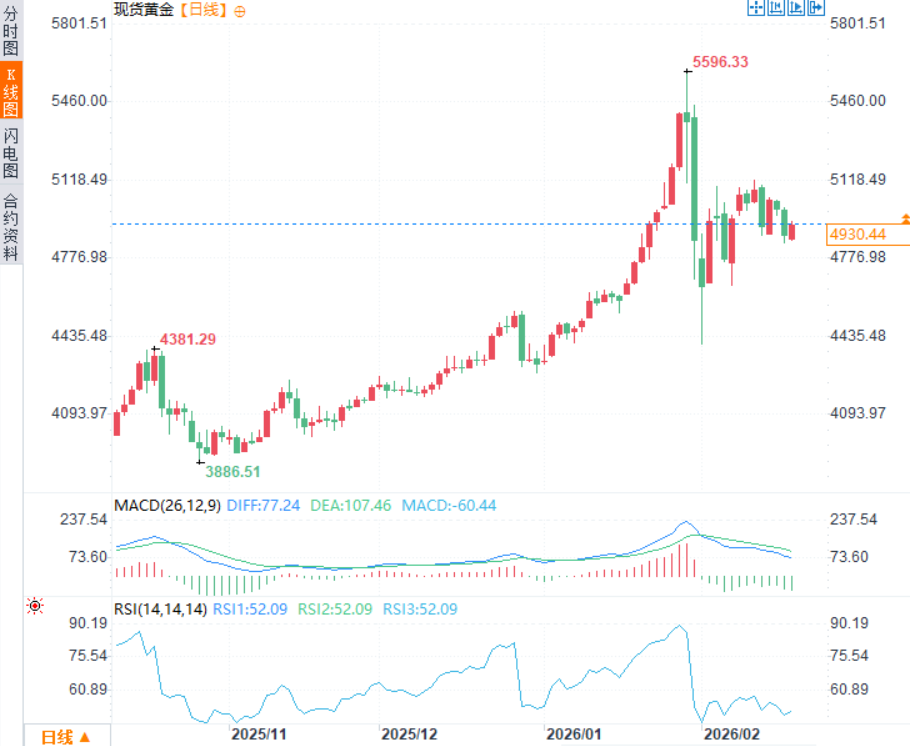
(Spot gold daily chart, source: FX678)
At 21:05 Beijing time, spot gold was trading at $4948.23 per ounce.
Negotiation deadlock: The two sides are far apart
According to a White House official on Tuesday, the Democratic proposal is "far removed" from the expectations of Republicans and the administration. The official emphasized that the Trump administration "remains committed to a sincere dialogue to end the shutdown," while also "firmly upholding the president's commitment to enforcing federal immigration laws."
President Donald Trump said Monday aboard Air Force One returning to Washington from Florida that he was willing to sit down and negotiate with Democrats. "I will, but we have to protect law enforcement. They're doing a fantastic job," Trump said. He did not provide a specific timeline and reiterated his opposition to some of the Democrats' demands, emphasizing that he would "protect law enforcement, especially ICE."
The shutdown was triggered by two fatal shootings in Minneapolis.
The shutdown stemmed from two deadly shootings in Minneapolis in January: on January 7, an ICE agent shot and killed Renee Goode, a mother of three; and on January 24, a federal agent shot and killed Alex Pretti, a ICU nurse with the Department of Veterans Affairs. These incidents sparked nationwide protests and prompted Democrats to make ICE reform a precondition for full funding to the DHS.
Democratic Party's core demands: multiple immigration enforcement restrictions
The Democratic proposal includes the following key restrictions: requiring immigration enforcement agents to wear body cameras; requiring a judicial search warrant (not an executive search warrant) before entering private property; prohibiting ICE agents from wearing masks during operations; tightening the use of force policy; and developing new training standards for agents.
Republicans opposed most of the demands, showing only some openness to body cameras.
Affected Institutions and Current Operations: U.S. Coast Guard
Several key agencies under the Department of Homeland Security were directly affected by the shutdown, including: the Transportation Security Administration (TSA); the Federal Emergency Management Agency (FEMA); the U.S. Coast Guard; and the U.S. Secret Service.
Most employees at these agencies are expected to continue working without pay, marking the second such situation recently – following the record 43-day U.S. government shutdown in the fall of 2025.
However, most of the operations of Immigration and Customs Enforcement (ICE) and Customs and Border Protection (CBP) will be maintained thanks to approximately $75 billion in additional funding provided by the "Beautiful Act" package signed by Trump in the summer of 2025. It is estimated that over 93% of ICE and CBP personnel will continue to serve, despite facing the same risk of working without pay.
The White House and the Democrats each made their statements.
Tom Homan stated, "ICE continues to enforce the law nationwide. They are already funded, and now ICE officers are not getting paid, but they seem to have gotten used to it. The core mission of President Trump's election—immigration enforcement—continues."
Democrats, however, insisted on the necessity of reform. Senate Minority Leader Chuck Schumer called the proposals "common sense measures" and accused ICE of being "out of control and reckless." House Minority Leader Hakim Jeffries stated on the program that Democrats were willing to engage in constructive dialogue, but needed "dramatic, bold, meaningful, and transformative change."
Outlook: Congressional Recess and Potential Delay
Capitol Hill is currently nearly empty, with lawmakers in recess and told they must return within 48 hours if an agreement is reached. If no progress is made, lawmakers could reconvene as early as next week. The uncertain prospects for negotiations between the White House and Democrats mean the shutdown could be prolonged, putting continued pressure on air travel, disaster response, and other nonimmigrant law enforcement functions related to homeland security.
This fiscal and policy battle highlights the deep-seated divisions in the United States regarding the balance between immigration enforcement and civil rights oversight, and may become a crucial test of Trump's governing ability in the early stages of his second term.
This situation is having a dual impact on both the US dollar and gold.
The ongoing US government shutdown and the deadlock in negotiations have exacerbated political uncertainty and fiscal governance concerns in the US, putting downward pressure on the dollar . Historical experience shows that such political stalemates often weaken investor confidence in US assets, leading to a decline in the dollar. On Wednesday, the dollar index fluctuated narrowly around 97.20.
Against this backdrop, gold's safe-haven appeal has become more prominent. The uncertainty stemming from the political gridlock and the US government shutdown has driven funds towards safe-haven assets. Furthermore, a prolonged shutdown could drag down economic growth expectations and weaken the Federal Reserve's hawkish stance, also benefiting non-interest-bearing gold. Spot gold has been trending higher, currently trading around $4,945 per ounce, up approximately 1.4% on the day.
(Spot gold daily chart, source: FX678)
At 21:05 Beijing time, spot gold was trading at $4948.23 per ounce.
- Risk Warning and Disclaimer
- The market involves risk, and trading may not be suitable for all investors. This article is for reference only and does not constitute personal investment advice, nor does it take into account certain users’ specific investment objectives, financial situation, or other needs. Any investment decisions made based on this information are at your own risk.