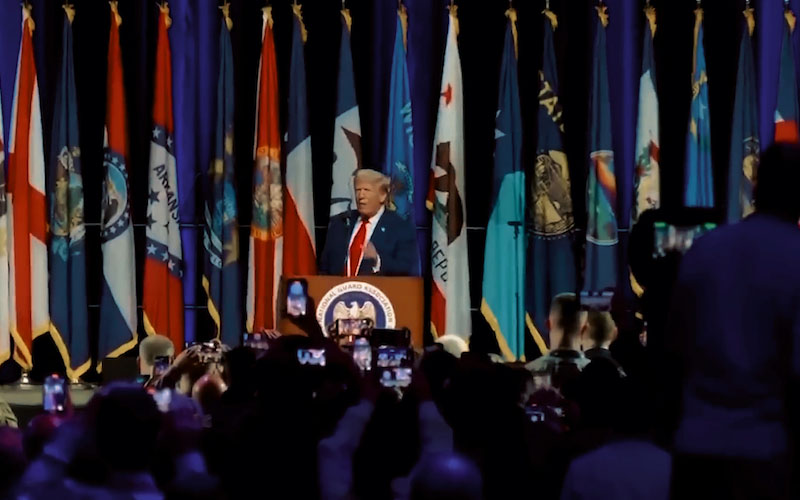
Beset by internal and external troubles! Tehran faces a double storm on the eve of US-Iran negotiations.
2026-02-23 15:32:02
Dubai, United Arab Emirates, officially announced last Sunday that the United States and Iran will begin the next round of nuclear talks in Geneva this Thursday.
Currently, Iran is in a particularly difficult situation: on the one hand, it has to deal with the direct threat of a US military strike, and on the other hand, anti-government protests are escalating again. Geopolitical risks and social unrest are fermenting in both directions, putting Iran's foreign policy decisions and internal governance in a dilemma.
Oman's Foreign Minister, Said Badr al-Busaidi, officially confirmed the negotiation arrangements.
As an important mediator in the Middle East, Oman has hosted indirect talks on the Iranian nuclear issue on several occasions and provided key coordination support for the new round of consultations held in Geneva last week, becoming an important bridge to ease tensions between the United States and Iran.
The Trump administration has not yet publicly commented on the negotiations, but its actions have sent a strong signal: the United States has deployed its largest military force in the Middle East in decades, attempting to force its long-time adversary to make concessions on core issues such as its nuclear program through a combination of military deterrence and political pressure.
Before Oman officially announced the negotiations, Iran's top diplomat Abbas Araqchi revealed in an interview with CBS that he was expected to meet with US envoy Steven Witkov in Geneva on Thursday, and emphasized that the "possibility of resolving the nuclear issue through diplomacy still exists"—a statement that demonstrated Iran's sincerity in negotiations and injected a brief glimmer of optimism into the deadlock.
Washington is awaiting the draft agreement that Araghchi had previously promised to submit within days, and the Iranian foreign minister confirmed to CBS that the draft is still being prepared.
He clearly defined the red lines for negotiations: the nuclear issue is currently the only topic of discussion, while additional issues such as the reduction of missile programs and the cutting off of support for armed proxies in the Middle East, which are demanded by the United States and Israel, have not yet been included in the scope of discussion, and the core differences between the two sides have not yet been bridged.
US President Trump issued a clear warning last Friday, not ruling out the possibility of a limited military strike against Iran; both the US and Iran have released strong signals of "preparing for war if negotiations break down," making this diplomatic game full of uncertainty.
Minutes after Oman confirmed the negotiations, Iranian President Masoud Pezechzian stated on social media that the negotiations had achieved "a concrete exchange of proposals and generated positive signals," but at the same time emphasized that Tehran "is fully prepared for all potential scenarios," expressing both a willingness for a peaceful resolution and demonstrating an uncompromising bottom line, highlighting the intense tension behind the negotiations.
The United States’ position is very clear: Iran must not possess nuclear weapons and nuclear deterrent capabilities, and must cease its uranium enrichment activities.
However, Araghshi explicitly refuted this, stating that uranium enrichment is Iran's legitimate right. This fundamental conflict over core demands has become the biggest obstacle to advancing negotiations.
Araghshi revealed last Friday that the US did not demand "zero enrichment" in the latest round of talks—contrary to the official US statements, suggesting that there might be room for private compromise in the negotiations.
He further stated that the focus of the talks was on how to ensure that Iran's nuclear program (including uranium enrichment) "remains permanently peaceful." In exchange, Iran would implement confidence-building measures in exchange for a substantial easing of economic sanctions—and the expectation of sanctions lifting is directly related to the recovery of Iran's crude oil exports and its position in the Middle East energy market.
Tehran has consistently adhered to its red lines in negotiations, refusing to include additional demands from the US, such as missile programs and contact with armed groups, on the agenda. While this firm stance has safeguarded the country's core interests, it has also led to a deadlock in the negotiations that is difficult to break through.
Despite Iran's repeated insistence that its nuclear program is peaceful, the US, Europe, and other parties generally suspect that it has a tendency to weaponize.
Iran has stated that it has suspended uranium enrichment activities since the joint US-Israeli strikes on its nuclear facilities in June—but the veracity of this statement is highly questionable due to Tehran's refusal of international inspections.
Trump claimed at the time that the strikes "completely destroyed" Iran's nuclear facilities, but the actual extent of the damage could not be verified. The lack of inspections further fueled market speculation about the progress of Iran's nuclear capability recovery and weakened the foundation of mutual trust between the US and Iran.
At the same time, Araghchi made a high-profile statement to CBS, declaring that "Iran's missile capabilities are at an extremely high level, and are currently superior to those before the June strikes." This statement was both a response to external threats and a demonstration of Iran's military deterrent capabilities, further escalating regional tensions.
Looking back at history, after the Trump administration unilaterally withdrew from the 2015 Joint Comprehensive Plan of Action (JCPOA) in 2018, the Iran nuclear negotiations fell into a stalemate for several years, becoming a core variable that disrupted the global energy market and geopolitical landscape, and also causing Iran's diplomatic environment to continue to deteriorate.
Just as news of the nuclear negotiations was being confirmed, anti-government protests in Iran escalated again. Witnesses said that university students in Tehran and another city gathered to protest around memorial sites for victims of nationwide demonstrations six weeks earlier. The risk of social unrest combined with the progress of nuclear negotiations has exacerbated Iran's already dire situation.
Students staged protests at five universities in the capital Tehran and one in Mashhad last Sunday. These scattered demonstrations erupted on Saturday, coinciding with the 40-day anniversary of the deaths in the January anti-government rallies—a traditional period of mourning that has historically ignited protests in Iran.
Videos circulating on social media show direct clashes between government supporters and anti-government protesters at two universities, with some protesters chanting slogans such as "Death to the dictator." The social divisions are becoming increasingly apparent, and the escalation of internal conflicts is putting increasing pressure on Iran's governance.
The Iranian government has not yet responded to the latest protests. This lack of transparency has further exacerbated concerns about Iran's internal stability and raised questions about the consistency of its negotiating stance.
Over the past week, 40 days of mourning ceremonies have been held in many parts of Iran. According to activists tracking the situation, most of the protesters who died died around January 8 or 9.
During the reign of 86-year-old Supreme Leader Ayatollah Saeed Ali Khamenei, previous protests were met with the deadliest crackdown in history, resulting in thousands of deaths and tens of thousands of arrests. The mass arrests and repressive control failed to completely quell public discontent and instead allowed social contradictions to continue to accumulate.
Protesters and social media videos show that although large-scale protests have been suppressed, small-scale demonstrations continue to escalate. Internal instability is not only testing Iran's governance capabilities but may also affect the consistency of its nuclear negotiation stance, adding more uncertainty to this diplomatic game.
Looking back at the history of the 1979 Islamic Revolution, the 40-day memorial service for the victims of the protests has repeatedly turned into large-scale rallies, and the crackdowns by security forces have led to more deaths, forming a cycle of "mourning-protest-repression-mourning again." This historical inertia has added more uncertainty to the current situation and posed a serious challenge to Iran's internal stability.
Because Iranian authorities cut off internet access and international calling services, the Associated Press was unable to independently verify the death toll, and this information asymmetry further amplified concerns about the situation in Iran.
This intertwined uncertainty, both internal and external, has precisely increased gold's safe-haven value. As the "ultimate hedge" against geopolitical risks, the stalemate in the Iranian nuclear negotiations and the ongoing domestic turmoil have kept market risk aversion high, which will continue to support the rise in gold prices in the short term, making it an important choice for global investors to hedge against risks in the Middle East.
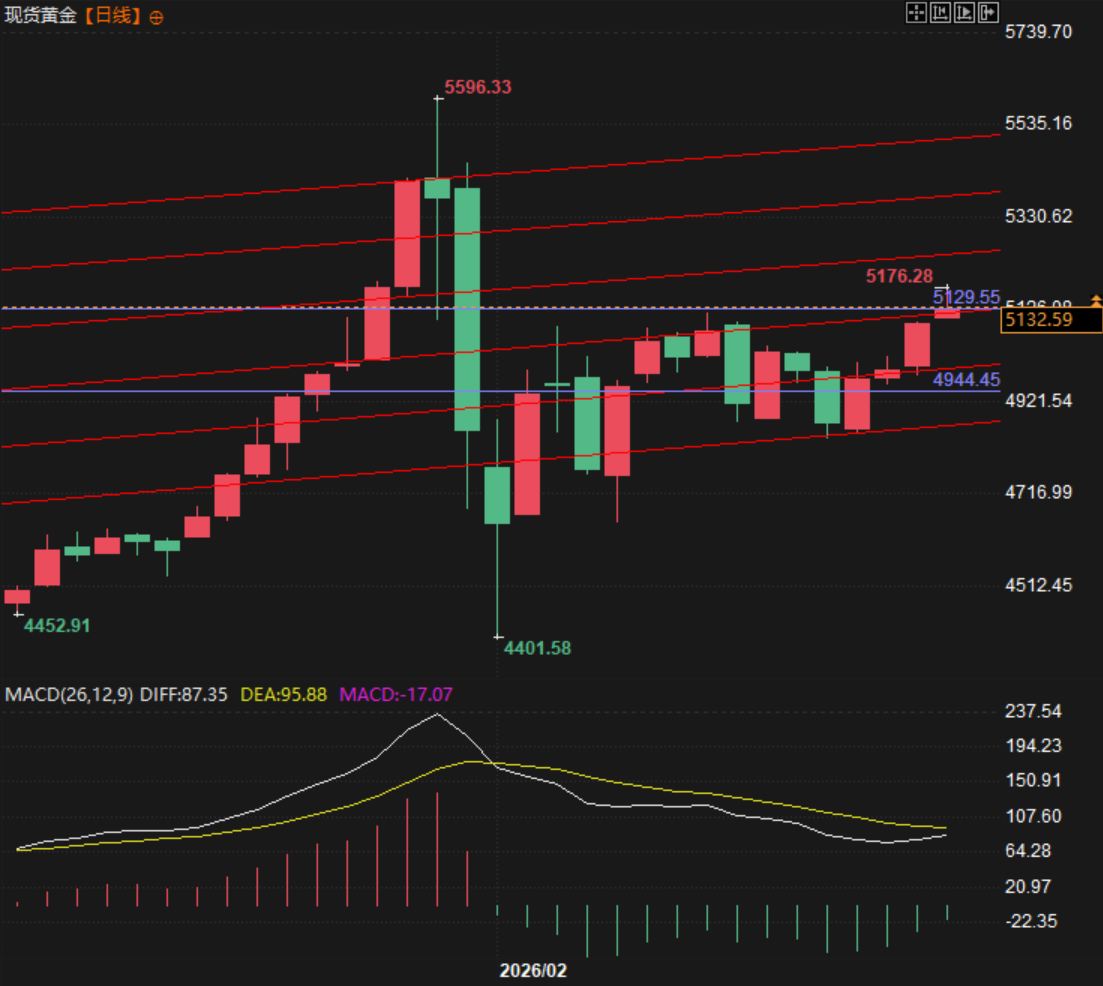
(Spot gold daily chart, source: FX678)
At 15:28 Beijing time, spot gold was trading at $5,135 per ounce.
Currently, Iran is in a particularly difficult situation: on the one hand, it has to deal with the direct threat of a US military strike, and on the other hand, anti-government protests are escalating again. Geopolitical risks and social unrest are fermenting in both directions, putting Iran's foreign policy decisions and internal governance in a dilemma.
Background of the negotiations: Oman's mediation, with undercurrents of military deterrence.
Oman's Foreign Minister, Said Badr al-Busaidi, officially confirmed the negotiation arrangements.
As an important mediator in the Middle East, Oman has hosted indirect talks on the Iranian nuclear issue on several occasions and provided key coordination support for the new round of consultations held in Geneva last week, becoming an important bridge to ease tensions between the United States and Iran.
The Trump administration has not yet publicly commented on the negotiations, but its actions have sent a strong signal: the United States has deployed its largest military force in the Middle East in decades, attempting to force its long-time adversary to make concessions on core issues such as its nuclear program through a combination of military deterrence and political pressure.
Both sides stated: sending a signal of peace, and that their bottom lines will never be compromised.
Before Oman officially announced the negotiations, Iran's top diplomat Abbas Araqchi revealed in an interview with CBS that he was expected to meet with US envoy Steven Witkov in Geneva on Thursday, and emphasized that the "possibility of resolving the nuclear issue through diplomacy still exists"—a statement that demonstrated Iran's sincerity in negotiations and injected a brief glimmer of optimism into the deadlock.
Washington is awaiting the draft agreement that Araghchi had previously promised to submit within days, and the Iranian foreign minister confirmed to CBS that the draft is still being prepared.
He clearly defined the red lines for negotiations: the nuclear issue is currently the only topic of discussion, while additional issues such as the reduction of missile programs and the cutting off of support for armed proxies in the Middle East, which are demanded by the United States and Israel, have not yet been included in the scope of discussion, and the core differences between the two sides have not yet been bridged.
US President Trump issued a clear warning last Friday, not ruling out the possibility of a limited military strike against Iran; both the US and Iran have released strong signals of "preparing for war if negotiations break down," making this diplomatic game full of uncertainty.
Minutes after Oman confirmed the negotiations, Iranian President Masoud Pezechzian stated on social media that the negotiations had achieved "a concrete exchange of proposals and generated positive signals," but at the same time emphasized that Tehran "is fully prepared for all potential scenarios," expressing both a willingness for a peaceful resolution and demonstrating an uncompromising bottom line, highlighting the intense tension behind the negotiations.
Core Dispute: The struggle over uranium enrichment rights, with additional demands becoming an obstacle.
The United States’ position is very clear: Iran must not possess nuclear weapons and nuclear deterrent capabilities, and must cease its uranium enrichment activities.
However, Araghshi explicitly refuted this, stating that uranium enrichment is Iran's legitimate right. This fundamental conflict over core demands has become the biggest obstacle to advancing negotiations.
Araghshi revealed last Friday that the US did not demand "zero enrichment" in the latest round of talks—contrary to the official US statements, suggesting that there might be room for private compromise in the negotiations.
He further stated that the focus of the talks was on how to ensure that Iran's nuclear program (including uranium enrichment) "remains permanently peaceful." In exchange, Iran would implement confidence-building measures in exchange for a substantial easing of economic sanctions—and the expectation of sanctions lifting is directly related to the recovery of Iran's crude oil exports and its position in the Middle East energy market.
Tehran has consistently adhered to its red lines in negotiations, refusing to include additional demands from the US, such as missile programs and contact with armed groups, on the agenda. While this firm stance has safeguarded the country's core interests, it has also led to a deadlock in the negotiations that is difficult to break through.
Historical Background: The stalemate lasted for several years after the agreement was withdrawn.
Despite Iran's repeated insistence that its nuclear program is peaceful, the US, Europe, and other parties generally suspect that it has a tendency to weaponize.
Iran has stated that it has suspended uranium enrichment activities since the joint US-Israeli strikes on its nuclear facilities in June—but the veracity of this statement is highly questionable due to Tehran's refusal of international inspections.
Trump claimed at the time that the strikes "completely destroyed" Iran's nuclear facilities, but the actual extent of the damage could not be verified. The lack of inspections further fueled market speculation about the progress of Iran's nuclear capability recovery and weakened the foundation of mutual trust between the US and Iran.
At the same time, Araghchi made a high-profile statement to CBS, declaring that "Iran's missile capabilities are at an extremely high level, and are currently superior to those before the June strikes." This statement was both a response to external threats and a demonstration of Iran's military deterrent capabilities, further escalating regional tensions.
Looking back at history, after the Trump administration unilaterally withdrew from the 2015 Joint Comprehensive Plan of Action (JCPOA) in 2018, the Iran nuclear negotiations fell into a stalemate for several years, becoming a core variable that disrupted the global energy market and geopolitical landscape, and also causing Iran's diplomatic environment to continue to deteriorate.
Domestic unrest: renewed protests and increased social divisions
Just as news of the nuclear negotiations was being confirmed, anti-government protests in Iran escalated again. Witnesses said that university students in Tehran and another city gathered to protest around memorial sites for victims of nationwide demonstrations six weeks earlier. The risk of social unrest combined with the progress of nuclear negotiations has exacerbated Iran's already dire situation.
Students staged protests at five universities in the capital Tehran and one in Mashhad last Sunday. These scattered demonstrations erupted on Saturday, coinciding with the 40-day anniversary of the deaths in the January anti-government rallies—a traditional period of mourning that has historically ignited protests in Iran.
Videos circulating on social media show direct clashes between government supporters and anti-government protesters at two universities, with some protesters chanting slogans such as "Death to the dictator." The social divisions are becoming increasingly apparent, and the escalation of internal conflicts is putting increasing pressure on Iran's governance.
The Iranian government has not yet responded to the latest protests. This lack of transparency has further exacerbated concerns about Iran's internal stability and raised questions about the consistency of its negotiating stance.
Background: Suppression fails to quell public anger; historical cycles are emerging.
Over the past week, 40 days of mourning ceremonies have been held in many parts of Iran. According to activists tracking the situation, most of the protesters who died died around January 8 or 9.
During the reign of 86-year-old Supreme Leader Ayatollah Saeed Ali Khamenei, previous protests were met with the deadliest crackdown in history, resulting in thousands of deaths and tens of thousands of arrests. The mass arrests and repressive control failed to completely quell public discontent and instead allowed social contradictions to continue to accumulate.
Protesters and social media videos show that although large-scale protests have been suppressed, small-scale demonstrations continue to escalate. Internal instability is not only testing Iran's governance capabilities but may also affect the consistency of its nuclear negotiation stance, adding more uncertainty to this diplomatic game.
Looking back at the history of the 1979 Islamic Revolution, the 40-day memorial service for the victims of the protests has repeatedly turned into large-scale rallies, and the crackdowns by security forces have led to more deaths, forming a cycle of "mourning-protest-repression-mourning again." This historical inertia has added more uncertainty to the current situation and posed a serious challenge to Iran's internal stability.
Interplay of Situations: Uncertainty Boosts Gold's Safe-Haven Value
Because Iranian authorities cut off internet access and international calling services, the Associated Press was unable to independently verify the death toll, and this information asymmetry further amplified concerns about the situation in Iran.
This intertwined uncertainty, both internal and external, has precisely increased gold's safe-haven value. As the "ultimate hedge" against geopolitical risks, the stalemate in the Iranian nuclear negotiations and the ongoing domestic turmoil have kept market risk aversion high, which will continue to support the rise in gold prices in the short term, making it an important choice for global investors to hedge against risks in the Middle East.
(Spot gold daily chart, source: FX678)
At 15:28 Beijing time, spot gold was trading at $5,135 per ounce.
- Risk Warning and Disclaimer
- The market involves risk, and trading may not be suitable for all investors. This article is for reference only and does not constitute personal investment advice, nor does it take into account certain users’ specific investment objectives, financial situation, or other needs. Any investment decisions made based on this information are at your own risk.