The discrepancy between the expected geopolitical powder keg and reality highlights the fatal vulnerability of crude oil short sellers.
2026-02-24 15:35:59
The current global energy landscape clearly shows that when the Middle East, a core oil-producing region, falls into political turmoil, the traditional market balance will be disrupted, and traders and investors will have to face unprecedented uncertainty.
When the tensions between the US and Iran become the core driver of the geopolitical risk premium in oil prices, using binomial trees or scenario hypotheses to determine the potential probability of supply disruptions and their cascading economic impacts is a feasible approach for market participants.
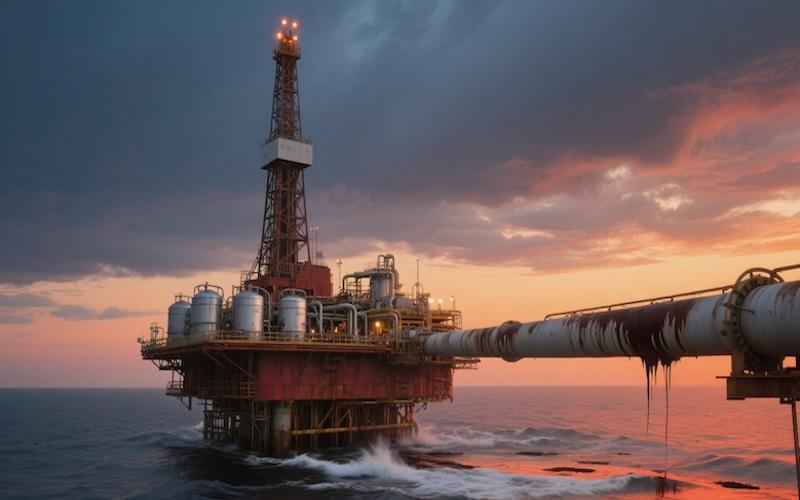
Iran's influence in the global crude oil market extends far beyond its direct production capacity.
The country produces about 3 million barrels of oil per day, accounting for 3% of global production. Behind this seemingly modest share lies its irreplaceable strategic value: as a core country in the Middle East, Iran's geographical location and network of regional influence make it a key variable in global energy security.
The Strait of Hormuz, a vital choke point for global crude oil transportation, carries 20% of the world's seaborne oil traffic. Iran possesses the actual ability to influence or even block this waterway—the impact of this potential risk on global energy security far exceeds its market weight corresponding to its own production capacity.
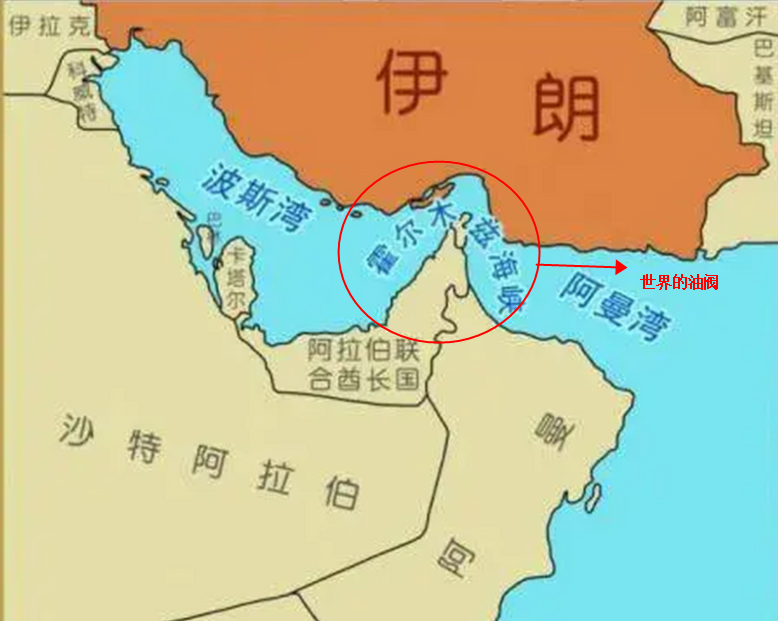
Furthermore, regional proxy networks with interests tied to Iran have infiltrated several core oil-producing regions in the Middle East. Although such networks have historically had limited frequency and effectiveness of operations, they have substantially acquired the technical capability to attack oil infrastructure, posing a potential threat to cross-border supply disruptions.
It is noteworthy that Iran has recently accelerated its energy cooperation strategy: its collaboration with Russia in oil field development continues to deepen, and it has also achieved a breakthrough in exploration licensing with Saudi Arabia. This strategic shift allows it to seek alternative financing and technological support outside the Western sanctions system, and even under current sanctions constraints, it is expected to substantially increase its long-term production capacity ceiling.
From 2024 to early 2025, the narrative of "global oversupply of crude oil" dominated the energy market narrative. However, after cross-validation with actual inventory data and spare capacity indicators, this claim has become untenable. Recent market dynamics have further confirmed that it has a fundamental logical flaw.
According to the Joint Organization Data Initiative (JODI) in December 2025, current global crude oil inventories are 111.7 million barrels lower than the five-year average. This significant gap contrasts sharply with the common perception of "oversupply," indicating that the traditional inventory buffer mechanism has substantially shrunk.
Meanwhile, OPEC+'s spare capacity has fallen to 2.5% of total capacity, below the safe threshold of 3%, directly limiting the organization's ability to fill supply gaps through increased production from member countries—a point clearly reflected in the recent OPEC production impact assessment report. This means that the amount of temporary capacity that can be mobilized is limited. Consequently, if oil prices continue to rise, the effect of controlling prices through increased supply will be quite limited, potentially leading to an irrational and accelerated rise in oil prices.
What is even more alarming is that the seemingly abundant crude oil resources in floating oil storage facilities are actually mainly Russian crude oil subject to sanctions.
Constrained by geographical location and commercial sanctions, these crude oils cannot effectively replace Middle Eastern crude oils in Western markets, forming a typical "false supply buffer" that is difficult to transform into effective supply in the event of actual supply disruptions.
While production growth from non-OPEC oil-producing countries can support overall supply figures, the increase is mainly concentrated in regions with high extraction costs and long project cycles, making it difficult to serve as an immediate buffer against sudden supply shocks.
Based on strategic scenario modeling, there are four clear evolution paths for the US-Iran tensions, each with a specific probability weight and oil price range. The core driving logic is the scale of supply disruptions and the efficiency of market emergency response, which directly determines the pricing direction of oil prices.
Limited diplomatic breakdown (probability: 40%)
Price impact: $75-85/barrel. The core of this scenario is "no direct military conflict, but sanctions escalation": the United States will reinstate comprehensive sanctions against Iranian oil exports, strengthen the enforcement of existing sanctions, and add more Iranian energy entities and cross-border oil trading intermediaries to the sanctions list.
Iran's response will focus on diplomatic efforts and proxy actions rather than direct military countermeasures, with the threat of blocking the Strait of Hormuz primarily serving as a bargaining chip rather than being actually implemented.
At this point, market pricing will incorporate a geopolitical risk premium of $10-15 per barrel, reflecting concerns about uncertainty regarding Iran's export capacity and the escalation of the situation.
It should be clarified that in this scenario, physical supply disruptions will be kept to a minimum, and the core of the oil price increase will be driven by "expectations" rather than "physical shortages".
Its key features include: increased US military deployment density in the Persian Gulf, Iran's diplomatic protest through the UN framework, strengthened security coordination among regional allies, and the global energy emergency response plan being put on standby.
Regional military confrontation (probability: 35%)
Price impact: The trigger for military escalation at $90-110/barrel would be a precise strike by the United States on Iranian nuclear facilities, which would then lead to retaliatory attacks by Iran on the oil infrastructure of Gulf countries.
The key premise of this scenario is that "the scope of the conflict is controllable" and both sides avoid a full-scale regional war.
The damage to Iranian production facilities and the attacks on Saudi and UAE oil infrastructure will lead to a temporary supply disruption of 1-2 million barrels per day, which is expected to last for several days to several weeks (rather than months), and international diplomatic mediation will intervene quickly.
At the same time, the G7 countries will launch a coordinated release of their strategic petroleum reserves (SPR)—630 million barrels from the United States and a total of 1.5 billion barrels from the G7 reserves, which will act as a short-term market stabilizer.
The international emergency coordination mechanisms established after each oil crisis will also be fully activated, including coordinated reserve releases and temporary demand control in major consuming countries. At the same time, we need to be wary of the chain reaction in the oil market caused by the trade war.
Full-scale conflict and blockade of the Strait of Hormuz (probability: 15%)
Price Impact: $120-150/barrel. The most extreme scenario is a complete blockade of the Strait of Hormuz plus attacks on key oil production facilities: global daily oil supply would decrease by 15-20 million barrels, representing 15-20% of total global supply. Iran's navy and missile forces could achieve a long-term blockade of the Strait of Hormuz. Although US and allied military forces would intervene to reopen the waterway, alternative pipeline routes would increase unit transportation costs by $2-5/barrel and would only meet a portion of supply demand.
In response to this crisis, the international community needs to launch an unprecedented coordinated emergency response: releasing strategic oil reserves on a massive scale, implementing a mandatory energy rationing mechanism, reducing temporary demand in the industrial sector, accelerating the emergency deployment of alternative energy sources, and activating a military escort mechanism for oil tanker transport.
Negotiation solution (probability: 10%)
Price impact: The core trigger condition for a price of $55-65/barrel is the US and Iran reaching a comprehensive nuclear agreement and the gradual lifting of oil export sanctions—which will add 1.5 million barrels per day of Iranian crude oil supply to the global market within 12-18 months.
At this point, the geopolitical risk premium will be completely removed from oil prices, and the core of pricing will return to fundamental supply and demand, provided that the nuclear agreement verification mechanism is effectively implemented and commercial cooperation between Iran and Western energy companies gradually resumes.
It should be noted that market pricing will reflect the equilibrium level of the "risk-free premium," but the benchmark price will still be affected by factors such as spare capacity constraints and non-Iranian geopolitical risks.
The combined effect of financial market leverage and supply chain structural vulnerabilities means that the actual impact of the initial geopolitical shock far exceeds its direct disruption to real supply and demand—this amplification mechanism is particularly evident in oil price fluctuations driven by the US-Iran situation.
Structural vulnerabilities in the supply chain
Insufficient refining capacity is a core weakness in the global crude oil industry chain: global spare refining capacity is limited, and different grades of crude oil have specific requirements for refining facilities. Even if alternative crude oil resources exist, supply disruptions may still trigger a chain reaction in the industry chain.
The risks to transportation infrastructure extend beyond the Strait of Hormuz: alternative routes to the Cape of Good Hope will add 15 days to the shipping cycle and $2-5 per barrel to the cost, while the pipeline capacity of alternative supply sources is insufficient to fully offset the impact of shipping disruptions.
In addition, the buffering capacity of storage facilities is limited: the theoretical buffer period of global strategic oil reserves is 30-90 days, but political decisions and logistical constraints during crises will significantly reduce the actual release efficiency.
At the same time, the concentration of positions in the futures market and the programmed operation of algorithmic trading may amplify the price impact of supply and demand imbalance by 2-3 times.
When volatility intensifies, margin calls and stop-loss triggers will cause a temporary "liquidity squeeze," which is highly consistent with the market characteristics of the rapid rise in oil prices in recent months.
The price elasticity threshold is very clear: when oil prices continue to break through $100 per barrel, short-term demand compression will begin, which will be manifested in a reduction of non-essential travel, substitution of public transportation, and accelerated popularization of energy-saving vehicles.
The high oil price cycle will also drive investment growth in electric vehicles, renewable energy, and natural gas alternatives, but the implementation cycle determines that its immediate impact will be limited.
From the perspective of economic feedback loops, for every $10/barrel increase in oil prices, global economic growth will decline by 0.1-0.3%. The slowdown in economic activity will in turn suppress oil demand, forming a medium- to long-term price stabilization mechanism.
The dramatic fluctuations in crude oil prices can affect the global economy through multiple channels, covering multiple dimensions such as monetary policy formulation, industry profit differentiation, and international trade balance. Against the backdrop of geopolitical conflicts, these transmission paths are even more complex and unpredictable.
The conflict between inflation and growth targets will intensify, and G7 central banks may activate emergency coordination mechanisms, including coordinated interest rate adjustments and targeted support measures such as injecting liquidity into stressed markets. Meanwhile, energy costs will spread throughout the entire industry chain via transportation and production, creating persistent inflationary pressure rather than short-term disruptions in the energy component.
The real economy is impacted, and the impact varies across different sectors. In the air transport industry, fuel costs account for a high proportion of costs and the ability to pass them on is weak. For every $10 increase in oil prices per barrel, global airlines will incur an additional $2-4 billion in annual costs, which will lead to capacity contraction and route optimization.
Chemical manufacturing industry: Petrochemical raw material costs account for 30-50% of total costs. A 15-25% increase in raw material prices will directly put pressure on industry profitability, forcing companies to adjust their production scale and supply chain layout.
Agriculture sector: Rising costs of fuel oil and fertilizers will drive up food price inflation through planting and transportation, creating an "imported inflation shock" to emerging markets that are highly dependent on food imports.
At the same time, the depletion of foreign exchange reserves in oil-importing economies will accelerate, the fixed exchange rate system will face speculative shocks, and some countries may fall into a balance of payments crisis.
Investment strategies under geopolitical and energy crises need to take into account both the direct impact on the industry and the secondary transmission across assets. The core is to build an investment portfolio that combines "scenario adaptation and risk hedging" around the four possible evolution paths of the US-Iran situation.
Upstream oil companies: Prefer targets with well-diversified and stable balance sheets, using the increased profits brought by high oil prices to hedge against operational disruptions caused by geopolitical risks.
Renewable energy: Energy security demands will drive both policy support and investment growth, with sectors such as solar, wind, and energy storage showing significant relative return advantages.
Natural gas industry chain: As an immediate alternative energy source, LNG's transportation and infrastructure assets will receive a valuation premium, and the increase in industrial substitution demand will support an upward shift in the price center.
Energy infrastructure: The strategic value of pipeline, storage, and refining assets is becoming increasingly apparent, and owner limited liability partnerships (MLPs) and infrastructure funds will benefit from asset valuation reassessment.
Precious metals: Gold's safe-haven properties will be strengthened, and a 5-10% allocation in a portfolio can effectively hedge against currency devaluation and systemic risks.
Agricultural products: Futures contracts for staple grains such as wheat, corn, and rice will benefit from the transmission of energy costs and concerns about supply chain security, forming a price linkage between "energy" and "food".
Currency hedging: Take a long position on the US dollar against the currencies of oil-importing countries (especially emerging market currencies) and lock in exchange rate risk through foreign exchange forwards and options.
The past Middle East energy crises provide a logical framework for current market judgments. Although the specific forms of geopolitical conflicts differ, the core response logic of the market has commonalities.
During the Iranian Revolution in 1979, oil prices soared from $12 to over $30, and it took three years to rebalance supply and demand. The core lesson is that "the development cycle of alternative supplies is longer than expected."
The Gulf War of 1990-1991 validated the effectiveness of the "emergency coordination mechanism"—the international coordinated release of reserves and the use of OPEC's spare capacity successfully offset the impact of the production disruptions in Iran and Kuwait.
From the perspective of market evolution, three dimensions are worth noting: the G7's strategic reserves of 1.5 billion barrels provide an effective buffer, but the political game of when to release them remains a key variable.
Diversification of pipeline transportation reduces reliance on a single waterway, but cost and capacity constraints remain.
While risk pricing in the energy derivatives market is more accurate, algorithmic trading and concentrated leverage also amplify short-term volatility.
In addition, the accelerated pace of mediation by major powers has reduced the probability of prolonged conflicts, which is also the core reason why the current market risk premium has not been over-extracted.
The tensions between the US and Iran, coupled with the current energy market's structural characteristics of "low inventory and low spare capacity," have created the most severe energy security environment since the beginning of the 21st century. This fundamental background determines that oil prices are significantly more sensitive to geopolitical conflicts than in the same period in history.
The current price of US crude oil at $71.9 per barrel only partially reflects the recent escalation of the situation and has not yet fully priced in the risk of supply disruptions under extreme scenarios.
From a trading perspective, there is a possibility of "undervaluation of risk premium" in the current market: in the scenario of a 15% probability of the Strait of Hormuz being blocked, the corresponding oil price center should be $120-150 per barrel.
The structural contradiction between inventory gaps and insufficient spare capacity means that any sudden geopolitical event could trigger "unexpected volatility." Trading strategies need to take into account both directional positioning and risk hedging, and avoid betting on a single scenario.
"The triple resonance of shrinking spare capacity, depleted inventory buffers and escalating geopolitical conflicts has pushed the energy market into a fragile equilibrium – the current oil price is not adequately compensated for risk, and the upside potential under extreme scenarios has not been fully priced in."
A successful trading strategy needs to cover both "capturing immediate volatility" and "long-term structural positioning": in the short term, focus on swing trading opportunities driven by geopolitical events, and in the medium to long term, seize structural opportunities brought about by alternative energy, strategic reserves, and emergency coordination mechanisms.
The evolving situation between the US and Iran will ultimately become a crucial litmus test for the resilience of the energy market and the efficiency of pricing.
From a technical perspective, Brent crude oil has broken out after completing a bottoming pattern recently. In the near term, attention should be paid to the opportunity for oil prices to retrace to the 5-day moving average and the resistance level around 73.29, which represents the measured increase in the trading range.
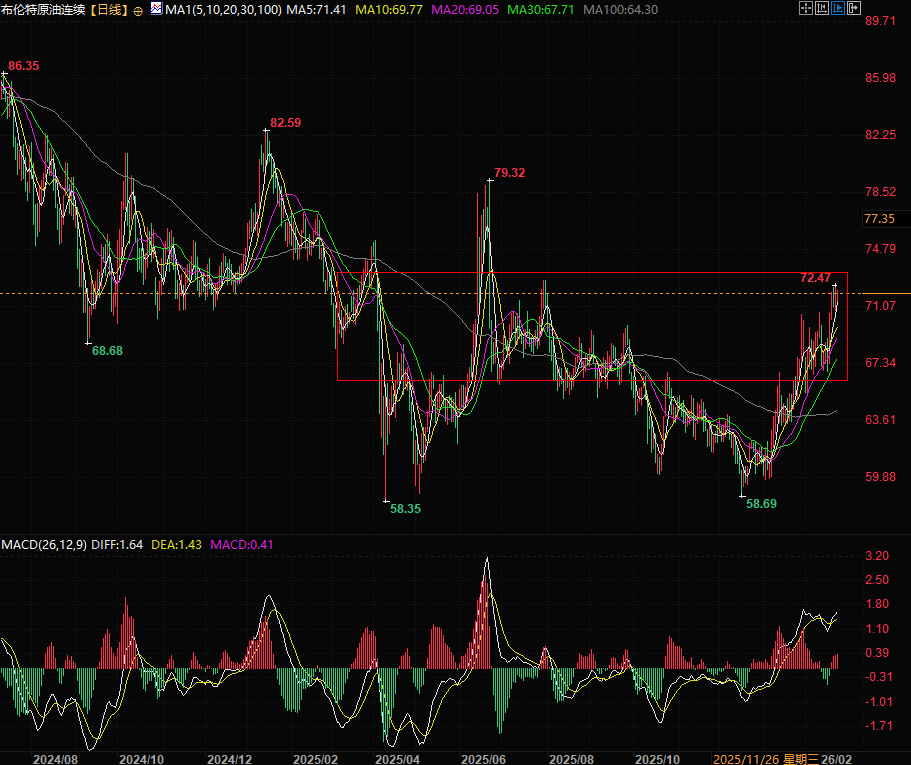
(Brent crude oil daily chart, source: EasyForex)
At 15:30 Beijing time, Brent crude oil futures were trading at $71.75 per barrel.
When the tensions between the US and Iran become the core driver of the geopolitical risk premium in oil prices, using binomial trees or scenario hypotheses to determine the potential probability of supply disruptions and their cascading economic impacts is a feasible approach for market participants.
Iran's strategic core position in global crude oil supply
Iran's influence in the global crude oil market extends far beyond its direct production capacity.
The country produces about 3 million barrels of oil per day, accounting for 3% of global production. Behind this seemingly modest share lies its irreplaceable strategic value: as a core country in the Middle East, Iran's geographical location and network of regional influence make it a key variable in global energy security.
The Strait of Hormuz, a vital choke point for global crude oil transportation, carries 20% of the world's seaborne oil traffic. Iran possesses the actual ability to influence or even block this waterway—the impact of this potential risk on global energy security far exceeds its market weight corresponding to its own production capacity.
Furthermore, regional proxy networks with interests tied to Iran have infiltrated several core oil-producing regions in the Middle East. Although such networks have historically had limited frequency and effectiveness of operations, they have substantially acquired the technical capability to attack oil infrastructure, posing a potential threat to cross-border supply disruptions.
It is noteworthy that Iran has recently accelerated its energy cooperation strategy: its collaboration with Russia in oil field development continues to deepen, and it has also achieved a breakthrough in exploration licensing with Saudi Arabia. This strategic shift allows it to seek alternative financing and technological support outside the Western sanctions system, and even under current sanctions constraints, it is expected to substantially increase its long-term production capacity ceiling.
Current crude oil market: a misalignment between fundamentals and risk perception
From 2024 to early 2025, the narrative of "global oversupply of crude oil" dominated the energy market narrative. However, after cross-validation with actual inventory data and spare capacity indicators, this claim has become untenable. Recent market dynamics have further confirmed that it has a fundamental logical flaw.
According to the Joint Organization Data Initiative (JODI) in December 2025, current global crude oil inventories are 111.7 million barrels lower than the five-year average. This significant gap contrasts sharply with the common perception of "oversupply," indicating that the traditional inventory buffer mechanism has substantially shrunk.
Meanwhile, OPEC+'s spare capacity has fallen to 2.5% of total capacity, below the safe threshold of 3%, directly limiting the organization's ability to fill supply gaps through increased production from member countries—a point clearly reflected in the recent OPEC production impact assessment report. This means that the amount of temporary capacity that can be mobilized is limited. Consequently, if oil prices continue to rise, the effect of controlling prices through increased supply will be quite limited, potentially leading to an irrational and accelerated rise in oil prices.
What is even more alarming is that the seemingly abundant crude oil resources in floating oil storage facilities are actually mainly Russian crude oil subject to sanctions.
Constrained by geographical location and commercial sanctions, these crude oils cannot effectively replace Middle Eastern crude oils in Western markets, forming a typical "false supply buffer" that is difficult to transform into effective supply in the event of actual supply disruptions.
While production growth from non-OPEC oil-producing countries can support overall supply figures, the increase is mainly concentrated in regions with high extraction costs and long project cycles, making it difficult to serve as an immediate buffer against sudden supply shocks.
Four possible scenarios for the evolution of the US-Iran situation: Analysis of the impact on oil prices
Based on strategic scenario modeling, there are four clear evolution paths for the US-Iran tensions, each with a specific probability weight and oil price range. The core driving logic is the scale of supply disruptions and the efficiency of market emergency response, which directly determines the pricing direction of oil prices.
Limited diplomatic breakdown (probability: 40%)
Price impact: $75-85/barrel. The core of this scenario is "no direct military conflict, but sanctions escalation": the United States will reinstate comprehensive sanctions against Iranian oil exports, strengthen the enforcement of existing sanctions, and add more Iranian energy entities and cross-border oil trading intermediaries to the sanctions list.
Iran's response will focus on diplomatic efforts and proxy actions rather than direct military countermeasures, with the threat of blocking the Strait of Hormuz primarily serving as a bargaining chip rather than being actually implemented.
At this point, market pricing will incorporate a geopolitical risk premium of $10-15 per barrel, reflecting concerns about uncertainty regarding Iran's export capacity and the escalation of the situation.
It should be clarified that in this scenario, physical supply disruptions will be kept to a minimum, and the core of the oil price increase will be driven by "expectations" rather than "physical shortages".
Its key features include: increased US military deployment density in the Persian Gulf, Iran's diplomatic protest through the UN framework, strengthened security coordination among regional allies, and the global energy emergency response plan being put on standby.
Regional military confrontation (probability: 35%)
Price impact: The trigger for military escalation at $90-110/barrel would be a precise strike by the United States on Iranian nuclear facilities, which would then lead to retaliatory attacks by Iran on the oil infrastructure of Gulf countries.
The key premise of this scenario is that "the scope of the conflict is controllable" and both sides avoid a full-scale regional war.
The damage to Iranian production facilities and the attacks on Saudi and UAE oil infrastructure will lead to a temporary supply disruption of 1-2 million barrels per day, which is expected to last for several days to several weeks (rather than months), and international diplomatic mediation will intervene quickly.
At the same time, the G7 countries will launch a coordinated release of their strategic petroleum reserves (SPR)—630 million barrels from the United States and a total of 1.5 billion barrels from the G7 reserves, which will act as a short-term market stabilizer.
The international emergency coordination mechanisms established after each oil crisis will also be fully activated, including coordinated reserve releases and temporary demand control in major consuming countries. At the same time, we need to be wary of the chain reaction in the oil market caused by the trade war.
Full-scale conflict and blockade of the Strait of Hormuz (probability: 15%)
Price Impact: $120-150/barrel. The most extreme scenario is a complete blockade of the Strait of Hormuz plus attacks on key oil production facilities: global daily oil supply would decrease by 15-20 million barrels, representing 15-20% of total global supply. Iran's navy and missile forces could achieve a long-term blockade of the Strait of Hormuz. Although US and allied military forces would intervene to reopen the waterway, alternative pipeline routes would increase unit transportation costs by $2-5/barrel and would only meet a portion of supply demand.
In response to this crisis, the international community needs to launch an unprecedented coordinated emergency response: releasing strategic oil reserves on a massive scale, implementing a mandatory energy rationing mechanism, reducing temporary demand in the industrial sector, accelerating the emergency deployment of alternative energy sources, and activating a military escort mechanism for oil tanker transport.
Negotiation solution (probability: 10%)
Price impact: The core trigger condition for a price of $55-65/barrel is the US and Iran reaching a comprehensive nuclear agreement and the gradual lifting of oil export sanctions—which will add 1.5 million barrels per day of Iranian crude oil supply to the global market within 12-18 months.
At this point, the geopolitical risk premium will be completely removed from oil prices, and the core of pricing will return to fundamental supply and demand, provided that the nuclear agreement verification mechanism is effectively implemented and commercial cooperation between Iran and Western energy companies gradually resumes.
It should be noted that market pricing will reflect the equilibrium level of the "risk-free premium," but the benchmark price will still be affected by factors such as spare capacity constraints and non-Iranian geopolitical risks.
The amplification mechanism of geopolitical shocks: the dual role of markets and supply chains
The combined effect of financial market leverage and supply chain structural vulnerabilities means that the actual impact of the initial geopolitical shock far exceeds its direct disruption to real supply and demand—this amplification mechanism is particularly evident in oil price fluctuations driven by the US-Iran situation.
Structural vulnerabilities in the supply chain
Insufficient refining capacity is a core weakness in the global crude oil industry chain: global spare refining capacity is limited, and different grades of crude oil have specific requirements for refining facilities. Even if alternative crude oil resources exist, supply disruptions may still trigger a chain reaction in the industry chain.
The risks to transportation infrastructure extend beyond the Strait of Hormuz: alternative routes to the Cape of Good Hope will add 15 days to the shipping cycle and $2-5 per barrel to the cost, while the pipeline capacity of alternative supply sources is insufficient to fully offset the impact of shipping disruptions.
In addition, the buffering capacity of storage facilities is limited: the theoretical buffer period of global strategic oil reserves is 30-90 days, but political decisions and logistical constraints during crises will significantly reduce the actual release efficiency.
At the same time, the concentration of positions in the futures market and the programmed operation of algorithmic trading may amplify the price impact of supply and demand imbalance by 2-3 times.
When volatility intensifies, margin calls and stop-loss triggers will cause a temporary "liquidity squeeze," which is highly consistent with the market characteristics of the rapid rise in oil prices in recent months.
The price elasticity threshold is very clear: when oil prices continue to break through $100 per barrel, short-term demand compression will begin, which will be manifested in a reduction of non-essential travel, substitution of public transportation, and accelerated popularization of energy-saving vehicles.
The high oil price cycle will also drive investment growth in electric vehicles, renewable energy, and natural gas alternatives, but the implementation cycle determines that its immediate impact will be limited.
From the perspective of economic feedback loops, for every $10/barrel increase in oil prices, global economic growth will decline by 0.1-0.3%. The slowdown in economic activity will in turn suppress oil demand, forming a medium- to long-term price stabilization mechanism.
Cross-market transmission of oil price fluctuations: from industry to the global economy
The dramatic fluctuations in crude oil prices can affect the global economy through multiple channels, covering multiple dimensions such as monetary policy formulation, industry profit differentiation, and international trade balance. Against the backdrop of geopolitical conflicts, these transmission paths are even more complex and unpredictable.
The conflict between inflation and growth targets will intensify, and G7 central banks may activate emergency coordination mechanisms, including coordinated interest rate adjustments and targeted support measures such as injecting liquidity into stressed markets. Meanwhile, energy costs will spread throughout the entire industry chain via transportation and production, creating persistent inflationary pressure rather than short-term disruptions in the energy component.
The real economy is impacted, and the impact varies across different sectors. In the air transport industry, fuel costs account for a high proportion of costs and the ability to pass them on is weak. For every $10 increase in oil prices per barrel, global airlines will incur an additional $2-4 billion in annual costs, which will lead to capacity contraction and route optimization.
Chemical manufacturing industry: Petrochemical raw material costs account for 30-50% of total costs. A 15-25% increase in raw material prices will directly put pressure on industry profitability, forcing companies to adjust their production scale and supply chain layout.
Agriculture sector: Rising costs of fuel oil and fertilizers will drive up food price inflation through planting and transportation, creating an "imported inflation shock" to emerging markets that are highly dependent on food imports.
At the same time, the depletion of foreign exchange reserves in oil-importing economies will accelerate, the fixed exchange rate system will face speculative shocks, and some countries may fall into a balance of payments crisis.
Trading Perspective: Scenario-Based Investment Strategies and Risk Hedging
Investment strategies under geopolitical and energy crises need to take into account both the direct impact on the industry and the secondary transmission across assets. The core is to build an investment portfolio that combines "scenario adaptation and risk hedging" around the four possible evolution paths of the US-Iran situation.
Upstream oil companies: Prefer targets with well-diversified and stable balance sheets, using the increased profits brought by high oil prices to hedge against operational disruptions caused by geopolitical risks.
Renewable energy: Energy security demands will drive both policy support and investment growth, with sectors such as solar, wind, and energy storage showing significant relative return advantages.
Natural gas industry chain: As an immediate alternative energy source, LNG's transportation and infrastructure assets will receive a valuation premium, and the increase in industrial substitution demand will support an upward shift in the price center.
Energy infrastructure: The strategic value of pipeline, storage, and refining assets is becoming increasingly apparent, and owner limited liability partnerships (MLPs) and infrastructure funds will benefit from asset valuation reassessment.
Precious metals: Gold's safe-haven properties will be strengthened, and a 5-10% allocation in a portfolio can effectively hedge against currency devaluation and systemic risks.
Agricultural products: Futures contracts for staple grains such as wheat, corn, and rice will benefit from the transmission of energy costs and concerns about supply chain security, forming a price linkage between "energy" and "food".
Currency hedging: Take a long position on the US dollar against the currencies of oil-importing countries (especially emerging market currencies) and lock in exchange rate risk through foreign exchange forwards and options.
Historical Lessons: Market Evolution and Current Risk Warnings
The past Middle East energy crises provide a logical framework for current market judgments. Although the specific forms of geopolitical conflicts differ, the core response logic of the market has commonalities.
During the Iranian Revolution in 1979, oil prices soared from $12 to over $30, and it took three years to rebalance supply and demand. The core lesson is that "the development cycle of alternative supplies is longer than expected."
The Gulf War of 1990-1991 validated the effectiveness of the "emergency coordination mechanism"—the international coordinated release of reserves and the use of OPEC's spare capacity successfully offset the impact of the production disruptions in Iran and Kuwait.
From the perspective of market evolution, three dimensions are worth noting: the G7's strategic reserves of 1.5 billion barrels provide an effective buffer, but the political game of when to release them remains a key variable.
Diversification of pipeline transportation reduces reliance on a single waterway, but cost and capacity constraints remain.
While risk pricing in the energy derivatives market is more accurate, algorithmic trading and concentrated leverage also amplify short-term volatility.
In addition, the accelerated pace of mediation by major powers has reduced the probability of prolonged conflicts, which is also the core reason why the current market risk premium has not been over-extracted.
Summary and Technical Analysis:
The tensions between the US and Iran, coupled with the current energy market's structural characteristics of "low inventory and low spare capacity," have created the most severe energy security environment since the beginning of the 21st century. This fundamental background determines that oil prices are significantly more sensitive to geopolitical conflicts than in the same period in history.
The current price of US crude oil at $71.9 per barrel only partially reflects the recent escalation of the situation and has not yet fully priced in the risk of supply disruptions under extreme scenarios.
From a trading perspective, there is a possibility of "undervaluation of risk premium" in the current market: in the scenario of a 15% probability of the Strait of Hormuz being blocked, the corresponding oil price center should be $120-150 per barrel.
The structural contradiction between inventory gaps and insufficient spare capacity means that any sudden geopolitical event could trigger "unexpected volatility." Trading strategies need to take into account both directional positioning and risk hedging, and avoid betting on a single scenario.
"The triple resonance of shrinking spare capacity, depleted inventory buffers and escalating geopolitical conflicts has pushed the energy market into a fragile equilibrium – the current oil price is not adequately compensated for risk, and the upside potential under extreme scenarios has not been fully priced in."
A successful trading strategy needs to cover both "capturing immediate volatility" and "long-term structural positioning": in the short term, focus on swing trading opportunities driven by geopolitical events, and in the medium to long term, seize structural opportunities brought about by alternative energy, strategic reserves, and emergency coordination mechanisms.
The evolving situation between the US and Iran will ultimately become a crucial litmus test for the resilience of the energy market and the efficiency of pricing.
From a technical perspective, Brent crude oil has broken out after completing a bottoming pattern recently. In the near term, attention should be paid to the opportunity for oil prices to retrace to the 5-day moving average and the resistance level around 73.29, which represents the measured increase in the trading range.
(Brent crude oil daily chart, source: EasyForex)
At 15:30 Beijing time, Brent crude oil futures were trading at $71.75 per barrel.
- Risk Warning and Disclaimer
- The market involves risk, and trading may not be suitable for all investors. This article is for reference only and does not constitute personal investment advice, nor does it take into account certain users’ specific investment objectives, financial situation, or other needs. Any investment decisions made based on this information are at your own risk.