













Zimbabwe's overnight supply disruption of lithium carbonate may lead to further price increases.
2026-02-25 18:11:20
On February 25, Zimbabwe's Ministry of Mines officially announced an indefinite suspension of all exports of lithium ore and lithium concentrate, covering all shipments already in transit. This move comes much earlier than the planned 2027 ban on lithium concentrate exports, directly impacting the global supply of lithium carbonate.
As a core raw material for lithium carbonate production, the export restrictions on lithium concentrate quickly drew close attention from the global lithium carbonate trading market. As of February 25, the price of the main lithium carbonate futures contract was 166,480 yuan/ton, with a single-day increase of up to 6.5%, highlighting the market's sensitive response to the contraction in raw material supply.
The announcement clearly states that the core motivation for this emergency ban is to investigate and deal with long-standing irregularities and resource losses in the export process. The authorities will systematically restructure the export approval and supervision system to achieve compliant and transparent management of the entire mineral export process.
Mining Minister Winston Chitando emphasized that the ultimate goal of the policy is to promote the deep processing and value-added of domestic mineral resources, so that Zimbabwe can upgrade from a simple lithium concentrate supplier to a core economy participating in the global lithium carbonate and battery module value chain.
This demand aligns closely with the wave of resource nationalism on the African continent. Namibia and Botswana have introduced similar requirements for critical mineral processing, and South Africa has also focused on downstream deep processing through the Critical Minerals Strategy.
Zimbabwe plays a crucial role in the global lithium carbonate raw material supply chain.
In 2025, Zimbabwe's spodumene concentrate exports reached 1.128 million tons, a year-on-year increase of 11%, ranking first in Africa. The vast majority of these exports were shipped to my country for processing into battery-grade lithium carbonate. As the world's largest consumer of lithium carbonate, my country relies on ore refining for 80% of its lithium carbonate production. Zimbabwe is one of the core sources of my country's lithium concentrate imports. In the first quarter of 2025 alone, exports to China amounted to 25,800 tons of lithium carbonate equivalent, accounting for approximately 15%-18% of China's total overseas lithium concentrate imports during the same period.
This structure of "highly concentrated upstream and single downstream flow" means that if Zimbabwean customs were to block the market, the "spot shortage" in the domestic spot market would come faster and more severely than in other parts of the world.
However, the restructuring of the lithium carbonate industry chain still faces multiple challenges. Zimbabwe's unstable power supply and infrastructure bottlenecks such as a shortage of skilled technical personnel may delay the release of deep processing capacity, thereby affecting the stable supply of intermediate lithium carbonate products in the region.
Meanwhile, global lithium carbonate prices have been rising steadily since the second half of 2025, from a low of 58,000 yuan/ton in June to 167,800 yuan/ton in February 2026, an increase of nearly two times. Under the tight supply and demand balance, the contraction of raw material supply may further support the high price level, but the uncertainty of policy implementation also brings additional volatility risks to the transaction.
For the global lithium carbonate trading market, the impact of the Zimbabwe ban has transcended the scope of a single country's policy.
As a core supplier of lithium resources in Africa, its transformation from raw material exports to domestic processing is forcing the global lithium carbonate trade to shift from a "resource-oriented" to a "supply chain-oriented" model.
Market participants have begun to adjust their trading strategies, locking in existing raw material supplies through long-term agreements on the one hand, and increasing their focus on local processing capacity in Africa on the other. Dynamic pricing mechanisms are being used more and more widely in the lithium carbonate trade.
Industry experts say that Zimbabwe's experience provides a new model for resource-rich countries to participate in the lithium carbonate value chain, but its success hinges on its ability to quickly address infrastructure shortcomings and production capacity issues.
If the deep processing projects proceed smoothly, Africa may become a new trading center for intermediate lithium carbonate products, forming a three-way supply pattern with the South American "Lithium Triangle" and Australia. Conversely, disruptions in raw material supply may exacerbate the global supply and demand imbalance for lithium carbonate, pushing prices towards the 180,000-200,000 yuan/ton range.
This industrial transformation, which concerns the global lithium carbonate trading landscape, is becoming a key test of resource-rich countries' policy implementation capabilities and their adaptability to international capital.
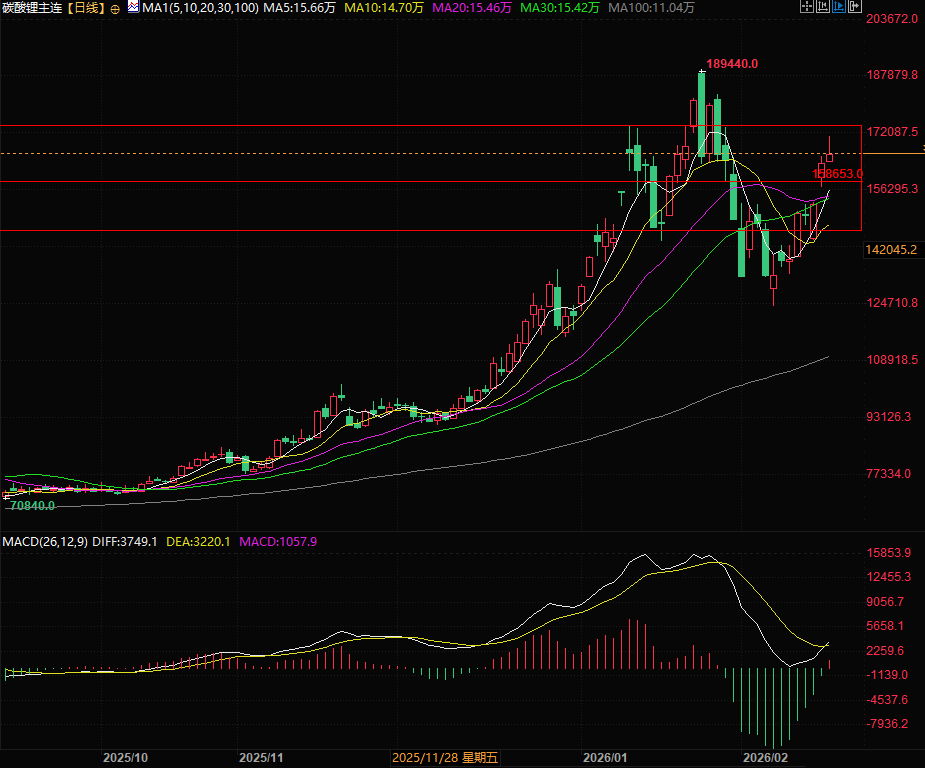
(Lithium carbonate futures daily chart, source: EasyForex)
As a core raw material for lithium carbonate production, the export restrictions on lithium concentrate quickly drew close attention from the global lithium carbonate trading market. As of February 25, the price of the main lithium carbonate futures contract was 166,480 yuan/ton, with a single-day increase of up to 6.5%, highlighting the market's sensitive response to the contraction in raw material supply.
The core motivation behind the ban: to close loopholes and accelerate industrial transformation.
The announcement clearly states that the core motivation for this emergency ban is to investigate and deal with long-standing irregularities and resource losses in the export process. The authorities will systematically restructure the export approval and supervision system to achieve compliant and transparent management of the entire mineral export process.
Mining Minister Winston Chitando emphasized that the ultimate goal of the policy is to promote the deep processing and value-added of domestic mineral resources, so that Zimbabwe can upgrade from a simple lithium concentrate supplier to a core economy participating in the global lithium carbonate and battery module value chain.
This demand aligns closely with the wave of resource nationalism on the African continent. Namibia and Botswana have introduced similar requirements for critical mineral processing, and South Africa has also focused on downstream deep processing through the Critical Minerals Strategy.
Key Position on the Supply Side: Africa's Lithium King Supports Global Raw Material Supply
Zimbabwe plays a crucial role in the global lithium carbonate raw material supply chain.
In 2025, Zimbabwe's spodumene concentrate exports reached 1.128 million tons, a year-on-year increase of 11%, ranking first in Africa. The vast majority of these exports were shipped to my country for processing into battery-grade lithium carbonate. As the world's largest consumer of lithium carbonate, my country relies on ore refining for 80% of its lithium carbonate production. Zimbabwe is one of the core sources of my country's lithium concentrate imports. In the first quarter of 2025 alone, exports to China amounted to 25,800 tons of lithium carbonate equivalent, accounting for approximately 15%-18% of China's total overseas lithium concentrate imports during the same period.
This structure of "highly concentrated upstream and single downstream flow" means that if Zimbabwean customs were to block the market, the "spot shortage" in the domestic spot market would come faster and more severely than in other parts of the world.
Transformation Challenges: Infrastructure Shortcomings and Price Fluctuations Test Supply Stability
However, the restructuring of the lithium carbonate industry chain still faces multiple challenges. Zimbabwe's unstable power supply and infrastructure bottlenecks such as a shortage of skilled technical personnel may delay the release of deep processing capacity, thereby affecting the stable supply of intermediate lithium carbonate products in the region.
Meanwhile, global lithium carbonate prices have been rising steadily since the second half of 2025, from a low of 58,000 yuan/ton in June to 167,800 yuan/ton in February 2026, an increase of nearly two times. Under the tight supply and demand balance, the contraction of raw material supply may further support the high price level, but the uncertainty of policy implementation also brings additional volatility risks to the transaction.
Global Impact: Restructuring of Transaction Logic, Supply Pattern Embracing a Three-Way Balance?
For the global lithium carbonate trading market, the impact of the Zimbabwe ban has transcended the scope of a single country's policy.
As a core supplier of lithium resources in Africa, its transformation from raw material exports to domestic processing is forcing the global lithium carbonate trade to shift from a "resource-oriented" to a "supply chain-oriented" model.
Market participants have begun to adjust their trading strategies, locking in existing raw material supplies through long-term agreements on the one hand, and increasing their focus on local processing capacity in Africa on the other. Dynamic pricing mechanisms are being used more and more widely in the lithium carbonate trade.
Industry experts say that Zimbabwe's experience provides a new model for resource-rich countries to participate in the lithium carbonate value chain, but its success hinges on its ability to quickly address infrastructure shortcomings and production capacity issues.
If the deep processing projects proceed smoothly, Africa may become a new trading center for intermediate lithium carbonate products, forming a three-way supply pattern with the South American "Lithium Triangle" and Australia. Conversely, disruptions in raw material supply may exacerbate the global supply and demand imbalance for lithium carbonate, pushing prices towards the 180,000-200,000 yuan/ton range.
This industrial transformation, which concerns the global lithium carbonate trading landscape, is becoming a key test of resource-rich countries' policy implementation capabilities and their adaptability to international capital.
(Lithium carbonate futures daily chart, source: EasyForex)
- Risk Warning and Disclaimer
- The market involves risk, and trading may not be suitable for all investors. This article is for reference only and does not constitute personal investment advice, nor does it take into account certain users’ specific investment objectives, financial situation, or other needs. Any investment decisions made based on this information are at your own risk.

