Unveiling the truth behind gold's repeated tests of 5200
2026-02-26 21:36:53
On Thursday, February 26th, during the North American trading session, spot gold traded around $5175 per ounce, with the market seemingly engaged in a breathtaking tug-of-war. Recently, gold prices have generally exhibited a high-level consolidation pattern, with bulls relentlessly attempting to break through the $5200 level, only to repeatedly fail at this crucial juncture. This repeated testing of the ups and downs has made the market appear anxious and sluggish, lacking a decisive catalyst in the short term, resulting in a sideways consolidation as the main trend.
However, this does not mean that the bulls have exhausted their strength. On the contrary, the undercurrent of risk aversion and the stubborn stickiness of inflation are building a solid bottom line for gold prices, significantly compressing the space for each pullback. Analysts believe that the current sideways movement is more like accumulating strength, waiting for the next trigger point.
Beneath this seemingly calm surface, the logic of macro pricing is quietly being restructured. The core drivers of gold prices remain tightly centered on real interest rates and the liquidity environment. Some institutions have astutely observed that if the Federal Reserve's policy focus further shifts towards its "maximum employment target," while the core personal consumption expenditure price index stubbornly remains near 3%, then the combination of declining nominal interest rate expectations and sticky inflation will inevitably limit the upside potential of real interest rates. For gold, a non-interest-bearing asset, a decrease in holding costs is undoubtedly a significant positive. Following this logic, the so-called "currency devaluation trade" could very well push gold prices to new historical highs, targeting around $5700 per ounce. Even if geopolitical tensions, tariff uncertainties, and investor allocation needs intertwine, causing a temporary cooling in market activity, this does not necessarily signal the start of a downward trend; rather, it may be the calm before the storm.
The market sentiment remains so cautious primarily due to the intense hedging between short-term variables. On one hand, geopolitical risk premiums continue to hang like a Damocles' sword over the market. The third round of US-Iran nuclear talks has begun in Geneva, with all parties stating their focus on the nuclear issue and sanctions easing. The outcome of these talks is highly unpredictable: a substantial breakthrough could instantly cool concerns about potential military conflict, rapidly squeezing out the risk premium embedded in gold and limiting its upward trajectory; conversely, if the negotiations fall short of expectations or even break down, panic buying could resurface, instantly igniting a market rally.
On the other hand, the repricing of inflation and growth expectations by tariffs is far from over. Officials have explicitly stated that tariffs will be raised to 15% if appropriate, while the previous 10% tariff officially took effect this week. As related legal disputes, following the US Supreme Court's ruling, have triggered a reassessment of the boundaries of policy tools, rising tariff expectations are reinforcing market concerns about inflation stickiness. This situation presents a complex two-way impact on gold: rising inflation expectations are inherently bullish for gold, but if this leads to a delay in interest rate cuts, a stronger dollar, and suppressed liquidity, it will pose a significant, albeit temporary, constraint on gold prices. This contradictory mindset of "wanting to guard against inflation while fearing deflation" is the root cause of the current moderately strong gold price around $5175, yet its inability to hold above $5200.
Subtle shifts in interest rate expectations are vividly demonstrating this constraining effect. Recently, market bets on near-term rate cuts have cooled significantly, with widespread expectations that the Federal Reserve will maintain interest rates unchanged at its March and April meetings. The previously considered high-probability June rate cut window has now become uncertain, with interest rate futures pricing indicating that July is more likely, with a probability of approximately 66%. Against this backdrop, the US dollar has gained support, thus severely limiting the upside potential for gold. From a technical perspective, the current market appears more like a high-level consolidation than a trend reversal. The area around $5200 has become a short-term watershed between bulls and bears; only a decisive break and hold above this level can reopen the upward channel and propel the price to higher levels.
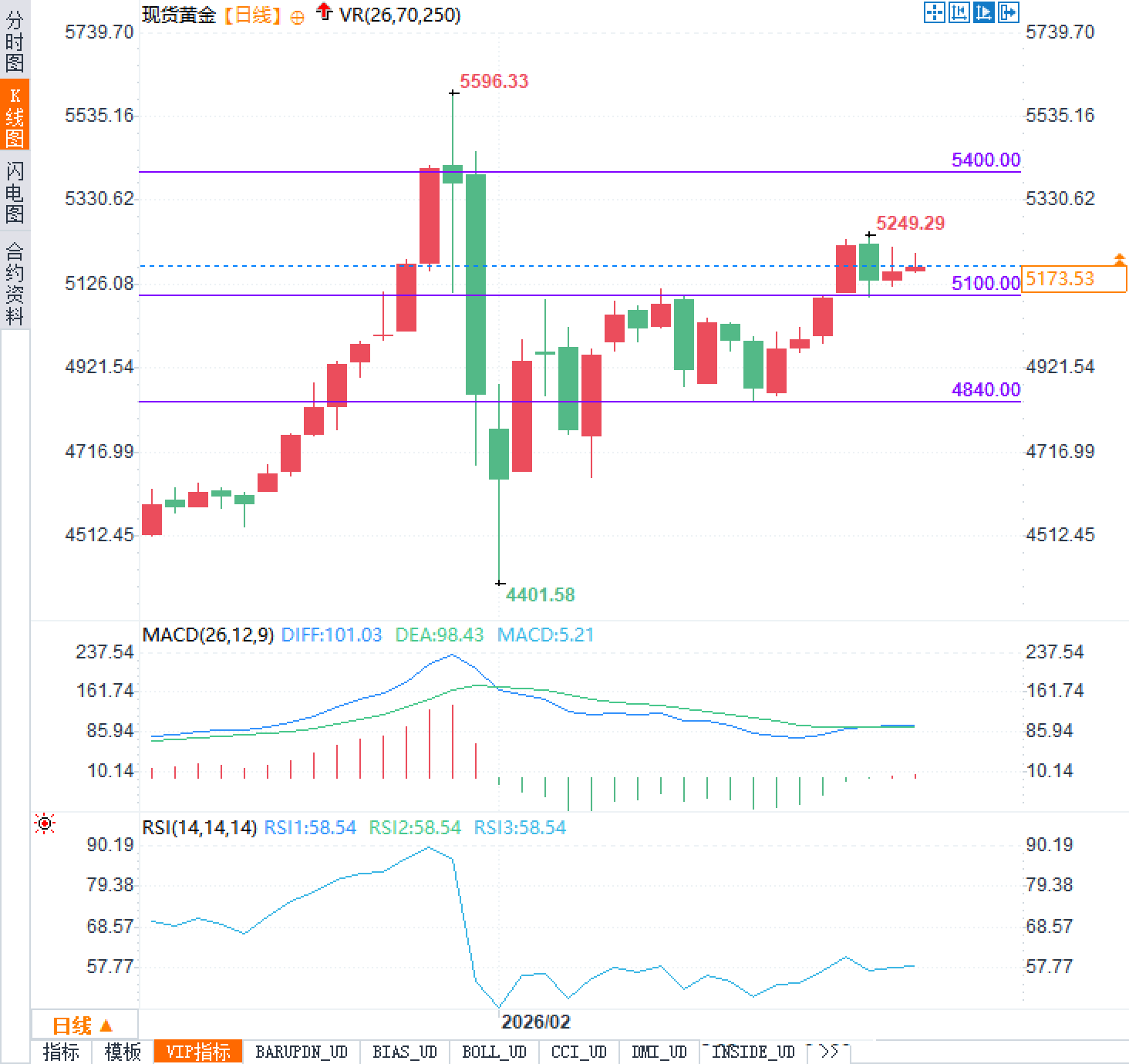
Based on common resistance and support levels on the chart, the area around $5400 can be considered one of the important resistance zones above, while $5100 is a crucial support level that must be held in the short term. If gold prices retrace but can stabilize in this area, it usually means that the bullish structure remains intact. Further down, the area around $4840 can be used as a reference for the medium-term defense line. Once broken, the trading range will shift downward and the retracement will be amplified.
However, this does not mean that the bulls have exhausted their strength. On the contrary, the undercurrent of risk aversion and the stubborn stickiness of inflation are building a solid bottom line for gold prices, significantly compressing the space for each pullback. Analysts believe that the current sideways movement is more like accumulating strength, waiting for the next trigger point.
Beneath this seemingly calm surface, the logic of macro pricing is quietly being restructured. The core drivers of gold prices remain tightly centered on real interest rates and the liquidity environment. Some institutions have astutely observed that if the Federal Reserve's policy focus further shifts towards its "maximum employment target," while the core personal consumption expenditure price index stubbornly remains near 3%, then the combination of declining nominal interest rate expectations and sticky inflation will inevitably limit the upside potential of real interest rates. For gold, a non-interest-bearing asset, a decrease in holding costs is undoubtedly a significant positive. Following this logic, the so-called "currency devaluation trade" could very well push gold prices to new historical highs, targeting around $5700 per ounce. Even if geopolitical tensions, tariff uncertainties, and investor allocation needs intertwine, causing a temporary cooling in market activity, this does not necessarily signal the start of a downward trend; rather, it may be the calm before the storm.
A Tale of Two Extremes: The Double Blow of Geopolitical Negotiations and Tariffs
The market sentiment remains so cautious primarily due to the intense hedging between short-term variables. On one hand, geopolitical risk premiums continue to hang like a Damocles' sword over the market. The third round of US-Iran nuclear talks has begun in Geneva, with all parties stating their focus on the nuclear issue and sanctions easing. The outcome of these talks is highly unpredictable: a substantial breakthrough could instantly cool concerns about potential military conflict, rapidly squeezing out the risk premium embedded in gold and limiting its upward trajectory; conversely, if the negotiations fall short of expectations or even break down, panic buying could resurface, instantly igniting a market rally.
On the other hand, the repricing of inflation and growth expectations by tariffs is far from over. Officials have explicitly stated that tariffs will be raised to 15% if appropriate, while the previous 10% tariff officially took effect this week. As related legal disputes, following the US Supreme Court's ruling, have triggered a reassessment of the boundaries of policy tools, rising tariff expectations are reinforcing market concerns about inflation stickiness. This situation presents a complex two-way impact on gold: rising inflation expectations are inherently bullish for gold, but if this leads to a delay in interest rate cuts, a stronger dollar, and suppressed liquidity, it will pose a significant, albeit temporary, constraint on gold prices. This contradictory mindset of "wanting to guard against inflation while fearing deflation" is the root cause of the current moderately strong gold price around $5175, yet its inability to hold above $5200.
Interest Rate Fog and Technical Defenses: The Final Script of the Battle Between Bulls and Bears
Subtle shifts in interest rate expectations are vividly demonstrating this constraining effect. Recently, market bets on near-term rate cuts have cooled significantly, with widespread expectations that the Federal Reserve will maintain interest rates unchanged at its March and April meetings. The previously considered high-probability June rate cut window has now become uncertain, with interest rate futures pricing indicating that July is more likely, with a probability of approximately 66%. Against this backdrop, the US dollar has gained support, thus severely limiting the upside potential for gold. From a technical perspective, the current market appears more like a high-level consolidation than a trend reversal. The area around $5200 has become a short-term watershed between bulls and bears; only a decisive break and hold above this level can reopen the upward channel and propel the price to higher levels.
Based on common resistance and support levels on the chart, the area around $5400 can be considered one of the important resistance zones above, while $5100 is a crucial support level that must be held in the short term. If gold prices retrace but can stabilize in this area, it usually means that the bullish structure remains intact. Further down, the area around $4840 can be used as a reference for the medium-term defense line. Once broken, the trading range will shift downward and the retracement will be amplified.
- Risk Warning and Disclaimer
- The market involves risk, and trading may not be suitable for all investors. This article is for reference only and does not constitute personal investment advice, nor does it take into account certain users’ specific investment objectives, financial situation, or other needs. Any investment decisions made based on this information are at your own risk.