A sudden black swan event! The Middle East "mass exodus" triggers panic and gold prices surge.
2026-02-27 21:49:12
On Friday (February 27), spot gold suddenly surged during the European and American trading sessions, rising by more than 1% and currently trading around 5215. According to Saudi Arabian sources on the 27th, security officials disclosed that a large number of American citizens left Iraq through Baghdad International Airport in the past 24 hours. This development has become the trigger for regional geopolitical concerns.
Previously, the United States had stated that if it were to take military action against Iran, it hoped Israel would strike first so that it could intervene in the form of aid. At the same time, Iran also made a strong statement that it was prepared for war. Amidst the tense situation, residents and officials received the news and chose to evacuate from Iraq.
The geopolitical situation in the Middle East has simultaneously entered a state of tension. As a key hub in the geopolitical game in the Middle East, Iraq and its surrounding areas were already in a sensitive state due to the stalemate in the US-Iran nuclear negotiations and the confrontation between regional forces. This large-scale evacuation of citizens has further amplified market speculation about potential escalation of security risks.

Coupled with the repeated negotiations on the US-Iran nuclear issue and the looming threat of regional armed conflict, the geopolitical risk premium in the Middle East has risen rapidly, creating a ripple effect of global geopolitical tensions with conflicts in many parts of Eurasia.
The current global geopolitical landscape has entered a highly sensitive phase, with the United States exerting strong pressure on Iran, Russia and Ukraine engaging in ongoing negotiations while fighting, and the border conflict between Pakistan and Afghanistan escalating rapidly. Coupled with the rapidly tightening security situation in the Middle East, these multiple risks have combined to fuel global risk aversion, becoming a key factor influencing market trends.
The resonance, coupled with news-driven stimuli, triggered an instantaneous reaction in gold prices.

(5-minute chart of spot gold)
Geopolitical conflicts in South Asia have escalated sharply, with a fierce standoff erupting on the border between Pakistan and Afghanistan. The two sides exchanged artillery fire, resulting in casualties. Pakistan announced a military operation, codenamed "Righteous Wrath," against the Taliban regime in Afghanistan, significantly increasing the risk of regional instability.
In the latest developments of the conflict, the Afghan Taliban launched an attack on Pakistani border positions on Thursday night, and Pakistan immediately launched Operation Righteous Wrath on Friday, bombing Afghan defense facilities in Kabul, Paktia province, and Kandahar province.
The Pakistani military claims to have destroyed 73 Taliban border posts and captured more than a dozen positions, while the Afghan side reports 13 soldiers killed and 22 wounded, and claims to have killed 55 Pakistani soldiers.
Looking back at the historical context, although Pakistan and Afghanistan have close economic and cultural ties, their historical relationship is complex.
Since the Taliban regained power in 2021, Pakistan has faced a surge in Islamist violence, with more than 1,200 people expected to die in armed attacks in 2025, double the number in 2021.
Pakistan has accused Afghanistan of harboring Pakistani Taliban militants and using weapons left behind by the US military during its withdrawal to launch attacks, while the Afghan Taliban denies the accusation.
Pakistan's defense minister said "patience has run out" and formally declared an "open war" with Afghanistan.
In terms of military strength, the two sides are vastly different: Pakistan has about 660,000 active military personnel and 300,000 paramilitary forces, equipped with American-made F-16s, French Mirage fighter jets and JF-17 fighter jets jointly produced by China and Pakistan, and also possesses nuclear weapons; the Afghan Taliban army has less than 200,000 people, lacks an air force, mainly relies on helicopters, transport planes and quadcopter drones left over from the Soviet era, and is good at guerrilla tactics.
Analysts warn the conflict could escalate further, with potential Afghan retaliation targeting Pakistani city centers, potentially allowing terrorist networks to operate. The International Crisis Group's South Asia director has recommended both sides resume negotiations and called for mediation from countries such as Turkey, Qatar, and Saudi Arabia. A Taliban spokesperson stated they still hope to resolve the issue through dialogue, but Pakistan has made it clear that it will launch another attack if the Taliban does not take concrete action.
Ukrainian President Volodymyr Zelenskyy announced on Thursday that Russia launched a large-scale attack on Ukraine overnight, deploying 420 drones and 39 missiles, including 11 ballistic missiles.
The attacks targeted key infrastructure and residential areas in eight regions of Ukraine, injuring dozens of people, including children. Official figures on the full extent of the casualties have not yet been released.
This military operation came just hours before the Geneva talks between US and Ukrainian envoys, marking the official start of the fifth year of the Russia-Ukraine conflict.
Zelenskyy spoke with US President Trump on Wednesday evening, expressing his gratitude for the US efforts to promote peace talks. The US-mediated Russia-Ukraine negotiations are still progressing, but the two sides remain deadlocked on the issue of Ukrainian territory claimed by Russia.
Zelensky has repeatedly called for a face-to-face summit with Russian President Vladimir Putin, but the Kremlin has only invited him to Moscow for negotiations, a proposal that Ukraine has rejected.
After completing consultations on the Iranian nuclear issue in Geneva, Trump's special envoys Steve Witkov and Jared Kushner turned to talks related to the Russia-Ukraine conflict. The two met with Ukrainian National Security and Defense Council Chairman Umerov and participated in the phone call between Trump and Zelensky.
Umerov stated that the special envoys from both sides will hold consultations on Uzbekistan's economic aid, post-war reconstruction, investment attraction pathways, and long-term cooperation frameworks, while also preparing for the next round of trilateral negotiations between Russia, the United States, and Ukraine, and exploring prisoner exchange programs.
Meanwhile, Russia and Ukraine reached a partial ceasefire agreement, and repair work began at Zaporizhia, Europe's largest nuclear power plant. The International Atomic Energy Agency (IAEA) officially announced on Friday that, with its assistance, Russia and Ukraine reached a partial ceasefire agreement, and the repair work coincides with the fourth anniversary of the Russia-Ukraine conflict.
The core objective of the ceasefire is to repair the 330 kV backup power supply line of the power station. Related mine clearance work is being carried out simultaneously to ensure the safety of the repair team.
As the conflict enters its fifth year, Russia faces an unfavorable start, with Ukrainian forces recently achieving their most significant battlefield advance since entering Russia's Kursk region in August 2024.
The repeated geopolitical maneuvering in various parts of the world has directly become a core pricing variable in the gold market.
In the Russia-Ukraine conflict, large-scale Russian airstrikes will quickly boost market risk aversion, providing upward support for gold prices; while the partial ceasefire agreement at the Zaporizhia nuclear power plant has temporarily alleviated nuclear safety risks and expectations of escalation of the conflict, causing gold to maintain high-level fluctuations near the key resistance level of $5,200.
The current gold market is experiencing intense competition between bulls and bears, with safe-haven buying and short-term profit-taking creating a balance. Going forward, it's crucial to monitor four key variables: substantive progress in the Geneva talks between Russia and Ukraine, the evolving situation on the Russian-Ukrainian battlefield, the progress of the Zaporizhia nuclear power plant repairs, and the risk of the conflict spreading to the Middle East and the Pakistan-Afghanistan border.
If conflict escalates again in any region or peace talks break down, gold's safe-haven appeal will be rapidly strengthened; if the ceasefire expands or peace talks make a breakthrough, the geopolitical risk premium will gradually fade, and gold prices will return to being dominated by US inflation data and the pace of Federal Reserve policy.
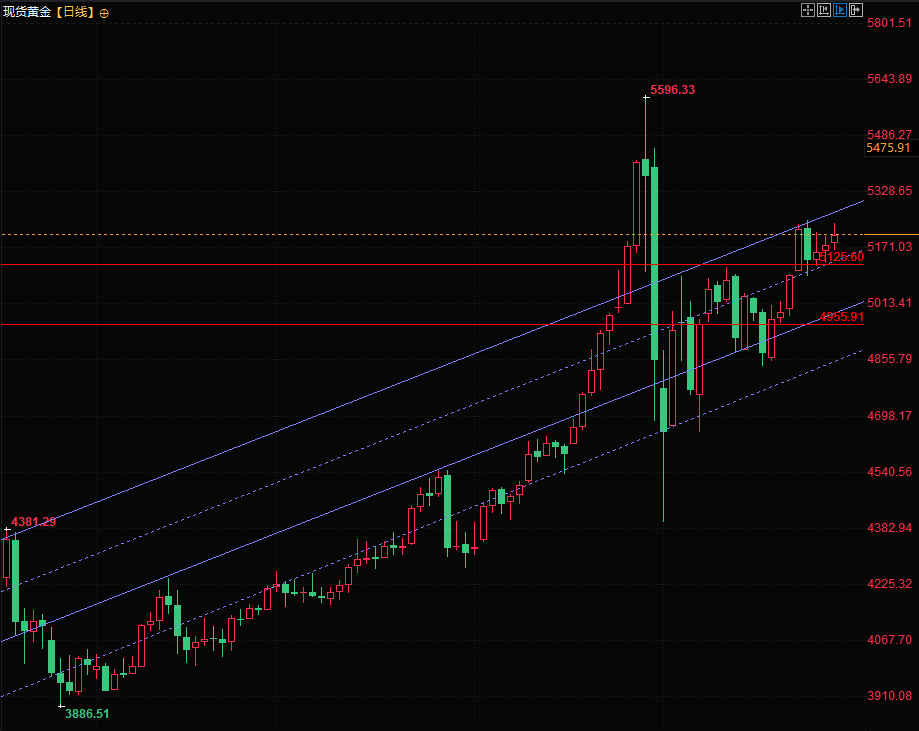
(Spot gold daily chart, source: FX678)
At 21:43 Beijing time, spot gold is currently trading at $5213 per ounce.
Previously, the United States had stated that if it were to take military action against Iran, it hoped Israel would strike first so that it could intervene in the form of aid. At the same time, Iran also made a strong statement that it was prepared for war. Amidst the tense situation, residents and officials received the news and chose to evacuate from Iraq.
The geopolitical situation in the Middle East has simultaneously entered a state of tension. As a key hub in the geopolitical game in the Middle East, Iraq and its surrounding areas were already in a sensitive state due to the stalemate in the US-Iran nuclear negotiations and the confrontation between regional forces. This large-scale evacuation of citizens has further amplified market speculation about potential escalation of security risks.
Coupled with the repeated negotiations on the US-Iran nuclear issue and the looming threat of regional armed conflict, the geopolitical risk premium in the Middle East has risen rapidly, creating a ripple effect of global geopolitical tensions with conflicts in many parts of Eurasia.
The current global geopolitical landscape has entered a highly sensitive phase, with the United States exerting strong pressure on Iran, Russia and Ukraine engaging in ongoing negotiations while fighting, and the border conflict between Pakistan and Afghanistan escalating rapidly. Coupled with the rapidly tightening security situation in the Middle East, these multiple risks have combined to fuel global risk aversion, becoming a key factor influencing market trends.
The resonance, coupled with news-driven stimuli, triggered an instantaneous reaction in gold prices.
(5-minute chart of spot gold)
Conflict escalates on Pakistan-Afghanistan border: Operation "Just Wrath" triggers regional unrest
Geopolitical conflicts in South Asia have escalated sharply, with a fierce standoff erupting on the border between Pakistan and Afghanistan. The two sides exchanged artillery fire, resulting in casualties. Pakistan announced a military operation, codenamed "Righteous Wrath," against the Taliban regime in Afghanistan, significantly increasing the risk of regional instability.
In the latest developments of the conflict, the Afghan Taliban launched an attack on Pakistani border positions on Thursday night, and Pakistan immediately launched Operation Righteous Wrath on Friday, bombing Afghan defense facilities in Kabul, Paktia province, and Kandahar province.
The Pakistani military claims to have destroyed 73 Taliban border posts and captured more than a dozen positions, while the Afghan side reports 13 soldiers killed and 22 wounded, and claims to have killed 55 Pakistani soldiers.
Looking back at the historical context, although Pakistan and Afghanistan have close economic and cultural ties, their historical relationship is complex.
Since the Taliban regained power in 2021, Pakistan has faced a surge in Islamist violence, with more than 1,200 people expected to die in armed attacks in 2025, double the number in 2021.
Pakistan has accused Afghanistan of harboring Pakistani Taliban militants and using weapons left behind by the US military during its withdrawal to launch attacks, while the Afghan Taliban denies the accusation.
Pakistan's defense minister said "patience has run out" and formally declared an "open war" with Afghanistan.
In terms of military strength, the two sides are vastly different: Pakistan has about 660,000 active military personnel and 300,000 paramilitary forces, equipped with American-made F-16s, French Mirage fighter jets and JF-17 fighter jets jointly produced by China and Pakistan, and also possesses nuclear weapons; the Afghan Taliban army has less than 200,000 people, lacks an air force, mainly relies on helicopters, transport planes and quadcopter drones left over from the Soviet era, and is good at guerrilla tactics.
Analysts warn the conflict could escalate further, with potential Afghan retaliation targeting Pakistani city centers, potentially allowing terrorist networks to operate. The International Crisis Group's South Asia director has recommended both sides resume negotiations and called for mediation from countries such as Turkey, Qatar, and Saudi Arabia. A Taliban spokesperson stated they still hope to resolve the issue through dialogue, but Pakistan has made it clear that it will launch another attack if the Taliban does not take concrete action.
Russia-Ukraine conflict: Fighting and negotiating simultaneously, nuclear security risks temporarily averted.
Ukrainian President Volodymyr Zelenskyy announced on Thursday that Russia launched a large-scale attack on Ukraine overnight, deploying 420 drones and 39 missiles, including 11 ballistic missiles.
The attacks targeted key infrastructure and residential areas in eight regions of Ukraine, injuring dozens of people, including children. Official figures on the full extent of the casualties have not yet been released.
This military operation came just hours before the Geneva talks between US and Ukrainian envoys, marking the official start of the fifth year of the Russia-Ukraine conflict.
Zelenskyy spoke with US President Trump on Wednesday evening, expressing his gratitude for the US efforts to promote peace talks. The US-mediated Russia-Ukraine negotiations are still progressing, but the two sides remain deadlocked on the issue of Ukrainian territory claimed by Russia.
Zelensky has repeatedly called for a face-to-face summit with Russian President Vladimir Putin, but the Kremlin has only invited him to Moscow for negotiations, a proposal that Ukraine has rejected.
After completing consultations on the Iranian nuclear issue in Geneva, Trump's special envoys Steve Witkov and Jared Kushner turned to talks related to the Russia-Ukraine conflict. The two met with Ukrainian National Security and Defense Council Chairman Umerov and participated in the phone call between Trump and Zelensky.
Umerov stated that the special envoys from both sides will hold consultations on Uzbekistan's economic aid, post-war reconstruction, investment attraction pathways, and long-term cooperation frameworks, while also preparing for the next round of trilateral negotiations between Russia, the United States, and Ukraine, and exploring prisoner exchange programs.
Meanwhile, Russia and Ukraine reached a partial ceasefire agreement, and repair work began at Zaporizhia, Europe's largest nuclear power plant. The International Atomic Energy Agency (IAEA) officially announced on Friday that, with its assistance, Russia and Ukraine reached a partial ceasefire agreement, and the repair work coincides with the fourth anniversary of the Russia-Ukraine conflict.
The core objective of the ceasefire is to repair the 330 kV backup power supply line of the power station. Related mine clearance work is being carried out simultaneously to ensure the safety of the repair team.
As the conflict enters its fifth year, Russia faces an unfavorable start, with Ukrainian forces recently achieving their most significant battlefield advance since entering Russia's Kursk region in August 2024.
Geopolitical risks resonate: Gold pricing logic is influenced by multiple situations.
The repeated geopolitical maneuvering in various parts of the world has directly become a core pricing variable in the gold market.
In the Russia-Ukraine conflict, large-scale Russian airstrikes will quickly boost market risk aversion, providing upward support for gold prices; while the partial ceasefire agreement at the Zaporizhia nuclear power plant has temporarily alleviated nuclear safety risks and expectations of escalation of the conflict, causing gold to maintain high-level fluctuations near the key resistance level of $5,200.
The current gold market is experiencing intense competition between bulls and bears, with safe-haven buying and short-term profit-taking creating a balance. Going forward, it's crucial to monitor four key variables: substantive progress in the Geneva talks between Russia and Ukraine, the evolving situation on the Russian-Ukrainian battlefield, the progress of the Zaporizhia nuclear power plant repairs, and the risk of the conflict spreading to the Middle East and the Pakistan-Afghanistan border.
If conflict escalates again in any region or peace talks break down, gold's safe-haven appeal will be rapidly strengthened; if the ceasefire expands or peace talks make a breakthrough, the geopolitical risk premium will gradually fade, and gold prices will return to being dominated by US inflation data and the pace of Federal Reserve policy.
(Spot gold daily chart, source: FX678)
At 21:43 Beijing time, spot gold is currently trading at $5213 per ounce.
- Risk Warning and Disclaimer
- The market involves risk, and trading may not be suitable for all investors. This article is for reference only and does not constitute personal investment advice, nor does it take into account certain users’ specific investment objectives, financial situation, or other needs. Any investment decisions made based on this information are at your own risk.