













Iranian Foreign Minister urgently calls for increased nuclear weapons production to counter landmines in the strait; OPEC+ urgently doubles production by 410,000 barrels to save the day.
2026-03-02 07:50:15
On Monday (March 2), during the Asian session, compared to spot gold which opened 1.5% higher, the extreme mismatch between supply and demand in the Strait of Hormuz and the overall crude oil market had a more pronounced impact on the market. US crude oil futures opened as high as 12.8%, but over the weekend, with the unexpected development of the US-Iran conflict and the unexpected progress of the war claimed by the US, coupled with the Iranian Foreign Minister's explicit statement that he had no intention of closing the Strait of Hormuz, crude oil experienced a surge followed by a decline and is currently trading around 72.72, up about 8.55%. At the same time, OPEC+ held its monthly meeting of eight OPEC+ oil-producing countries on oil production policy over the weekend.
Recent escalation of geopolitical conflicts in the Middle East has plunged the global oil market into a dual struggle between supply and demand and geopolitical risks. Iran's current foreign minister, a veteran diplomat, and former chief nuclear negotiator have clearly stated that Iran has no intention of closing the Strait of Hormuz, sending a signal of easing tensions along the energy shipping route. Meanwhile, to mitigate the risk of supply disruptions caused by the conflict, OPEC+ is planning a significant production increase, while the Strait of Hormuz is already experiencing ship congestion and soaring shipping costs, directly impacting the global energy transportation system.
Iran is a major oil producer in the region, producing about 3.3 million barrels of crude oil per day and exporting more than 2 million barrels per day. An explosion has been reported on Kharg Island, its core export hub.
The conflict has significantly impacted regional oil and gas production capacity, compounded by Israel's temporary shutdown of offshore natural gas facilities and the suspension of crude oil production in Iraq's Kurdish region.
Driven by geopolitical risk premiums, Brent crude oil prices also experienced a sharp rise followed by a decline.
The Strait of Hormuz, as the world's most crucial oil transportation route, carries 20% of the world's crude oil supply, and its shipping safety affects the entire oil market. Despite official statements from Iran regarding maintaining stability, the situation around the strait remains tense: shipping industry reports indicate that three oil tankers have been attacked and damaged in the waters off the Persian Gulf.
Meanwhile, this strait carries more than 20% of the world's crude oil shipping capacity, and the impact will be amplified significantly in the short term.
Shipping data reveals that over 200 vessels, including oil tankers and liquefied gas tankers, are stranded in the strait and surrounding waters, unable to navigate normally.
Due to a surge in security risks, mandatory war risk premiums in the region will be raised significantly, with an expected increase of 25% to 50%, directly driving up shipping costs in key waterways and further disrupting global energy trade flows.
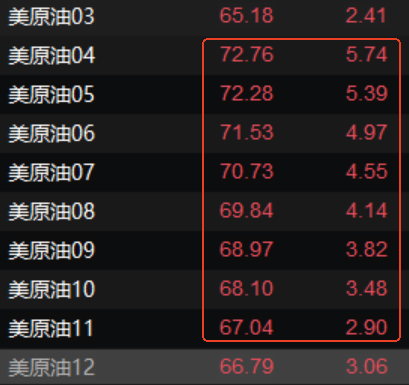
Short-term supply pressures on oil prices have also caused existing futures contracts to exhibit a clear backwardation pattern, with the near-month contract showing a significant premium.
Faced with supply concerns stemming from geopolitical conflicts, OPEC+ policy has undergone a major shift.
The alliance will hold a key meeting on Sunday to consider a resolution to significantly increase crude oil production, planning to raise daily crude oil output by up to 411,000 barrels in April, three times the previous expectation;
If market volatility intensifies, the production increase could reach as high as 548,000 barrels per day. In the first quarter of 2026, OPEC+ suspended production increases due to weak seasonal demand and previous oversupply pressures. Now, the escalating conflict between the US and Israel and Iran is pushing the alliance's focus to shift from oil price control to stabilizing market supply.
Saudi Arabia and the UAE have already increased their export efforts in advance. Saudi crude oil exports climbed to a near three-year high in February, and the UAE's main crude oil exports are also expected to increase in April. The combined export volumes of Iraq, Kuwait, and the UAE are also rising in advance, in anticipation of potential supply disruptions.
The strengthening of oil prices is rapidly being transmitted to downstream chemical products, resulting in cost-push price increases, which is a clear positive factor for the three major futures contracts: paraxylene (PX), styrene, and PVC.
As the core of the aromatics industry chain, PX directly benefits from the smooth transmission of crude oil-naphtha-PX. The increase in costs, coupled with the recovery in polyester demand, has led to a simultaneous rise in prices and operating rates, with a strong correlation between futures and spot prices. Styrene, on the other hand, relies on the upward trend of both benzene and ethylene as raw materials, with rigid cost support. Coupled with the expectation of resumption of work in downstream plastics and home appliance industries, its futures prices have shown significant elasticity.
Although PVC is mainly produced using the calcium carbide method, the rising international costs of the ethylene method, driven by oil prices, have pushed up the domestic price level, creating a cost scissors effect that benefits futures valuations. Against the backdrop of persistent geopolitical premiums for crude oil and tightening supply, all three major commodities are in a cost-driven upward cycle, further consolidating the overall strong performance of the chemical sector.
Previous articles have consistently highlighted opportunities in crude oil. Overall, the Iranian official statement has temporarily eased the market's extreme concerns about the blockade of shipping lanes, and crude oil prices may see a rapid and immediate realization of this trend. However, the real pressures of disrupted shipping in the Strait of Hormuz and rising shipping costs have not yet been alleviated, and oil prices will continue to fluctuate at high levels.
With the pace of OPEC+ production increases taking effect, geopolitical tensions in the Middle East will continue to dominate short-term crude oil market trends, and significant uncertainties remain regarding global energy supply and price fluctuations.
From a technical perspective, US crude oil has experienced a huge gap down. The area around 72.43 is a key watershed for bulls and bears in the near term. It is the 50% retracement price of the key bearish candlestick on June 23 last year. Support has been found near the gap since then.
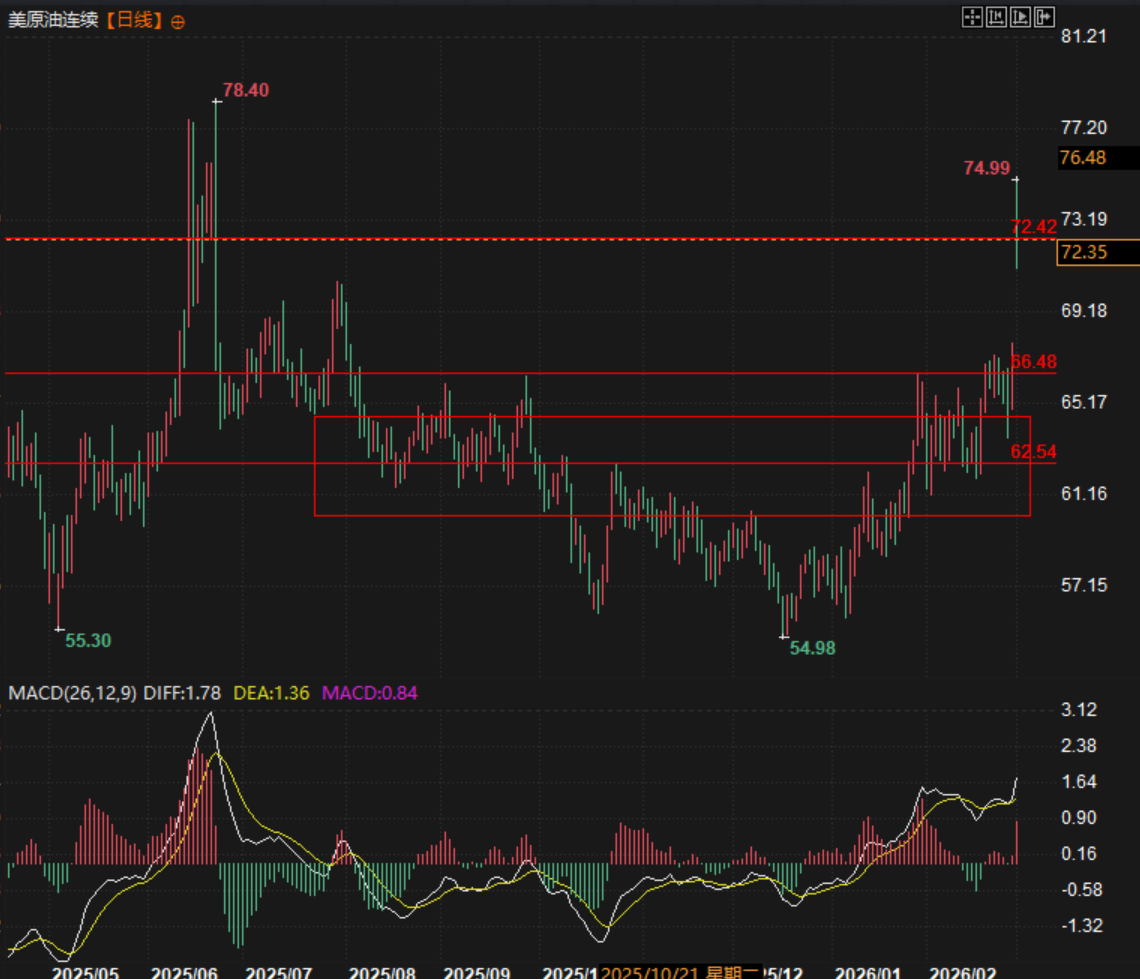
(US crude oil futures daily chart, source: FX678)
At 7:48 Beijing time, US crude oil is currently trading at $72.35 per barrel.
Recent escalation of geopolitical conflicts in the Middle East has plunged the global oil market into a dual struggle between supply and demand and geopolitical risks. Iran's current foreign minister, a veteran diplomat, and former chief nuclear negotiator have clearly stated that Iran has no intention of closing the Strait of Hormuz, sending a signal of easing tensions along the energy shipping route. Meanwhile, to mitigate the risk of supply disruptions caused by the conflict, OPEC+ is planning a significant production increase, while the Strait of Hormuz is already experiencing ship congestion and soaring shipping costs, directly impacting the global energy transportation system.
Geopolitical shocks: Regional production capacity disrupted, crude oil prices surge.
Iran is a major oil producer in the region, producing about 3.3 million barrels of crude oil per day and exporting more than 2 million barrels per day. An explosion has been reported on Kharg Island, its core export hub.
The conflict has significantly impacted regional oil and gas production capacity, compounded by Israel's temporary shutdown of offshore natural gas facilities and the suspension of crude oil production in Iraq's Kurdish region.
Driven by geopolitical risk premiums, Brent crude oil prices also experienced a sharp rise followed by a decline.
Navigational warning: Shipping in the Strait of Hormuz is disrupted, and insurance costs are soaring.
The Strait of Hormuz, as the world's most crucial oil transportation route, carries 20% of the world's crude oil supply, and its shipping safety affects the entire oil market. Despite official statements from Iran regarding maintaining stability, the situation around the strait remains tense: shipping industry reports indicate that three oil tankers have been attacked and damaged in the waters off the Persian Gulf.
Meanwhile, this strait carries more than 20% of the world's crude oil shipping capacity, and the impact will be amplified significantly in the short term.
Shipping data reveals that over 200 vessels, including oil tankers and liquefied gas tankers, are stranded in the strait and surrounding waters, unable to navigate normally.
Due to a surge in security risks, mandatory war risk premiums in the region will be raised significantly, with an expected increase of 25% to 50%, directly driving up shipping costs in key waterways and further disrupting global energy trade flows.
Short-term supply pressures on oil prices have also caused existing futures contracts to exhibit a clear backwardation pattern, with the near-month contract showing a significant premium.
Policy shift: OPEC+ urgently increases production to hedge against supply risks
Faced with supply concerns stemming from geopolitical conflicts, OPEC+ policy has undergone a major shift.
The alliance will hold a key meeting on Sunday to consider a resolution to significantly increase crude oil production, planning to raise daily crude oil output by up to 411,000 barrels in April, three times the previous expectation;
If market volatility intensifies, the production increase could reach as high as 548,000 barrels per day. In the first quarter of 2026, OPEC+ suspended production increases due to weak seasonal demand and previous oversupply pressures. Now, the escalating conflict between the US and Israel and Iran is pushing the alliance's focus to shift from oil price control to stabilizing market supply.
Saudi Arabia and the UAE have already increased their export efforts in advance. Saudi crude oil exports climbed to a near three-year high in February, and the UAE's main crude oil exports are also expected to increase in April. The combined export volumes of Iraq, Kuwait, and the UAE are also rising in advance, in anticipation of potential supply disruptions.
Transmission effect: Oil prices drive downstream demand, benefiting PX, styrene, and PVC futures prices.
The strengthening of oil prices is rapidly being transmitted to downstream chemical products, resulting in cost-push price increases, which is a clear positive factor for the three major futures contracts: paraxylene (PX), styrene, and PVC.
As the core of the aromatics industry chain, PX directly benefits from the smooth transmission of crude oil-naphtha-PX. The increase in costs, coupled with the recovery in polyester demand, has led to a simultaneous rise in prices and operating rates, with a strong correlation between futures and spot prices. Styrene, on the other hand, relies on the upward trend of both benzene and ethylene as raw materials, with rigid cost support. Coupled with the expectation of resumption of work in downstream plastics and home appliance industries, its futures prices have shown significant elasticity.
Although PVC is mainly produced using the calcium carbide method, the rising international costs of the ethylene method, driven by oil prices, have pushed up the domestic price level, creating a cost scissors effect that benefits futures valuations. Against the backdrop of persistent geopolitical premiums for crude oil and tightening supply, all three major commodities are in a cost-driven upward cycle, further consolidating the overall strong performance of the chemical sector.
Market Summary
Previous articles have consistently highlighted opportunities in crude oil. Overall, the Iranian official statement has temporarily eased the market's extreme concerns about the blockade of shipping lanes, and crude oil prices may see a rapid and immediate realization of this trend. However, the real pressures of disrupted shipping in the Strait of Hormuz and rising shipping costs have not yet been alleviated, and oil prices will continue to fluctuate at high levels.
With the pace of OPEC+ production increases taking effect, geopolitical tensions in the Middle East will continue to dominate short-term crude oil market trends, and significant uncertainties remain regarding global energy supply and price fluctuations.
From a technical perspective, US crude oil has experienced a huge gap down. The area around 72.43 is a key watershed for bulls and bears in the near term. It is the 50% retracement price of the key bearish candlestick on June 23 last year. Support has been found near the gap since then.
(US crude oil futures daily chart, source: FX678)
At 7:48 Beijing time, US crude oil is currently trading at $72.35 per barrel.
- Risk Warning and Disclaimer
- The market involves risk, and trading may not be suitable for all investors. This article is for reference only and does not constitute personal investment advice, nor does it take into account certain users’ specific investment objectives, financial situation, or other needs. Any investment decisions made based on this information are at your own risk.

