













Crude oil trading alert: Geopolitical tensions have pushed oil prices sharply higher; be wary of further amplification of volatility.
2026-03-02 09:11:06
On Monday, West Texas Intermediate (WTI) crude oil opened sharply higher, rising by more than 5% and quickly breaking through the $72 mark. It then retreated slightly and is currently trading around $71, with a significant increase in short-term volatility, which also shows strong bullish momentum.
The core driver of this round of market movements stems from the sudden deterioration of the situation in the Middle East. The US and Israel launched military strikes against Iran over the weekend, escalating regional tensions to a new level. Subsequently, Iran announced a suspension of shipping activities through the Strait of Hormuz.

The Strait of Hormuz handles more than 20% of global crude oil shipments and is one of the most critical hubs in the international energy supply chain. Once shipping is disrupted, market concerns about supply disruptions escalate rapidly, and risk premiums rise significantly.
Market research indicates that most tanker owners, oil companies, and trading organizations have suspended the transport of crude oil, fuel oil, and liquefied natural gas through the Strait of Hormuz. This move has exacerbated expectations of tight supply and further strengthened the upward momentum of oil prices.
US President Trump stated that he would continue military operations until the established objectives were achieved. This statement was interpreted by the market as indicating that the conflict was unlikely to ease in the short term, thus increasing the upside risk for oil prices.
Meanwhile, another piece of news from the supply side has also attracted attention. OPEC+ agreed to increase production by 206,000 barrels per day in April, higher than the market had previously expected. Theoretically, this production increase should help alleviate some supply concerns, but its impact is relatively limited given the current geopolitical tensions.
In the short term, WTI's price movement will continue to be dominated by geopolitical tensions. If the conflict continues to escalate or shipping disruptions are prolonged, oil prices may rise further; however, in the absence of new signs of escalation, some long positions may choose to take profits, triggering a technical correction.
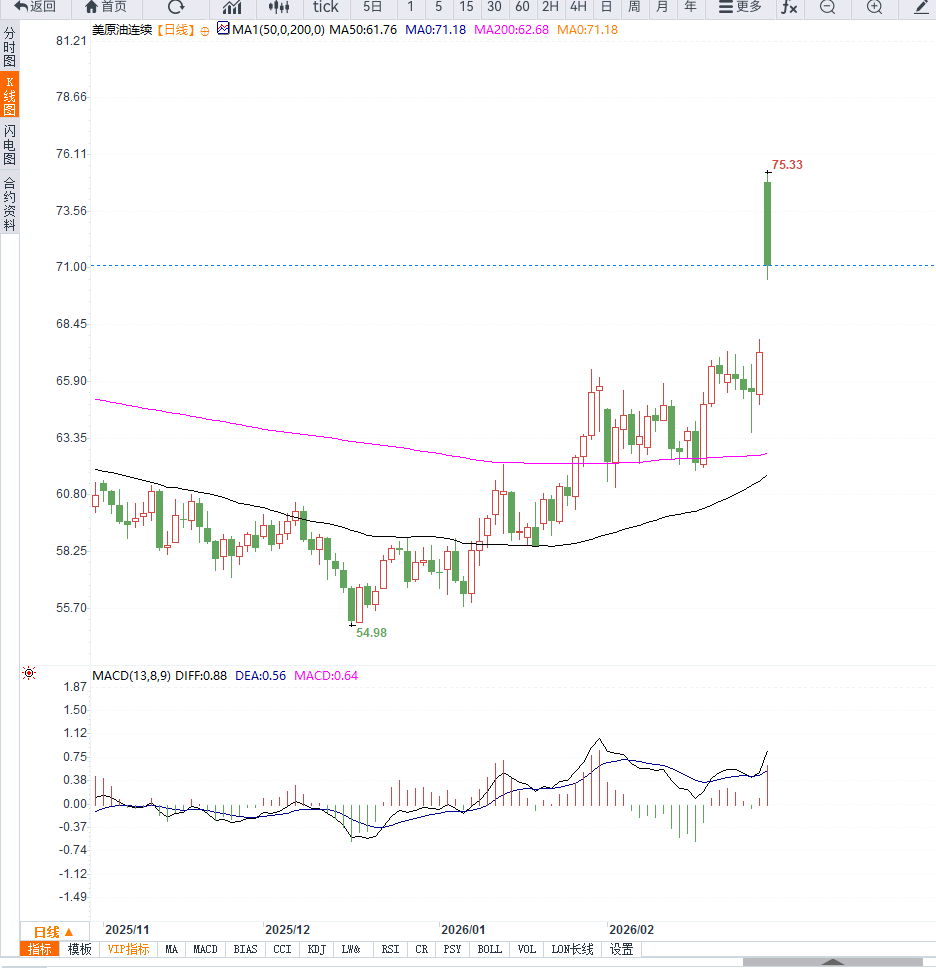
From the daily chart, WTI had previously been oscillating between $65 and $72. This recent gap-up breakout above the key resistance level of $72 formed a clear upward breakout structure. The current price pullback to above $71 indicates that the bulls have regained control of the short-term trend.
On the daily chart, the RSI is rising rapidly and approaching the overbought zone, indicating strong bullish momentum but also a risk of short-term pullback. The MACD has formed a golden cross and is expanding, suggesting that an upward trend is forming. If the bullish momentum continues, the initial resistance level to watch is $74.50, followed by the $76.80 area.
On the downside, $70 has transformed from previous resistance into the first support level; a break below this level could lead to a gap fill, with further support levels around $69.00 and $67.50. In the short term, oil prices may enter a period of high volatility.
If profit-taking occurs, a pullback to $70 to confirm support will be a key point to watch. If it holds above this level, the medium-term upward trend is likely to continue.
Editor's Note:
The core of this round of oil price increases lies in the "risk premium" rather than the fundamental supply and demand situation itself. Although the slight increase in OPEC+ production has a certain buffering effect on the supply side, the market is more concerned about potential supply disruptions before the transportation risks in the Strait of Hormuz are eliminated.
Historically, oil price surges triggered by geopolitical conflicts are often driven by sentiment, and their duration depends on whether the conflict substantially impacts export volumes. If the situation drags on, the central oil price may rise; however, if tensions ease quickly, prices may revert to fundamental factors.
Closely monitoring developments and air traffic patterns will be key to determining the next direction of oil prices.
The core driver of this round of market movements stems from the sudden deterioration of the situation in the Middle East. The US and Israel launched military strikes against Iran over the weekend, escalating regional tensions to a new level. Subsequently, Iran announced a suspension of shipping activities through the Strait of Hormuz.
The Strait of Hormuz handles more than 20% of global crude oil shipments and is one of the most critical hubs in the international energy supply chain. Once shipping is disrupted, market concerns about supply disruptions escalate rapidly, and risk premiums rise significantly.
Market research indicates that most tanker owners, oil companies, and trading organizations have suspended the transport of crude oil, fuel oil, and liquefied natural gas through the Strait of Hormuz. This move has exacerbated expectations of tight supply and further strengthened the upward momentum of oil prices.
US President Trump stated that he would continue military operations until the established objectives were achieved. This statement was interpreted by the market as indicating that the conflict was unlikely to ease in the short term, thus increasing the upside risk for oil prices.
Meanwhile, another piece of news from the supply side has also attracted attention. OPEC+ agreed to increase production by 206,000 barrels per day in April, higher than the market had previously expected. Theoretically, this production increase should help alleviate some supply concerns, but its impact is relatively limited given the current geopolitical tensions.
In the short term, WTI's price movement will continue to be dominated by geopolitical tensions. If the conflict continues to escalate or shipping disruptions are prolonged, oil prices may rise further; however, in the absence of new signs of escalation, some long positions may choose to take profits, triggering a technical correction.
From the daily chart, WTI had previously been oscillating between $65 and $72. This recent gap-up breakout above the key resistance level of $72 formed a clear upward breakout structure. The current price pullback to above $71 indicates that the bulls have regained control of the short-term trend.
On the daily chart, the RSI is rising rapidly and approaching the overbought zone, indicating strong bullish momentum but also a risk of short-term pullback. The MACD has formed a golden cross and is expanding, suggesting that an upward trend is forming. If the bullish momentum continues, the initial resistance level to watch is $74.50, followed by the $76.80 area.
On the downside, $70 has transformed from previous resistance into the first support level; a break below this level could lead to a gap fill, with further support levels around $69.00 and $67.50. In the short term, oil prices may enter a period of high volatility.
If profit-taking occurs, a pullback to $70 to confirm support will be a key point to watch. If it holds above this level, the medium-term upward trend is likely to continue.
Editor's Note:
The core of this round of oil price increases lies in the "risk premium" rather than the fundamental supply and demand situation itself. Although the slight increase in OPEC+ production has a certain buffering effect on the supply side, the market is more concerned about potential supply disruptions before the transportation risks in the Strait of Hormuz are eliminated.
Historically, oil price surges triggered by geopolitical conflicts are often driven by sentiment, and their duration depends on whether the conflict substantially impacts export volumes. If the situation drags on, the central oil price may rise; however, if tensions ease quickly, prices may revert to fundamental factors.
Closely monitoring developments and air traffic patterns will be key to determining the next direction of oil prices.
- Risk Warning and Disclaimer
- The market involves risk, and trading may not be suitable for all investors. This article is for reference only and does not constitute personal investment advice, nor does it take into account certain users’ specific investment objectives, financial situation, or other needs. Any investment decisions made based on this information are at your own risk.

