Stop chasing the highs! Top analysts reveal: Gold and silver are about to experience another sharp drop, but uncertainties surrounding Iranian missiles and tariffs are quietly forming a bottom!
2026-03-03 11:30:58
Amidst continued volatility in the global precious metals market, Heraeus' latest report offers investors insightful perspectives. The report points out that while gold and silver prices have recently experienced sharp rebounds and pullbacks, historical experience suggests they still have room to fall further before reaching a true bottom. However, geopolitical tensions stemming from the Iranian conflict and uncertainty surrounding US trade tariffs are providing some support for gold prices. Meanwhile, the silver market is benefiting from continued favor from ETF investors. This analysis not only reviews past market patterns but also incorporates current international events and economic dynamics to provide a rational outlook on future trends. Overall, while short-term volatility in the gold and silver markets presents challenges, the long-term fundamentals remain solid, and investors should be wary of the fading of excessive optimism.
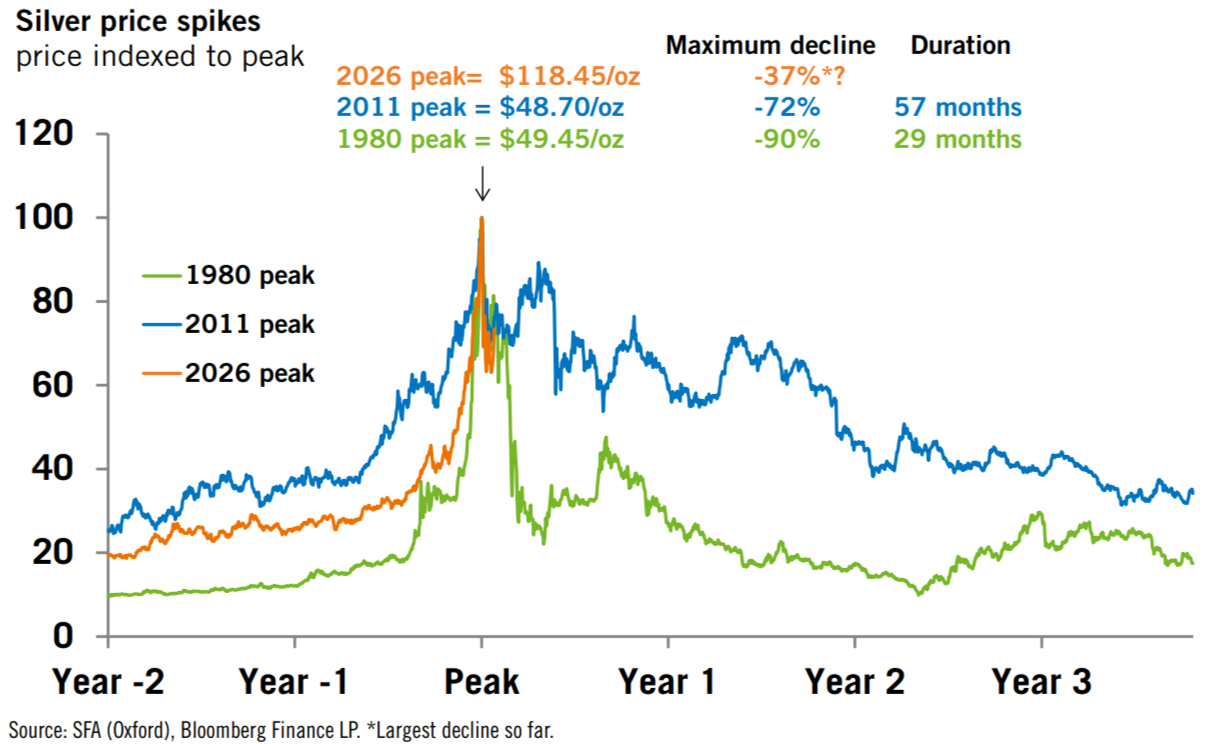
Looking back at the historical trajectory of the precious metals market, Heraeus analysts emphasize that after a rapid rise, gold and silver prices often face a long period of adjustment. For example, since the beginning of 2025, silver prices surged 72% in one month, with a cumulative increase of 322%; during the same period, gold prices rose by 30% and 115%, respectively. This sharp rebound came to an abrupt halt at the end of January, followed by a significant drop in silver prices, but they quickly rebounded to new highs in February, equivalent to a 50% retracement of the previous decline.
In contrast, gold has performed much stronger, retracing approximately 70% of its losses. Analysts warn that this pattern is not isolated. Back in 1980 and 2011, silver prices approached peaks of $50/ounce, followed by significant declines over the next few years. Historically, after numerous extreme rallies, prices have typically fallen by 40% to 70%, with the bottoming process potentially taking months or even years. The only exception was the mid-stage of the 2006 bull market, where a 35% drop occurred in just one month, but this was a rapid and moderate correction. While the current 37% drop in silver over a week aligns with historical patterns, analysts believe that a longer period and lower price levels are needed to completely eliminate excessive market optimism. This historical lesson reminds investors that the volatility of gold and silver, especially the higher volatility of silver, makes short-term trading risky, while long-term holdings should be based on solid fundamentals.
Geopolitical risks have become a key factor driving short-term price movements in precious metals. Last weekend, the US and Israel launched missile attacks on Iran, prompting retaliatory strikes against Israel and several Gulf states. This event quickly ignited risk aversion in the market, causing oil prices to jump sharply and global stock markets to generally fall by 1 to 2 percentage points. As a traditional safe-haven asset, gold prices rose accordingly, the US dollar was also boosted, and other precious metals followed suit.
Heraeus analysts pointed out that the United States has strengthened its military deployment in the Middle East in recent years, so some of the risks have already been reflected in gold prices – gold prices rebounded by more than 10% in February from the sharp drop at the end of January.
However, once the hostilities in the Gulf subside, the sustainability of price support will depend on the final settlement. If the conflict escalates or becomes protracted, gold prices may remain high; conversely, if it subsides quickly, the market may shift its focus to assessing economic fundamentals. This uncertainty not only amplifies short-term volatility but could also impact global supply chains and energy costs, indirectly increasing the attractiveness of precious metals. Investors should closely monitor developments in the Middle East to identify potential buying opportunities.
Beyond geopolitical risks, changes in US domestic policy have further exacerbated market uncertainty. The recent ruling by the US Supreme Court that President Trump lacks the power to impose most trade tariffs directly undermines the existing trade framework. Although tariffs under Section 232 (such as those on automobile imports) remain in effect, the president quickly moved to another piece of legislation to implement a comprehensive 10% tariff. This new policy is valid for 150 days and will face adjustments unless extended by Congress. This not only casts doubt on several trade agreements but also alters the cost structure of US importers.
Heraeus analysts believe that this ruling and its follow-up measures will amplify global economic uncertainty, potentially stimulating safe-haven demand and thus providing additional support for gold prices. In the long term, the recurring tariff policies could impact manufacturing and consumer confidence, thereby affecting investment demand for precious metals. Against this backdrop, investors need to assess the risks of an escalating trade war and consider its potential ripple effects on inflation and economic growth.
Moving upstream in the supply chain, the Heraeus report also focused on the operational dynamics of major mining companies.
For example, Newmont's gold production is projected to decline by 600,000 ounces to 5.3 million ounces in 2026 due to planned mining sequences. This short-term decline is primarily driven by project transitions, but the company is optimistic about 2027, anticipating a return to growth and setting a long-term target of 6 million ounces. Factors supporting this growth include the gradual commissioning of the Ahafo North project in Ghana, the completion of stripping work at the Boddington mine (leading to access to higher-grade ore layers), and the 2027 completion of the Tanami Expansion 2 project. These initiatives not only improve production efficiency but also strengthen Newmont's competitiveness in the global gold market.
Analysts believe that while short-term production fluctuations may cause supply pressure, long-term growth will stabilize market supply and mitigate downside risks to prices. This dynamic reminds investors that precious metal prices are not only driven by demand but also heavily influenced by the mining production cycle.
At the time of the report's release, the spot market showed that gold and silver prices were in a correction phase. Gold briefly broke through $5,400 per ounce on Monday (March 2nd) but subsequently fell back to a new intraday low of around $5,261, closing at $5,321.97 per ounce, a daily gain of only 0.80%. Silver's performance was more dramatic, surging above $96 per ounce during the Asian and European sessions, but then following gold's decline, falling as much as 7.5% to $86.47 per ounce. This immediate market movement reflects the market's sensitive reaction to geopolitical risks and also exposes the fragility of speculative sentiment.
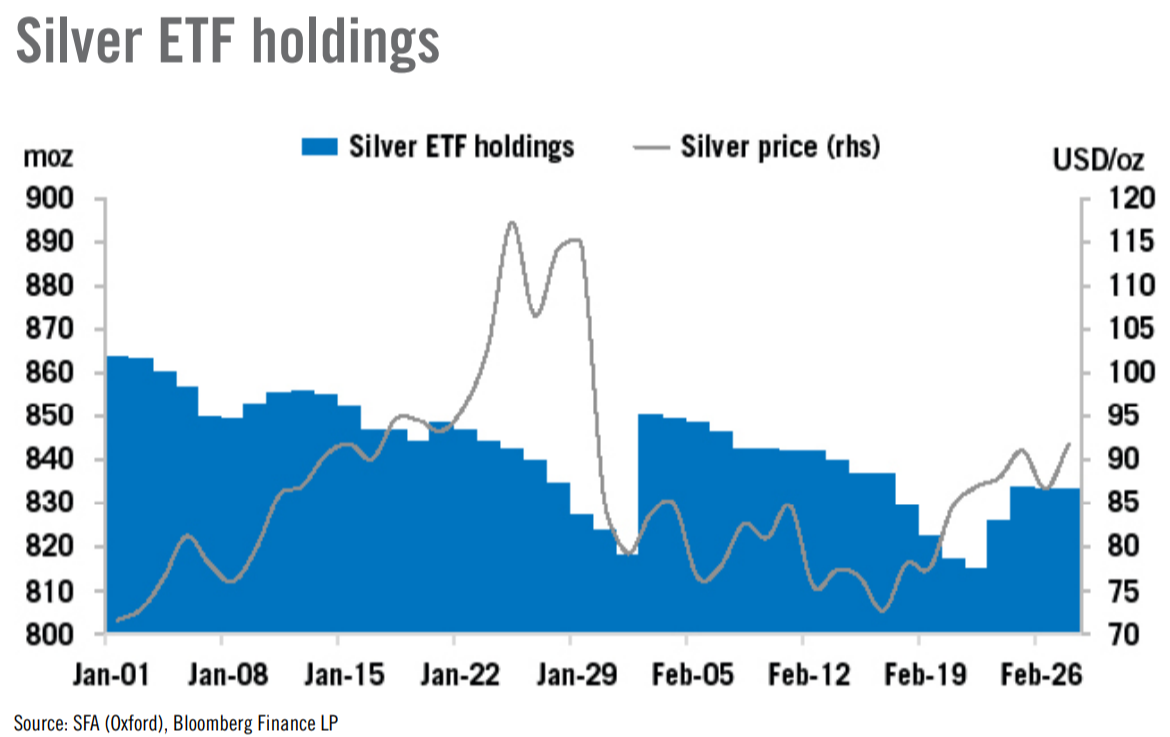
One bright spot in the silver market is the continued enthusiasm of ETF investors. Last week, global silver ETF holdings increased by more than 18 million ounces, with the price rebound attracting more inflows. Nevertheless, total holdings remain at 834 million ounces, down from 864 million ounces at the beginning of the year and 870 million ounces at the end of December. This indicates that while the short-term recovery has boosted confidence, overall holdings have not yet returned to their peak.
Meanwhile, the Chinese market is also adjusting to cope with volatility: the Shanghai Gold Exchange (SGE) has lowered its margin requirements for silver from 27% to 24% and its daily price fluctuation limit to 23%; the requirements for gold have also been reduced by 3 percentage points to 18% and 17%, respectively. These measures aim to improve liquidity, but analysts point out that margin levels remain high and may need to be further reduced to significantly stimulate trading activity. This combination of investor behavior and regulatory adjustments highlights the resilience of the silver market but also warns of potential liquidity risks.
In conclusion, while gold and silver prices face further downward pressure, the conflict with Iran, geopolitical risks, and tariff uncertainties are providing a supporting floor. Historical patterns, economic dynamics, and market behavior have collectively shaped this complex landscape. Investors should remain cautious and focus on long-term fundamental stability rather than short-term speculation. Looking ahead, if risk events ease, gold and silver may enter a healthier period of adjustment, providing opportunities for rational investment.
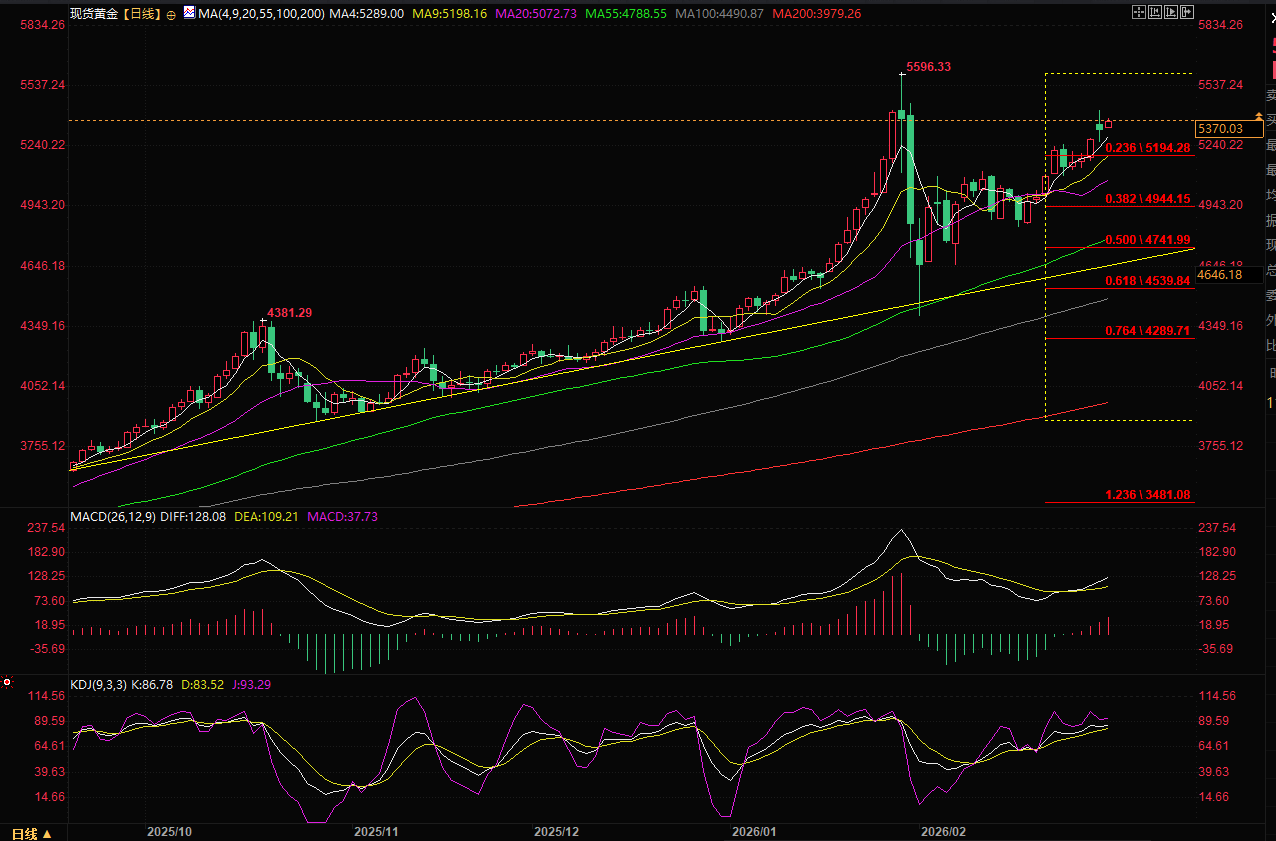
(Spot gold daily chart, source: FX678)
At 11:28 Beijing time, spot gold was trading at $5,368.30 per ounce.
Historical price action serves as a warning: potential pullbacks after gold and silver price rebounds.
Looking back at the historical trajectory of the precious metals market, Heraeus analysts emphasize that after a rapid rise, gold and silver prices often face a long period of adjustment. For example, since the beginning of 2025, silver prices surged 72% in one month, with a cumulative increase of 322%; during the same period, gold prices rose by 30% and 115%, respectively. This sharp rebound came to an abrupt halt at the end of January, followed by a significant drop in silver prices, but they quickly rebounded to new highs in February, equivalent to a 50% retracement of the previous decline.
In contrast, gold has performed much stronger, retracing approximately 70% of its losses. Analysts warn that this pattern is not isolated. Back in 1980 and 2011, silver prices approached peaks of $50/ounce, followed by significant declines over the next few years. Historically, after numerous extreme rallies, prices have typically fallen by 40% to 70%, with the bottoming process potentially taking months or even years. The only exception was the mid-stage of the 2006 bull market, where a 35% drop occurred in just one month, but this was a rapid and moderate correction. While the current 37% drop in silver over a week aligns with historical patterns, analysts believe that a longer period and lower price levels are needed to completely eliminate excessive market optimism. This historical lesson reminds investors that the volatility of gold and silver, especially the higher volatility of silver, makes short-term trading risky, while long-term holdings should be based on solid fundamentals.
Support from Geopolitical Storms: The Immediate Impact of the Iranian Conflict on Gold Prices
Geopolitical risks have become a key factor driving short-term price movements in precious metals. Last weekend, the US and Israel launched missile attacks on Iran, prompting retaliatory strikes against Israel and several Gulf states. This event quickly ignited risk aversion in the market, causing oil prices to jump sharply and global stock markets to generally fall by 1 to 2 percentage points. As a traditional safe-haven asset, gold prices rose accordingly, the US dollar was also boosted, and other precious metals followed suit.
Heraeus analysts pointed out that the United States has strengthened its military deployment in the Middle East in recent years, so some of the risks have already been reflected in gold prices – gold prices rebounded by more than 10% in February from the sharp drop at the end of January.
However, once the hostilities in the Gulf subside, the sustainability of price support will depend on the final settlement. If the conflict escalates or becomes protracted, gold prices may remain high; conversely, if it subsides quickly, the market may shift its focus to assessing economic fundamentals. This uncertainty not only amplifies short-term volatility but could also impact global supply chains and energy costs, indirectly increasing the attractiveness of precious metals. Investors should closely monitor developments in the Middle East to identify potential buying opportunities.
Trade Policy Fog: Tariff Rulings Exacerbate Economic Uncertainty
Beyond geopolitical risks, changes in US domestic policy have further exacerbated market uncertainty. The recent ruling by the US Supreme Court that President Trump lacks the power to impose most trade tariffs directly undermines the existing trade framework. Although tariffs under Section 232 (such as those on automobile imports) remain in effect, the president quickly moved to another piece of legislation to implement a comprehensive 10% tariff. This new policy is valid for 150 days and will face adjustments unless extended by Congress. This not only casts doubt on several trade agreements but also alters the cost structure of US importers.
Heraeus analysts believe that this ruling and its follow-up measures will amplify global economic uncertainty, potentially stimulating safe-haven demand and thus providing additional support for gold prices. In the long term, the recurring tariff policies could impact manufacturing and consumer confidence, thereby affecting investment demand for precious metals. Against this backdrop, investors need to assess the risks of an escalating trade war and consider its potential ripple effects on inflation and economic growth.
Outlook for Mining Giants: Newmont's Production Plans and Growth Forecasts
Moving upstream in the supply chain, the Heraeus report also focused on the operational dynamics of major mining companies.
For example, Newmont's gold production is projected to decline by 600,000 ounces to 5.3 million ounces in 2026 due to planned mining sequences. This short-term decline is primarily driven by project transitions, but the company is optimistic about 2027, anticipating a return to growth and setting a long-term target of 6 million ounces. Factors supporting this growth include the gradual commissioning of the Ahafo North project in Ghana, the completion of stripping work at the Boddington mine (leading to access to higher-grade ore layers), and the 2027 completion of the Tanami Expansion 2 project. These initiatives not only improve production efficiency but also strengthen Newmont's competitiveness in the global gold market.
Analysts believe that while short-term production fluctuations may cause supply pressure, long-term growth will stabilize market supply and mitigate downside risks to prices. This dynamic reminds investors that precious metal prices are not only driven by demand but also heavily influenced by the mining production cycle.
Current Market Situation: Real-time Fluctuations in Gold and Silver Prices
At the time of the report's release, the spot market showed that gold and silver prices were in a correction phase. Gold briefly broke through $5,400 per ounce on Monday (March 2nd) but subsequently fell back to a new intraday low of around $5,261, closing at $5,321.97 per ounce, a daily gain of only 0.80%. Silver's performance was more dramatic, surging above $96 per ounce during the Asian and European sessions, but then following gold's decline, falling as much as 7.5% to $86.47 per ounce. This immediate market movement reflects the market's sensitive reaction to geopolitical risks and also exposes the fragility of speculative sentiment.
Investor Behavior and Market Adjustments: ETF Holdings and Changes in Chinese Trading Rules
One bright spot in the silver market is the continued enthusiasm of ETF investors. Last week, global silver ETF holdings increased by more than 18 million ounces, with the price rebound attracting more inflows. Nevertheless, total holdings remain at 834 million ounces, down from 864 million ounces at the beginning of the year and 870 million ounces at the end of December. This indicates that while the short-term recovery has boosted confidence, overall holdings have not yet returned to their peak.
Meanwhile, the Chinese market is also adjusting to cope with volatility: the Shanghai Gold Exchange (SGE) has lowered its margin requirements for silver from 27% to 24% and its daily price fluctuation limit to 23%; the requirements for gold have also been reduced by 3 percentage points to 18% and 17%, respectively. These measures aim to improve liquidity, but analysts point out that margin levels remain high and may need to be further reduced to significantly stimulate trading activity. This combination of investor behavior and regulatory adjustments highlights the resilience of the silver market but also warns of potential liquidity risks.
In conclusion, while gold and silver prices face further downward pressure, the conflict with Iran, geopolitical risks, and tariff uncertainties are providing a supporting floor. Historical patterns, economic dynamics, and market behavior have collectively shaped this complex landscape. Investors should remain cautious and focus on long-term fundamental stability rather than short-term speculation. Looking ahead, if risk events ease, gold and silver may enter a healthier period of adjustment, providing opportunities for rational investment.
(Spot gold daily chart, source: FX678)
At 11:28 Beijing time, spot gold was trading at $5,368.30 per ounce.
- Risk Warning and Disclaimer
- The market involves risk, and trading may not be suitable for all investors. This article is for reference only and does not constitute personal investment advice, nor does it take into account certain users’ specific investment objectives, financial situation, or other needs. Any investment decisions made based on this information are at your own risk.