













Oil prices soar, airline stocks crash! US-Israeli airstrikes on Iran trigger global flight cancellations.
2026-03-04 09:14:02
The escalating US-Israeli airstrikes against Iran have led to the closure or severe restrictions of major aviation hubs in the Middle East for several consecutive days, severely impacting the global aviation network. Flightradar24 data shows that since the outbreak of the conflict, seven major airports, including Dubai, Doha, and Abu Dhabi, have cancelled a total of 21,300 flights, leaving tens of thousands of passengers stranded and their travel plans completely disrupted. This incident is considered the largest wave of flight cancellations since the pandemic, with estimated cargo losses reaching billions of dollars.
On Wednesday (March 4), airports in the Gulf region, such as Dubai International Airport, one of the world's busiest international hubs, were unable to operate normally for the fifth consecutive day. Emirates and Etihad Airways maintained only a limited number of repatriation and cargo flights. Governments around the world urgently launched evacuation operations. The U.S. State Department contacted nearly 3,000 U.S. citizens in the region and mobilized military aircraft and charter flights to assist in the evacuation. Demand for alternative routes surged, with fares and bookings for long-haul routes such as Hong Kong to London rising sharply. If the conflict continues, the Middle East tourism industry could suffer losses of billions of dollars.

Following the joint US-Israeli airstrikes on key Iranian facilities, Iran and its allies retaliated, leading to the closure of large areas of airspace in the Middle East. Hub airports such as Dubai, Doha, and Abu Dhabi were among the hardest hit, with flight routes further compressed and long-haul flights worldwide forced to reroute or be canceled.
"This is undoubtedly the largest flight disruption since the pandemic began," said Paul Charles, CEO of high-end travel consultancy PC Agency recently. He emphasized that in addition to passenger disruptions, freight losses will reach billions of dollars, and supply chain pressures have increased significantly.
According to Flightradar24, seven major Middle Eastern airports have cancelled a total of 21,300 flights since the start of the airstrikes, leaving tens of thousands of passengers stranded. Dubai, as the world's busiest international airport, has seen the largest number of transit passengers due to its closure for several consecutive days.
Stranded passengers scrambled for limited repatriation flights, causing chaos at the airport and forcing some to turn to land or sea to leave. If the conflict continues, the number of canceled flights is expected to rise further, with the impact extending to Europe, Asia, and even the world.
The UAE government has arranged 60 dedicated emergency flights, with plans to increase to over 80, primarily to repatriate stranded passengers. A U.S. State Department official stated on the X platform that resources are being mobilized to evacuate nearly 3,000 U.S. citizens, but this has drawn criticism from Congress for not providing prior warning.
Demand surged for alternative routes such as Hong Kong-London, causing ticket prices to soar. Virgin Atlantic announced the planned resumption of flights from London to Dubai or Riyadh, seen as an initial sign that the situation might be easing, but most airlines remain cautious.
Emirates, Dubai Airlines, and Etihad Airways are operating only a limited number of flights for repatriation and cargo transport. European airlines such as Lufthansa and Air France-KLM have suspended their Middle East routes, while Asian airlines such as Japan Airlines and Korean Air are significantly affected.
Freight disruptions have led to supply chain bottlenecks and increased global trade costs. Experts point out that if airspace restrictions persist, the aviation industry's recovery could take weeks or even longer.

The comparison shows that European and Asian airlines with high exposure to Middle Eastern routes experienced larger declines, while US airlines were relatively more resilient due to hedging and a high proportion of domestic business.
The conflict between the US and Iran pushed up oil prices. On Wednesday in Asian trading, US crude oil prices rose to a high of $75.70 per barrel before falling back due to selling pressure. It is currently trading around $74.60 per barrel. The previous trading day, oil prices rose 5.31% and touched a near nine-month high of $77.98.
The sharp rise in jet fuel costs is directly squeezing airline profits. JPMorgan analyst Karen Li points out that the impact varies significantly among different airlines, with companies possessing strong fuel hedging strategies experiencing better buffers. In the long term, if oil prices remain high, the airline industry's profit outlook is bleak, and ticket price increases may become inevitable.
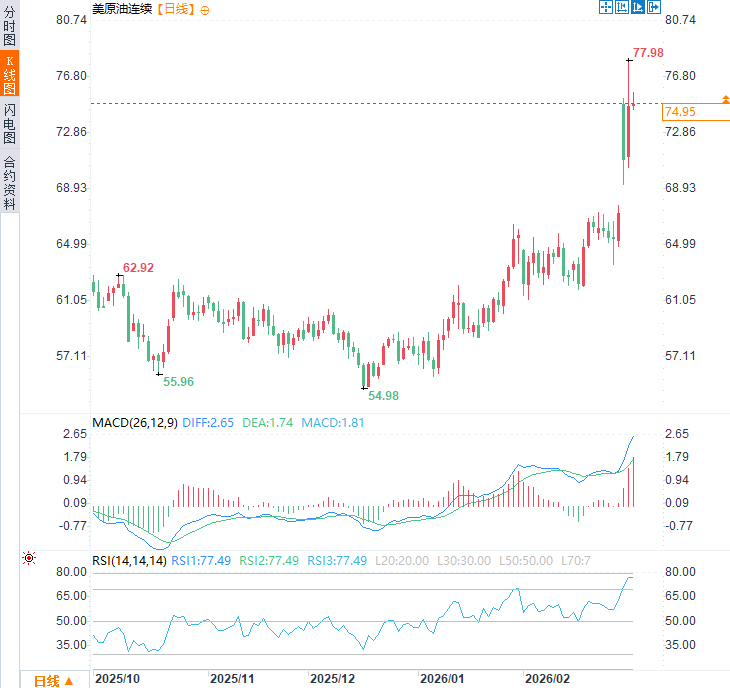
(US crude oil daily chart, source: FX678)
The escalating conflict in the Middle East has plunged the global aviation industry into a severe crisis, with over 20,000 flights canceled and tens of thousands of passengers stranded. This, coupled with soaring oil prices, has amplified fuel cost pressures. Airline stocks have generally declined, but there is significant divergence, with airlines reliant on Middle Eastern hubs suffering the most severe losses.
The evacuation operation and the progress of airspace restoration will be key in the short term, while the long-term impact depends on the intensity of the conflict and mediation by major powers. If the situation persists, tourism, freight, and supply chains will face greater challenges, and investors need to be wary of the contagion of geopolitical risks.
At 9:13 AM Beijing time, US crude oil futures were trading at $75.29 per barrel.
On Wednesday (March 4), airports in the Gulf region, such as Dubai International Airport, one of the world's busiest international hubs, were unable to operate normally for the fifth consecutive day. Emirates and Etihad Airways maintained only a limited number of repatriation and cargo flights. Governments around the world urgently launched evacuation operations. The U.S. State Department contacted nearly 3,000 U.S. citizens in the region and mobilized military aircraft and charter flights to assist in the evacuation. Demand for alternative routes surged, with fares and bookings for long-haul routes such as Hong Kong to London rising sharply. If the conflict continues, the Middle East tourism industry could suffer losses of billions of dollars.
Latest update on flight disruptions caused by escalating conflict
Following the joint US-Israeli airstrikes on key Iranian facilities, Iran and its allies retaliated, leading to the closure of large areas of airspace in the Middle East. Hub airports such as Dubai, Doha, and Abu Dhabi were among the hardest hit, with flight routes further compressed and long-haul flights worldwide forced to reroute or be canceled.
"This is undoubtedly the largest flight disruption since the pandemic began," said Paul Charles, CEO of high-end travel consultancy PC Agency recently. He emphasized that in addition to passenger disruptions, freight losses will reach billions of dollars, and supply chain pressures have increased significantly.
Scale of flight cancellations and impact of passenger delays
According to Flightradar24, seven major Middle Eastern airports have cancelled a total of 21,300 flights since the start of the airstrikes, leaving tens of thousands of passengers stranded. Dubai, as the world's busiest international airport, has seen the largest number of transit passengers due to its closure for several consecutive days.
Stranded passengers scrambled for limited repatriation flights, causing chaos at the airport and forcing some to turn to land or sea to leave. If the conflict continues, the number of canceled flights is expected to rise further, with the impact extending to Europe, Asia, and even the world.
Demand for emergency evacuations and alternative flight routes in various countries
The UAE government has arranged 60 dedicated emergency flights, with plans to increase to over 80, primarily to repatriate stranded passengers. A U.S. State Department official stated on the X platform that resources are being mobilized to evacuate nearly 3,000 U.S. citizens, but this has drawn criticism from Congress for not providing prior warning.
Demand surged for alternative routes such as Hong Kong-London, causing ticket prices to soar. Virgin Atlantic announced the planned resumption of flights from London to Dubai or Riyadh, seen as an initial sign that the situation might be easing, but most airlines remain cautious.
Airlines operational adjustments and cargo losses
Emirates, Dubai Airlines, and Etihad Airways are operating only a limited number of flights for repatriation and cargo transport. European airlines such as Lufthansa and Air France-KLM have suspended their Middle East routes, while Asian airlines such as Japan Airlines and Korean Air are significantly affected.
Freight disruptions have led to supply chain bottlenecks and increased global trade costs. Experts point out that if airspace restrictions persist, the aviation industry's recovery could take weeks or even longer.
Comparative Analysis of Global Airline Stock Performance
The comparison shows that European and Asian airlines with high exposure to Middle Eastern routes experienced larger declines, while US airlines were relatively more resilient due to hedging and a high proportion of domestic business.
The impact of soaring oil prices on fuel costs and profits
The conflict between the US and Iran pushed up oil prices. On Wednesday in Asian trading, US crude oil prices rose to a high of $75.70 per barrel before falling back due to selling pressure. It is currently trading around $74.60 per barrel. The previous trading day, oil prices rose 5.31% and touched a near nine-month high of $77.98.
The sharp rise in jet fuel costs is directly squeezing airline profits. JPMorgan analyst Karen Li points out that the impact varies significantly among different airlines, with companies possessing strong fuel hedging strategies experiencing better buffers. In the long term, if oil prices remain high, the airline industry's profit outlook is bleak, and ticket price increases may become inevitable.
(US crude oil daily chart, source: FX678)
Editor's Summary
The escalating conflict in the Middle East has plunged the global aviation industry into a severe crisis, with over 20,000 flights canceled and tens of thousands of passengers stranded. This, coupled with soaring oil prices, has amplified fuel cost pressures. Airline stocks have generally declined, but there is significant divergence, with airlines reliant on Middle Eastern hubs suffering the most severe losses.
The evacuation operation and the progress of airspace restoration will be key in the short term, while the long-term impact depends on the intensity of the conflict and mediation by major powers. If the situation persists, tourism, freight, and supply chains will face greater challenges, and investors need to be wary of the contagion of geopolitical risks.
At 9:13 AM Beijing time, US crude oil futures were trading at $75.29 per barrel.
- Risk Warning and Disclaimer
- The market involves risk, and trading may not be suitable for all investors. This article is for reference only and does not constitute personal investment advice, nor does it take into account certain users’ specific investment objectives, financial situation, or other needs. Any investment decisions made based on this information are at your own risk.

