Treasury yields plunge to a 196 basis point abyss, marking the start of the ultimate hunting ground for traders?
2026-03-05 19:52:16
On Thursday, March 5th, the divergence in government bond yields among major economies continued. US and UK yields remained high, while Japanese and German yields were low. This trend stems from the decoupling of monetary policy cycles, the stratification of inflation expectations, and the continued effect of fiscal deficit pricing. Latest market data shows that the US 10-year Treasury yield was 4.11%, the UK 4.44%, the German benchmark 2.78%, and Japan 2.15%.
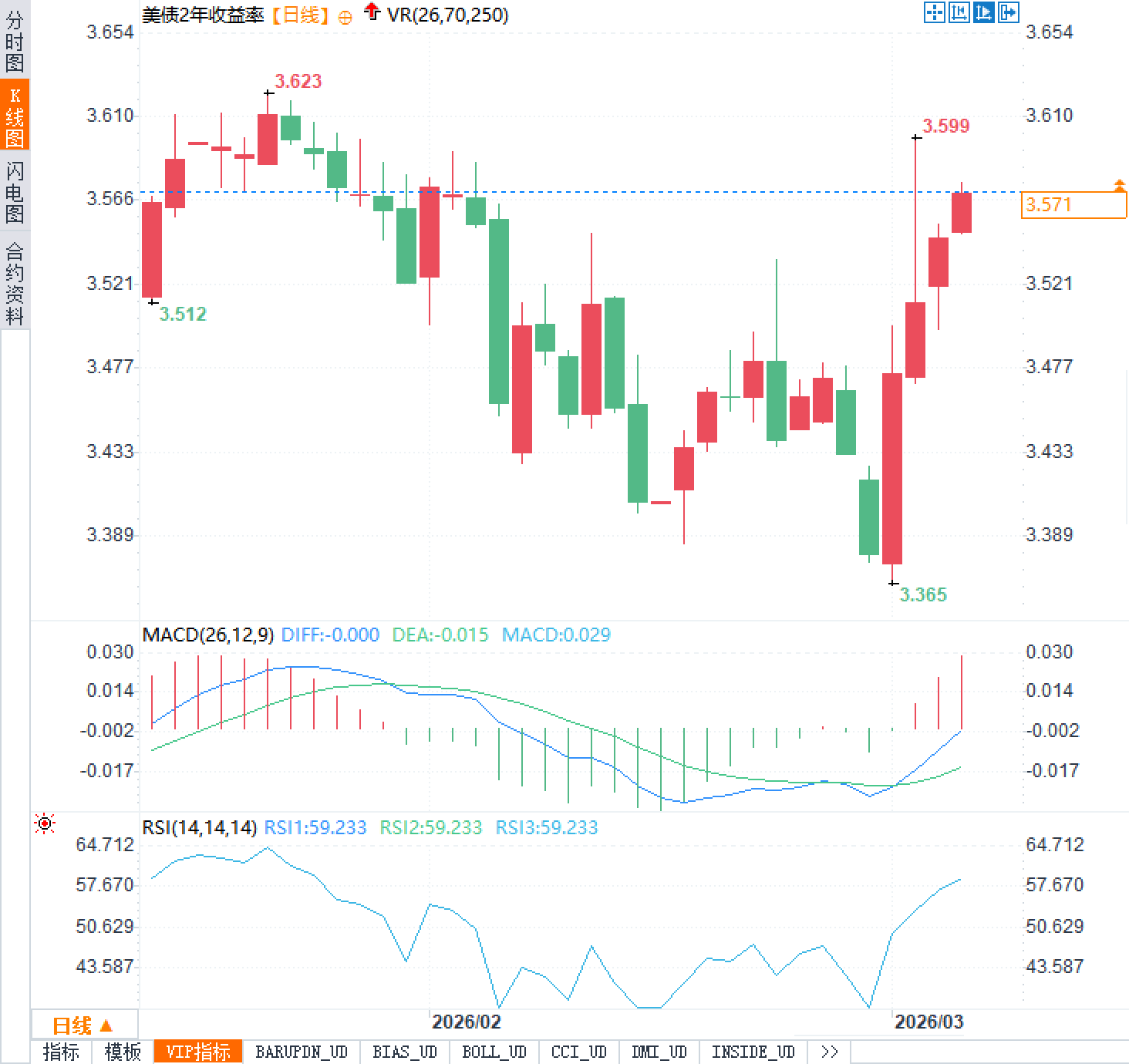
The US 2-year yield has fluctuated around 3.57%. Looking at the daily chart, it recently rebounded from a low of 3.365 to 3.599 before slightly retreating to around 3.57. The MACD indicator is showing a slight positive crossover, while the RSI remains at a neutral level of 59.23, indicating that short-term policy pricing is still fluctuating. Interest rate differentials within the Eurozone are becoming more pronounced, with yields in France, Italy, and Spain around 62 to 66 basis points higher than the German benchmark. Traders need to closely monitor the direct impact of this divergence on cross-market carry trades and volatility transmission.
Latest data shows a clear tiered distribution of global 10-year government bond yields. The US yield of 4.11% represents a 133 basis point premium over Germany's 2.78%, and a 196 basis point spread over Japan's 2.15%. The UK yield of 4.44% leads Germany by 166 basis points and is also 33 basis points higher than the US, indicating that the market continues to price in the UK's sticky inflation and tightening monetary policy path.
Significant differences exist within the Eurozone. France (3.40%), Italy (3.44%), and Spain (3.25%) all have interest rate spreads higher than the German benchmark, with spreads concentrated between 47 and 66 basis points. The premiums in Belgium and the Netherlands have narrowed relatively, reflecting differences in the perception of fiscal risk between core and peripheral countries.
The following is a comparison of the latest 10-year yields of major economies:
This premium structure indicates that the market is overpricing the resilience of growth and fiscal sustainability in the US and UK, while Japan and Germany are weighed down by low inflation and expectations of further easing. Compared to the end of last month, the US premium has widened slightly, while the UK's lead has solidified, and traders are assessing the risk exposure and hedging logic of cross-border interest rate carry trades.
The 2-year yield curve has diverged even more dramatically. The US 2-year yield is at 3.57%, the UK yield remains high, while yields in Eurozone countries such as Germany, France, and Italy are concentrated in the 2.1% to 2.3% range, and Japan's is only around 1.25%, with a spread of over 230 basis points compared to the US. This inversion highlights significant differences in short-term policy rate expectations: the Federal Reserve and the Bank of England are relatively tight, while the European Central Bank and the Bank of Japan tend to ease monetary policy earlier.
The premium of 10-year yields in Eurozone countries over the German benchmark mainly stems from differences in fiscal deficits and sovereign credit stratification. Italy's 3.44% premium is 66 basis points higher than Germany's, primarily due to its high public debt ratio, demanding a higher risk premium from the market. France's 3.40% premium is 62 basis points, reflecting the pressure of expanding budget deficits. Spain's 3.25% premium is 47 basis points, benefiting from the recovery of the service sector but with lingering risks of energy dependence. Belgium and the Netherlands have premiums kept below 30 basis points, thanks to stricter fiscal discipline.
The European Central Bank's policy path lags behind the Federal Reserve, and the market expects its accommodative stance to last longer, putting overall pressure on long-term yields in the Eurozone. Compared to the end of 2025, interest rate spreads within the Eurozone have narrowed slightly, but the absolute spread between Italy and Germany remains at historically high levels. This structure directly impacts interbank funding costs and corporate bond issuance pricing within the Eurozone, and traders need to pay close attention to the latest statements on fiscal sustainability in the ECB's meeting minutes.
The divergence in yields stems from the significant decoupling of monetary policy cycles among major central banks. Faced with relatively strong growth and fiscal expansion, the market prices the Federal Reserve's policy rate higher than that of the European Central Bank and the Bank of Japan. The Bank of England's yield curve remains steep due to more persistent inflation. The European Central Bank, dragged down by slowing growth in the Eurozone, has seen its easing expectations brought forward; while the Bank of Japan is gradually withdrawing from yield curve control, low inflation and a weak yen continue to suppress long-term yields.
Fiscal factors are equally crucial. Higher deficits in the US and UK are pushing up term premiums, while lower debt burdens in Japan and Germany are providing downside support. Geopolitical risks are driving up energy prices, further amplifying the inflation premiums in the UK and the US. Overall, this divergence reflects the asynchronous global economic cycles, and traders can use the widening or narrowing of interest rate spreads as an early signal of policy shifts. Compared to historical cycles, this divergence may last longer, requiring dynamic adjustments to position strategies based on core inflation and employment data.
The US 2-year yield has fluctuated around 3.57%. Looking at the daily chart, it recently rebounded from a low of 3.365 to 3.599 before slightly retreating to around 3.57. The MACD indicator is showing a slight positive crossover, while the RSI remains at a neutral level of 59.23, indicating that short-term policy pricing is still fluctuating. Interest rate differentials within the Eurozone are becoming more pronounced, with yields in France, Italy, and Spain around 62 to 66 basis points higher than the German benchmark. Traders need to closely monitor the direct impact of this divergence on cross-market carry trades and volatility transmission.
Comparison of 10-year benchmark Treasury bond yields
Latest data shows a clear tiered distribution of global 10-year government bond yields. The US yield of 4.11% represents a 133 basis point premium over Germany's 2.78%, and a 196 basis point spread over Japan's 2.15%. The UK yield of 4.44% leads Germany by 166 basis points and is also 33 basis points higher than the US, indicating that the market continues to price in the UK's sticky inflation and tightening monetary policy path.
Significant differences exist within the Eurozone. France (3.40%), Italy (3.44%), and Spain (3.25%) all have interest rate spreads higher than the German benchmark, with spreads concentrated between 47 and 66 basis points. The premiums in Belgium and the Netherlands have narrowed relatively, reflecting differences in the perception of fiscal risk between core and peripheral countries.
The following is a comparison of the latest 10-year yields of major economies:
| Country/Region | 10-year yield (%) | Premium over Germany (basis points) | Premium over US (basis points) |
|---|---|---|---|
| USA | 4.11 | 133 | — |
| U.K. | 4.44 | 166 | 33 |
| Germany | 2.78 | — | -133 |
| Japan | 2.15 | -63 | -196 |
| France | 3.40 | 62 | -71 |
| Italy | 3.44 | 66 | -67 |
| Spain | 3.25 | 47 | -86 |
This premium structure indicates that the market is overpricing the resilience of growth and fiscal sustainability in the US and UK, while Japan and Germany are weighed down by low inflation and expectations of further easing. Compared to the end of last month, the US premium has widened slightly, while the UK's lead has solidified, and traders are assessing the risk exposure and hedging logic of cross-border interest rate carry trades.
Divergence in the 2-year Treasury yield curve and short-term trends in the US market
The 2-year yield curve has diverged even more dramatically. The US 2-year yield is at 3.57%, the UK yield remains high, while yields in Eurozone countries such as Germany, France, and Italy are concentrated in the 2.1% to 2.3% range, and Japan's is only around 1.25%, with a spread of over 230 basis points compared to the US. This inversion highlights significant differences in short-term policy rate expectations: the Federal Reserve and the Bank of England are relatively tight, while the European Central Bank and the Bank of Japan tend to ease monetary policy earlier.
Eurozone intra-regional yield premium and policy transmission mechanism
The premium of 10-year yields in Eurozone countries over the German benchmark mainly stems from differences in fiscal deficits and sovereign credit stratification. Italy's 3.44% premium is 66 basis points higher than Germany's, primarily due to its high public debt ratio, demanding a higher risk premium from the market. France's 3.40% premium is 62 basis points, reflecting the pressure of expanding budget deficits. Spain's 3.25% premium is 47 basis points, benefiting from the recovery of the service sector but with lingering risks of energy dependence. Belgium and the Netherlands have premiums kept below 30 basis points, thanks to stricter fiscal discipline.
The European Central Bank's policy path lags behind the Federal Reserve, and the market expects its accommodative stance to last longer, putting overall pressure on long-term yields in the Eurozone. Compared to the end of 2025, interest rate spreads within the Eurozone have narrowed slightly, but the absolute spread between Italy and Germany remains at historically high levels. This structure directly impacts interbank funding costs and corporate bond issuance pricing within the Eurozone, and traders need to pay close attention to the latest statements on fiscal sustainability in the ECB's meeting minutes.
In-depth analysis of the driving factors of policy divergence
The divergence in yields stems from the significant decoupling of monetary policy cycles among major central banks. Faced with relatively strong growth and fiscal expansion, the market prices the Federal Reserve's policy rate higher than that of the European Central Bank and the Bank of Japan. The Bank of England's yield curve remains steep due to more persistent inflation. The European Central Bank, dragged down by slowing growth in the Eurozone, has seen its easing expectations brought forward; while the Bank of Japan is gradually withdrawing from yield curve control, low inflation and a weak yen continue to suppress long-term yields.
Fiscal factors are equally crucial. Higher deficits in the US and UK are pushing up term premiums, while lower debt burdens in Japan and Germany are providing downside support. Geopolitical risks are driving up energy prices, further amplifying the inflation premiums in the UK and the US. Overall, this divergence reflects the asynchronous global economic cycles, and traders can use the widening or narrowing of interest rate spreads as an early signal of policy shifts. Compared to historical cycles, this divergence may last longer, requiring dynamic adjustments to position strategies based on core inflation and employment data.
Frequently Asked Questions
Question 1: Why did the divergence in global government bond yields continue to widen in March 2026?
A: The core issue lies in the decoupling of monetary policy paths. The US and UK, facing high inflation and resilient growth, have maintained high yields; Japan and Germany, suppressed by low inflation, have the lowest yields. Fiscal disparities within the Eurozone have further widened interest rate spreads. The latest data is slightly higher than at the end of February, reflecting the market's repeated pricing in of central bank meeting expectations.
Question 2: What impact do the recent fluctuations in the yield on the 2-year U.S. Treasury note have on the shape of the yield curve?
A: The daily chart shows that yields have rebounded from a low of 3.365 to 3.57, with the MACD showing a slight positive crossover and the RSI neutral. The short-term yield curve is steepening, indicating market adjustment to the Fed's short-term interest rate path, but overall it remains constrained by employment and inflation data. Traders need to pay attention to the transmission effect of this dynamic on the long-short interest rate spread.
Question 3: What does the widening yield premium in the Eurozone mean?
A: Italy and France are 62 to 66 basis points higher than Germany, due to differences in debt and deficits. ECB easing expectations are suppressing benchmark yields, but rising risk premiums in peripheral countries directly impact bank funding costs and regional economic stability. Based on the latest data, this situation is unlikely to reverse in the short term, and continued monitoring of changes in fiscal discipline is necessary.
- Risk Warning and Disclaimer
- The market involves risk, and trading may not be suitable for all investors. This article is for reference only and does not constitute personal investment advice, nor does it take into account certain users’ specific investment objectives, financial situation, or other needs. Any investment decisions made based on this information are at your own risk.