Non-farm payrolls face a major test: Is "stability" real or fake? Be wary of structural fragility under the sole support of healthcare.
2026-03-06 11:30:36
The US February non-farm payroll data report will be released at 21:30 Beijing time on Friday (March 6). The market expects this month's non-farm payroll narrative to shift towards "stability"—January's non-farm payrolls exceeded expectations with an increase of 130,000, and the unemployment rate fell to 4.3%. However, the growth was highly concentrated in the healthcare sector, with almost zero growth after excluding it, as companies generally adopted a "low-hiring, low-layoff" strategy to cope with tariffs, inflation, and geopolitical risks. The February forecast has plummeted to 59,000, and the market is waiting for the data to verify whether this "stability" is a sustainable balance or a manifestation of structural fragility.

The US labor market in 2025 is described as volatile , with job growth nearly stagnant, averaging only 15,000 new jobs per month and a total annual increase of only 181,000 (a significant downward revision after baseline adjustments).
While 2026 begins with similar headwinds (such as Trump tariffs, persistent inflation, and geopolitical conflicts), the mainstream narrative is shifting towards stability . Federal Reserve officials and economists emphasize that despite sluggish hiring, businesses are reluctant to lay off workers (demand remains strong), the unemployment rate remains low, and current growth is seen as sufficient rather than robust .
This shift stems from a change in expectations: immigration restrictions have led to slower growth in the labor supply, and low hiring rates are seen as acceptable , even necessary , to avoid overheating. Market focus has shifted from explosive growth to sustainable balance .
January nonfarm payrolls increased by 130,000 jobs, far exceeding consensus expectations (55,000-75,000), and the unemployment rate fell slightly to 4.3%. This better-than-expected data eased concerns about a labor market recession, but the annual revision shows overall weakness in 2025.
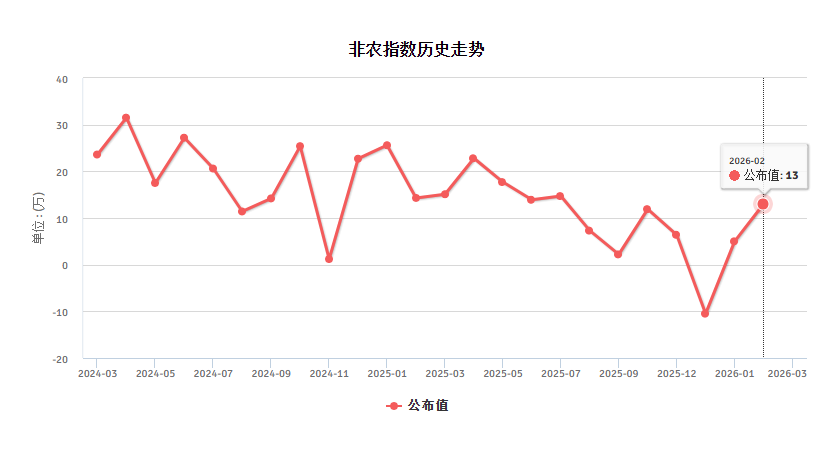
(Historical trend chart of non-farm payroll index, source:)
The February report anticipates 59,000 new jobs, with the unemployment rate remaining stable at 4.3%. Some institutions are more cautious: Deutsche Bank forecasts only 30,000, while Goldman Sachs predicts 44,000, mainly due to the impact of the Kaiser Permanente strike on healthcare data. Wage growth is expected to be 0.3% month-on-month and flat at 3.7% year-on-year.
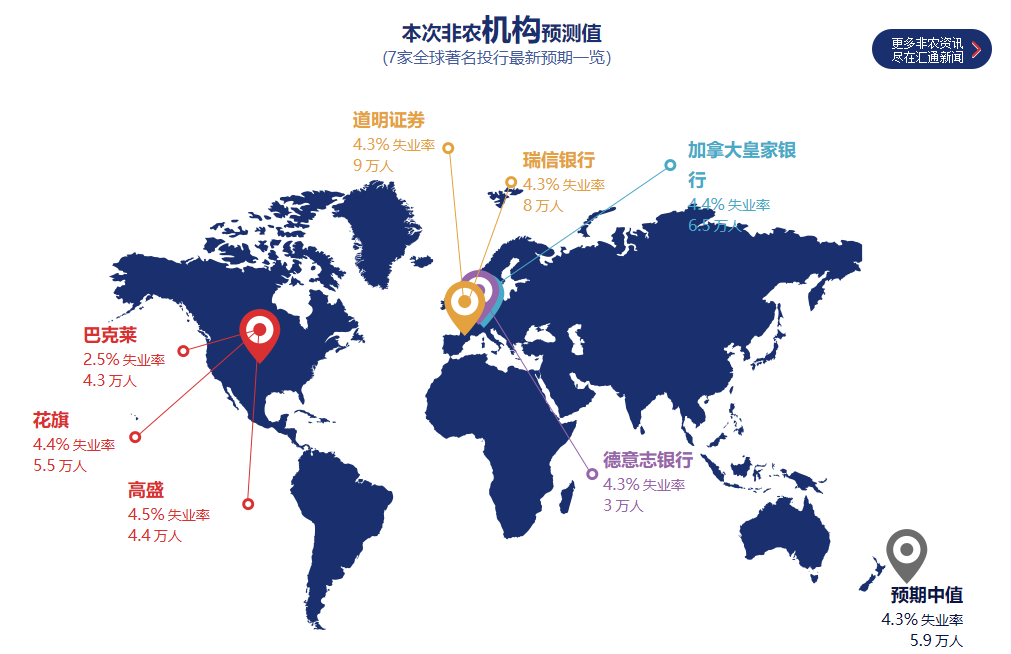
(February non-farm payroll forecast chart, source: FX678)
The current labor market is characterized by "low hiring and low layoffs": companies are reluctant to lay off large numbers of employees due to stable demand, but are hesitant to expand their workforce due to uncertainties surrounding Trump's tariffs, inflationary pressures, and geopolitical conflicts in the Middle East. Low hiring rates have become the norm, with companies preferring internal optimization to creating new positions. This "stability" is actually a defensive equilibrium, not a robust recovery.
In 2025, almost all job growth will come from the healthcare and social assistance sectors; excluding these sectors, the average monthly growth will be negative. The same will be true in January 2026: healthcare will contribute 82,000, and social assistance 42,000, accounting for almost all of the increase. The construction industry will see a net loss of 88,000 jobs in 2025, and the technology sector will be impacted by the accelerated adoption of AI (e.g., Block laid off 40% of its workforce). This high concentration casts doubt on the "stability" label: if healthcare growth slows, the entire market could weaken rapidly.
The strike involving 31,000 workers at Kaiser Permanente in California and Hawaii (from January 26 to February 23) coincided with the BLS survey reference week. The strike may have led to an underestimation of healthcare sector data, causing the market to lower its February expectations, but its impact on the unemployment rate was limited (the strike does not account for unemployment). The strike has ended, and March data may rebound.
The Federal Reserve views the current "stability" as a positive sign: the unemployment rate is anchored at a low level, and there is no significant wage spiral pressure on inflation, providing room to maintain the interest rate range. However, if hiring remains sluggish, the downside risks to the economy will increase.
Looking ahead, several factors need to be observed: if February's data meets or falls short of expectations, market expectations for interest rate cuts may intensify; if non-medical sectors recover, the Federal Reserve's room for tightening will expand. Overall, the labor market is "stable" but fragile, with geopolitical and policy uncertainties remaining the biggest variables.
The US labor market appears "stable" at the start of 2026: January saw more than 130,000 new jobs added, exceeding expectations, with an unemployment rate of 4.3%. However, growth is extremely dependent on healthcare, with near-zero growth excluding healthcare. Low hiring and layoff rates reflect companies' caution regarding tariffs, inflation, and geopolitical factors. February's expected figure is only 59,000, and healthcare strikes may further drag down healthcare data.
Experts warn that this "stability" is actually a structural imbalance, and vulnerabilities will be exposed if a single sector slows down or external shocks intensify. The Federal Reserve has gained some breathing room, but should be wary of the risk of a slowdown in growth caused by persistently low hiring rates. Market volatility may increase after the report's release; pay attention to sectoral details and wage data to assess true resilience.
The labor market is expected to shift from instability to stability by 2026.
The US labor market in 2025 is described as volatile , with job growth nearly stagnant, averaging only 15,000 new jobs per month and a total annual increase of only 181,000 (a significant downward revision after baseline adjustments).
While 2026 begins with similar headwinds (such as Trump tariffs, persistent inflation, and geopolitical conflicts), the mainstream narrative is shifting towards stability . Federal Reserve officials and economists emphasize that despite sluggish hiring, businesses are reluctant to lay off workers (demand remains strong), the unemployment rate remains low, and current growth is seen as sufficient rather than robust .
This shift stems from a change in expectations: immigration restrictions have led to slower growth in the labor supply, and low hiring rates are seen as acceptable , even necessary , to avoid overheating. Market focus has shifted from explosive growth to sustainable balance .
January's actual figures exceeded expectations by 130,000, while the consensus forecast for February was only 59,000.
January nonfarm payrolls increased by 130,000 jobs, far exceeding consensus expectations (55,000-75,000), and the unemployment rate fell slightly to 4.3%. This better-than-expected data eased concerns about a labor market recession, but the annual revision shows overall weakness in 2025.
(Historical trend chart of non-farm payroll index, source:)
The February report anticipates 59,000 new jobs, with the unemployment rate remaining stable at 4.3%. Some institutions are more cautious: Deutsche Bank forecasts only 30,000, while Goldman Sachs predicts 44,000, mainly due to the impact of the Kaiser Permanente strike on healthcare data. Wage growth is expected to be 0.3% month-on-month and flat at 3.7% year-on-year.
(February non-farm payroll forecast chart, source: FX678)
The environment of low hiring and low layoffs continues, with businesses observing tariff, inflation, and geopolitical risks.
The current labor market is characterized by "low hiring and low layoffs": companies are reluctant to lay off large numbers of employees due to stable demand, but are hesitant to expand their workforce due to uncertainties surrounding Trump's tariffs, inflationary pressures, and geopolitical conflicts in the Middle East. Low hiring rates have become the norm, with companies preferring internal optimization to creating new positions. This "stability" is actually a defensive equilibrium, not a robust recovery.
Healthcare led the growth, while other sectors faced significant pressure.
In 2025, almost all job growth will come from the healthcare and social assistance sectors; excluding these sectors, the average monthly growth will be negative. The same will be true in January 2026: healthcare will contribute 82,000, and social assistance 42,000, accounting for almost all of the increase. The construction industry will see a net loss of 88,000 jobs in 2025, and the technology sector will be impacted by the accelerated adoption of AI (e.g., Block laid off 40% of its workforce). This high concentration casts doubt on the "stability" label: if healthcare growth slows, the entire market could weaken rapidly.
Potential impact of the Kaiser Permanente strike on February data
The strike involving 31,000 workers at Kaiser Permanente in California and Hawaii (from January 26 to February 23) coincided with the BLS survey reference week. The strike may have led to an underestimation of healthcare sector data, causing the market to lower its February expectations, but its impact on the unemployment rate was limited (the strike does not account for unemployment). The strike has ended, and March data may rebound.
Federal Reserve Perspective and Future Outlook
The Federal Reserve views the current "stability" as a positive sign: the unemployment rate is anchored at a low level, and there is no significant wage spiral pressure on inflation, providing room to maintain the interest rate range. However, if hiring remains sluggish, the downside risks to the economy will increase.
Looking ahead, several factors need to be observed: if February's data meets or falls short of expectations, market expectations for interest rate cuts may intensify; if non-medical sectors recover, the Federal Reserve's room for tightening will expand. Overall, the labor market is "stable" but fragile, with geopolitical and policy uncertainties remaining the biggest variables.
Editor's Summary
The US labor market appears "stable" at the start of 2026: January saw more than 130,000 new jobs added, exceeding expectations, with an unemployment rate of 4.3%. However, growth is extremely dependent on healthcare, with near-zero growth excluding healthcare. Low hiring and layoff rates reflect companies' caution regarding tariffs, inflation, and geopolitical factors. February's expected figure is only 59,000, and healthcare strikes may further drag down healthcare data.
Experts warn that this "stability" is actually a structural imbalance, and vulnerabilities will be exposed if a single sector slows down or external shocks intensify. The Federal Reserve has gained some breathing room, but should be wary of the risk of a slowdown in growth caused by persistently low hiring rates. Market volatility may increase after the report's release; pay attention to sectoral details and wage data to assess true resilience.
- Risk Warning and Disclaimer
- The market involves risk, and trading may not be suitable for all investors. This article is for reference only and does not constitute personal investment advice, nor does it take into account certain users’ specific investment objectives, financial situation, or other needs. Any investment decisions made based on this information are at your own risk.