Oil prices fell as panic over Iran subsided, and the Nikkei index corrected from oversold levels.
2026-03-10 09:55:20
According to APP, Hideyuki Ishiguro, chief strategist at Nomura Asset Management, recently pointed out that with the continued decline in oil prices and the latest remarks by US President Trump regarding the Iranian crisis, market panic surrounding the Middle East geopolitical conflict seems to be gradually subsiding.
He stated explicitly, "Even during yesterday's sharp drop in Japanese stocks , there was a considerable amount of bargain hunting at the lows, and investors' willingness to buy seems to remain strong." This observation reflects the resilience of Japanese institutional and retail investors during market corrections and may provide support for the stock market in the short term.
Hideyuki Ishiguro further analyzed that the aforementioned buying on dips may continue to play a role in the morning trading session, but the overall upside potential may be relatively limited. He added that as oil prices remain above $80 per barrel and the Iranian conflict has yet to find a clear solution, the market will remain highly cautious.
Concerns about credit risk continue to weigh on the performance of the financial sector, with Hideyuki Ishiguro emphasizing, "Therefore, it is too early to assert an overall bullish outlook." These views are consistent with Ishiguro's recent statements at several internal strategy meetings, where he has repeatedly reminded investors to pay attention to the potential transmission effects of global supply chain disruptions on Japan's export-oriented economy.
From a macroeconomic perspective, as a major global importer of crude oil, Japan benefits from lower oil prices, which help reduce energy costs for businesses, alleviate imported inflationary pressures, and boost manufacturing profit margins. However, current oil prices remain relatively high, and coupled with the uncertainty surrounding the situation in Iran, global risk appetite is unlikely to recover quickly. The financial sector is particularly under pressure, with banks performing poorly due to expanded credit exposure. Market concerns exist that if the Middle East conflict prolongs, rising corporate financing costs will further erode profits.
In contrast, the technology and export-oriented sectors may have benefited somewhat from the yen's exchange rate fluctuations, but the overall market remains in a "cautiously optimistic" range. The table below compares recent oil price volatility with the performance of major Nikkei indices, clearly demonstrating the correlation between the two:
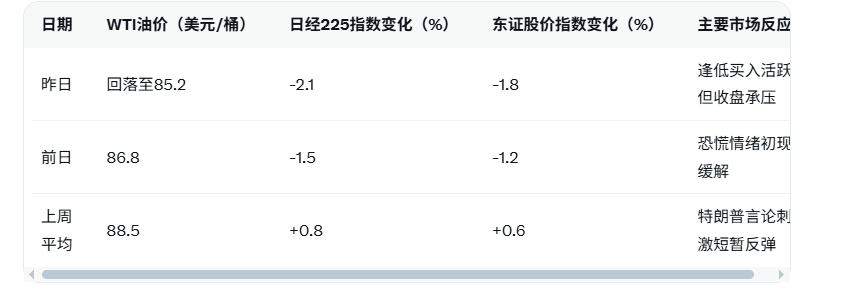
Data shows that for every $1 drop in oil prices, the Nikkei 225 index receives an average of 0.3-0.5% support, but credit risk premiums continue to limit the rebound of financial stocks. Investors should pay attention to the Federal Reserve's statements this week and the latest developments in the Middle East, as these factors will directly affect the risk appetite of the Nikkei index.
Editor's Summary: Hideyuki Ishiguro's analysis highlights the current market's balancing act between falling oil prices and geopolitical risks. Japanese stocks may find support for buying on dips in the short term, but their long-term trend still depends on the progress of resolving the Iranian conflict and the degree of improvement in the global credit environment. Investors should maintain flexible position management.
Frequently Asked Questions
Question 1: Why does Hideyuki Ishiguro emphasize that falling oil prices can alleviate panic over the Iranian crisis?
Answer: The drop in oil prices directly reduced Japan's import costs, easing inflationary pressures. Meanwhile, Trump's optimistic statements regarding the war with Iran lessened expectations of supply disruptions. Hideyuki Ishiguro pointed out that this restored some investor confidence, with bargain hunters still buying on dips despite yesterday's sharp decline, demonstrating market resilience. However, oil prices remain above $80, indicating that risks have not been completely eliminated. While short-term support is evident, it is unlikely to drive a sustained surge.
Question 2: Does the strong buying on dips mean that the Japanese stock market is about to rebound?
Answer: Hideyuki Ishiguro believes that the market may find support in the morning, but upside potential is limited. Global risk sentiment remains cautious due to the lack of a clear solution to the Iranian conflict. While Japan, as an importer, benefits from low oil prices, financial stocks are dragged down by credit concerns, and banks' credit risk exposure is widening. Overall, the market is in a period of observation, awaiting more positive catalysts to confirm a trend reversal.
Question 3: What specific impact will Trump's latest remarks have on the Japanese stock market?
Answer: Trump's statement that the situation in Iran would stabilize quickly eased market concerns about a potential disruption in the Strait of Hormuz, causing oil prices to fall and boosting global risk assets. As a market sensitive to external demand, the Japanese stock market benefited in the short term. However, Hideyuki Ishiguro cautioned that if the conflict drags on, the rebound in oil prices could erode Japanese corporate profits, with financial stocks bearing the brunt. Therefore, it is premature to declare a bullish outlook.
Question 4: Why do concerns about credit risk continue to drag down financial stocks?
Answer: The Iranian crisis has increased global uncertainty, raising the probability of corporate defaults and increasing pressure on banks' non-performing loans. While Japanese financial stocks are already undervalued, Hideyuki Ishiguro points out that with oil prices remaining high, rising financing costs will further suppress credit expansion. Compared to technology stocks, the financial sector lacks defensive characteristics, causing it to consistently underperform the broader market and become one of the biggest drags on the market.
Question 5: How should investors respond to the current volatility in the Japanese stock market?
Answer: Hideyuki Ishiguro advises caution, prioritizing oil price movements and Middle East news. In the short term, consider buying on dips in export-oriented sectors, but strictly control position size and avoid chasing highs. In the long term, observe whether the Iranian conflict is resolved quickly and the Federal Reserve's policy signals. If oil prices stabilize below $75 and credit risks ease, Japanese stocks are expected to see a stronger rebound; otherwise, the market will continue its range-bound trading pattern. It is recommended to use both the Topix and Nikkei 225 in your analysis to flexibly adjust asset allocation to cope with geopolitical uncertainties.
He stated explicitly, "Even during yesterday's sharp drop in Japanese stocks , there was a considerable amount of bargain hunting at the lows, and investors' willingness to buy seems to remain strong." This observation reflects the resilience of Japanese institutional and retail investors during market corrections and may provide support for the stock market in the short term.
Hideyuki Ishiguro further analyzed that the aforementioned buying on dips may continue to play a role in the morning trading session, but the overall upside potential may be relatively limited. He added that as oil prices remain above $80 per barrel and the Iranian conflict has yet to find a clear solution, the market will remain highly cautious.
Concerns about credit risk continue to weigh on the performance of the financial sector, with Hideyuki Ishiguro emphasizing, "Therefore, it is too early to assert an overall bullish outlook." These views are consistent with Ishiguro's recent statements at several internal strategy meetings, where he has repeatedly reminded investors to pay attention to the potential transmission effects of global supply chain disruptions on Japan's export-oriented economy.
From a macroeconomic perspective, as a major global importer of crude oil, Japan benefits from lower oil prices, which help reduce energy costs for businesses, alleviate imported inflationary pressures, and boost manufacturing profit margins. However, current oil prices remain relatively high, and coupled with the uncertainty surrounding the situation in Iran, global risk appetite is unlikely to recover quickly. The financial sector is particularly under pressure, with banks performing poorly due to expanded credit exposure. Market concerns exist that if the Middle East conflict prolongs, rising corporate financing costs will further erode profits.
In contrast, the technology and export-oriented sectors may have benefited somewhat from the yen's exchange rate fluctuations, but the overall market remains in a "cautiously optimistic" range. The table below compares recent oil price volatility with the performance of major Nikkei indices, clearly demonstrating the correlation between the two:
Data shows that for every $1 drop in oil prices, the Nikkei 225 index receives an average of 0.3-0.5% support, but credit risk premiums continue to limit the rebound of financial stocks. Investors should pay attention to the Federal Reserve's statements this week and the latest developments in the Middle East, as these factors will directly affect the risk appetite of the Nikkei index.
Editor's Summary: Hideyuki Ishiguro's analysis highlights the current market's balancing act between falling oil prices and geopolitical risks. Japanese stocks may find support for buying on dips in the short term, but their long-term trend still depends on the progress of resolving the Iranian conflict and the degree of improvement in the global credit environment. Investors should maintain flexible position management.
Frequently Asked Questions
Question 1: Why does Hideyuki Ishiguro emphasize that falling oil prices can alleviate panic over the Iranian crisis?
Answer: The drop in oil prices directly reduced Japan's import costs, easing inflationary pressures. Meanwhile, Trump's optimistic statements regarding the war with Iran lessened expectations of supply disruptions. Hideyuki Ishiguro pointed out that this restored some investor confidence, with bargain hunters still buying on dips despite yesterday's sharp decline, demonstrating market resilience. However, oil prices remain above $80, indicating that risks have not been completely eliminated. While short-term support is evident, it is unlikely to drive a sustained surge.
Question 2: Does the strong buying on dips mean that the Japanese stock market is about to rebound?
Answer: Hideyuki Ishiguro believes that the market may find support in the morning, but upside potential is limited. Global risk sentiment remains cautious due to the lack of a clear solution to the Iranian conflict. While Japan, as an importer, benefits from low oil prices, financial stocks are dragged down by credit concerns, and banks' credit risk exposure is widening. Overall, the market is in a period of observation, awaiting more positive catalysts to confirm a trend reversal.
Question 3: What specific impact will Trump's latest remarks have on the Japanese stock market?
Answer: Trump's statement that the situation in Iran would stabilize quickly eased market concerns about a potential disruption in the Strait of Hormuz, causing oil prices to fall and boosting global risk assets. As a market sensitive to external demand, the Japanese stock market benefited in the short term. However, Hideyuki Ishiguro cautioned that if the conflict drags on, the rebound in oil prices could erode Japanese corporate profits, with financial stocks bearing the brunt. Therefore, it is premature to declare a bullish outlook.
Question 4: Why do concerns about credit risk continue to drag down financial stocks?
Answer: The Iranian crisis has increased global uncertainty, raising the probability of corporate defaults and increasing pressure on banks' non-performing loans. While Japanese financial stocks are already undervalued, Hideyuki Ishiguro points out that with oil prices remaining high, rising financing costs will further suppress credit expansion. Compared to technology stocks, the financial sector lacks defensive characteristics, causing it to consistently underperform the broader market and become one of the biggest drags on the market.
Question 5: How should investors respond to the current volatility in the Japanese stock market?
Answer: Hideyuki Ishiguro advises caution, prioritizing oil price movements and Middle East news. In the short term, consider buying on dips in export-oriented sectors, but strictly control position size and avoid chasing highs. In the long term, observe whether the Iranian conflict is resolved quickly and the Federal Reserve's policy signals. If oil prices stabilize below $75 and credit risks ease, Japanese stocks are expected to see a stronger rebound; otherwise, the market will continue its range-bound trading pattern. It is recommended to use both the Topix and Nikkei 225 in your analysis to flexibly adjust asset allocation to cope with geopolitical uncertainties.
- Risk Warning and Disclaimer
- The market involves risk, and trading may not be suitable for all investors. This article is for reference only and does not constitute personal investment advice, nor does it take into account certain users’ specific investment objectives, financial situation, or other needs. Any investment decisions made based on this information are at your own risk.