Trump lashes out at Powell: Is the rate cut a rescue for the market or adding fuel to the fire?
2026-03-13 16:55:06
Faced with economic pressures and inflation, Trump has repeatedly called on the Federal Reserve to cut interest rates.
The former president, who nominated Powell to be the chairman of the Federal Reserve, has recently criticized Powell on social media for "reacting too late" and called for an immediate reduction in interest rates to a low of 1%, regarding interest rate cuts as a core means to stimulate the economy and reduce the cost of living for people.
Trump said on the 12th that Powell should not wait until the next Federal Reserve meeting to cut interest rates, but should lower rates immediately.
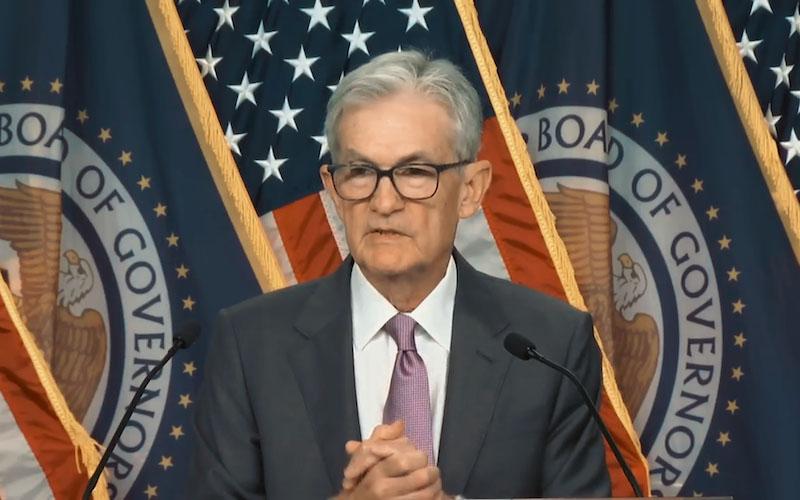
Powell was actually quite aggrieved because on January 28, facing pressure from the White House and data, Powell and his colleagues maintained the benchmark interest rate unchanged at the policy meeting. Now, facing the rise in global inflation caused by the war, it's as if they had completely guessed the test question, but instead of receiving praise, they were pressured again.
In emphasizing his demand for interest rate cuts to the Federal Reserve, Trump seems to have overlooked some important issues: there is a fundamental difference between monetary policy in wartime and peacetime. Interest rate cuts in peacetime "empower growth," while blind interest rate cuts in wartime will only "add fuel to the fire."
On the one hand, the Federal Reserve usually only adjusts interest rates at scheduled meetings, and emergency rate cuts are only applicable to extreme crises such as the COVID-19 pandemic. The conflict between the United States and Iran has triggered an inflation rebound rather than a liquidity crunch, which does not meet the conditions for emergency easing.
On the other hand, the core PCE inflation rate has risen to 3.1%, continuing to deviate from the policy target of 2%, and rising oil prices are further transmitting inflationary pressures. At this time, cutting interest rates would completely shake the market's confidence in the Fed's ability to combat inflation.
The market has already voted with its feet. Data from the CME Group's FedWatch tool shows that since the outbreak of the conflict, traders have abandoned their expectations for an early summer rate cut, even ruling out a September rate cut, anticipating only a single rate cut in December. The pricing for the next additional rate cut has been postponed to the second half of 2027. This shift in expectations is a direct response to Trump's cognitive biases.
With the dual constraints of war and inflation, the Federal Reserve's policy path has gradually become clear.
The market is giving almost 100% confidence that the FOMC meeting scheduled for March 18 will maintain the current interest rate range of 3.50%-3.75%, a decision based on multiple practical considerations.
First, inflationary pressures continue to mount, with soaring oil prices and high core PCE making combating inflation a top priority. Goldman Sachs has postponed its expectation for the next rate cut from June to September.
Secondly, the increased economic uncertainty caused by the war necessitates that the Federal Reserve maintain policy flexibility to avoid premature easing and falling into a "stagflation" trap. Finally, with a new dovish chairman set to take office in May, the current policy continuity will help ensure a smooth transition and prevent drastic market fluctuations.
The Federal Reserve's cautious stance is essentially a rational adaptation to the wartime environment. As Bank of America economist Stephen Juno said, "Inflation is still fluctuating above target, and the Fed should not rush to further ease interest rates."
Even with signs of a cooling labor market, the transmission of rising oil prices to inflation expectations has kept policymakers on high alert.
For the market, the Fed's "holding steady" is not a passive wait, but rather an attempt to anchor policy amidst chaos and avoid negative resonance between monetary policy and fiscal deficits and geopolitical risks.
In peacetime, interest rate cuts reduce financing costs by releasing liquidity, which in turn stimulates corporate investment and household consumption, forming a closed loop of economic growth. However, the geopolitical turmoil caused by the US-Iran conflict has completely broken this logical chain.
Shipping risks in the Strait of Hormuz have driven up crude oil supply premiums, pushing oil prices above $100 a barrel. Supply chain restructuring has led to decreased economic efficiency, and increased military spending has created a rigid deficit. These triple pressures have plunged the market into a bizarre situation of "liquidity stagnation"—new funds are unwilling to flow into supply chains disrupted by war, but instead are pouring into safe-haven assets such as crude oil and gold for arbitrage. This not only fails to create GDP but also further increases corporate production costs, exacerbating the risk of "stagflation."
More importantly, the war disrupted the link between monetary policy and economic growth.
According to the fiscal theory of debt (FTPL), fiscal surpluses depend on economic growth. However, the increase in non-productive expenditures caused by war and the disordered inflation path make it difficult for the government to implement fiscal consolidation even if it intends to, and it can only maintain a high deficit.
At this point, the central bank is caught in a dilemma: tightening monetary policy to combat inflation would suppress economic growth and increase debt repayment pressure; loosening monetary policy would allow liquidity to flow into speculative areas, which would completely conflict with the goal of boosting the economy.
The core issue behind this policy failure lies in the fact that the uncertainty created by war far exceeds the regulatory capacity of monetary policy—without ending geopolitical conflicts, any interest rate adjustment is merely a "band-aid solution."
In this game of war and monetary policy, gold's safe-haven properties have been continuously strengthened, making it a "stabilizing force" in market fluctuations.
Data shows that the price of gold in London has been fluctuating around $5,100 per ounce recently, and has repeatedly surged above $5,200 during periods of escalating conflict.
This behavior is essentially a dual hedge of capital against the uncertainty of war and the failure of policies. When the Federal Reserve is unable to resolve the contradiction between "liquidity stagnation" and "real economy cash shortage" through interest rate adjustments, and when the demand for interest rate cuts clashes sharply with the goal of combating inflation, gold, as a hard asset that does not rely on credit issuance and is not subject to policy intervention, naturally becomes a "safe haven" for capital.
The current temporary slump in gold prices is mainly due to the excessive gains in the previous period and the excessively high yields on global government bonds. This has made gold, which does not raise interest rates, less sought after than highly liquid and high-yield government bonds. At the same time, the cause of inflation is mainly the price increase of upstream materials rather than excessive money supply.
However, the longer the war lasts, the less concern about oil prices will arise, and the higher the safe-haven premium for gold will be.
For investors, gold is no longer just a short-term speculative tool, but a long-term investment choice to hedge against war risks, policy failures, and inflation rebounds. Its price trend will continue to reflect the interplay between global geopolitical situations and Federal Reserve policies.
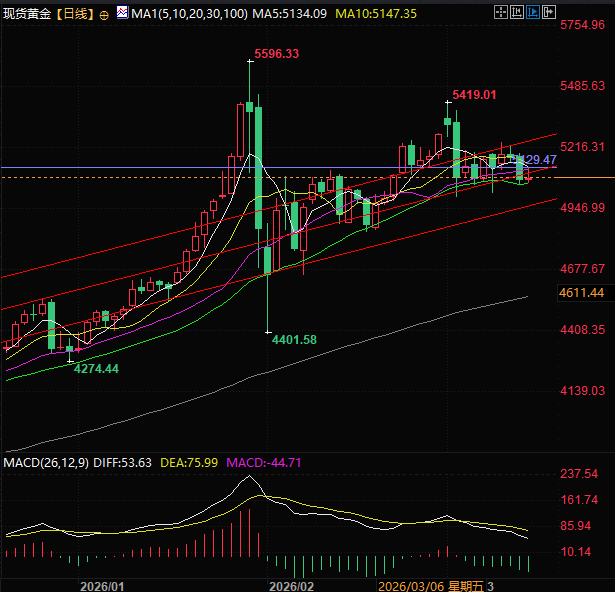
(Spot gold daily chart, source: FX678)
The former president, who nominated Powell to be the chairman of the Federal Reserve, has recently criticized Powell on social media for "reacting too late" and called for an immediate reduction in interest rates to a low of 1%, regarding interest rate cuts as a core means to stimulate the economy and reduce the cost of living for people.
Trump said on the 12th that Powell should not wait until the next Federal Reserve meeting to cut interest rates, but should lower rates immediately.
Powell was actually quite aggrieved because on January 28, facing pressure from the White House and data, Powell and his colleagues maintained the benchmark interest rate unchanged at the policy meeting. Now, facing the rise in global inflation caused by the war, it's as if they had completely guessed the test question, but instead of receiving praise, they were pressured again.
In emphasizing his demand for interest rate cuts to the Federal Reserve, Trump seems to have overlooked some important issues: there is a fundamental difference between monetary policy in wartime and peacetime. Interest rate cuts in peacetime "empower growth," while blind interest rate cuts in wartime will only "add fuel to the fire."
On the one hand, the Federal Reserve usually only adjusts interest rates at scheduled meetings, and emergency rate cuts are only applicable to extreme crises such as the COVID-19 pandemic. The conflict between the United States and Iran has triggered an inflation rebound rather than a liquidity crunch, which does not meet the conditions for emergency easing.
On the other hand, the core PCE inflation rate has risen to 3.1%, continuing to deviate from the policy target of 2%, and rising oil prices are further transmitting inflationary pressures. At this time, cutting interest rates would completely shake the market's confidence in the Fed's ability to combat inflation.
The market has already voted with its feet. Data from the CME Group's FedWatch tool shows that since the outbreak of the conflict, traders have abandoned their expectations for an early summer rate cut, even ruling out a September rate cut, anticipating only a single rate cut in December. The pricing for the next additional rate cut has been postponed to the second half of 2027. This shift in expectations is a direct response to Trump's cognitive biases.
The Federal Reserve's rational choice: maintain interest rates unchanged and anchor to its inflation target.
With the dual constraints of war and inflation, the Federal Reserve's policy path has gradually become clear.
The market is giving almost 100% confidence that the FOMC meeting scheduled for March 18 will maintain the current interest rate range of 3.50%-3.75%, a decision based on multiple practical considerations.
First, inflationary pressures continue to mount, with soaring oil prices and high core PCE making combating inflation a top priority. Goldman Sachs has postponed its expectation for the next rate cut from June to September.
Secondly, the increased economic uncertainty caused by the war necessitates that the Federal Reserve maintain policy flexibility to avoid premature easing and falling into a "stagflation" trap. Finally, with a new dovish chairman set to take office in May, the current policy continuity will help ensure a smooth transition and prevent drastic market fluctuations.
The Federal Reserve's cautious stance is essentially a rational adaptation to the wartime environment. As Bank of America economist Stephen Juno said, "Inflation is still fluctuating above target, and the Fed should not rush to further ease interest rates."
Even with signs of a cooling labor market, the transmission of rising oil prices to inflation expectations has kept policymakers on high alert.
For the market, the Fed's "holding steady" is not a passive wait, but rather an attempt to anchor policy amidst chaos and avoid negative resonance between monetary policy and fiscal deficits and geopolitical risks.
The transmission logic of traditional monetary tools is prone to completely failing under the shadow of war.
In peacetime, interest rate cuts reduce financing costs by releasing liquidity, which in turn stimulates corporate investment and household consumption, forming a closed loop of economic growth. However, the geopolitical turmoil caused by the US-Iran conflict has completely broken this logical chain.
Shipping risks in the Strait of Hormuz have driven up crude oil supply premiums, pushing oil prices above $100 a barrel. Supply chain restructuring has led to decreased economic efficiency, and increased military spending has created a rigid deficit. These triple pressures have plunged the market into a bizarre situation of "liquidity stagnation"—new funds are unwilling to flow into supply chains disrupted by war, but instead are pouring into safe-haven assets such as crude oil and gold for arbitrage. This not only fails to create GDP but also further increases corporate production costs, exacerbating the risk of "stagflation."
More importantly, the war disrupted the link between monetary policy and economic growth.
According to the fiscal theory of debt (FTPL), fiscal surpluses depend on economic growth. However, the increase in non-productive expenditures caused by war and the disordered inflation path make it difficult for the government to implement fiscal consolidation even if it intends to, and it can only maintain a high deficit.
At this point, the central bank is caught in a dilemma: tightening monetary policy to combat inflation would suppress economic growth and increase debt repayment pressure; loosening monetary policy would allow liquidity to flow into speculative areas, which would completely conflict with the goal of boosting the economy.
The core issue behind this policy failure lies in the fact that the uncertainty created by war far exceeds the regulatory capacity of monetary policy—without ending geopolitical conflicts, any interest rate adjustment is merely a "band-aid solution."
Gold: The "Ultimate Safe-Haven Asset" in the Game of War and Policy
In this game of war and monetary policy, gold's safe-haven properties have been continuously strengthened, making it a "stabilizing force" in market fluctuations.
Data shows that the price of gold in London has been fluctuating around $5,100 per ounce recently, and has repeatedly surged above $5,200 during periods of escalating conflict.
This behavior is essentially a dual hedge of capital against the uncertainty of war and the failure of policies. When the Federal Reserve is unable to resolve the contradiction between "liquidity stagnation" and "real economy cash shortage" through interest rate adjustments, and when the demand for interest rate cuts clashes sharply with the goal of combating inflation, gold, as a hard asset that does not rely on credit issuance and is not subject to policy intervention, naturally becomes a "safe haven" for capital.
The current temporary slump in gold prices is mainly due to the excessive gains in the previous period and the excessively high yields on global government bonds. This has made gold, which does not raise interest rates, less sought after than highly liquid and high-yield government bonds. At the same time, the cause of inflation is mainly the price increase of upstream materials rather than excessive money supply.
However, the longer the war lasts, the less concern about oil prices will arise, and the higher the safe-haven premium for gold will be.
For investors, gold is no longer just a short-term speculative tool, but a long-term investment choice to hedge against war risks, policy failures, and inflation rebounds. Its price trend will continue to reflect the interplay between global geopolitical situations and Federal Reserve policies.
(Spot gold daily chart, source: FX678)
- Risk Warning and Disclaimer
- The market involves risk, and trading may not be suitable for all investors. This article is for reference only and does not constitute personal investment advice, nor does it take into account certain users’ specific investment objectives, financial situation, or other needs. Any investment decisions made based on this information are at your own risk.