This week, seven central banks are targeting inflation! Australia has fired the first shot; will the outcome be reversed?
2026-03-17 15:53:41
On Tuesday, March 17th, with the escalating geopolitical conflict in the Middle East continuing for over two weeks, WTI crude oil futures traded in the range of approximately $94-97 per barrel, while Brent crude remained above $100 per barrel. The continued risk of energy supply chain disruptions continues to weigh on inflation expectations. The Reserve Bank of Australia announced today that it would raise the cash rate by 25 basis points from 3.85% to 4.10%, marking the first action in this week's busy period of central bank policy decisions. This highlights the more proactive approach taken by some central banks in responding to upward inflationary pressures stemming from geopolitical risks. The remaining agenda items this week include policy decisions from the Bank of Canada, the Federal Reserve, the Bank of Japan, the Swiss National Bank, the Bank of England, and the European Central Bank. Market focus will shift to how these institutions assess the dual impact of geopolitical conflicts on inflation and growth.

The Reserve Bank of Australia (RBA) raised its cash rate target to 4.10% today, with a 5-4 vote, indicating some internal disagreement. Governor Bullock stated at the press conference that this move primarily responded to a significant shift in upside risks to the inflation outlook, particularly oil price volatility caused by the Middle East conflict and accumulating domestic pressures. The RBA emphasized that this rate hike aimed to bring its policy stance closer to the current levels of other major central banks, while maintaining flexibility by not pre-committing to further paths and instead closely monitoring developments in the Middle East. The market had previously priced in a rate hike at approximately 82%, and the Australian dollar experienced increased short-term volatility after the decision was announced, but the overall reaction was relatively restrained.
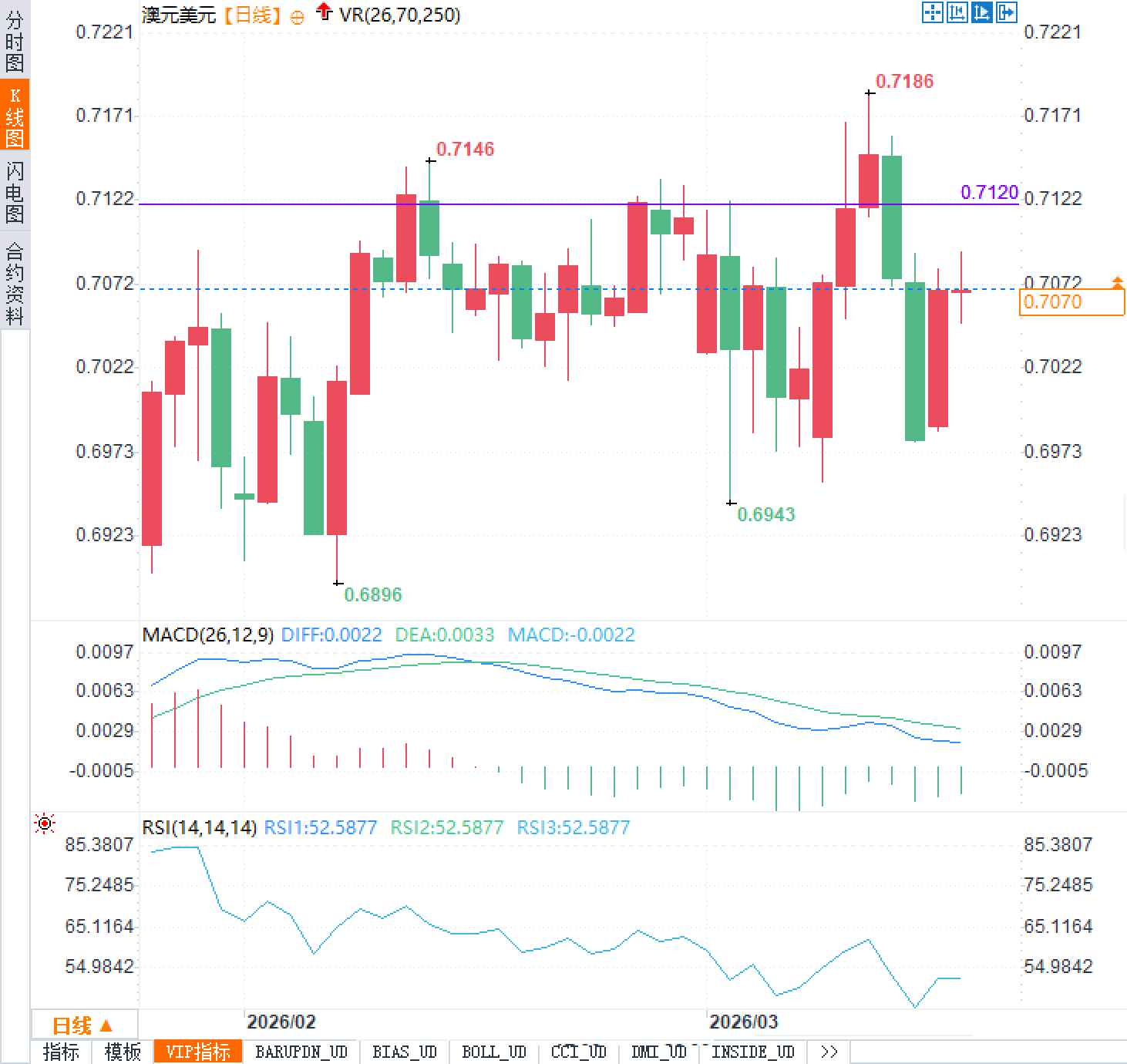
This rate hike reflects the Reserve Bank of Australia's (RBA) vigilance regarding the transmission effects of energy prices. The conflict has disrupted shipping in the Strait of Hormuz, putting structural pressure on global crude oil supply. While Australia, as an energy exporter, benefits from rising prices, import costs and inflation spillovers still pose challenges. The RBA reiterated that it will take further action if necessary, but currently prioritizes a wait-and-see approach to avoid prematurely locking in direction. This contrasts with the assessment by some central banks in 2021-2022 that inflation was "temporary," a delayed response that led to subsequent setbacks. The RBA's move to act proactively this time indicates a more forward-looking approach to risk management.
This week is a busy week for major central banks to make decisions. Apart from the Reserve Bank of Australia, which has already taken action, most other institutions are expected to maintain the status quo, but the focus will be on their statements on geopolitical risks and forward guidance.
?
Bank of Canada (March 18): Market consensus expected the overnight rate to remain unchanged at 2.25%. While inflation faces upward pressure from oil prices, slowing domestic growth limits the scope for tightening. Policymakers may emphasize data-driven decision-making, focusing on employment and consumption indicators.
?
?
Federal Reserve (March 19): The target range for the federal funds rate is expected to remain at 3.50%-3.75%. The current effective federal funds rate is approximately 3.64%. Policymakers need to balance inflation risks with growth resilience, and updates to the dot plot and economic projections will be key points of observation.
?
?
Bank of Japan (March 19): The policy rate is expected to remain unchanged at 0.75%. The yen has been under pressure recently, but the central bank is inclined to continue its gradual normalization path, and the window for a rate hike in April remains open.
?
?
Swiss National Bank (March 19): Policy rate is expected to remain unchanged at 0%. Moderate inflation and a stable Swiss franc provide a policy buffer.
?
?
Bank of England (March 19): The benchmark interest rate is expected to remain unchanged at 3.75%. Internal voting divisions may persist, with the focus on assessing the transmission of energy prices.
?
?
European Central Bank (March 19): Deposit facility rates are expected to remain unchanged. Some institutions predict that rates will remain stable overall in 2026, but the inflation path still needs to be observed.
?
Central banks generally favor a "wait-and-see + flexible" strategy to avoid prematurely committing to a direction in order to cope with the uncertainties of geopolitical conflicts. Oil price volatility has become a core variable; if supply disruptions persist, inflation expectations may rise further; conversely, if conflicts ease, falling energy prices will provide room for easing.
The Middle East conflict has already caused crude oil prices to rise sharply from pre-conflict levels. The Strait of Hormuz, a vital chokepoint for global oil transport, will amplify supply shocks if any prolonged disruption occurs. Current market pricing already partially reflects the risk premium, but if the conflict drags on, the transmission of energy costs to non-energy goods and services will exacerbate core inflationary pressures.
The table below briefly compares the current policy interest rate levels of major central banks (as of March 17, 2026):
The Reserve Bank of Australia's latest move positions it more neutral to slightly tight, contrasting with the Federal Reserve and other institutions.
In-depth analysis of the Reserve Bank of Australia's interest rate hike decision
The Reserve Bank of Australia (RBA) raised its cash rate target to 4.10% today, with a 5-4 vote, indicating some internal disagreement. Governor Bullock stated at the press conference that this move primarily responded to a significant shift in upside risks to the inflation outlook, particularly oil price volatility caused by the Middle East conflict and accumulating domestic pressures. The RBA emphasized that this rate hike aimed to bring its policy stance closer to the current levels of other major central banks, while maintaining flexibility by not pre-committing to further paths and instead closely monitoring developments in the Middle East. The market had previously priced in a rate hike at approximately 82%, and the Australian dollar experienced increased short-term volatility after the decision was announced, but the overall reaction was relatively restrained.
This rate hike reflects the Reserve Bank of Australia's (RBA) vigilance regarding the transmission effects of energy prices. The conflict has disrupted shipping in the Strait of Hormuz, putting structural pressure on global crude oil supply. While Australia, as an energy exporter, benefits from rising prices, import costs and inflation spillovers still pose challenges. The RBA reiterated that it will take further action if necessary, but currently prioritizes a wait-and-see approach to avoid prematurely locking in direction. This contrasts with the assessment by some central banks in 2021-2022 that inflation was "temporary," a delayed response that led to subsequent setbacks. The RBA's move to act proactively this time indicates a more forward-looking approach to risk management.
Outlook for the week's concentrated period of global central bank decisions
This week is a busy week for major central banks to make decisions. Apart from the Reserve Bank of Australia, which has already taken action, most other institutions are expected to maintain the status quo, but the focus will be on their statements on geopolitical risks and forward guidance.
?
Bank of Canada (March 18): Market consensus expected the overnight rate to remain unchanged at 2.25%. While inflation faces upward pressure from oil prices, slowing domestic growth limits the scope for tightening. Policymakers may emphasize data-driven decision-making, focusing on employment and consumption indicators.
?
?
Federal Reserve (March 19): The target range for the federal funds rate is expected to remain at 3.50%-3.75%. The current effective federal funds rate is approximately 3.64%. Policymakers need to balance inflation risks with growth resilience, and updates to the dot plot and economic projections will be key points of observation.
?
?
Bank of Japan (March 19): The policy rate is expected to remain unchanged at 0.75%. The yen has been under pressure recently, but the central bank is inclined to continue its gradual normalization path, and the window for a rate hike in April remains open.
?
?
Swiss National Bank (March 19): Policy rate is expected to remain unchanged at 0%. Moderate inflation and a stable Swiss franc provide a policy buffer.
?
?
Bank of England (March 19): The benchmark interest rate is expected to remain unchanged at 3.75%. Internal voting divisions may persist, with the focus on assessing the transmission of energy prices.
?
?
European Central Bank (March 19): Deposit facility rates are expected to remain unchanged. Some institutions predict that rates will remain stable overall in 2026, but the inflation path still needs to be observed.
?
Central banks generally favor a "wait-and-see + flexible" strategy to avoid prematurely committing to a direction in order to cope with the uncertainties of geopolitical conflicts. Oil price volatility has become a core variable; if supply disruptions persist, inflation expectations may rise further; conversely, if conflicts ease, falling energy prices will provide room for easing.
The impact of geopolitical conflicts on global inflation and asset pricing
The Middle East conflict has already caused crude oil prices to rise sharply from pre-conflict levels. The Strait of Hormuz, a vital chokepoint for global oil transport, will amplify supply shocks if any prolonged disruption occurs. Current market pricing already partially reflects the risk premium, but if the conflict drags on, the transmission of energy costs to non-energy goods and services will exacerbate core inflationary pressures.
The table below briefly compares the current policy interest rate levels of major central banks (as of March 17, 2026):
| Central Bank | Current policy interest rate | Recent Changes | Market expectations for this meeting |
|---|---|---|---|
| Reserve Bank of Australia | 4.10% | +25bp (March 17) | Interest rates have been raised |
| Fed | 3.50%-3.75% | Keep stable | Keep stable |
| Bank of Japan | 0.75% | Keep stable | Keep stable |
| Swiss National Bank | 0% | Keep stable | Keep stable |
| Bank of England | 3.75% | Keep stable | Keep stable |
| European Central Bank | Maintain the status quo | Keep stable | Keep stable |
| Bank of Canada | 2.25% | Keep stable | Keep stable |
Frequently Asked Questions
Question 1: What is the core driving factor behind the Reserve Bank of Australia's latest interest rate hike?
A: The Reserve Bank of Australia (RBA) explicitly attributed this rate hike to a significant shift in upside risks to the inflation outlook, primarily stemming from oil price volatility triggered by the Middle East conflict and accumulating domestic pressures. Governor Bullock emphasized that this move aims to make policy more balanced while maintaining flexibility, avoiding pre-locking in further paths, and closely monitoring geopolitical developments. This decision reflects caution regarding the transmission effects of energy prices, avoiding a repeat of past mistakes that viewed inflation as temporary.
Question 2: Will other major central banks follow the Reserve Bank of Australia's lead and shift towards tightening this week?
A: The market generally expects other central banks to maintain the status quo, shifting the focus to statements regarding geopolitical risks rather than immediate action. The Federal Reserve and the European Central Bank tend to rely on data and adopt a wait-and-see approach. If the conflict leads to persistently higher-than-expected inflation, it may reinforce tightening signals; conversely, if oil prices fall, it will provide room for further adjustments. As an energy exporter, Australia is more directly affected by rising oil prices and therefore has acted relatively early.
Question 3: How to assess the long-term impact of the escalation of the Middle East conflict on the global inflation path?
A: The conflict has pushed crude oil prices to high levels, and the risk of supply disruptions has amplified the transmission of energy costs. If the Strait of Hormuz remains blocked, global inflation expectations will rise further, increasing core inflationary pressures; however, if the situation eases, a price decline will alleviate the pressure.
- Risk Warning and Disclaimer
- The market involves risk, and trading may not be suitable for all investors. This article is for reference only and does not constitute personal investment advice, nor does it take into account certain users’ specific investment objectives, financial situation, or other needs. Any investment decisions made based on this information are at your own risk.