Oil prices hold firm above $100, gold prices retreat from highs: Are safe-haven funds changing their strategies?
2026-03-17 20:11:27
On Tuesday, March 17, geopolitical conflict-related risk premiums once again became the main variable in the market. The latest fundamental signal came from the tough stance of Iran's top decision-makers at their first foreign policy meeting, which explicitly rejected de-escalation paths proposed by external mediation and emphasized that "now is not the right time for peace," setting "defeating the United States and Israel and demanding compensation" as a precondition for a ceasefire.
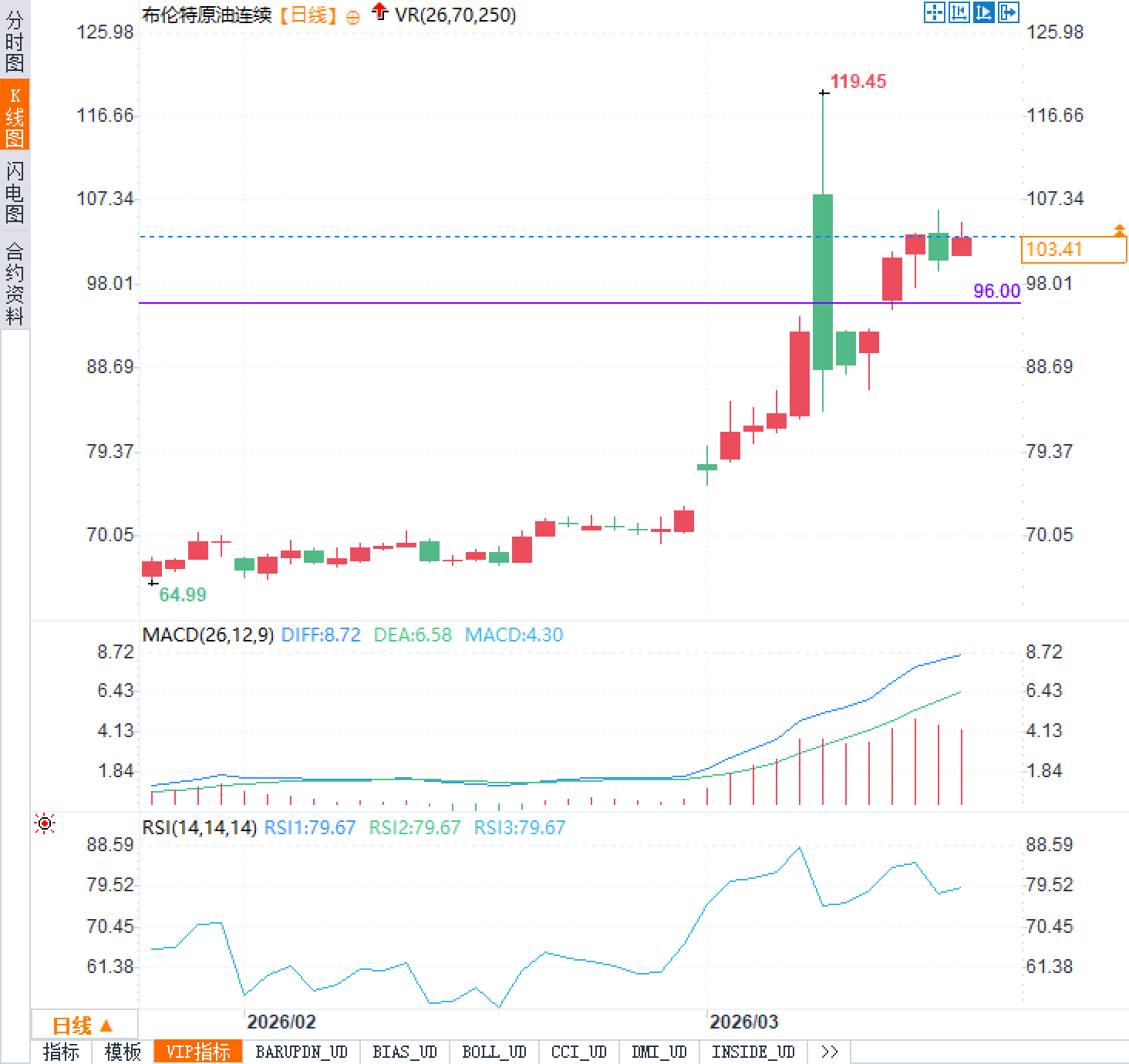
This statement directly reduced market pricing in a short-term easing, and funds immediately refocused on tail risks in shipping chokepoints and energy infrastructure. Crude oil prices remained high after the previous day's fluctuations. Brent crude is currently trading around $103.50 per barrel, and WTI crude is around $97 per barrel, reflecting that risk premiums still dominate pricing.
Iran's top leadership's "victory-first" narrative has essentially raised the upper limit of expected conflict duration and shifted the negotiation path from "de-escalation for stability" to "compensation for ceasefire." For traders, the key lies in its impact on two pricing frameworks: first, with de-escalation expectations revised downwards, the market's discount factor for supply recovery time increases, making risk assets more sensitive to discount rates; second, the energy chain's risk has shifted from "supply volume risk" to "supply channel and facility risk," leading to a more concentrated transmission of risk premiums to near-month contracts, shipping, and refined oil cracking. This strategy often doesn't aim for a one-time price surge but rather prefers to maintain a high volatility range, keeping hedging costs and term structures strained over a longer period, thereby amplifying the constraints of "energy inflation" on global financial conditions at the macro level.
The core issue currently plaguing oil prices is not simply a production shortfall, but rather the delivery risk stemming from uncertainties in shipping routes. Public reports indicate that disruptions surrounding key shipping chokepoints and the impact on regional energy infrastructure have led the market to continuously assess "shippable volume" rather than "producible volume," a key reason why Brent crude has consistently held above $100 per barrel recently. More importantly, the impact of supply shocks on different commodities and maturities is asymmetrical. While crude oil itself possesses a certain degree of inventory and inter-regional transport flexibility, once transportation and refining chains are disrupted, shortages in refined products are more likely to manifest first, thereby raising inflation expectations and, in turn, supporting crude oil risk premiums. Therefore, traders typically consider "near-term tightness" as a higher-weighted variable when interpreting market trends: the simultaneous strengthening of near-month premiums, shipping rates, regional price spreads, and refined product cracking often indicates a more pessimistic market outlook on short-term supply availability, rather than a simple loss of confidence in the medium- to long-term supply-demand rebalancing.
After oil prices surpass $100 per barrel, the impact on the interest rate market typically unfolds in two phases: first, rising inflation expectations drive up the term premium; second, changes in risk appetite and adjustments in growth expectations alter the yield curve's slope. Recent data shows a steepening of the US Treasury yield curve, with the 10-year yield rising to 4.240%, the 30-year yield to approximately 4.870%, and the 2-year yield around 3.680%, indicating a more significant upward movement at the longer end, consistent with the logic of "repricing of energy-driven inflation concerns." It's important to emphasize that this type of inflationary pressure triggered by supply-side shocks is often less favorable for risk asset valuations: it raises "passive inflation," not automatically leading to upward earnings revisions, but rather impacting demand by increasing financing costs and compressing real purchasing power. Therefore, the market is paying closer attention to two types of follow-up signals: first, the buffering mechanisms major economies employ against energy shocks, including strategic reserves and supply coordination; and second, whether secondary transmission of inflation spreads from energy to services and wages. If the latter is confirmed, the yield curve may further reflect a longer period of tight constraints.
This statement directly reduced market pricing in a short-term easing, and funds immediately refocused on tail risks in shipping chokepoints and energy infrastructure. Crude oil prices remained high after the previous day's fluctuations. Brent crude is currently trading around $103.50 per barrel, and WTI crude is around $97 per barrel, reflecting that risk premiums still dominate pricing.
The re-anchoring of the core event and risk premium
Iran's top leadership's "victory-first" narrative has essentially raised the upper limit of expected conflict duration and shifted the negotiation path from "de-escalation for stability" to "compensation for ceasefire." For traders, the key lies in its impact on two pricing frameworks: first, with de-escalation expectations revised downwards, the market's discount factor for supply recovery time increases, making risk assets more sensitive to discount rates; second, the energy chain's risk has shifted from "supply volume risk" to "supply channel and facility risk," leading to a more concentrated transmission of risk premiums to near-month contracts, shipping, and refined oil cracking. This strategy often doesn't aim for a one-time price surge but rather prefers to maintain a high volatility range, keeping hedging costs and term structures strained over a longer period, thereby amplifying the constraints of "energy inflation" on global financial conditions at the macro level.
Vulnerabilities and Term Structure Signals in the Energy Supply Chain
The core issue currently plaguing oil prices is not simply a production shortfall, but rather the delivery risk stemming from uncertainties in shipping routes. Public reports indicate that disruptions surrounding key shipping chokepoints and the impact on regional energy infrastructure have led the market to continuously assess "shippable volume" rather than "producible volume," a key reason why Brent crude has consistently held above $100 per barrel recently. More importantly, the impact of supply shocks on different commodities and maturities is asymmetrical. While crude oil itself possesses a certain degree of inventory and inter-regional transport flexibility, once transportation and refining chains are disrupted, shortages in refined products are more likely to manifest first, thereby raising inflation expectations and, in turn, supporting crude oil risk premiums. Therefore, traders typically consider "near-term tightness" as a higher-weighted variable when interpreting market trends: the simultaneous strengthening of near-month premiums, shipping rates, regional price spreads, and refined product cracking often indicates a more pessimistic market outlook on short-term supply availability, rather than a simple loss of confidence in the medium- to long-term supply-demand rebalancing.
| index | Latest level | Time point | Meaning emphasis |
|---|---|---|---|
| Brent crude oil | $103.50 per barrel | March 17 | Geopolitical risk premium dominates |
| WTI crude oil | $97 per barrel | March 17 | North American supply is flexible but still tight |
| US 10-year Treasury yield | 4.240% | March 17 | Oil prices fuel inflation concerns and drive up long-term prices. |
| US 2-year Treasury yield | 3.680% | March 17 | Policy expectations are relatively anchored but are driven by inflation repricing. |
| Gold futures settlement price | $5,002 per ounce | March 16 | A period of pullback occurred during the high-level fluctuations. |
From Oil Prices to Yield Curves: Inflation Expectations and the Recalibration of Financial Conditions
After oil prices surpass $100 per barrel, the impact on the interest rate market typically unfolds in two phases: first, rising inflation expectations drive up the term premium; second, changes in risk appetite and adjustments in growth expectations alter the yield curve's slope. Recent data shows a steepening of the US Treasury yield curve, with the 10-year yield rising to 4.240%, the 30-year yield to approximately 4.870%, and the 2-year yield around 3.680%, indicating a more significant upward movement at the longer end, consistent with the logic of "repricing of energy-driven inflation concerns." It's important to emphasize that this type of inflationary pressure triggered by supply-side shocks is often less favorable for risk asset valuations: it raises "passive inflation," not automatically leading to upward earnings revisions, but rather impacting demand by increasing financing costs and compressing real purchasing power. Therefore, the market is paying closer attention to two types of follow-up signals: first, the buffering mechanisms major economies employ against energy shocks, including strategic reserves and supply coordination; and second, whether secondary transmission of inflation spreads from energy to services and wages. If the latter is confirmed, the yield curve may further reflect a longer period of tight constraints.
Frequently Asked Questions
Question 1: Why did the tough stance quickly reflect on oil prices instead of first on the stock market?
A: Energy is the most direct and quantifiable channel for the transmission of conflict risks, especially when risks target shipping chokepoints and infrastructure. The market prioritizes pricing "deliverable risks," and the term structure of crude oil and refined products often signals these risks earlier than the stock market. The stock market needs to map events to earnings and discount rates, which involves a longer chain and more variables, thus its reaction may be delayed or differentiated.
Question 2: Why does the yield curve steepen more easily after oil prices reach $100 per barrel?
A: When supply-side shocks raise inflation concerns, longer-term rates are more likely to reflect an upward shift in the term premium and increased inflation compensation, while shorter-term rates remain more constrained by policy paths. As a result, longer-term rates rise relatively faster, the yield curve tends to steepen, financial conditions tighten accordingly, and valuation pressures on risky assets increase.
- Risk Warning and Disclaimer
- The market involves risk, and trading may not be suitable for all investors. This article is for reference only and does not constitute personal investment advice, nor does it take into account certain users’ specific investment objectives, financial situation, or other needs. Any investment decisions made based on this information are at your own risk.