Trump tried to calm the oil market, but it seems to have failed?
2026-03-20 21:35:26
On Friday, March 20, Brent crude futures traded around $108 a barrel during North American trading hours, with a weekly gain still close to 4%. This price movement stemmed from the ongoing conflict in the Middle East, with Iran's closure of the Strait of Hormuz causing significant disruptions to shipping. US Treasury Secretary Scott Bessenter hinted at a possible lifting of some sanctions on crude oil to ease price pressures. Israeli Prime Minister Benjamin Netanyahu expressed support for US efforts to reopen the waterway, while Iran continued its attacks on its Gulf neighbors. Despite some vessels attempting to pass, regional strikes continued, and analysts warned the crisis could escalate further. Traders are focused on how supply disruptions will affect the steepening of the futures curve and increased volatility.
The rapidly deteriorating situation in the Middle East has directly driven up oil price volatility. The Strait of Hormuz, which handles about one-fifth of global oil shipments, has experienced daily supply disruptions exceeding 8 million barrels since its closure, with Gulf countries reducing production by at least 10 million barrels per day. Brent crude prices surged rapidly, with a monthly increase of nearly 50%, far exceeding historical fluctuations for the same period. The slight pullback today was mainly influenced by policy signals, but the overall supply tightness remains unchanged. Israeli Prime Minister Netanyahu recently stated at a press conference that Israel supports the US efforts to reopen the Strait and pledged to avoid attacking Iranian energy infrastructure, which temporarily eased market panic. However, Iran's continued attacks on Gulf energy targets have kept actual flows low. Traders should note that such geopolitical drivers often lead to widening premiums in longer-dated contracts, reflecting long-term uncertainty.
U.S. Treasury Secretary Scott Bessant stated publicly on Thursday that Washington may lift sanctions on Iranian crude oil stranded on tankers within days, a move expected to release approximately 140 million barrels of inventory, equivalent to 10 to 14 days of global supply. Bessant emphasized that this is tantamount to using Iran's own resources to counter its actions, while avoiding direct intervention in the futures market. Trump has also recently attempted to calm market concerns about oil and gas supplies, calling on allies to assist in reopening the Straits of Hormuz. Israeli Prime Minister Netanyahu simultaneously expressed support for this effort, further strengthening the signal of policy coordination. Such adjustments are similar to previous temporary exemption mechanisms, which can temporarily smooth out spot premiums but cannot solve the fundamental transportation bottlenecks. Traders observed that the WTI-Brent price spread narrowed simultaneously, indicating that North American benchmarks are increasingly affected by global linkages. While policy easing provides a short-term buffer, it highlights the vulnerability of supply dependence; if the conflict prolongs, the effectiveness of reserve releases will rapidly diminish.
Analysts widely warn that a prolonged closure of the Strait of Hormuz would trigger a chain reaction in the global energy market. Goldman Sachs' commodities team recently raised its Q4 2026 Brent crude oil forecast to $71 per barrel, assuming a 21-day initial restriction followed by a gradual recovery. The previous forecast was only $66, reflecting the extended disruption. Other institutions point out that a prolonged blockade could push prices above $150 or even higher, primarily due to the inability to quickly fill the over 8 million barrels per day supply gap. The International Energy Agency has hinted that releasing strategic reserves could provide limited relief, but the risk of attacks on Gulf infrastructure remains, and production recovery could take months. The futures market has already reflected this expectation: volatility in near-month contracts has surged, and the curve structure indicates a tight supply balance. Traders need to assess how geopolitical events will impact inventory data and crack spreads. In the long term, rising costs of alternative routes will push up global refining margins, amplifying energy inflationary pressures.
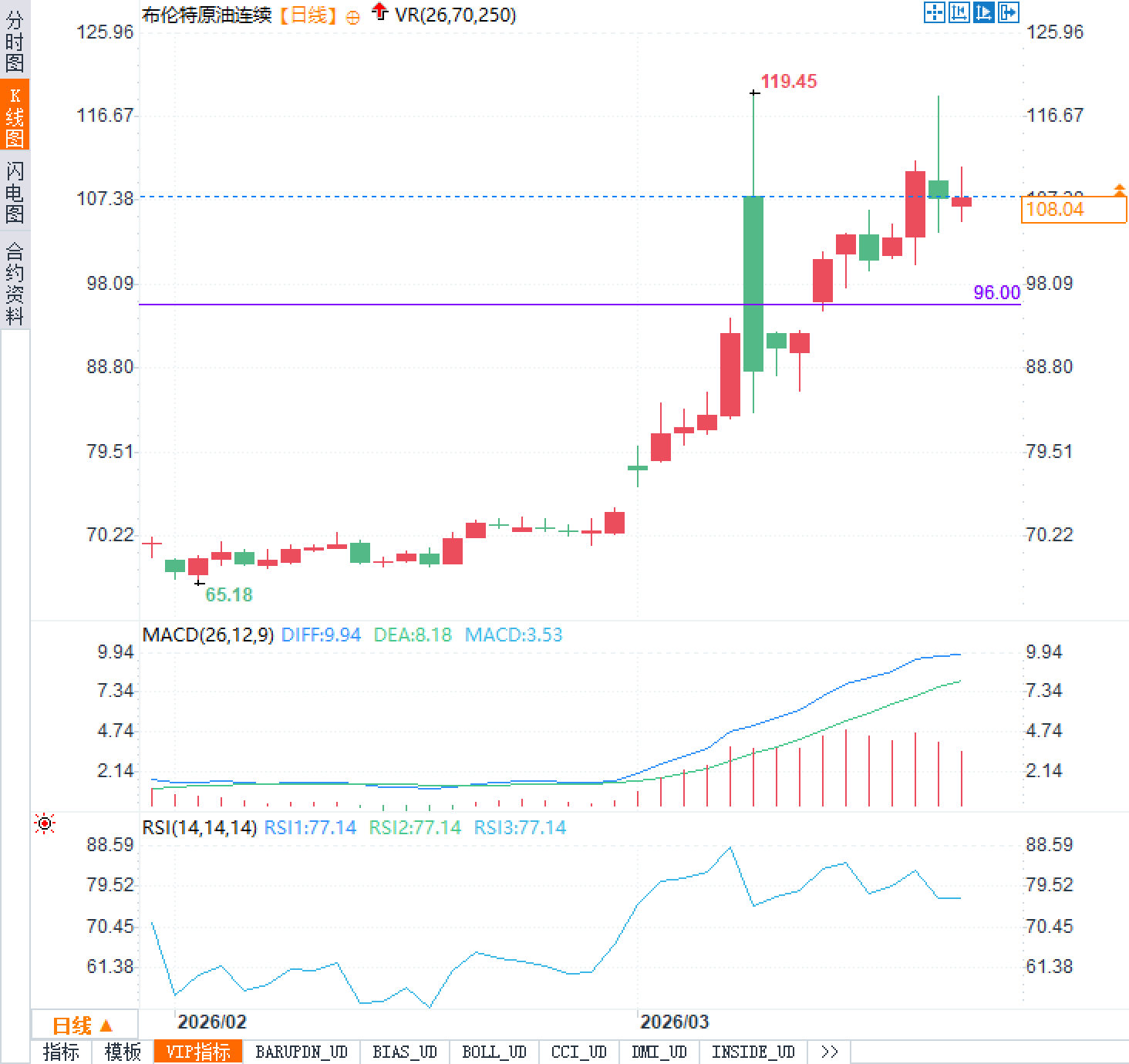
Escalating conflict drives sharp fluctuations in oil prices
The rapidly deteriorating situation in the Middle East has directly driven up oil price volatility. The Strait of Hormuz, which handles about one-fifth of global oil shipments, has experienced daily supply disruptions exceeding 8 million barrels since its closure, with Gulf countries reducing production by at least 10 million barrels per day. Brent crude prices surged rapidly, with a monthly increase of nearly 50%, far exceeding historical fluctuations for the same period. The slight pullback today was mainly influenced by policy signals, but the overall supply tightness remains unchanged. Israeli Prime Minister Netanyahu recently stated at a press conference that Israel supports the US efforts to reopen the Strait and pledged to avoid attacking Iranian energy infrastructure, which temporarily eased market panic. However, Iran's continued attacks on Gulf energy targets have kept actual flows low. Traders should note that such geopolitical drivers often lead to widening premiums in longer-dated contracts, reflecting long-term uncertainty.
| date | Brent crude oil price (USD/barrel) | Daily change (%) |
|---|---|---|
| March 20, 2026 | 108.04 | -0.83 |
| March 19, 2026 | 108.65 | +1.18 |
| March 18, 2026 | 107.38 | +3.83 |
| March 17, 2026 | 103.42 | +3.20 |
| March 16, 2026 | 100.21 | -2.84 |
US policy adjustments create short-term supply buffers
U.S. Treasury Secretary Scott Bessant stated publicly on Thursday that Washington may lift sanctions on Iranian crude oil stranded on tankers within days, a move expected to release approximately 140 million barrels of inventory, equivalent to 10 to 14 days of global supply. Bessant emphasized that this is tantamount to using Iran's own resources to counter its actions, while avoiding direct intervention in the futures market. Trump has also recently attempted to calm market concerns about oil and gas supplies, calling on allies to assist in reopening the Straits of Hormuz. Israeli Prime Minister Netanyahu simultaneously expressed support for this effort, further strengthening the signal of policy coordination. Such adjustments are similar to previous temporary exemption mechanisms, which can temporarily smooth out spot premiums but cannot solve the fundamental transportation bottlenecks. Traders observed that the WTI-Brent price spread narrowed simultaneously, indicating that North American benchmarks are increasingly affected by global linkages. While policy easing provides a short-term buffer, it highlights the vulnerability of supply dependence; if the conflict prolongs, the effectiveness of reserve releases will rapidly diminish.
Amplified Supply Risks and Long-Term Early Warning
Analysts widely warn that a prolonged closure of the Strait of Hormuz would trigger a chain reaction in the global energy market. Goldman Sachs' commodities team recently raised its Q4 2026 Brent crude oil forecast to $71 per barrel, assuming a 21-day initial restriction followed by a gradual recovery. The previous forecast was only $66, reflecting the extended disruption. Other institutions point out that a prolonged blockade could push prices above $150 or even higher, primarily due to the inability to quickly fill the over 8 million barrels per day supply gap. The International Energy Agency has hinted that releasing strategic reserves could provide limited relief, but the risk of attacks on Gulf infrastructure remains, and production recovery could take months. The futures market has already reflected this expectation: volatility in near-month contracts has surged, and the curve structure indicates a tight supply balance. Traders need to assess how geopolitical events will impact inventory data and crack spreads. In the long term, rising costs of alternative routes will push up global refining margins, amplifying energy inflationary pressures.
Frequently Asked Questions
Question 1: What is the core logic behind Brent crude oil's slight decline on Friday but still recording a weekly gain?
A: The intraday decline was mainly due to comments about lifting sanctions on Bessant releasing approximately 140 million barrels of potential supply, briefly suppressing panic buying. However, the nearly 4% weekly gain stemmed from the cumulative supply disruptions caused by the closure of the Strait of Hormuz, with the monthly increase reaching 50%. The ongoing conflict, coupled with regional sanctions, means market pricing remains primarily based on a long-term tight balance, which traders are reflecting in the widening premium for longer-dated contracts. Short-term policy signals cannot address the fundamental transportation bottlenecks, therefore the overall upward trend has not reversed.
Question 2: How significant is the actual impact of the US sanctions adjustment on oil prices?
A: Releasing 140 million barrels of stranded crude oil provides a 10-14 day buffer, similar to previous temporary exemptions for Russian crude, which can reduce spot premiums and smooth the WTI-Brent price spread. However, this is only a tactical measure and cannot replace the 8 million barrels of daily traffic through the Strait. Netanyahu's support for reopening the Strait and his statements to strengthen coordination mean that if the conflict escalates, the inventory buffer will be quickly depleted. Traders need to pay attention to actual tanker traffic data; this policy is more about alleviating panic than addressing the root cause.
Question 3: If the Hormuz crisis continues, what are the long-term risks to the oil market?
A: Analysts warn that prolonged disruptions will push prices above $150, and the global supply gap will be difficult to fill. Goldman Sachs and other institutions have raised their forecasts, emphasizing that restrictions exceeding 21 days will reshape the yield curve. The risk of infrastructure attacks and rising insurance costs will amplify the ripple effects, and traders face persistently high volatility and widening spreads. With limited strategic reserves and high costs of alternative routes, the market needs to prepare for a tight supply-demand balance to become the new normal.
- Risk Warning and Disclaimer
- The market involves risk, and trading may not be suitable for all investors. This article is for reference only and does not constitute personal investment advice, nor does it take into account certain users’ specific investment objectives, financial situation, or other needs. Any investment decisions made based on this information are at your own risk.