Gold prices plummet: What are traders looking at now?
2026-03-23 15:10:08
Spot gold is undergoing a sharp correction. On Monday, March 23, the price fell to around $4,165 per ounce, a single-day drop of nearly 7%, and a cumulative weekly decline of over 9%. Despite the escalating US-Iran conflict and its push up energy costs, gold failed to fulfill its traditional safe-haven appeal. Instead, it was constrained by the inflationary chain reaction triggered by soaring oil prices and the rapid shift in policy expectations of major central banks. This triple negative factor dominated traders' position adjustments, and market sentiment shifted from geopolitical safe-haven aversion to concerns about macroeconomic tightening.
The escalation of tensions between the US and Iran should have provided support for gold, but the actual effect was completely offset by the impact of oil price shocks. The conflict disrupted shipping in the Strait of Hormuz, disrupting the global energy supply chain and directly pushing up oil prices. Traders observed that, unlike previous purely geopolitical events, the rise in oil prices translated into persistent inflationary pressures, weakening gold's appeal. Historically, gold has often recorded positive returns during similar periods of tension, but in the current environment, energy costs are being passed on to production and consumption, forcing traders to reassess their asset allocation. Federal Reserve Chairman Powell clearly stated on March 18 that the impact of the Middle East events on the US economy was still uncertain, but that rising energy prices would push up overall inflation in the short term. This statement further suppressed safe-haven buying of gold, with traders turning to assess the path of real interest rates rather than simply risk events.
The crude oil market has become a core driver of gold price movements. Brent crude is currently hovering around $113 per barrel, while WTI crude is near $100 per barrel, a significant increase from pre-conflict levels. Rising energy prices directly increase production costs and are transmitted to consumers through the supply chain, creating broad inflationary pressure. Below is a comparison of recent key commodity prices:
This comparison highlights the squeezing effect of strong crude oil prices on gold. Traders are watching whether oil prices can remain high; if the energy shock continues, inflation expectations will solidify further, and the cost of holding gold as a non-yielding asset will rise significantly.
The central bank easing cycle of the past two years provided solid support for gold, but the current resurgence of inflation has forced a shift in policy focus towards tightening. The Federal Reserve maintained the federal funds rate in the range of 3.50% to 3.75% and raised its 2026 inflation forecast to 2.7%. Powell emphasized that rising energy prices will constitute "new inflation," and although he did not explicitly raise interest rates, the market has reduced its expectations for rate cuts from multiple times to possibly only once. Major institutions such as the European Central Bank and the Bank of Japan are also facing similar dilemmas, with rising real interest rates directly increasing the opportunity cost of gold. Traders' calculations show that the rise in the yield on 10-year US Treasury bonds has reduced the relative attractiveness of gold, and deleveraging has accelerated the price adjustment. This policy shift is not a short-term phenomenon, but a systemic response to energy-driven inflation.
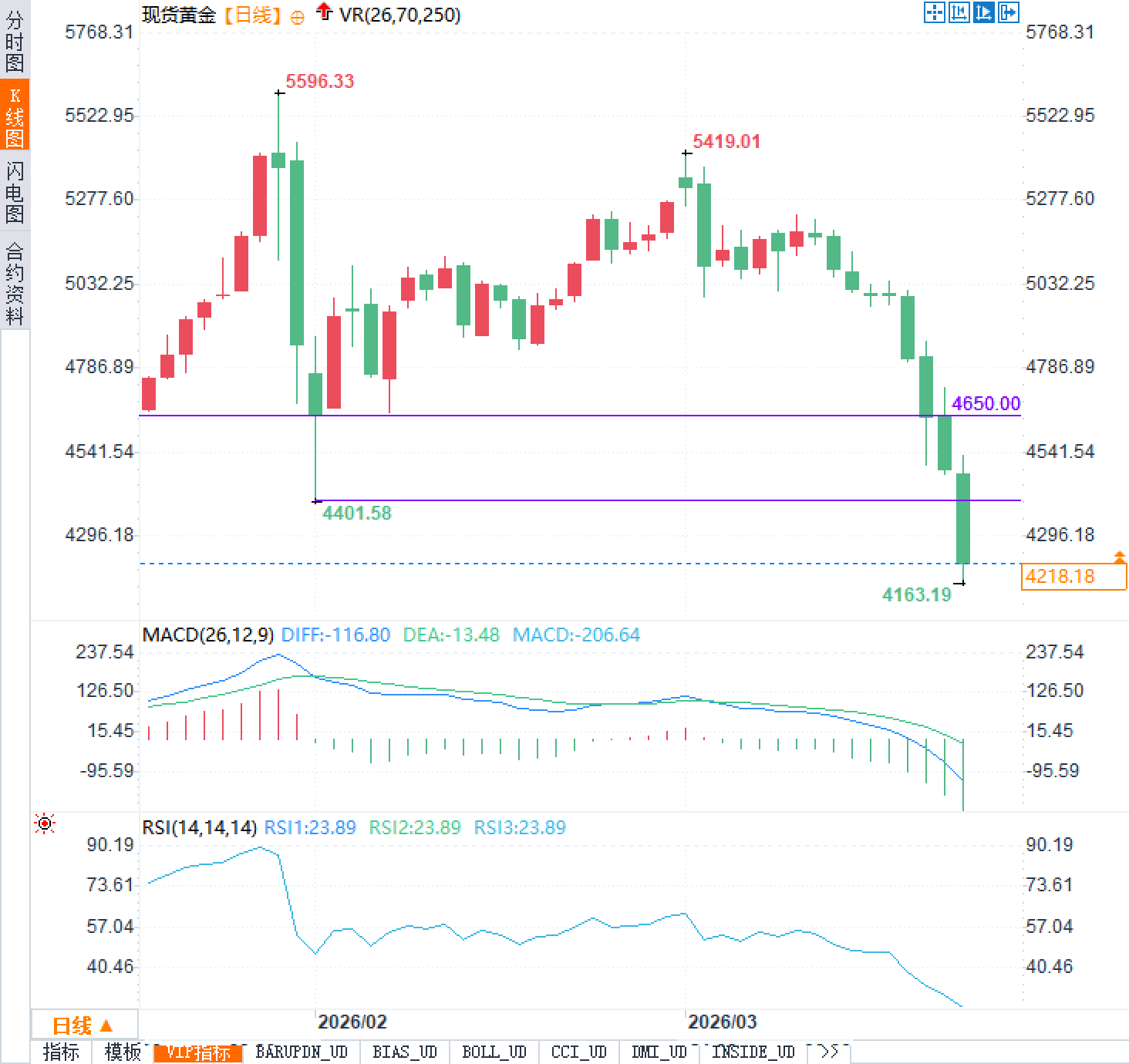
Looking ahead, gold faces multiple uncertainties. The duration of the conflict will determine the path of oil prices. If energy supply disruptions are prolonged, inflationary pressures may force central banks to further tighten policy, increasing the downside risk for gold. Conversely, if the situation eases, a decline in oil prices may alleviate inflation expectations, providing room for a gold rebound. However, traders should be wary of additional downward pressure from a simultaneous strengthening of the US dollar index and asset sell-offs driven by global liquidity needs. Overall, spot gold has entered a highly volatile range, and every update to macroeconomic data and geopolitical dynamics could trigger significant price movements.
Geopolitical conflicts failed to trigger a safe-haven premium for gold.
The escalation of tensions between the US and Iran should have provided support for gold, but the actual effect was completely offset by the impact of oil price shocks. The conflict disrupted shipping in the Strait of Hormuz, disrupting the global energy supply chain and directly pushing up oil prices. Traders observed that, unlike previous purely geopolitical events, the rise in oil prices translated into persistent inflationary pressures, weakening gold's appeal. Historically, gold has often recorded positive returns during similar periods of tension, but in the current environment, energy costs are being passed on to production and consumption, forcing traders to reassess their asset allocation. Federal Reserve Chairman Powell clearly stated on March 18 that the impact of the Middle East events on the US economy was still uncertain, but that rising energy prices would push up overall inflation in the short term. This statement further suppressed safe-haven buying of gold, with traders turning to assess the path of real interest rates rather than simply risk events.
Soaring crude oil prices are reshaping inflation expectations
The crude oil market has become a core driver of gold price movements. Brent crude is currently hovering around $113 per barrel, while WTI crude is near $100 per barrel, a significant increase from pre-conflict levels. Rising energy prices directly increase production costs and are transmitted to consumers through the supply chain, creating broad inflationary pressure. Below is a comparison of recent key commodity prices:
| variety | Current price | Weekly changes |
|---|---|---|
| spot gold | $4218/ounce | -9% |
| Brent crude oil | $113/barrel | +9% |
| WTI crude oil | $100/barrel | +53% (monthly) |
The policy shifts of major central banks constitute a direct negative factor.
The central bank easing cycle of the past two years provided solid support for gold, but the current resurgence of inflation has forced a shift in policy focus towards tightening. The Federal Reserve maintained the federal funds rate in the range of 3.50% to 3.75% and raised its 2026 inflation forecast to 2.7%. Powell emphasized that rising energy prices will constitute "new inflation," and although he did not explicitly raise interest rates, the market has reduced its expectations for rate cuts from multiple times to possibly only once. Major institutions such as the European Central Bank and the Bank of Japan are also facing similar dilemmas, with rising real interest rates directly increasing the opportunity cost of gold. Traders' calculations show that the rise in the yield on 10-year US Treasury bonds has reduced the relative attractiveness of gold, and deleveraging has accelerated the price adjustment. This policy shift is not a short-term phenomenon, but a systemic response to energy-driven inflation.
Market Risk Assessment and Trader Focus
Looking ahead, gold faces multiple uncertainties. The duration of the conflict will determine the path of oil prices. If energy supply disruptions are prolonged, inflationary pressures may force central banks to further tighten policy, increasing the downside risk for gold. Conversely, if the situation eases, a decline in oil prices may alleviate inflation expectations, providing room for a gold rebound. However, traders should be wary of additional downward pressure from a simultaneous strengthening of the US dollar index and asset sell-offs driven by global liquidity needs. Overall, spot gold has entered a highly volatile range, and every update to macroeconomic data and geopolitical dynamics could trigger significant price movements.
Frequently Asked Questions
Question 1: Why did the US-Iran conflict fail to push up spot gold prices as traditionally expected?
A: While the conflict created uncertainty, the surge in oil prices dominated market logic. Rising energy costs pushed up inflation expectations, central bank policies shifted towards tightening, and higher real interest rates directly suppressed non-yielding assets like gold. Powell's recent statements confirmed that the energy shock would raise short-term inflation, which changed traders' pricing of safe-haven assets, further accelerating the sell-off due to liquidity needs.
Question 2: How significant is the specific impact of the central bank's policy shift on gold?
A: The Federal Reserve maintained interest rates at 3.50% to 3.75% and raised its inflation forecast to 2.7%, narrowing the path of rate cuts to one. Rising real yields have increased the cost of holding gold, and trader calculations show that this change has erased geopolitical premiums. Similar dynamics are simultaneously emerging at institutions such as the European Central Bank, creating global pressure.
Question 3: How long will the current divergence between crude oil and gold last?
A: The core of the divergence lies in the inflationary effect transmitted through oil prices. If oil prices remain above $100 per barrel, expectations of policy tightening will dominate the market until the conflict eases or supply recovers. Traders need to pay attention to energy data; if monthly inflation readings exceed expectations, the gold correction may continue; conversely, a drop in oil prices will open a window for a rebound.
- Risk Warning and Disclaimer
- The market involves risk, and trading may not be suitable for all investors. This article is for reference only and does not constitute personal investment advice, nor does it take into account certain users’ specific investment objectives, financial situation, or other needs. Any investment decisions made based on this information are at your own risk.