Fourth week of the US-Iran conflict: After Brent crude oil surged 60%, what are the market trends?
2026-03-23 15:44:19
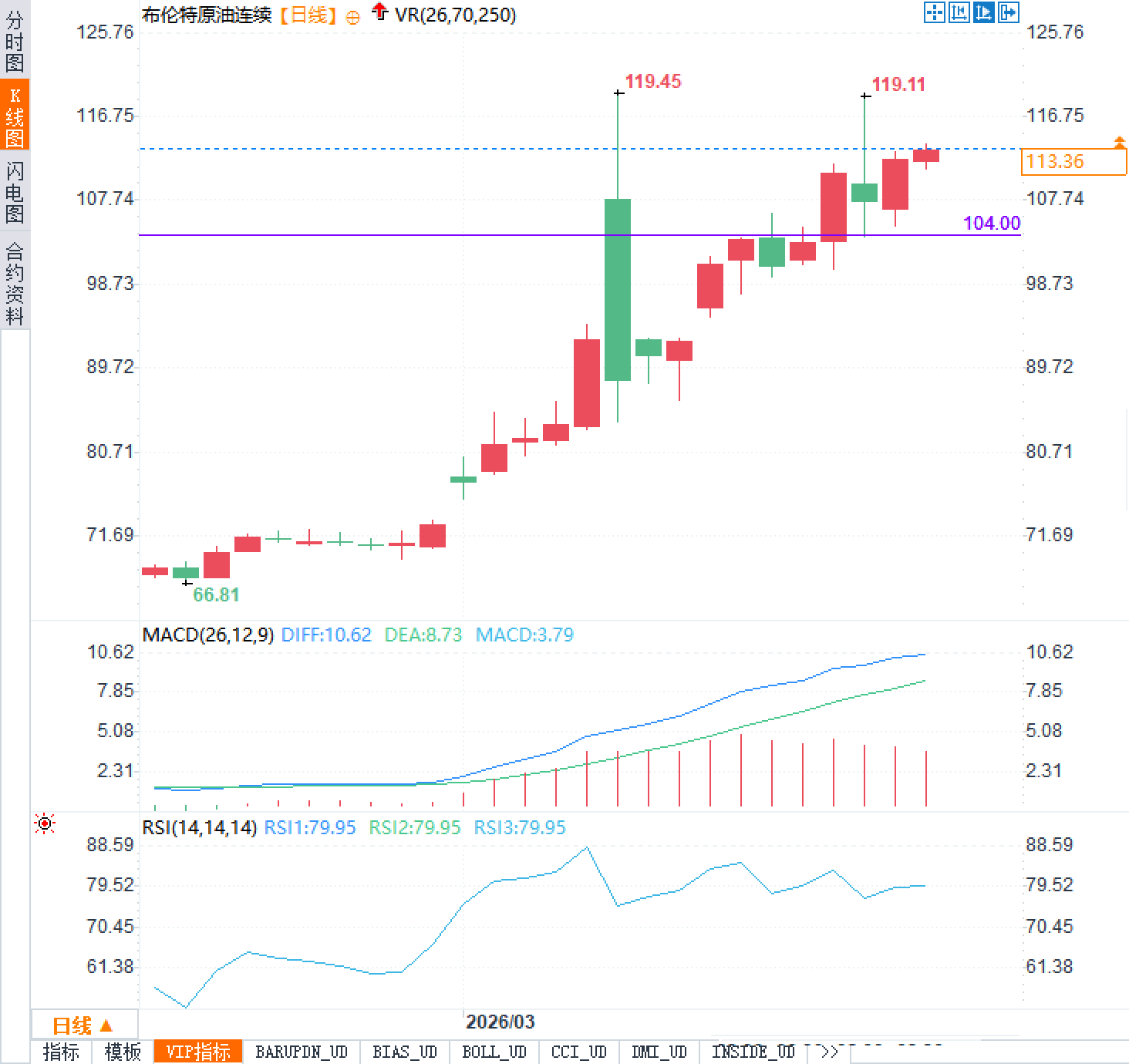
On Monday, March 23, Brent crude oil prices opened near $113 per barrel, essentially unchanged from the previous trading day's closing level. However, further developments in Middle Eastern geopolitical tensions over the weekend injected new uncertainty into the oil market. With the US-Iran conflict entering its fourth week and related military activities continuing, the risk of obstructed passage through the Strait of Hormuz continues to weigh on market supply expectations. Although prices haven't seen dramatic fluctuations in the short term, traders are aware that any further escalation could trigger a new round of volatility.
Tensions in the Middle East have become a major support for Brent crude oil prices. The Strait of Hormuz, a crucial chokepoint for global oil transportation, handles approximately 20% of the world's daily oil flow. Disruptions or blockages directly lead to tightening supply expectations, with the market quickly pricing in the risk premium. Recent reports of related airstrikes and threats to infrastructure have kept oil prices high.
If the strait remains closed, more serious consequences could be expected. On the other hand, while Iraq's declaration of force majeure for its oil field development and adjustments to short-term oil sales arrangements have provided some buffer, the overall vulnerability of the supply chain still dominates the market. Brent crude, as an international benchmark, reflects not only European demand but also broadly influences contract pricing in Asia and other regions. This geopolitically driven rise has resulted in a cumulative price increase of approximately 60% within a month, rapidly climbing from previous lows to current highs.
Traders need to consider the duration of the disruption when assessing the situation. Short-term events may be mitigated by inventory releases, while prolonged lockdowns will test the resilience of the global energy system. Historical experience shows that such bottleneck issues often lead to sustained price premiums until supply routes return to normal.
The supply pressure on Brent crude oil stems not only from direct shipping disruptions but also from refinery operations and inventory management. Strait congestion has forced adjustments to some production activities, accelerating the depletion of global inventories. Alternative shipping routes have seen significant cost increases, putting some refineries at risk of feedstock shortages. Market data indicates substantial daily supply losses during the early stages of the disruptions, and despite discussions of strategic reserves, the actual scale and timing of their release remain uncertain.
With prices high, the futures market structure may shift towards a spot premium, reflecting tight immediate supply. Meanwhile, high oil prices may gradually transmit to downstream products, such as diesel and jet fuel, impacting the overall energy cost structure. While global demand remains relatively resilient, price sensitivity is increasing, and some consumption sectors may show signs of adjustment.
This supply dynamic requires traders to continuously monitor vessel activity and infrastructure updates. While technological improvements have provided some alternative routes, efficiency and capacity limitations make it difficult to fully replace the role of the core corridor in the short term.
The sharp rise in oil prices is becoming a significant factor in central bank policy decisions. Following last week's meetings of several central banks, officials' comments conveyed mixed signals. European Central Bank President Christine Lagarde expressed a balanced view, reflecting the internal divisions within the Governing Council. On one hand, Bundesbank President Nagel indicated that a rate hike might be implemented in April if inflation risks increase due to rising energy costs; on the other hand, other members favored a more cautious path, appearing relatively restrained compared to the period in 2022.
Federal Reserve Governor Waller specifically emphasized inflation concerns related to the oil price shock. Despite previous easing tendencies, vigilance is necessary in the current environment. Rising oil prices, transmitted through transportation and production, could push up core inflation indicators. Central banks face a more complex environment in balancing growth and price stability. Persistent high energy prices could delay anticipated policy adjustments and increase the likelihood of a double-dip inflation effect.
Geopolitical tensions drive up risk premiums
Tensions in the Middle East have become a major support for Brent crude oil prices. The Strait of Hormuz, a crucial chokepoint for global oil transportation, handles approximately 20% of the world's daily oil flow. Disruptions or blockages directly lead to tightening supply expectations, with the market quickly pricing in the risk premium. Recent reports of related airstrikes and threats to infrastructure have kept oil prices high.
If the strait remains closed, more serious consequences could be expected. On the other hand, while Iraq's declaration of force majeure for its oil field development and adjustments to short-term oil sales arrangements have provided some buffer, the overall vulnerability of the supply chain still dominates the market. Brent crude, as an international benchmark, reflects not only European demand but also broadly influences contract pricing in Asia and other regions. This geopolitically driven rise has resulted in a cumulative price increase of approximately 60% within a month, rapidly climbing from previous lows to current highs.
| period | Brent crude oil price (USD/barrel) | Increase |
|---|---|---|
| One month ago | Approximately 70 | benchmark |
| current | 113 | Approximately 60% |
Supply-side pressures and global energy market response
The supply pressure on Brent crude oil stems not only from direct shipping disruptions but also from refinery operations and inventory management. Strait congestion has forced adjustments to some production activities, accelerating the depletion of global inventories. Alternative shipping routes have seen significant cost increases, putting some refineries at risk of feedstock shortages. Market data indicates substantial daily supply losses during the early stages of the disruptions, and despite discussions of strategic reserves, the actual scale and timing of their release remain uncertain.
With prices high, the futures market structure may shift towards a spot premium, reflecting tight immediate supply. Meanwhile, high oil prices may gradually transmit to downstream products, such as diesel and jet fuel, impacting the overall energy cost structure. While global demand remains relatively resilient, price sensitivity is increasing, and some consumption sectors may show signs of adjustment.
This supply dynamic requires traders to continuously monitor vessel activity and infrastructure updates. While technological improvements have provided some alternative routes, efficiency and capacity limitations make it difficult to fully replace the role of the core corridor in the short term.
Central bank policymakers' assessment of the oil price impact
The sharp rise in oil prices is becoming a significant factor in central bank policy decisions. Following last week's meetings of several central banks, officials' comments conveyed mixed signals. European Central Bank President Christine Lagarde expressed a balanced view, reflecting the internal divisions within the Governing Council. On one hand, Bundesbank President Nagel indicated that a rate hike might be implemented in April if inflation risks increase due to rising energy costs; on the other hand, other members favored a more cautious path, appearing relatively restrained compared to the period in 2022.
Federal Reserve Governor Waller specifically emphasized inflation concerns related to the oil price shock. Despite previous easing tendencies, vigilance is necessary in the current environment. Rising oil prices, transmitted through transportation and production, could push up core inflation indicators. Central banks face a more complex environment in balancing growth and price stability. Persistent high energy prices could delay anticipated policy adjustments and increase the likelihood of a double-dip inflation effect.
Frequently Asked Questions
Question 1: Why did the closure of the Strait of Hormuz have such a significant impact on Brent crude oil prices?
A: As the world's most critical oil transportation route, approximately 20% of oil supply relies on this strait. The closure led to strong expectations of supply shortages, immediately pushing up risk premiums in the market, causing Brent crude prices to rise by about 60% to around $113 per barrel within a month. The continued disruption also accelerated inventory depletion, strengthening price support.
Question 2: How will the central bank adjust its policies given the high oil prices?
A: Officials have shown caution. There is disagreement within the European Central Bank; Lagarde has offered a balanced perspective, while Nagel has hinted at a possible rate hike given inflationary risks. The Federal Reserve is focused on inflationary pressures transmitted through oil prices and may postpone its easing efforts. Overall policy will depend on the impact of energy costs on the overall price level.
Question 3: What key variables should traders focus on in the current environment?
A: We will focus on monitoring developments in geopolitical events, signals of the reopening of the Taiwan Strait, and changes in inventory data. At the same time, central bank policy signals and downstream demand responses are also crucial. In a highly volatile environment, any sudden news could trigger a sharp price adjustment.
- Risk Warning and Disclaimer
- The market involves risk, and trading may not be suitable for all investors. This article is for reference only and does not constitute personal investment advice, nor does it take into account certain users’ specific investment objectives, financial situation, or other needs. Any investment decisions made based on this information are at your own risk.