Gold prices rebounded strongly as US-Iran peace talks seemed more likely and inflationary tensions eased.
2026-03-25 11:22:44
Spot gold rose in a volatile manner on Wednesday (March 25), currently trading around $4,580 per ounce, up about 2.3% on the day, continuing the upward trend of the previous trading day. This was benefited by the decline in oil prices easing market concerns about persistent inflation, while news of progress in negotiations between the United States and Iran further boosted demand for safe-haven assets.
Gold prices touched a four-month low of $4,099.02 per ounce earlier this week. Although gold prices are still about 17% lower than their peak at the end of January, the strong short-term rebound reflects investors' optimism about easing geopolitical risks.
The decline in oil prices was the main catalyst for the recent rebound in gold prices. During Wednesday's Asian trading session, US crude oil prices fluctuated downwards, currently trading around $88.40 per barrel, down approximately 4.2% from Tuesday's settlement price.
High oil prices previously fueled inflation expectations, but the decline in oil prices directly alleviated this pressure, creating a favorable environment for gold as an inflation hedge.
Trump's optimistic remarks regarding US-Iran negotiations directly led to a decline in oil prices, which in turn eased inflation expectations. Investors believe that if an agreement is reached, shipping in the Strait of Hormuz is expected to gradually resume, and the risk of energy supply disruptions will be significantly reduced.
The ongoing conflict with Iran has fueled volatility in global oil prices, with U.S. gasoline prices once approaching $4 per gallon. Goldman Sachs and other institutions point out that energy price shocks amplify inflationary pressures through direct consumption and industrial cost transmission, while falling oil prices help stabilize market expectations.
US President Donald Trump said on Tuesday that the United States and Iran are "in talks" and hinted that Iran is "very eager to reach a deal." He decided to suspend threats of strikes against Iran's energy infrastructure in favor of a diplomatic solution.
Speaking to reporters in the Oval Office, Trump said the two sides were "having a rational conversation" and hinted at the possibility of a joint control agreement on the Strait of Hormuz. He warned that if negotiations failed to make progress, he would "continue the all-out bombing." This statement quickly boosted market risk appetite, causing gold prices and stocks to rebound in tandem.
Dan Struveen, co-head of commodities research at Goldman Sachs, said the recent pullback in gold prices is in line with historical patterns and is mainly driven by expectations of higher interest rates and market volatility. Gold-backed ETFs are highly sensitive to interest rates, and investors tend to sell gold simultaneously when faced with margin calls.
He believes that some of the recent gains have exceeded fundamentals, and the current pullback is a "certain degree of normalization." However, Goldman Sachs maintains a structurally bullish stance, predicting that gold prices will reach $5,400 per ounce by the end of 2026, mainly supported by continued gold purchases by central banks to diversify geopolitical and financial risks.
In the short term, if the US-Iran negotiations continue to make positive progress, oil prices are expected to fall further, and the premium of gold as a safe-haven asset will gradually diminish. However, any breakdown in negotiations or escalation of conflict could quickly push up oil prices, reignite inflation concerns, and boost gold prices.
In the medium to long term, central bank gold purchases, geopolitical uncertainties, and the dollar's performance will continue to support gold. Goldman Sachs and other institutions believe that despite increased short-term volatility, the fundamental structural bull market for gold remains unchanged. Investors should closely monitor the latest developments in negotiations, oil price movements, and statements from Federal Reserve officials.
Gold prices rose more than 2% on Wednesday, mainly driven by lower oil prices easing inflation concerns and optimistic comments from Trump regarding US-Iran negotiations. Although gold prices are still 17% lower than their late January peak, Goldman Sachs maintained its bullish forecast of $5,400 by the end of 2026, emphasizing long-term support from central bank gold purchases.
Overall, the current market sentiment reflects optimistic expectations of easing geopolitical risks, but uncertainty surrounding negotiations remains high, and gold price volatility is expected to remain high.
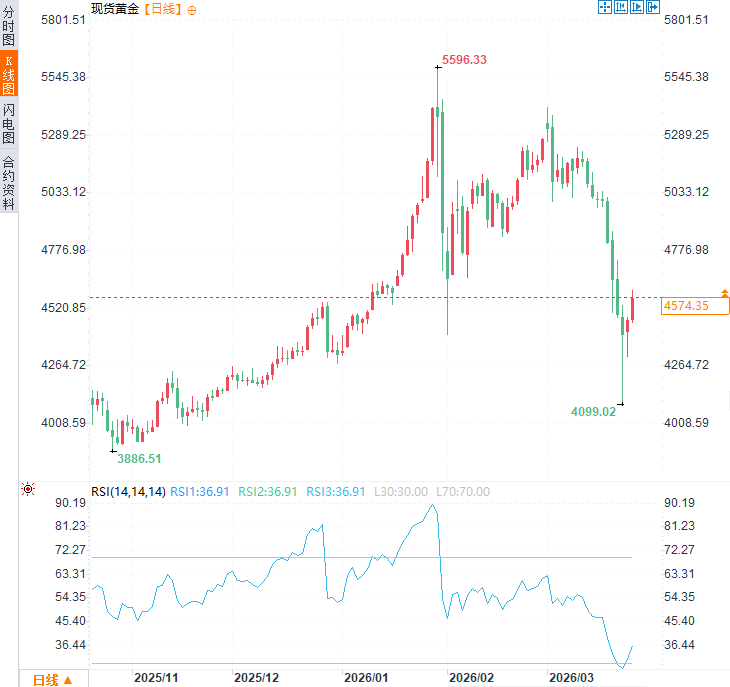
(Spot gold daily chart, source: FX678)
At 11:22 Beijing time, spot gold was trading at $4,575.12 per ounce.
Gold prices touched a four-month low of $4,099.02 per ounce earlier this week. Although gold prices are still about 17% lower than their peak at the end of January, the strong short-term rebound reflects investors' optimism about easing geopolitical risks.
Factors driving the rise in gold prices
The decline in oil prices was the main catalyst for the recent rebound in gold prices. During Wednesday's Asian trading session, US crude oil prices fluctuated downwards, currently trading around $88.40 per barrel, down approximately 4.2% from Tuesday's settlement price.
High oil prices previously fueled inflation expectations, but the decline in oil prices directly alleviated this pressure, creating a favorable environment for gold as an inflation hedge.
Inflation eases
Trump's optimistic remarks regarding US-Iran negotiations directly led to a decline in oil prices, which in turn eased inflation expectations. Investors believe that if an agreement is reached, shipping in the Strait of Hormuz is expected to gradually resume, and the risk of energy supply disruptions will be significantly reduced.
The ongoing conflict with Iran has fueled volatility in global oil prices, with U.S. gasoline prices once approaching $4 per gallon. Goldman Sachs and other institutions point out that energy price shocks amplify inflationary pressures through direct consumption and industrial cost transmission, while falling oil prices help stabilize market expectations.
Progress of Trump-Iran negotiations
US President Donald Trump said on Tuesday that the United States and Iran are "in talks" and hinted that Iran is "very eager to reach a deal." He decided to suspend threats of strikes against Iran's energy infrastructure in favor of a diplomatic solution.
Speaking to reporters in the Oval Office, Trump said the two sides were "having a rational conversation" and hinted at the possibility of a joint control agreement on the Strait of Hormuz. He warned that if negotiations failed to make progress, he would "continue the all-out bombing." This statement quickly boosted market risk appetite, causing gold prices and stocks to rebound in tandem.
Gold Outlook
Dan Struveen, co-head of commodities research at Goldman Sachs, said the recent pullback in gold prices is in line with historical patterns and is mainly driven by expectations of higher interest rates and market volatility. Gold-backed ETFs are highly sensitive to interest rates, and investors tend to sell gold simultaneously when faced with margin calls.
He believes that some of the recent gains have exceeded fundamentals, and the current pullback is a "certain degree of normalization." However, Goldman Sachs maintains a structurally bullish stance, predicting that gold prices will reach $5,400 per ounce by the end of 2026, mainly supported by continued gold purchases by central banks to diversify geopolitical and financial risks.
Market Outlook and Risks
In the short term, if the US-Iran negotiations continue to make positive progress, oil prices are expected to fall further, and the premium of gold as a safe-haven asset will gradually diminish. However, any breakdown in negotiations or escalation of conflict could quickly push up oil prices, reignite inflation concerns, and boost gold prices.
In the medium to long term, central bank gold purchases, geopolitical uncertainties, and the dollar's performance will continue to support gold. Goldman Sachs and other institutions believe that despite increased short-term volatility, the fundamental structural bull market for gold remains unchanged. Investors should closely monitor the latest developments in negotiations, oil price movements, and statements from Federal Reserve officials.
Editor's Summary
Gold prices rose more than 2% on Wednesday, mainly driven by lower oil prices easing inflation concerns and optimistic comments from Trump regarding US-Iran negotiations. Although gold prices are still 17% lower than their late January peak, Goldman Sachs maintained its bullish forecast of $5,400 by the end of 2026, emphasizing long-term support from central bank gold purchases.
Overall, the current market sentiment reflects optimistic expectations of easing geopolitical risks, but uncertainty surrounding negotiations remains high, and gold price volatility is expected to remain high.
(Spot gold daily chart, source: FX678)
At 11:22 Beijing time, spot gold was trading at $4,575.12 per ounce.
- Risk Warning and Disclaimer
- The market involves risk, and trading may not be suitable for all investors. This article is for reference only and does not constitute personal investment advice, nor does it take into account certain users’ specific investment objectives, financial situation, or other needs. Any investment decisions made based on this information are at your own risk.