Oil prices plunge 5%, is there a glimmer of hope for US-Iran peace talks?
2026-03-25 19:58:58
On Wednesday, March 25, WTI crude oil futures prices fell by about 5% during the European session, settling around $87 per barrel. Previously, escalating regional conflicts had pushed oil prices rapidly above $100, but news of US diplomatic mediation quickly dominated market sentiment, overshadowing potential risks such as troop increases and restrictions on key waterways. The spot premium also declined, indicating that geopolitical risk premiums are rapidly compressing, while physical tensions in the global energy supply chain continue to escalate.
The US authorities delivered a 15-point plan to Iran through third-party channels, covering core issues of the conflict, including navigational safety guarantees and a framework for regional stability. This move marks a substantial step forward in diplomatic efforts, and the market is pricing in the possibility of a peace window opening. Although approximately 2,000 US troops have been deployed to the region to support the security of key waterways, the diplomatic signal carries significantly more weight than military action. While Iran launched missiles and explicitly ruled out a short-term ceasefire, it agreed to allow some foreign vessels passage under strict restrictions, indicating a degree of flexibility in its position.
Such events often lead to a temporary divergence between financial and physical markets: risk premiums in the futures market evaporate sharply, while supply shortages in the spot market take several weeks to digest. Historical examples show that oil prices can initially correct by 5% to 10% after a diplomatic breakthrough, but the subsequent implementation details will determine the strength of the rebound. Currently, implied volatility in WTI forward contracts has fallen from its highs, reflecting cautious optimism in the market regarding the duration of the disruption.
The Strait of Hormuz, a vital chokepoint for global oil transportation, typically handles about 20% of seaborne crude oil traffic. Currently, the waterway is nearly closed, and the disruption directly fuels expectations of global supply shortages. While the deployment of additional US troops aims to alleviate security pressures, actual traffic volume remains far below normal levels, with alternative routes proving costly and lacking capacity. Iran's limited passage policy, while providing a buffer, cannot completely eliminate market concerns about a prolonged blockade.
This bottleneck has been transmitted to the crude oil futures curve, with the discount of near-month contracts widening, reflecting tight spot supply. Traders assess the scale of the disruption by observing crack spreads and cross-market spreads: if the daily supply gap continues to be several million barrels, refinery utilization rates will face downward pressure. In the current environment, while diplomatic progress has eased financial panic, the recovery of physical logistics still requires multilateral coordination, and the oil market will remain in a highly volatile range in the short term.
The supply disruptions caused by the conflict have rapidly spread from upstream to downstream consumer markets. Major refining companies on the US West Coast have issued warnings of a fuel crisis in California, emphasizing that disruptions to fuel imports from Asia could trigger regional supply disruptions. Australia has reported hundreds of fuel shortages, the Philippines has declared a national energy emergency, and many countries have begun stockpiling aviation fuel to cope with potential shortages.
These regional signals highlight the complexity of the crude oil price transmission mechanism: traders observed that gasoline and diesel crack spreads widened to abnormal levels, reflecting squeezed refinery margins. Inventory data showed that U.S. commercial crude oil inventories increased by approximately 6.2 million barrels to about 449 million barrels in the most recent week, slightly higher than expected, but still at historically low levels, insufficient to adequately buffer against disruptions in the Strait of Hormuz. The global supply and demand balance is fragile, and any setbacks in diplomatic developments could trigger a new round of volatility.
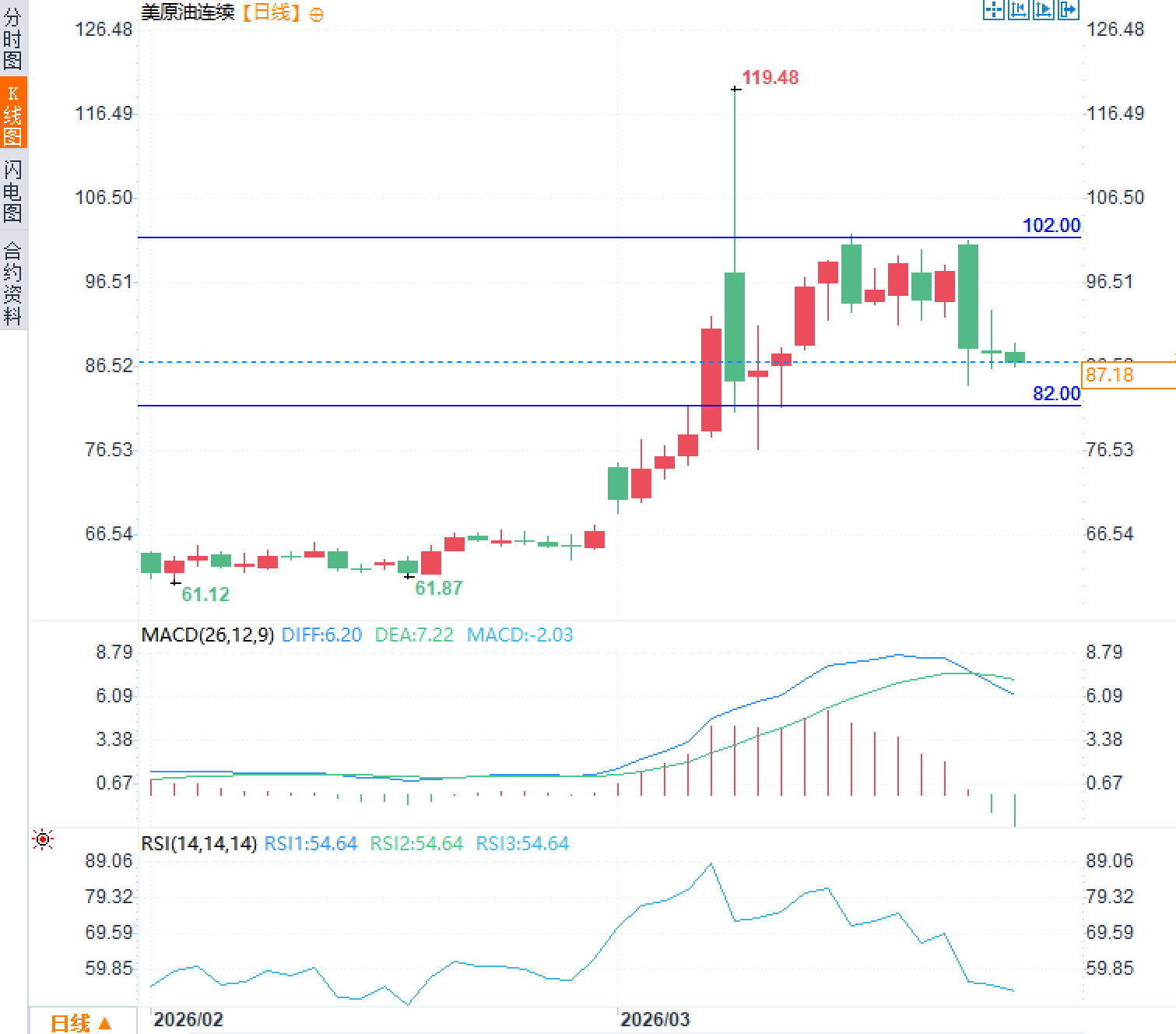
Despite the opening of diplomatic channels, the fundamentals of the oil market still need to be examined in conjunction with real-world data. OPEC+ members are lagging behind in production adjustments, global crude oil inventories are tight, and seasonal demand recovery is further supporting the bottom. Traders are closely monitoring weekly inventory reports, refinery utilization rates, and the progress of alternative supply releases, as these indicators will determine the sustainability of the oil price pullback.
Overall, the current decline in oil prices is more due to a correction in expectations than a fundamental improvement in supply. The risk lies in the uncertainty surrounding the implementation of diplomatic negotiations; if the resumption of navigation in the Taiwan Strait is slow, downstream shortages will continue to amplify crack spreads and regional premiums.
Geopolitical dynamics are driving a short-term correction in oil prices.
The US authorities delivered a 15-point plan to Iran through third-party channels, covering core issues of the conflict, including navigational safety guarantees and a framework for regional stability. This move marks a substantial step forward in diplomatic efforts, and the market is pricing in the possibility of a peace window opening. Although approximately 2,000 US troops have been deployed to the region to support the security of key waterways, the diplomatic signal carries significantly more weight than military action. While Iran launched missiles and explicitly ruled out a short-term ceasefire, it agreed to allow some foreign vessels passage under strict restrictions, indicating a degree of flexibility in its position.
Such events often lead to a temporary divergence between financial and physical markets: risk premiums in the futures market evaporate sharply, while supply shortages in the spot market take several weeks to digest. Historical examples show that oil prices can initially correct by 5% to 10% after a diplomatic breakthrough, but the subsequent implementation details will determine the strength of the rebound. Currently, implied volatility in WTI forward contracts has fallen from its highs, reflecting cautious optimism in the market regarding the duration of the disruption.
Supply chain impact of the Strait of Hormuz shipping bottleneck
The Strait of Hormuz, a vital chokepoint for global oil transportation, typically handles about 20% of seaborne crude oil traffic. Currently, the waterway is nearly closed, and the disruption directly fuels expectations of global supply shortages. While the deployment of additional US troops aims to alleviate security pressures, actual traffic volume remains far below normal levels, with alternative routes proving costly and lacking capacity. Iran's limited passage policy, while providing a buffer, cannot completely eliminate market concerns about a prolonged blockade.
This bottleneck has been transmitted to the crude oil futures curve, with the discount of near-month contracts widening, reflecting tight spot supply. Traders assess the scale of the disruption by observing crack spreads and cross-market spreads: if the daily supply gap continues to be several million barrels, refinery utilization rates will face downward pressure. In the current environment, while diplomatic progress has eased financial panic, the recovery of physical logistics still requires multilateral coordination, and the oil market will remain in a highly volatile range in the short term.
The ripple effects of global downstream energy shortages
The supply disruptions caused by the conflict have rapidly spread from upstream to downstream consumer markets. Major refining companies on the US West Coast have issued warnings of a fuel crisis in California, emphasizing that disruptions to fuel imports from Asia could trigger regional supply disruptions. Australia has reported hundreds of fuel shortages, the Philippines has declared a national energy emergency, and many countries have begun stockpiling aviation fuel to cope with potential shortages.
These regional signals highlight the complexity of the crude oil price transmission mechanism: traders observed that gasoline and diesel crack spreads widened to abnormal levels, reflecting squeezed refinery margins. Inventory data showed that U.S. commercial crude oil inventories increased by approximately 6.2 million barrels to about 449 million barrels in the most recent week, slightly higher than expected, but still at historically low levels, insufficient to adequately buffer against disruptions in the Strait of Hormuz. The global supply and demand balance is fragile, and any setbacks in diplomatic developments could trigger a new round of volatility.
Fundamental supply and demand logic and risk outlook
Despite the opening of diplomatic channels, the fundamentals of the oil market still need to be examined in conjunction with real-world data. OPEC+ members are lagging behind in production adjustments, global crude oil inventories are tight, and seasonal demand recovery is further supporting the bottom. Traders are closely monitoring weekly inventory reports, refinery utilization rates, and the progress of alternative supply releases, as these indicators will determine the sustainability of the oil price pullback.
Overall, the current decline in oil prices is more due to a correction in expectations than a fundamental improvement in supply. The risk lies in the uncertainty surrounding the implementation of diplomatic negotiations; if the resumption of navigation in the Taiwan Strait is slow, downstream shortages will continue to amplify crack spreads and regional premiums.
Frequently Asked Questions
Question 1: Why did the US's 15-point plan quickly lower WTI oil prices by over 5%? Answer: The plan, submitted through a third party, released a clear signal of diplomatic easing, and the market immediately repriced the geopolitical risk premium. Futures investors quickly closed out high-risk long positions, causing a price correction. Meanwhile, physical supply disruptions have not yet been fully reversed, reflecting the financial market's high sensitivity to changes in expectations. Traders need to distinguish between short-term sentiment and long-term supply realities.
Question 2: What are the long-term impacts of the Strait of Hormuz traffic restrictions on the global energy supply chain? Answer: As a vital waterway for 20% of global crude oil transportation, the strait bottleneck drives up freight rates, reduces refinery utilization, and triggers regional shortages. Crisis signals in California, Australia, and the Philippines indicate that downstream transmission has already begun, inventory buffers are limited, and alternative routes are costly. If the disruption is prolonged, crack spreads will continue to widen, impacting the transmission of global energy costs.
- Risk Warning and Disclaimer
- The market involves risk, and trading may not be suitable for all investors. This article is for reference only and does not constitute personal investment advice, nor does it take into account certain users’ specific investment objectives, financial situation, or other needs. Any investment decisions made based on this information are at your own risk.