Gold rebounds after nine consecutive days of decline; geopolitics and policy determine the outcome.
2026-03-25 20:40:53
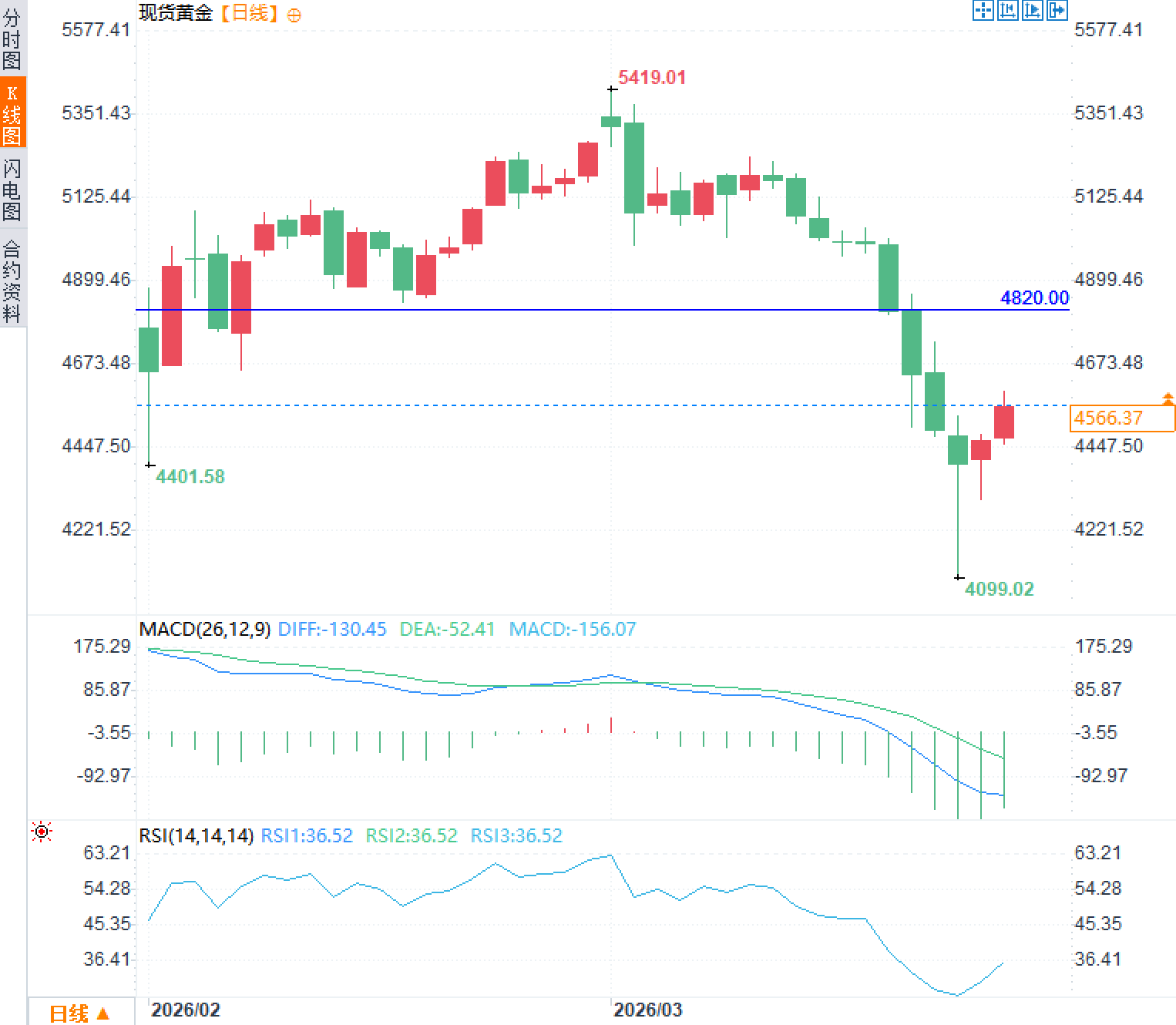
On Wednesday, March 25th, spot gold prices rebounded sharply from recent lows, returning above $4,500 per ounce and ending a nine-day losing streak. The US dollar index is currently hovering around 99.3, showing signs of weakness, while crude oil prices have fallen to the $88 per barrel range. Meanwhile, diplomatic developments in the Middle East surrounding the Strait of Hormuz have released signs of easing tensions. These factors combined to help gold escape short-term downward pressure. However, expectations regarding Federal Reserve policy, fluctuations in geopolitical risk premiums, and potential reserve adjustments by some central banks will continue to determine the sustainability of gold price movements.
The core logic behind this rebound in spot gold lies in the convergence of multiple positive factors. A weaker dollar directly lowers the holding cost of non-interest-bearing assets. ING's recent analysis points out that gold prices continued to rise on the second day, mainly due to support from a pullback in the dollar index and a decline in oil prices, while diplomatic signals further eased market concerns about energy transportation disruptions. Traders have observed in live trading that the correlation coefficient between gold and the dollar has recently remained around -0.7; once the dollar index falls below the 99 level, gold often experiences an accelerated upward surge.
The decline in crude oil prices also played a significant role in the price movement. Lower energy prices eased some inflation expectations but did not completely eliminate geopolitical premiums, providing additional support for gold's safe-haven appeal. In the short term, gold prices reversed a nine-day losing streak, reflecting the market's ability to quickly price in risk events.
The situation in the Middle East remains a core variable influencing gold pricing. Despite diplomatic gestures of goodwill around the Strait of Hormuz and positive signals from the US regarding energy flows, Israel's actions against Iranian assets continue, and the US decision to deploy additional troops further highlights the complexity of regional tensions. Geopolitical risk premiums do not rise linearly, but rather depend on the speed of event evolution and shifts in market risk appetite.
The recent weakness of the US dollar index has provided direct support for gold. Currently, the dollar index is hovering around 99.3, a significant drop from its early-month high, which is closely related to the market's repricing of the Federal Reserve's interest rate cut path. As a dollar-denominated asset, gold's price is highly negatively correlated with the dollar exchange rate; when the dollar weakens, holders of other currencies worldwide are more willing to buy gold. Traders are watching the intraday volatility comparison between the dollar index and gold. If the dollar's intraday volatility narrows while gold remains strong, the probability of a continued rebound is high.
The decline in crude oil prices also impacted gold through inflation expectations. Lower energy costs eased global inflationary pressures, but geopolitical volatility in oil prices persists. Traders are monitoring the Brent-WTI spread; a widening spread could indicate a reassessment of transportation risks.
The Federal Reserve's policy path remains the biggest uncertainty facing gold. Currently, the federal funds rate is maintained in the 3.5% to 3.75% range, and the market expects only one rate cut throughout 2026. This means that real yields will remain relatively high, putting some downward pressure on gold. Traders are focusing on the latest statements from Fed officials. If hawkish signals strengthen, the upside potential for gold may be limited; conversely, if data supports a more accommodative path, further weakening of the dollar will amplify the upside potential for gold prices.
Furthermore, the responses of some central banks to rising energy import costs warrant attention. The Central Bank of Turkey has shown a tendency to stabilize the lira by adjusting its gold reserves; if such actions expand, they could increase pressure on the gold supply in the market. ING warns that while central bank gold sales are isolated cases, if they create a chain reaction, they will structurally drag down gold prices. Traders need to balance geopolitical positives and policy negatives in their portfolio allocations, and pay attention to monthly changes in global central bank net gold purchase data to determine long-term trends.
Immediate drivers of gold's rebound
The core logic behind this rebound in spot gold lies in the convergence of multiple positive factors. A weaker dollar directly lowers the holding cost of non-interest-bearing assets. ING's recent analysis points out that gold prices continued to rise on the second day, mainly due to support from a pullback in the dollar index and a decline in oil prices, while diplomatic signals further eased market concerns about energy transportation disruptions. Traders have observed in live trading that the correlation coefficient between gold and the dollar has recently remained around -0.7; once the dollar index falls below the 99 level, gold often experiences an accelerated upward surge.
The decline in crude oil prices also played a significant role in the price movement. Lower energy prices eased some inflation expectations but did not completely eliminate geopolitical premiums, providing additional support for gold's safe-haven appeal. In the short term, gold prices reversed a nine-day losing streak, reflecting the market's ability to quickly price in risk events.
The situation in the Middle East remains a core variable influencing gold pricing. Despite diplomatic gestures of goodwill around the Strait of Hormuz and positive signals from the US regarding energy flows, Israel's actions against Iranian assets continue, and the US decision to deploy additional troops further highlights the complexity of regional tensions. Geopolitical risk premiums do not rise linearly, but rather depend on the speed of event evolution and shifts in market risk appetite.
The correlation between the US dollar's performance and crude oil prices
The recent weakness of the US dollar index has provided direct support for gold. Currently, the dollar index is hovering around 99.3, a significant drop from its early-month high, which is closely related to the market's repricing of the Federal Reserve's interest rate cut path. As a dollar-denominated asset, gold's price is highly negatively correlated with the dollar exchange rate; when the dollar weakens, holders of other currencies worldwide are more willing to buy gold. Traders are watching the intraday volatility comparison between the dollar index and gold. If the dollar's intraday volatility narrows while gold remains strong, the probability of a continued rebound is high.
The decline in crude oil prices also impacted gold through inflation expectations. Lower energy costs eased global inflationary pressures, but geopolitical volatility in oil prices persists. Traders are monitoring the Brent-WTI spread; a widening spread could indicate a reassessment of transportation risks.
The Impact of Monetary Policy Expectations and Central Bank Behavior
The Federal Reserve's policy path remains the biggest uncertainty facing gold. Currently, the federal funds rate is maintained in the 3.5% to 3.75% range, and the market expects only one rate cut throughout 2026. This means that real yields will remain relatively high, putting some downward pressure on gold. Traders are focusing on the latest statements from Fed officials. If hawkish signals strengthen, the upside potential for gold may be limited; conversely, if data supports a more accommodative path, further weakening of the dollar will amplify the upside potential for gold prices.
Furthermore, the responses of some central banks to rising energy import costs warrant attention. The Central Bank of Turkey has shown a tendency to stabilize the lira by adjusting its gold reserves; if such actions expand, they could increase pressure on the gold supply in the market. ING warns that while central bank gold sales are isolated cases, if they create a chain reaction, they will structurally drag down gold prices. Traders need to balance geopolitical positives and policy negatives in their portfolio allocations, and pay attention to monthly changes in global central bank net gold purchase data to determine long-term trends.
Frequently Asked Questions
Question 1: Why was spot gold able to end its nine-day losing streak and rebound to above $4,500 per ounce?
A: The core drivers are the weakening of the US dollar index from its previous high to around 99.3, the decline in crude oil prices to the $88/barrel range, and the confluence of diplomatic signals from the Strait of Hormuz. A weaker dollar directly reduces the cost of holding gold, lower oil prices alleviate inflationary pressures while retaining a risk premium, and diplomatic progress reduces expectations of transport disruptions. These factors combined create a short-term positive feedback loop.
Question 2: What role do geopolitical factors play in the current pricing of gold?
A: Geopolitical risks remain the dominant variable. Despite signs of easing, regional troop deployments and asset operations maintain a tense atmosphere. This supports gold's risk premium, and traders need to distinguish between event-driven volatility and trend changes.
Question 3: What does the possibility of the central bank using its gold reserves mean for the market?
A: The Turkish central bank and other institutions are considering adjusting their reserves due to pressure from energy import costs, which could increase the supply of gold in the market and constitute a structural bearish factor. Traders should pay attention to signals that global central banks are shifting from net gold purchases to net sales, which would weaken the long-term support for gold. Combined with expectations of Federal Reserve policy, central bank actions may amplify gold price volatility.
- Risk Warning and Disclaimer
- The market involves risk, and trading may not be suitable for all investors. This article is for reference only and does not constitute personal investment advice, nor does it take into account certain users’ specific investment objectives, financial situation, or other needs. Any investment decisions made based on this information are at your own risk.