Caught in a bind! Iran's resilience far exceeds Trump's expectations, and the US is repeating the mistakes of Iraq.
2026-03-26 09:27:59
The US-Israel military operation against Iran has entered its fourth week. Continued airstrikes have severely damaged Iran's leadership and military projection capabilities, but hopes for a swift victory are fading. The Trump administration initially hinted that the operation could last four to six weeks, but the Iranian regime has demonstrated remarkable resilience and escalated the conflict into the global energy sphere by blocking the Strait of Hormuz.
Former U.S. Army Colonel and military history professor Peter Mansour said the war has left him "deeply concerned," fearing that the United States will once again be embroiled in a protracted and costly Middle East conflict. He bluntly stated, "It's simply history repeating itself."
On Thursday (March 26) during the Asian session, US crude oil prices fluctuated upwards and are currently trading around $91.45 per barrel, with a daily increase of about 1.25%.

Mansour, who served as a brigade commander after the 2003 Iraq War and as a senior aide to General David Petraeus, pointed out that the US operation in Iran again suffered from unclear objectives, inadequate planning, and excessive optimism, strikingly similar to the wars in Iraq, Afghanistan, and Vietnam.
Former senior U.S. diplomat Alan Ayr believes that even if the war ends now, its long-term consequences will be mostly negative, "like the Iraq War." Former counterterrorism official Joe Kent resigned due to his dissatisfaction with the war with Iran; he had supported Trump's promise to "not get involved in endless wars" but felt betrayed.
University of Texas scholar Robert Kaplan warned that if the Iranian regime holds firm and continues to attack ships, the entire Gulf region could become unstable, and Trump would face a difficult situation.
The Trump administration's justifications for war ranged from regime change to limiting Iran's projection capabilities. White House spokeswoman Anna Kelly stated that the objectives were clear: to destroy Iran's navy and ballistic missile capabilities, to end its armed militias' ability to operate, and to ensure that Iran could never acquire nuclear weapons.
But Mansour pointed out that, similar to the Iraq War, the United States focused on combat and tactical victories, with almost no consideration for "what would happen after the fall of Saddam's regime." This time, it's even uncertain whether it wants the current Iranian regime to collapse, or what the final outcome will be.
University of Chicago military expert Robert Papp believes that Iran's "lateral escalation" strategy, which expands the conflict to a new battlefield, has forced the United States to change its plans.
Iran's closure of the Strait of Hormuz (which carries approximately 20% of global oil shipments) has become the core of the conflict. Experts point out that this follows the "pottery shop rule" of "whoever breaks the glass pays the price"—the United States must bear the responsibility of reopening the strait, otherwise it will face the risks of global economic turmoil, anger from allies, and damage to its influence.
Even if a ceasefire is reached, infrastructure repair and shipping recovery will take a long time, global oil supply may be held hostage by Iran for years to come, and inflation and economic uncertainty will persist for a long time.
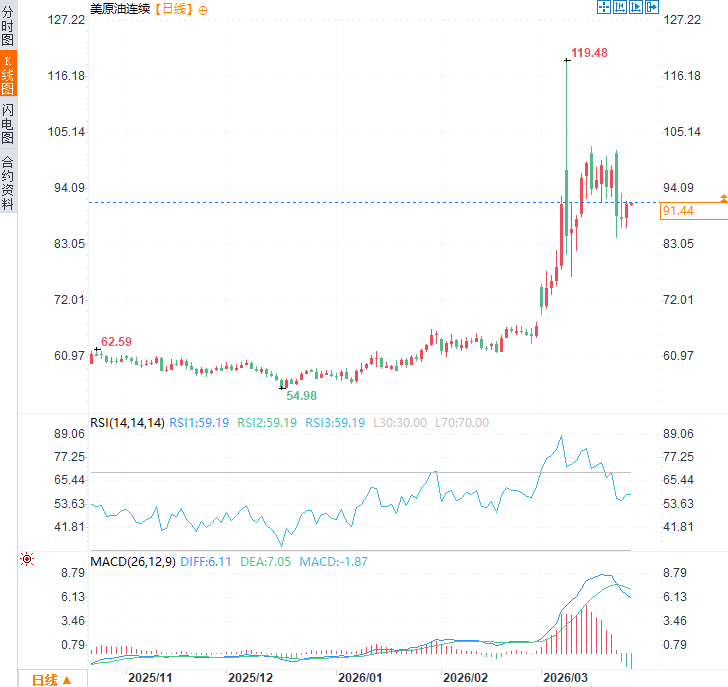
(US crude oil daily chart, source: FX678)
Defense Secretary Peter Hegseth denied any comparisons to wars like Iraq, calling the operation "focused and decisive." Former Trump Middle East envoy Jason Greenblatt suggested "reassessing whether it's a permanent war in six or twelve months."
The White House emphasized that it is prepared to block the flow of energy from Iran, including measures such as destroying mine-laying vessels. However, former Deputy Secretary of Defense Colin Carr pointed out that wars without clear political objectives rarely end well, and the missions are prone to escalation and prolonged durations.
In the short term, Trump faces increasing pressure to withdraw troops, especially before the midterm elections, as he cannot anger voters. If negotiations progress, the conflict may ease; however, if Iran maintains its hardline stance and continues to block the Strait of Hormuz, the United States will be caught in a dilemma of prolonging the war or incurring economic costs.
Experts warn that misjudging Iran's resilience could have unintended consequences and even strengthen adversaries. Global economic and financial markets are already feeling persistent pressure, and investors need to pay close attention to diplomatic developments, oil price trends, and domestic political developments in the United States.
As the war with Iran enters its fourth week, concerns are growing that the lack of clear strategic objectives, pre-war planning, and misjudgment of the Iranian regime's resilience will lead to a protracted conflict. Several experts who have participated in wars such as those in Iraq point out that this conflict is repeating historical mistakes: tactical victories are easy to achieve, but post-war stability and long-term consequences are difficult to control.
The closure of the Strait of Hormuz has become a long-term risk to the global energy market, and even if a ceasefire agreement is reached, the impact of infrastructure damage will continue. While the Trump administration emphasizes its clear objectives and seeks a diplomatic way out, internal opposition and external pressure coexist, making the outcome of the conflict highly uncertain. Its profound impact on the global economy and geopolitical landscape warrants close attention.
At 9:27 Beijing time, US crude oil futures were trading at $91.50 per barrel.
Former U.S. Army Colonel and military history professor Peter Mansour said the war has left him "deeply concerned," fearing that the United States will once again be embroiled in a protracted and costly Middle East conflict. He bluntly stated, "It's simply history repeating itself."
On Thursday (March 26) during the Asian session, US crude oil prices fluctuated upwards and are currently trading around $91.45 per barrel, with a daily increase of about 1.25%.
Historical analogies and expert concerns
Mansour, who served as a brigade commander after the 2003 Iraq War and as a senior aide to General David Petraeus, pointed out that the US operation in Iran again suffered from unclear objectives, inadequate planning, and excessive optimism, strikingly similar to the wars in Iraq, Afghanistan, and Vietnam.
Former senior U.S. diplomat Alan Ayr believes that even if the war ends now, its long-term consequences will be mostly negative, "like the Iraq War." Former counterterrorism official Joe Kent resigned due to his dissatisfaction with the war with Iran; he had supported Trump's promise to "not get involved in endless wars" but felt betrayed.
University of Texas scholar Robert Kaplan warned that if the Iranian regime holds firm and continues to attack ships, the entire Gulf region could become unstable, and Trump would face a difficult situation.
Unclear strategic goals and lack of planning
The Trump administration's justifications for war ranged from regime change to limiting Iran's projection capabilities. White House spokeswoman Anna Kelly stated that the objectives were clear: to destroy Iran's navy and ballistic missile capabilities, to end its armed militias' ability to operate, and to ensure that Iran could never acquire nuclear weapons.
But Mansour pointed out that, similar to the Iraq War, the United States focused on combat and tactical victories, with almost no consideration for "what would happen after the fall of Saddam's regime." This time, it's even uncertain whether it wants the current Iranian regime to collapse, or what the final outcome will be.
University of Chicago military expert Robert Papp believes that Iran's "lateral escalation" strategy, which expands the conflict to a new battlefield, has forced the United States to change its plans.
Strait of Hormuz and its economic consequences
Iran's closure of the Strait of Hormuz (which carries approximately 20% of global oil shipments) has become the core of the conflict. Experts point out that this follows the "pottery shop rule" of "whoever breaks the glass pays the price"—the United States must bear the responsibility of reopening the strait, otherwise it will face the risks of global economic turmoil, anger from allies, and damage to its influence.
Even if a ceasefire is reached, infrastructure repair and shipping recovery will take a long time, global oil supply may be held hostage by Iran for years to come, and inflation and economic uncertainty will persist for a long time.
(US crude oil daily chart, source: FX678)
Trump Administration Response and Internal Voices
Defense Secretary Peter Hegseth denied any comparisons to wars like Iraq, calling the operation "focused and decisive." Former Trump Middle East envoy Jason Greenblatt suggested "reassessing whether it's a permanent war in six or twelve months."
The White House emphasized that it is prepared to block the flow of energy from Iran, including measures such as destroying mine-laying vessels. However, former Deputy Secretary of Defense Colin Carr pointed out that wars without clear political objectives rarely end well, and the missions are prone to escalation and prolonged durations.
Market Outlook and Risks
In the short term, Trump faces increasing pressure to withdraw troops, especially before the midterm elections, as he cannot anger voters. If negotiations progress, the conflict may ease; however, if Iran maintains its hardline stance and continues to block the Strait of Hormuz, the United States will be caught in a dilemma of prolonging the war or incurring economic costs.
Experts warn that misjudging Iran's resilience could have unintended consequences and even strengthen adversaries. Global economic and financial markets are already feeling persistent pressure, and investors need to pay close attention to diplomatic developments, oil price trends, and domestic political developments in the United States.
Editor's Summary
As the war with Iran enters its fourth week, concerns are growing that the lack of clear strategic objectives, pre-war planning, and misjudgment of the Iranian regime's resilience will lead to a protracted conflict. Several experts who have participated in wars such as those in Iraq point out that this conflict is repeating historical mistakes: tactical victories are easy to achieve, but post-war stability and long-term consequences are difficult to control.
The closure of the Strait of Hormuz has become a long-term risk to the global energy market, and even if a ceasefire agreement is reached, the impact of infrastructure damage will continue. While the Trump administration emphasizes its clear objectives and seeks a diplomatic way out, internal opposition and external pressure coexist, making the outcome of the conflict highly uncertain. Its profound impact on the global economy and geopolitical landscape warrants close attention.
At 9:27 Beijing time, US crude oil futures were trading at $91.50 per barrel.
- Risk Warning and Disclaimer
- The market involves risk, and trading may not be suitable for all investors. This article is for reference only and does not constitute personal investment advice, nor does it take into account certain users’ specific investment objectives, financial situation, or other needs. Any investment decisions made based on this information are at your own risk.