Crude oil trading alert: Oil prices are gradually becoming less sensitive to geopolitical tensions, and the sentiment premium is currently declining.
2026-03-27 09:17:15
As tensions continue to escalate in the Middle East, market research indicates that the United States is assessing the possibility of deploying up to 10,000 additional ground troops to the region. This move is seen as a significant signal of maintaining greater strategic space between diplomacy and military operations. Building upon the existing deployment of approximately 5,000 Marines and thousands of airborne troops, the additional forces would further strengthen the US military presence near key energy routes.

This development has directly triggered market concerns about the stability of energy supply. The Strait of Hormuz, one of the world's most critical oil shipping routes, handles approximately 20% of global seaborne crude oil transport. If the situation deteriorates, the potential risk of transport disruptions will rapidly amplify oil price volatility. At the same time, the region where Iran's important crude oil export facilities are located has also become a focus of market attention, causing the supply risk premium to continue to rise.
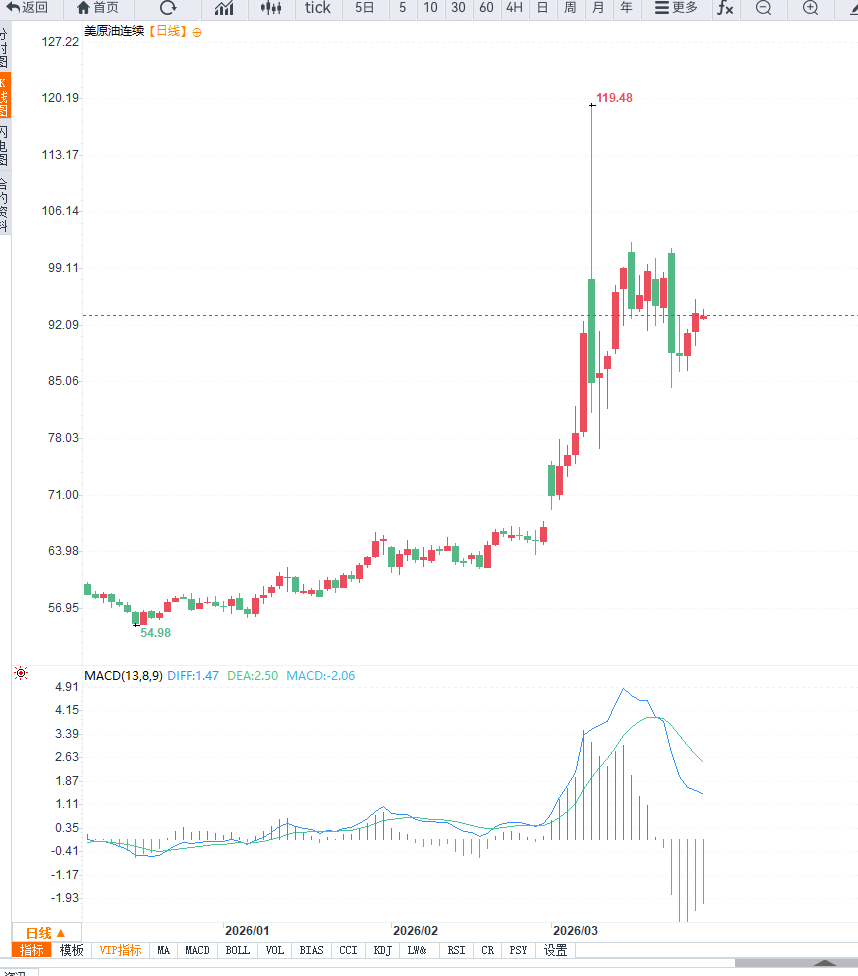
In terms of market performance, WTI crude oil prices have risen rapidly since the end of February, from around $65 to the current level of around $94 per barrel , a cumulative increase of nearly $30 . Despite the significant increase, oil prices have consistently failed to break through the $100 mark, reflecting a shift in the market's reaction to geopolitical conflicts—from initial high sensitivity to more rational pricing.
From a macroeconomic perspective, the transmission effect of rising energy prices on the economy is beginning to emerge. Federal Reserve Vice Chairman Philip Jefferson stated that while the direct impact of current energy price increases on overall inflation remains relatively limited, consumers are already clearly feeling the pressure from rising oil prices. He pointed out that if energy prices remain high, they will be transmitted to a wider range of goods and services through production costs, thus providing sustained support for inflation.
Meanwhile, concerns about economic growth are also rising. Goldman Sachs estimates that if oil prices remain high for an extended period, the US labor market could lose approximately 10,000 jobs per month this year. Although the job market is currently in a state of overall equilibrium, its stability is being tested against the backdrop of rising energy costs and external uncertainties.
Against this backdrop, market sentiment has also undergone subtle changes. On the one hand, geopolitical conflicts continue to support oil prices; on the other hand, as the conflicts persist without further substantial escalation, investors are gradually becoming less sensitive to risk events. This shift in sentiment has weakened the upward momentum of oil prices, and the market is beginning to refocus on supply and demand fundamentals.
From a technical perspective, the daily chart shows that WTI crude oil is still in an upward channel, but the $100 level has formed a significant psychological and technical resistance, with multiple unsuccessful attempts indicating strong selling pressure. Support levels are concentrated in the $90 and $85 range, forming a temporary defensive line. In terms of momentum indicators, the MACD is slowing at high levels, indicating weakening upward momentum and a potential short-term consolidation phase. Looking at the 4-hour chart, oil prices are exhibiting sideways movement at high levels, with short-term support around $92 . A break below this level could lead to a retest of the $90 area. Resistance remains in the $95-$97 range, requiring new fundamental drivers for a breakout. Overall, the short-term trend is mainly range-bound, awaiting new catalysts.
Editor's Summary:
The current logic behind oil price movements has gradually shifted from being solely driven by geopolitics to a dual interplay of geopolitics and fundamentals. While the situation in the Middle East continues to provide a floor for oil prices, the market's decreased sensitivity to conflict makes it difficult for prices to form a one-sided upward trend. The key to future oil price movements lies in two points: first, whether the geopolitical situation will escalate further; and second, whether global demand can maintain its resilience. In the absence of new risk events, oil prices are likely to maintain a high-level consolidation pattern, but once demand weakens or supply recovers, prices will face downward pressure.
This development has directly triggered market concerns about the stability of energy supply. The Strait of Hormuz, one of the world's most critical oil shipping routes, handles approximately 20% of global seaborne crude oil transport. If the situation deteriorates, the potential risk of transport disruptions will rapidly amplify oil price volatility. At the same time, the region where Iran's important crude oil export facilities are located has also become a focus of market attention, causing the supply risk premium to continue to rise.
In terms of market performance, WTI crude oil prices have risen rapidly since the end of February, from around $65 to the current level of around $94 per barrel , a cumulative increase of nearly $30 . Despite the significant increase, oil prices have consistently failed to break through the $100 mark, reflecting a shift in the market's reaction to geopolitical conflicts—from initial high sensitivity to more rational pricing.
From a macroeconomic perspective, the transmission effect of rising energy prices on the economy is beginning to emerge. Federal Reserve Vice Chairman Philip Jefferson stated that while the direct impact of current energy price increases on overall inflation remains relatively limited, consumers are already clearly feeling the pressure from rising oil prices. He pointed out that if energy prices remain high, they will be transmitted to a wider range of goods and services through production costs, thus providing sustained support for inflation.
Meanwhile, concerns about economic growth are also rising. Goldman Sachs estimates that if oil prices remain high for an extended period, the US labor market could lose approximately 10,000 jobs per month this year. Although the job market is currently in a state of overall equilibrium, its stability is being tested against the backdrop of rising energy costs and external uncertainties.
Against this backdrop, market sentiment has also undergone subtle changes. On the one hand, geopolitical conflicts continue to support oil prices; on the other hand, as the conflicts persist without further substantial escalation, investors are gradually becoming less sensitive to risk events. This shift in sentiment has weakened the upward momentum of oil prices, and the market is beginning to refocus on supply and demand fundamentals.
From a technical perspective, the daily chart shows that WTI crude oil is still in an upward channel, but the $100 level has formed a significant psychological and technical resistance, with multiple unsuccessful attempts indicating strong selling pressure. Support levels are concentrated in the $90 and $85 range, forming a temporary defensive line. In terms of momentum indicators, the MACD is slowing at high levels, indicating weakening upward momentum and a potential short-term consolidation phase. Looking at the 4-hour chart, oil prices are exhibiting sideways movement at high levels, with short-term support around $92 . A break below this level could lead to a retest of the $90 area. Resistance remains in the $95-$97 range, requiring new fundamental drivers for a breakout. Overall, the short-term trend is mainly range-bound, awaiting new catalysts.
Editor's Summary:
The current logic behind oil price movements has gradually shifted from being solely driven by geopolitics to a dual interplay of geopolitics and fundamentals. While the situation in the Middle East continues to provide a floor for oil prices, the market's decreased sensitivity to conflict makes it difficult for prices to form a one-sided upward trend. The key to future oil price movements lies in two points: first, whether the geopolitical situation will escalate further; and second, whether global demand can maintain its resilience. In the absence of new risk events, oil prices are likely to maintain a high-level consolidation pattern, but once demand weakens or supply recovers, prices will face downward pressure.
- Risk Warning and Disclaimer
- The market involves risk, and trading may not be suitable for all investors. This article is for reference only and does not constitute personal investment advice, nor does it take into account certain users’ specific investment objectives, financial situation, or other needs. Any investment decisions made based on this information are at your own risk.