USD/JPY Life-or-Death Showdown: Intervention Storm Approaching at the 160 Level?
2026-03-27 20:19:53
On Friday, March 27, the USD/JPY exchange rate rose for the fourth consecutive trading day, approaching the key psychological level of 160.00. Japanese authorities have repeatedly considered this level a potential intervention threshold, significantly escalating market tensions. Former Bank of Japan Governor Haruhiko Kuroda recently reiterated the necessity of accelerating the normalization of monetary policy, while Finance Minister Katayama explicitly warned of possible bold action to address exchange rate volatility. These latest developments provide important signals for traders, suggesting that exchange rate volatility may further amplify, and the complex interplay of fundamentals and policy factors warrants in-depth analysis.
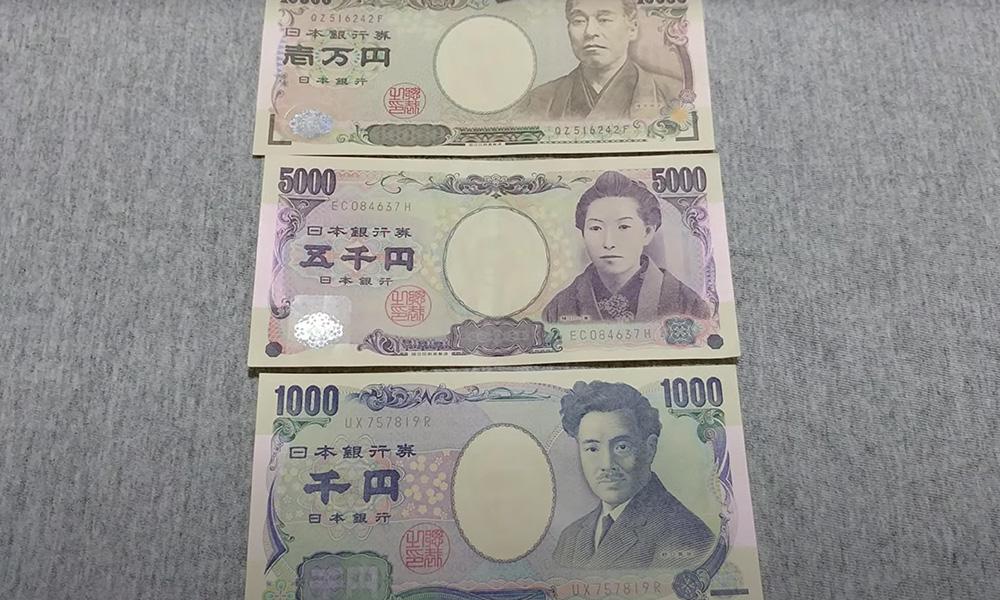
The USD/JPY pair has risen nearly 1% this week, with the latest quote firmly above 159.80, just shy of 160.00. This level, which triggered government intervention multiple times in 2024, is still fresh in the market's memory. The recent rise is mainly due to the overall strength of the US dollar and the offsetting of the yen's traditional safe-haven appeal by oil price shocks. Traders should note that exchange rates do not simply follow interest rate differentials, but are also influenced by the transmission effect of energy costs. As a net energy importer, a $10 increase per barrel in oil prices could push Japan's trade deficit up by approximately 0.3% to 0.5% of its GDP, directly weakening the yen's support.
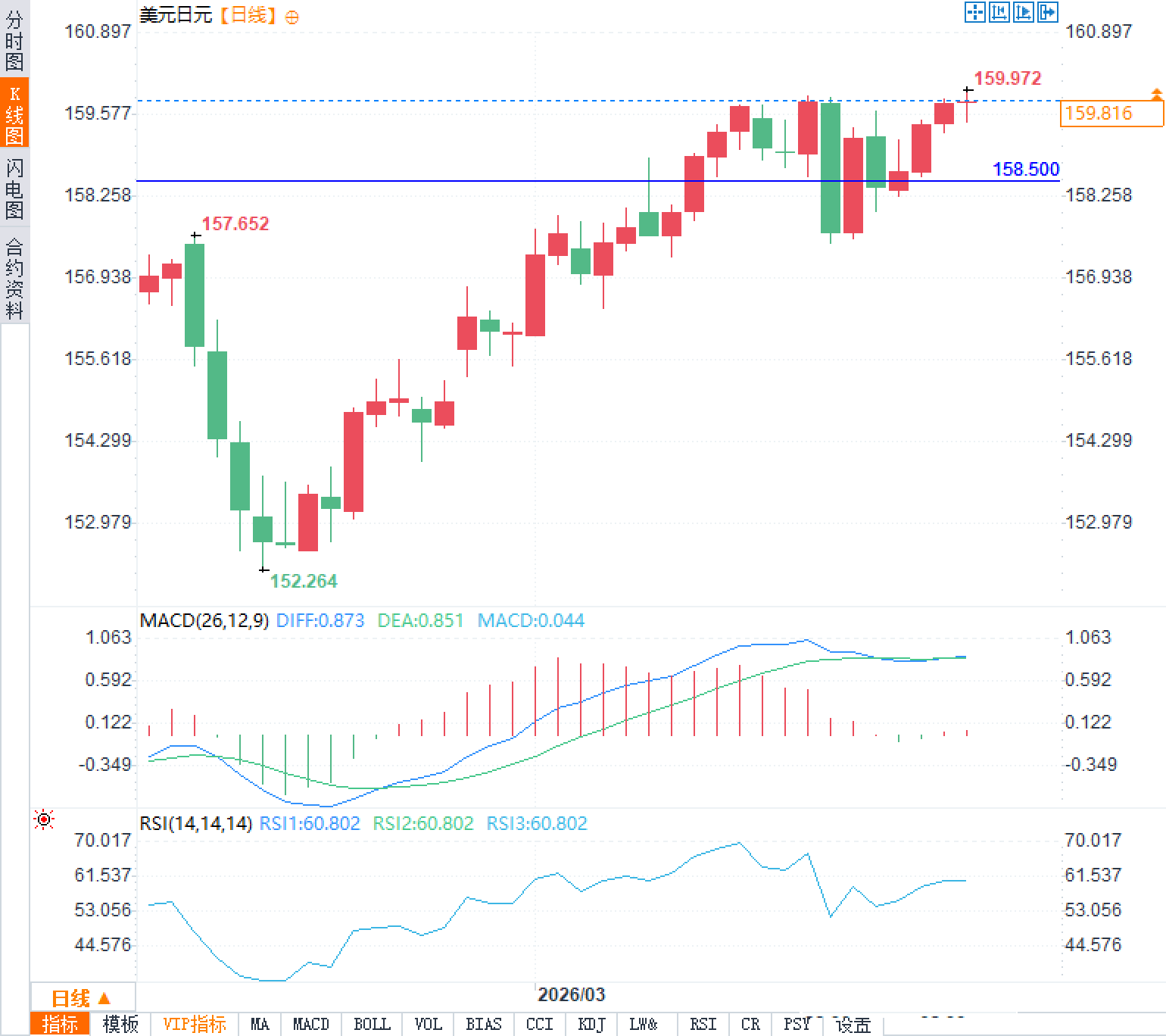
Historically, similar oil-price-driven exchange rate pressures occurred multiple times in 2022, when Japanese authorities intervened with a total of over 9 trillion yen, but the effects were mostly short-term. In the current environment, if USD/JPY continues to test 160.00, volatility indicators are likely to rise, and traders need to closely monitor intraday gap risks and liquidity changes.
Former Bank of Japan Governor Haruhiko Kuroda recently stated that the Bank of Japan should continue to raise borrowing costs, and the situation in Iran only provides additional justification for accelerating the normalization of monetary policy. He believes that, logically, the policy rate will "very likely" be raised at the April monetary policy meeting. Kuroda further predicts that the Bank of Japan could raise interest rates approximately twice a year between 2026 and 2027, gradually pushing the policy rate towards a neutral range, with a target of 1.5% to 1.75%. Although this statement comes from a former official, its influence should not be underestimated, especially given the current context of the Bank of Japan maintaining a policy rate of 0.75%.
Haruhiko Kuroda emphasized that the Japanese economy is in a "good state," with robust wage growth, anchored inflation expectations, and a need for corresponding tightening of fiscal policy to prevent inflation overshooting. Market expectations for the Bank of Japan's April meeting may shift from a complete standstill to a slightly hawkish lean, although the final decision still depends on data developments. This statement indirectly amplified the upward pressure on USD/JPY, as the expectation of a narrowing interest rate differential is unlikely to materialize in the short term. In contrast, imported inflationary pressures from rising energy prices further reinforce Kuroda's logic: without accelerated normalization, fiscal stability will face a greater test.
Japanese Finance Minister Katayama stated clearly on Friday that if the dollar/yen exchange rate approaches 160.00, the government will take "bold action" to address the exchange rate fluctuations. This statement directly targets the historical threshold of multiple interventions in 2024, aiming to send a strong signal to the market. Katayama emphasized in parliament that G7 finance ministers have reached a consensus on extreme volatility in the foreign exchange market, and the Japanese government remains "maximum vigilance" and is prepared to "respond in all aspects."
In practice, while verbal intervention can temporarily boost the yen, actual market intervention is costly: it requires the use of foreign exchange reserves, and its effectiveness can be quickly reversed by market demand for the dollar as a safe haven. Some analysts believe that the current yen weakness driven by oil prices differs from the pure interest rate differential-driven weakness of 2022, and the marginal utility of intervention may further decline. Historical data shows that after similar warnings, the exchange rate often falls by 50 to 100 points before retesting its highs, forming a typical cycle of "warning—falling—rebounding." The timing of policy signals is crucial; the market may maintain a high-level consolidation pattern in the short term.
The ongoing tensions in the Middle East have kept Brent crude oil prices high, at around $104 per barrel, a significant increase from the beginning of the month. Japan, which imports over 95% of its crude oil, is directly amplified by this external shock, impacting its current account and weakening the yen's safe-haven appeal. The US dollar, however, has remained relatively resilient due to changes in global risk appetite. Despite continued uncertainty surrounding the Federal Reserve's policy path, interest rate differentials continue to support the dollar.
Concerns about Japan's fiscal stability are escalating: high oil prices could push up import costs, widen the trade deficit, and consequently impact corporate profits and consumer spending. Traders have observed that the correlation coefficient between USD/JPY and crude oil futures has recently risen above 0.88, indicating a significantly strengthened linkage between the two. If oil prices remain high, the fundamental recovery of the yen will become more difficult. While the Bank of Japan's normalization process may accelerate, short-term exchange rate pressures are unlikely to ease. This development reminds the market that exchange rate movements have transcended the scope of purely monetary policy and require a comprehensive consideration of the combined effects of geopolitical and energy factors.
Exchange Rate Trends: The Market Reality of Approaching the 160 Mark
The USD/JPY pair has risen nearly 1% this week, with the latest quote firmly above 159.80, just shy of 160.00. This level, which triggered government intervention multiple times in 2024, is still fresh in the market's memory. The recent rise is mainly due to the overall strength of the US dollar and the offsetting of the yen's traditional safe-haven appeal by oil price shocks. Traders should note that exchange rates do not simply follow interest rate differentials, but are also influenced by the transmission effect of energy costs. As a net energy importer, a $10 increase per barrel in oil prices could push Japan's trade deficit up by approximately 0.3% to 0.5% of its GDP, directly weakening the yen's support.
Historically, similar oil-price-driven exchange rate pressures occurred multiple times in 2022, when Japanese authorities intervened with a total of over 9 trillion yen, but the effects were mostly short-term. In the current environment, if USD/JPY continues to test 160.00, volatility indicators are likely to rise, and traders need to closely monitor intraday gap risks and liquidity changes.
Haruhiko Kuroda's latest statement: Calls to accelerate policy normalization
Former Bank of Japan Governor Haruhiko Kuroda recently stated that the Bank of Japan should continue to raise borrowing costs, and the situation in Iran only provides additional justification for accelerating the normalization of monetary policy. He believes that, logically, the policy rate will "very likely" be raised at the April monetary policy meeting. Kuroda further predicts that the Bank of Japan could raise interest rates approximately twice a year between 2026 and 2027, gradually pushing the policy rate towards a neutral range, with a target of 1.5% to 1.75%. Although this statement comes from a former official, its influence should not be underestimated, especially given the current context of the Bank of Japan maintaining a policy rate of 0.75%.
Haruhiko Kuroda emphasized that the Japanese economy is in a "good state," with robust wage growth, anchored inflation expectations, and a need for corresponding tightening of fiscal policy to prevent inflation overshooting. Market expectations for the Bank of Japan's April meeting may shift from a complete standstill to a slightly hawkish lean, although the final decision still depends on data developments. This statement indirectly amplified the upward pressure on USD/JPY, as the expectation of a narrowing interest rate differential is unlikely to materialize in the short term. In contrast, imported inflationary pressures from rising energy prices further reinforce Kuroda's logic: without accelerated normalization, fiscal stability will face a greater test.
Finance Minister's intervention serves as a warning: Risk assessment at the 160 mark
Japanese Finance Minister Katayama stated clearly on Friday that if the dollar/yen exchange rate approaches 160.00, the government will take "bold action" to address the exchange rate fluctuations. This statement directly targets the historical threshold of multiple interventions in 2024, aiming to send a strong signal to the market. Katayama emphasized in parliament that G7 finance ministers have reached a consensus on extreme volatility in the foreign exchange market, and the Japanese government remains "maximum vigilance" and is prepared to "respond in all aspects."
In practice, while verbal intervention can temporarily boost the yen, actual market intervention is costly: it requires the use of foreign exchange reserves, and its effectiveness can be quickly reversed by market demand for the dollar as a safe haven. Some analysts believe that the current yen weakness driven by oil prices differs from the pure interest rate differential-driven weakness of 2022, and the marginal utility of intervention may further decline. Historical data shows that after similar warnings, the exchange rate often falls by 50 to 100 points before retesting its highs, forming a typical cycle of "warning—falling—rebounding." The timing of policy signals is crucial; the market may maintain a high-level consolidation pattern in the short term.
Fundamental drivers: Oil price shocks and a relatively strong US dollar
The ongoing tensions in the Middle East have kept Brent crude oil prices high, at around $104 per barrel, a significant increase from the beginning of the month. Japan, which imports over 95% of its crude oil, is directly amplified by this external shock, impacting its current account and weakening the yen's safe-haven appeal. The US dollar, however, has remained relatively resilient due to changes in global risk appetite. Despite continued uncertainty surrounding the Federal Reserve's policy path, interest rate differentials continue to support the dollar.
Concerns about Japan's fiscal stability are escalating: high oil prices could push up import costs, widen the trade deficit, and consequently impact corporate profits and consumer spending. Traders have observed that the correlation coefficient between USD/JPY and crude oil futures has recently risen above 0.88, indicating a significantly strengthened linkage between the two. If oil prices remain high, the fundamental recovery of the yen will become more difficult. While the Bank of Japan's normalization process may accelerate, short-term exchange rate pressures are unlikely to ease. This development reminds the market that exchange rate movements have transcended the scope of purely monetary policy and require a comprehensive consideration of the combined effects of geopolitical and energy factors.
- Risk Warning and Disclaimer
- The market involves risk, and trading may not be suitable for all investors. This article is for reference only and does not constitute personal investment advice, nor does it take into account certain users’ specific investment objectives, financial situation, or other needs. Any investment decisions made based on this information are at your own risk.