Troop withdrawal and improved shipping traffic, yet oil prices fluctuated at high levels, harboring hidden dangers.
2026-03-30 18:29:04
International oil prices rose and then fell back on Monday (March 30), closing slightly higher. Throughout the day, prices fluctuated within the recent high range. Last Friday, international oil prices rose by about 7%.
The ongoing geopolitical conflict in the Middle East continues to disrupt global energy markets. Driven by a series of extreme events last Friday, international oil prices surged on Friday, before retreating slightly on Monday as signs of easing emerged. Overall, prices remain in a high-level consolidation range.
Last Friday and Saturday, the Middle East conflict further touched upon core and sensitive areas. According to Iranian media reports, the United States and Israel jointly attacked Iran's Khondab nuclear facility, which houses a heavy water reactor. This action directly exacerbated market concerns about the spread of the war's impact.
The Iranian Foreign Minister immediately issued a statement accusing Israel of launching attacks on Iranian steel, electricity, and nuclear facilities under the coordination of the United States, saying that this action was completely contrary to the US President's statement on extending the deadline for diplomatic negotiations.
In response to the US deployment of ground troops, Iran has issued a series of strong statements. On the 27th, Iranian Parliament Speaker Qalibaf responded to the US ground invasion threat on social media, stating that the US military cannot even properly protect its own soldiers at military bases in the Middle East, and is simply incapable of maintaining the security of its troops on Iranian territory, implying that a ground invasion would inevitably fail.
Iran's Islamic Revolutionary Guard Corps announced that it had destroyed several US fuel suppliers and logistics support fleets at the Al-Haji base, retaliating against US and Israeli attacks with military action.
At the same time, Iran softened its stance on the nuclear agreement, with Iranian officials publicly stating that Iran's accession to the Treaty on the Non-Proliferation of Nuclear Weapons was worthless and brought no real benefits, foreshadowing its subsequent withdrawal from the treaty.
Faced with the escalating conflict, the United States has released limited signals of de-escalation.
U.S. Vice President Vance said on Saturday that President Trump has made it clear that the U.S. has no intention of staying in Iran for one or two years and will withdraw quickly after achieving its objectives, which has alleviated market concerns about a protracted conflict to some extent.
Despite geopolitical tensions, positive progress has been made in shipping lanes. In addition to Iran's previous efforts to negotiate a passage mechanism with neighboring countries, Thailand and Iran have reached an agreement that allows Thai ships to pass safely through the Strait of Hormuz, bringing some relief to the strained energy transport route.
The conflict has spread to key global oil transport routes such as the Red Sea and the Bab el-Mandeb Strait. To avoid the risks in the Strait of Hormuz, Saudi Arabia has shifted its oil exports to ports along the Red Sea coast.
In addition, market participants are not only focusing on the Strait of Hormuz, but are also highly vigilant about the "suffocation risk" of the Bab el-Mandeb Strait, the gateway to the Red Sea.
As the conflict spills over, the Houthi rebels, with strategic coordination from Iran, have substantially strengthened their blockade of the Bab el-Mandeb Strait, leaving Saudi Arabia's "alternative route" of bypassing danger via Red Sea ports in a desperate situation with both ends blocked.
Once the Bab el-Mandeb Strait and the Strait of Hormuz form a "double strait lock-in effect," it means that the Middle East will lose its ability to transport crude oil to Asia, and global energy supply, especially to Asia, will completely lose its flexibility, forcing the vast majority of crude oil trade to shift to the Cape of Good Hope route, which has a longer distance and higher costs.
This geopolitical pressure, linked by maritime factors, not only makes oil prices more prone to rise than fall amidst volatility, but also transmits severe inflationary aftershocks to the global supply chain through soaring shipping insurance premiums and capacity shortages.
However, the Houthis have only launched two missiles at Israel so far, both of which were successfully intercepted. Although Israel has claimed it will take corresponding action against the Houthis, the situation has now reached its limit.
Currently, oil prices are still mainly focused on the situation in the Strait of Hormuz. In addition to whether more countries reach passage agreements with Iran, the main concern regarding the passage is the next military action by the United States and Israel. If the scope of the attack continues to expand, the Strait of Hormuz will remain effectively closed. At the same time, if Israel retaliates against the Houthis, the strait of Bab el-Mandeb will be closed, which will stimulate international oil prices to rise again.
The military movements of the US and Israel are constrained by their own personnel and ammunition, as well as by the personnel and ammunition of the resistance forces, primarily Iran. At the same time, the US also faces the constraints of the midterm elections and Trump's visit to China.
Technically, WTI crude oil futures broke through the 0.618 level and continued to advance towards the vicinity of 105.89.
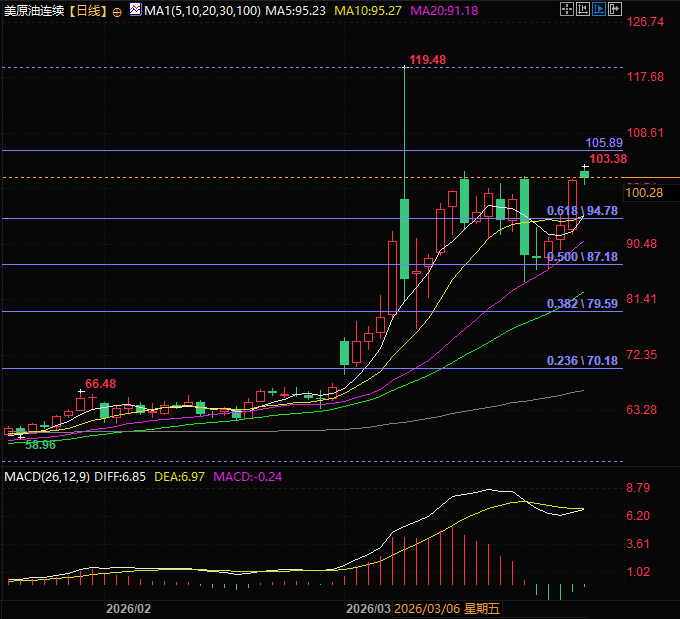
(WTI crude oil futures contract daily chart, source: EasyForex)
At 18:26 Beijing time, WTI crude oil futures were trading at $101.51 per barrel.
The ongoing geopolitical conflict in the Middle East continues to disrupt global energy markets. Driven by a series of extreme events last Friday, international oil prices surged on Friday, before retreating slightly on Monday as signs of easing emerged. Overall, prices remain in a high-level consolidation range.
Intensive clashes over the weekend: US and Israel in a hardline standoff following attacks on Iranian nuclear facilities.
Last Friday and Saturday, the Middle East conflict further touched upon core and sensitive areas. According to Iranian media reports, the United States and Israel jointly attacked Iran's Khondab nuclear facility, which houses a heavy water reactor. This action directly exacerbated market concerns about the spread of the war's impact.
The Iranian Foreign Minister immediately issued a statement accusing Israel of launching attacks on Iranian steel, electricity, and nuclear facilities under the coordination of the United States, saying that this action was completely contrary to the US President's statement on extending the deadline for diplomatic negotiations.
In response to the US deployment of ground troops, Iran has issued a series of strong statements. On the 27th, Iranian Parliament Speaker Qalibaf responded to the US ground invasion threat on social media, stating that the US military cannot even properly protect its own soldiers at military bases in the Middle East, and is simply incapable of maintaining the security of its troops on Iranian territory, implying that a ground invasion would inevitably fail.
Iran's Islamic Revolutionary Guard Corps announced that it had destroyed several US fuel suppliers and logistics support fleets at the Al-Haji base, retaliating against US and Israeli attacks with military action.
At the same time, Iran softened its stance on the nuclear agreement, with Iranian officials publicly stating that Iran's accession to the Treaty on the Non-Proliferation of Nuclear Weapons was worthless and brought no real benefits, foreshadowing its subsequent withdrawal from the treaty.
The US has signaled its intention to withdraw troops, and there are signs of easing tensions in navigation along the waterway.
Faced with the escalating conflict, the United States has released limited signals of de-escalation.
U.S. Vice President Vance said on Saturday that President Trump has made it clear that the U.S. has no intention of staying in Iran for one or two years and will withdraw quickly after achieving its objectives, which has alleviated market concerns about a protracted conflict to some extent.
Despite geopolitical tensions, positive progress has been made in shipping lanes. In addition to Iran's previous efforts to negotiate a passage mechanism with neighboring countries, Thailand and Iran have reached an agreement that allows Thai ships to pass safely through the Strait of Hormuz, bringing some relief to the strained energy transport route.
Energy shipping lane risks remain, and the oil market remains unpredictable.
The conflict has spread to key global oil transport routes such as the Red Sea and the Bab el-Mandeb Strait. To avoid the risks in the Strait of Hormuz, Saudi Arabia has shifted its oil exports to ports along the Red Sea coast.
In addition, market participants are not only focusing on the Strait of Hormuz, but are also highly vigilant about the "suffocation risk" of the Bab el-Mandeb Strait, the gateway to the Red Sea.
As the conflict spills over, the Houthi rebels, with strategic coordination from Iran, have substantially strengthened their blockade of the Bab el-Mandeb Strait, leaving Saudi Arabia's "alternative route" of bypassing danger via Red Sea ports in a desperate situation with both ends blocked.
Once the Bab el-Mandeb Strait and the Strait of Hormuz form a "double strait lock-in effect," it means that the Middle East will lose its ability to transport crude oil to Asia, and global energy supply, especially to Asia, will completely lose its flexibility, forcing the vast majority of crude oil trade to shift to the Cape of Good Hope route, which has a longer distance and higher costs.
This geopolitical pressure, linked by maritime factors, not only makes oil prices more prone to rise than fall amidst volatility, but also transmits severe inflationary aftershocks to the global supply chain through soaring shipping insurance premiums and capacity shortages.
However, the Houthis have only launched two missiles at Israel so far, both of which were successfully intercepted. Although Israel has claimed it will take corresponding action against the Houthis, the situation has now reached its limit.
Summary and Technical Analysis:
Currently, oil prices are still mainly focused on the situation in the Strait of Hormuz. In addition to whether more countries reach passage agreements with Iran, the main concern regarding the passage is the next military action by the United States and Israel. If the scope of the attack continues to expand, the Strait of Hormuz will remain effectively closed. At the same time, if Israel retaliates against the Houthis, the strait of Bab el-Mandeb will be closed, which will stimulate international oil prices to rise again.
The military movements of the US and Israel are constrained by their own personnel and ammunition, as well as by the personnel and ammunition of the resistance forces, primarily Iran. At the same time, the US also faces the constraints of the midterm elections and Trump's visit to China.
Technically, WTI crude oil futures broke through the 0.618 level and continued to advance towards the vicinity of 105.89.
(WTI crude oil futures contract daily chart, source: EasyForex)
At 18:26 Beijing time, WTI crude oil futures were trading at $101.51 per barrel.
- Risk Warning and Disclaimer
- The market involves risk, and trading may not be suitable for all investors. This article is for reference only and does not constitute personal investment advice, nor does it take into account certain users’ specific investment objectives, financial situation, or other needs. Any investment decisions made based on this information are at your own risk.