Powell "waits" for an Iranian shock: The Fed refrains from action, and market bets on interest rate hikes vanish overnight.
2026-03-31 09:33:10
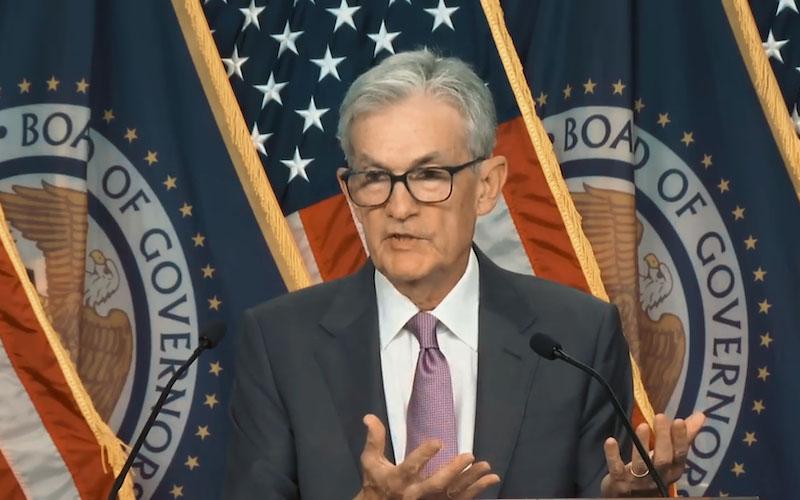
Federal Reserve Chairman Jerome Powell said on Monday (March 30) that the Fed could wait and see how the impact of the war with Iran on the economy and inflation evolves, noting that policymakers typically ignore the short-term effects of shocks such as rising oil prices.
During a Q&A session in a macroeconomics course at Harvard University, Powell said, "We believe the current policy stance is well-positioned to allow us to wait and see how things develop."
His remarks seemed to soothe financial markets that had been fluctuating last week on expectations that the Federal Reserve might raise interest rates to curb rising inflation, with markets now almost completely unwinding their bets on rate hikes.
As the conflict with Iran enters its fifth week, the average price of gasoline in the United States has risen to around $4 per gallon, and Powell acknowledged that the Federal Reserve may face a dilemma between its two major mandates of full employment and price stability.
Powell stated, "There are some downside risks to the labor market, which means that interest rates should be kept low; but there are upside risks to inflation, which suggests that perhaps interest rates should not be kept low. The two objectives are mutually constraining."
However, he stated that the Federal Reserve does not need to take action at present, but policymakers are closely monitoring signs of deteriorating inflation expectations, which could indicate a need for intervention. Powell said, "From a time perspective other than the short term, inflation expectations appear to remain well anchored."
Earlier this month, the Federal Reserve kept the overnight benchmark interest rate unchanged at 3.50%-3.75% after concluding its two-day policy meeting.
At the subsequent press conference, Powell stated that he hoped to see tariff-driven commodity price inflation ease before considering whether the Federal Reserve should ignore the inflationary rise caused by the Iran war or respond by tightening monetary policy to prevent inflation from accelerating.
Powell noted on Monday that inflation has been above the Fed’s 2% target for about five years, affected by a series of shocks: the clash between strong demand and limited supply as the world reopened from pandemic lockdowns, and what he called a “much smaller” shock from tariffs recently.
Powell stated, "We are now facing an energy shock: no one knows how big its impact will be, and it is too early to draw conclusions."
A University of Michigan survey last week showed that households' inflation expectations for the coming year have jumped. Meanwhile, other measures, including a widely followed market-based indicator, are even more optimistic.
Oliver Allen, senior U.S. economist at Pantheon Macroeconomics, said: "Powell's statement was very textbook and quite consistent with his previous statements. The Fed is basically in a wait-and-see mode until it understands the specific form, scope and scale of the current energy shock."
Federal Reserve Governor Milan said on Monday that he still believes the Fed should cut interest rates by about one percentage point this year to boost the cooling labor market. This view contradicts market consensus, especially since the outbreak of the Iran-Iraq war, when the market has widely bet on a Fed rate hike.
Milan told CNBC, "If there's going to be market volatility, it'll definitely be during wartime... I don't want to overinterpret it," adding that rising oil prices haven't yet pushed up inflation expectations or triggered a wage-price spiral, otherwise he might be more concerned .
In an interaction with the course's two professors—David Laibson and Jason Furman—and the students present, Powell actively answered a variety of questions, covering topics such as private lending, the Federal Reserve's balance sheet, the impact of artificial intelligence, and his optimistic medium-term outlook for the U.S. economy—despite the current sluggish hiring in the labor market, which makes it particularly difficult for recent college graduates to find jobs.
When asked what advice he would give to former Federal Reserve Governor Warsh, Powell avoided giving specific details. President Trump nominated Warsh to succeed Powell as Federal Reserve Chairman after his term expires on May 15.
However, Powell did point out that the Federal Reserve should resist any temptation to use its tools to accomplish things beyond the congressional mandate to maintain price stability and achieve full employment.
Powell stated, "We don't want to go against any politician or any administration, but we must be careful and stick to what we're doing." Trump has repeatedly accused him of keeping borrowing costs too high.
Walsh had previously indicated that he might support interest rate cuts.
A student asked how interest rate cuts would affect the Federal Reserve's ability to fulfill both its duties, given the tariff policies implemented by the Trump administration and the recent oil price shock that has led to persistently high inflation.
Powell noticed the student was wearing a Boston Red Sox baseball jersey. He remarked, "I'm not going to swing at that ball."
Powell noted on Monday that inflation has been above the Fed’s 2% target for about five years, affected by a series of shocks: the clash between strong demand and limited supply as the world reopened from pandemic lockdowns, and what he called a “much smaller” shock from tariffs recently.
According to CME's "FedWatch": the probability of the Fed raising interest rates by 25 basis points in April is 2.6%, and the probability of keeping rates unchanged is 97.4%. The probability of the Fed cutting rates by a cumulative 25 basis points by June is 5%, the probability of keeping rates unchanged is 92.5%, and the probability of a cumulative 25 basis point rate hike is 2.5%.
The probability of the Federal Reserve cutting interest rates by a cumulative 25 basis points by December is 14.1% (1.3% the previous day), the probability of keeping interest rates unchanged is 82% (74% the previous day), and the probability of raising interest rates by a cumulative 25 basis points has fallen to 4% (24.6% the previous day, and as high as 40% last week).
Federal Reserve Chairman Jerome Powell explicitly stated that the Fed can "wait and see" the impact of the Iran war on inflation, and that rising energy prices have not yet forced the Fed to face a difficult decision. The Fed maintained interest rates at 3.50%-3.75%, focusing on inflation expectations and downside risks to the labor market. Governor Milan, however, advocated for a rate cut of approximately 100 basis points this year. Financial markets have largely unwinded their bets on rate hikes; future policy direction will depend on the duration of the war, the scale of the energy shock, and the actual evolution of inflation expectations.
During a Q&A session in a macroeconomics course at Harvard University, Powell said, "We believe the current policy stance is well-positioned to allow us to wait and see how things develop."
His remarks seemed to soothe financial markets that had been fluctuating last week on expectations that the Federal Reserve might raise interest rates to curb rising inflation, with markets now almost completely unwinding their bets on rate hikes.
Rising energy prices have not yet presented a difficult choice.
As the conflict with Iran enters its fifth week, the average price of gasoline in the United States has risen to around $4 per gallon, and Powell acknowledged that the Federal Reserve may face a dilemma between its two major mandates of full employment and price stability.
Powell stated, "There are some downside risks to the labor market, which means that interest rates should be kept low; but there are upside risks to inflation, which suggests that perhaps interest rates should not be kept low. The two objectives are mutually constraining."
However, he stated that the Federal Reserve does not need to take action at present, but policymakers are closely monitoring signs of deteriorating inflation expectations, which could indicate a need for intervention. Powell said, "From a time perspective other than the short term, inflation expectations appear to remain well anchored."
Earlier this month, the Federal Reserve kept the overnight benchmark interest rate unchanged at 3.50%-3.75% after concluding its two-day policy meeting.
At the subsequent press conference, Powell stated that he hoped to see tariff-driven commodity price inflation ease before considering whether the Federal Reserve should ignore the inflationary rise caused by the Iran war or respond by tightening monetary policy to prevent inflation from accelerating.
Powell noted on Monday that inflation has been above the Fed’s 2% target for about five years, affected by a series of shocks: the clash between strong demand and limited supply as the world reopened from pandemic lockdowns, and what he called a “much smaller” shock from tariffs recently.
Powell stated, "We are now facing an energy shock: no one knows how big its impact will be, and it is too early to draw conclusions."
Dual risks of inflation and labor market
A University of Michigan survey last week showed that households' inflation expectations for the coming year have jumped. Meanwhile, other measures, including a widely followed market-based indicator, are even more optimistic.
Oliver Allen, senior U.S. economist at Pantheon Macroeconomics, said: "Powell's statement was very textbook and quite consistent with his previous statements. The Fed is basically in a wait-and-see mode until it understands the specific form, scope and scale of the current energy shock."
Federal Reserve Governor Milan's Views on Interest Rate Cuts
Federal Reserve Governor Milan said on Monday that he still believes the Fed should cut interest rates by about one percentage point this year to boost the cooling labor market. This view contradicts market consensus, especially since the outbreak of the Iran-Iraq war, when the market has widely bet on a Fed rate hike.
Milan told CNBC, "If there's going to be market volatility, it'll definitely be during wartime... I don't want to overinterpret it," adding that rising oil prices haven't yet pushed up inflation expectations or triggered a wage-price spiral, otherwise he might be more concerned .
Interest Rate Stance
In an interaction with the course's two professors—David Laibson and Jason Furman—and the students present, Powell actively answered a variety of questions, covering topics such as private lending, the Federal Reserve's balance sheet, the impact of artificial intelligence, and his optimistic medium-term outlook for the U.S. economy—despite the current sluggish hiring in the labor market, which makes it particularly difficult for recent college graduates to find jobs.
When asked what advice he would give to former Federal Reserve Governor Warsh, Powell avoided giving specific details. President Trump nominated Warsh to succeed Powell as Federal Reserve Chairman after his term expires on May 15.
However, Powell did point out that the Federal Reserve should resist any temptation to use its tools to accomplish things beyond the congressional mandate to maintain price stability and achieve full employment.
Powell stated, "We don't want to go against any politician or any administration, but we must be careful and stick to what we're doing." Trump has repeatedly accused him of keeping borrowing costs too high.
Walsh had previously indicated that he might support interest rate cuts.
A student asked how interest rate cuts would affect the Federal Reserve's ability to fulfill both its duties, given the tariff policies implemented by the Trump administration and the recent oil price shock that has led to persistently high inflation.
Powell noticed the student was wearing a Boston Red Sox baseball jersey. He remarked, "I'm not going to swing at that ball."
The combined effects of tariffs and energy shocks
Powell noted on Monday that inflation has been above the Fed’s 2% target for about five years, affected by a series of shocks: the clash between strong demand and limited supply as the world reopened from pandemic lockdowns, and what he called a “much smaller” shock from tariffs recently.
The probability of the Federal Reserve keeping interest rates unchanged in April is 97.4%, while the probability of a rate hike in December has dropped to 4%.
According to CME's "FedWatch": the probability of the Fed raising interest rates by 25 basis points in April is 2.6%, and the probability of keeping rates unchanged is 97.4%. The probability of the Fed cutting rates by a cumulative 25 basis points by June is 5%, the probability of keeping rates unchanged is 92.5%, and the probability of a cumulative 25 basis point rate hike is 2.5%.
The probability of the Federal Reserve cutting interest rates by a cumulative 25 basis points by December is 14.1% (1.3% the previous day), the probability of keeping interest rates unchanged is 82% (74% the previous day), and the probability of raising interest rates by a cumulative 25 basis points has fallen to 4% (24.6% the previous day, and as high as 40% last week).
Editor's Summary
Federal Reserve Chairman Jerome Powell explicitly stated that the Fed can "wait and see" the impact of the Iran war on inflation, and that rising energy prices have not yet forced the Fed to face a difficult decision. The Fed maintained interest rates at 3.50%-3.75%, focusing on inflation expectations and downside risks to the labor market. Governor Milan, however, advocated for a rate cut of approximately 100 basis points this year. Financial markets have largely unwinded their bets on rate hikes; future policy direction will depend on the duration of the war, the scale of the energy shock, and the actual evolution of inflation expectations.
- Risk Warning and Disclaimer
- The market involves risk, and trading may not be suitable for all investors. This article is for reference only and does not constitute personal investment advice, nor does it take into account certain users’ specific investment objectives, financial situation, or other needs. Any investment decisions made based on this information are at your own risk.