Rising expectations of the Federal Reserve's balance sheet reduction, coupled with the outlook for interest rate cuts in 2026, are causing the market to repric the policy cycle and liquidity environment.
2026-03-31 15:18:13
The Federal Reserve's balance sheet has returned to the core of market discussions. The macro strategy team at BNY Mellon points out that as the policy environment changes, discussions about the path of balance sheet reduction and reserve levels will continue to intensify. Currently, bank reserves have become the largest liability item on the Fed's balance sheet, even exceeding the amount of currency in circulation, making reserve management a key variable in the balance sheet reduction process.
From a policy perspective, several Federal Reserve officials have explicitly expressed their desire to shrink the size of the balance sheet in the coming years. Officials, including Kevin Warsh, a candidate for Fed Chair, favor achieving this goal by reducing the supply of reserves in the system. This approach suggests that the Fed may focus more on liquidity withdrawal in the future, rather than simply relying on the natural reduction of maturing assets.
John Willis, a macro strategist at BNY Mellon, said: "Balance sheet and reserve issues are closely linked, and the core of future policy discussions will revolve around how to achieve a contraction in size while controlling volatility."
At the operational level, the market is focused on the "balance sheet trilemma." This framework points out that if central banks wish to shrink their balance sheets, they typically need to strike a balance between increased volatility in the money market and frequent intervention. However, some policymakers have proposed a new path: reducing banks' structural demand for reserves, thereby achieving balance sheet reduction goals without significantly increasing market volatility.
Meanwhile, expectations regarding the interest rate path are also changing. BNY Mellon maintains its assessment that the Federal Reserve may begin a rate-cutting cycle in the second half of 2026. This forecast differs somewhat from current market pricing, indicating that uncertainty surrounding policy expectations remains high.
This path of interest rate cuts depends on several preconditions. First, the situation in the Middle East must gradually ease, thereby reducing pressure on energy prices; second, key input costs must fall, easing inflationary pressures; and finally, the US labor market must show signs of cooling. Only through the combined effect of these factors can room for a policy shift be created.
Analysts point out: "The market remains cautious about the path of interest rate cuts, but if inflation and employment data weaken in tandem, the window for a policy shift will gradually open."
Judging from market reactions, the interest rate market has already seen some degree of expectation adjustment, with traders beginning to reassess the future policy path. This "repricing" process will not only affect bond yields but will also have a ripple effect on the US dollar, gold, and risk assets.
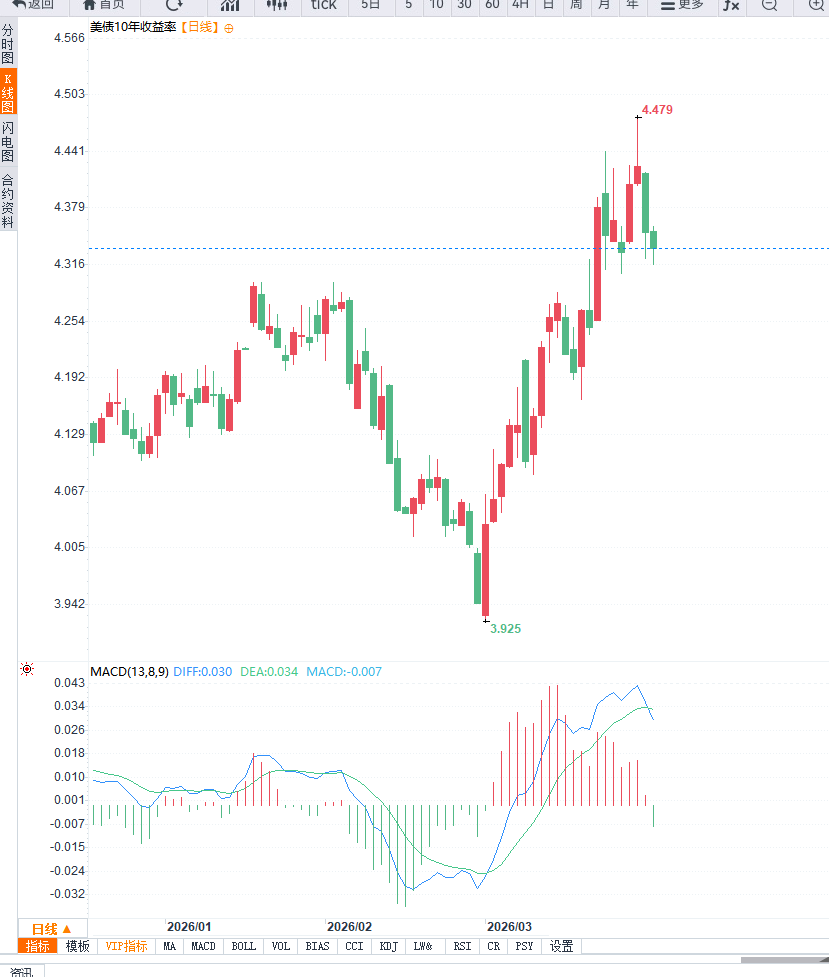
From a technical perspective, US Treasury yields have shown signs of pullback after their previous surge, with weakening momentum on the daily chart indicating a more cautious market regarding further rate hikes. Short-term support is gradually emerging, but overall, yields remain within a high-level consolidation range. On the 4-hour chart, yields are consolidating, with momentum indicators declining. If subsequent data continues to weaken, it could open up further downside potential.
Editor's Summary : Overall, the Federal Reserve's balance sheet reduction and the future path of interest rate cuts are becoming the two core themes of market focus. On the one hand, balance sheet reduction implies a tightening liquidity environment, potentially putting pressure on the market; on the other hand, if inflation and economic data weaken, expectations for interest rate cuts will gradually strengthen, providing support for the market. Currently, policy expectations remain highly uncertain, and the market is in a dynamic adjustment process. Future trends will depend on geopolitical situations, inflation changes, and the performance of the employment market. Investors need to closely monitor marginal changes in policy signals and macroeconomic data.
From a policy perspective, several Federal Reserve officials have explicitly expressed their desire to shrink the size of the balance sheet in the coming years. Officials, including Kevin Warsh, a candidate for Fed Chair, favor achieving this goal by reducing the supply of reserves in the system. This approach suggests that the Fed may focus more on liquidity withdrawal in the future, rather than simply relying on the natural reduction of maturing assets.
John Willis, a macro strategist at BNY Mellon, said: "Balance sheet and reserve issues are closely linked, and the core of future policy discussions will revolve around how to achieve a contraction in size while controlling volatility."
At the operational level, the market is focused on the "balance sheet trilemma." This framework points out that if central banks wish to shrink their balance sheets, they typically need to strike a balance between increased volatility in the money market and frequent intervention. However, some policymakers have proposed a new path: reducing banks' structural demand for reserves, thereby achieving balance sheet reduction goals without significantly increasing market volatility.
Meanwhile, expectations regarding the interest rate path are also changing. BNY Mellon maintains its assessment that the Federal Reserve may begin a rate-cutting cycle in the second half of 2026. This forecast differs somewhat from current market pricing, indicating that uncertainty surrounding policy expectations remains high.
This path of interest rate cuts depends on several preconditions. First, the situation in the Middle East must gradually ease, thereby reducing pressure on energy prices; second, key input costs must fall, easing inflationary pressures; and finally, the US labor market must show signs of cooling. Only through the combined effect of these factors can room for a policy shift be created.
Analysts point out: "The market remains cautious about the path of interest rate cuts, but if inflation and employment data weaken in tandem, the window for a policy shift will gradually open."
Judging from market reactions, the interest rate market has already seen some degree of expectation adjustment, with traders beginning to reassess the future policy path. This "repricing" process will not only affect bond yields but will also have a ripple effect on the US dollar, gold, and risk assets.
From a technical perspective, US Treasury yields have shown signs of pullback after their previous surge, with weakening momentum on the daily chart indicating a more cautious market regarding further rate hikes. Short-term support is gradually emerging, but overall, yields remain within a high-level consolidation range. On the 4-hour chart, yields are consolidating, with momentum indicators declining. If subsequent data continues to weaken, it could open up further downside potential.
Editor's Summary : Overall, the Federal Reserve's balance sheet reduction and the future path of interest rate cuts are becoming the two core themes of market focus. On the one hand, balance sheet reduction implies a tightening liquidity environment, potentially putting pressure on the market; on the other hand, if inflation and economic data weaken, expectations for interest rate cuts will gradually strengthen, providing support for the market. Currently, policy expectations remain highly uncertain, and the market is in a dynamic adjustment process. Future trends will depend on geopolitical situations, inflation changes, and the performance of the employment market. Investors need to closely monitor marginal changes in policy signals and macroeconomic data.
- Risk Warning and Disclaimer
- The market involves risk, and trading may not be suitable for all investors. This article is for reference only and does not constitute personal investment advice, nor does it take into account certain users’ specific investment objectives, financial situation, or other needs. Any investment decisions made based on this information are at your own risk.