The probability of a Fed rate hike has decreased, and the limited impact of oil price supply is unlikely to alter the course of monetary policy.
2026-04-01 14:12:22
According to APP, Goldman Sachs analysts noted in a recent report that while market pricing of the US federal funds rate has fluctuated dramatically since the outbreak of the Iraq War, the likelihood of a rate hike this year remains low. Analysts stated that the current supply shock is smaller in scale and more limited than previous inflationary shocks, and oil price increases are less pronounced than in the 1970s. Furthermore, they believe that "the current economic start makes a widespread spillover of inflation less likely," and the current starting point for monetary policy also reduces the probability of a rate hike. Analysts emphasized, "The Fed typically does not tighten policy solely in response to oil shocks."
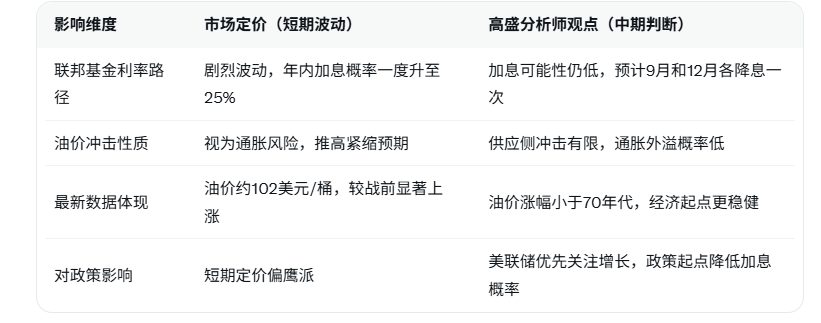
Goldman Sachs analysts recently further explained that although oil prices climbed rapidly to around $102 per barrel after the outbreak of the war, this shock was primarily driven by supply-side events rather than overheated demand. In contrast, the oil crisis of the 1970s was accompanied by broader inflationary spillovers and slower economic growth. The current oil price increase is limited, and the buffering effect of US domestic shale oil production is significant, resulting in a more robust overall economic foundation. Therefore, the Federal Reserve does not need to raise interest rates to address fluctuations in a single energy price.
The latest data shows that the CME FedWatch tool indicates a greater than 94% probability that the Federal Reserve will maintain interest rates in the 3.50%-3.75% range in April. Although the market once priced in a rate hike probability of around 25% this year, Goldman Sachs believes this pricing is significantly overestimated. Analysts expect the Fed to proceed with its planned 25 basis point rate cuts in September and December, guiding the federal funds rate target range to 3.00%-3.25%, prioritizing the risk of slowing economic growth over short-term inflationary pressures.
To clearly illustrate the differences between market expectations and Goldman Sachs' views, the following table summarizes a comparison of policy paths under the impact of the oil price shock following the Iraq War:
A deeper analysis reveals that while the recent oil price shock has boosted short-term inflation expectations, Goldman Sachs emphasizes its more significant negative impact on the labor market and overall economic growth. The war-induced energy supply disruptions are expected to cause a slight increase in the US unemployment rate by 0.1-0.2 percentage points, putting downward pressure on full-year GDP growth. Goldman Sachs has therefore raised its 12-month probability of a US recession to 30%, while maintaining its assessment of the Federal Reserve's easing path, arguing that historical experience shows central banks are more likely to "see through" short-term price fluctuations than to proactively tighten policy in the face of supply shocks.
Looking ahead, if shipping through the Strait of Hormuz resumes smoothly and oil prices gradually fall back to around $80 per barrel, inflationary pressures are expected to ease, and the window for a Federal Reserve rate cut will open as scheduled. Investors should pay close attention to next week's US employment data and subsequent PCE inflation indicators, as these will be key signals validating Goldman Sachs' assessment. Overall, this round of oil price volatility tests policymakers' art of balancing growth and inflation, rather than simply repeating the historical oil crisis scenario.
Editor's Summary : The Goldman Sachs report clearly indicates that while the oil price shock triggered by the Iraq War caused short-term fluctuations in interest rate pricing, it did not substantially change the Federal Reserve's assessment of a low probability of interest rate hikes. The limitations of the supply shock and the downside risks to economic growth have jointly shaped the current monetary policy path. The market needs to rationally distinguish between short-term noise and medium-term trends, and avoid over-pricing tightening expectations.
Goldman Sachs analysts recently further explained that although oil prices climbed rapidly to around $102 per barrel after the outbreak of the war, this shock was primarily driven by supply-side events rather than overheated demand. In contrast, the oil crisis of the 1970s was accompanied by broader inflationary spillovers and slower economic growth. The current oil price increase is limited, and the buffering effect of US domestic shale oil production is significant, resulting in a more robust overall economic foundation. Therefore, the Federal Reserve does not need to raise interest rates to address fluctuations in a single energy price.
The latest data shows that the CME FedWatch tool indicates a greater than 94% probability that the Federal Reserve will maintain interest rates in the 3.50%-3.75% range in April. Although the market once priced in a rate hike probability of around 25% this year, Goldman Sachs believes this pricing is significantly overestimated. Analysts expect the Fed to proceed with its planned 25 basis point rate cuts in September and December, guiding the federal funds rate target range to 3.00%-3.25%, prioritizing the risk of slowing economic growth over short-term inflationary pressures.
To clearly illustrate the differences between market expectations and Goldman Sachs' views, the following table summarizes a comparison of policy paths under the impact of the oil price shock following the Iraq War:
A deeper analysis reveals that while the recent oil price shock has boosted short-term inflation expectations, Goldman Sachs emphasizes its more significant negative impact on the labor market and overall economic growth. The war-induced energy supply disruptions are expected to cause a slight increase in the US unemployment rate by 0.1-0.2 percentage points, putting downward pressure on full-year GDP growth. Goldman Sachs has therefore raised its 12-month probability of a US recession to 30%, while maintaining its assessment of the Federal Reserve's easing path, arguing that historical experience shows central banks are more likely to "see through" short-term price fluctuations than to proactively tighten policy in the face of supply shocks.
Looking ahead, if shipping through the Strait of Hormuz resumes smoothly and oil prices gradually fall back to around $80 per barrel, inflationary pressures are expected to ease, and the window for a Federal Reserve rate cut will open as scheduled. Investors should pay close attention to next week's US employment data and subsequent PCE inflation indicators, as these will be key signals validating Goldman Sachs' assessment. Overall, this round of oil price volatility tests policymakers' art of balancing growth and inflation, rather than simply repeating the historical oil crisis scenario.
Editor's Summary : The Goldman Sachs report clearly indicates that while the oil price shock triggered by the Iraq War caused short-term fluctuations in interest rate pricing, it did not substantially change the Federal Reserve's assessment of a low probability of interest rate hikes. The limitations of the supply shock and the downside risks to economic growth have jointly shaped the current monetary policy path. The market needs to rationally distinguish between short-term noise and medium-term trends, and avoid over-pricing tightening expectations.
- Risk Warning and Disclaimer
- The market involves risk, and trading may not be suitable for all investors. This article is for reference only and does not constitute personal investment advice, nor does it take into account certain users’ specific investment objectives, financial situation, or other needs. Any investment decisions made based on this information are at your own risk.