The US dollar bucked the trend and rose despite the ongoing conflict in the Middle East and a surprisingly strong non-farm payrolls report, but its safe-haven appeal is fading.
2026-04-04 09:16:41
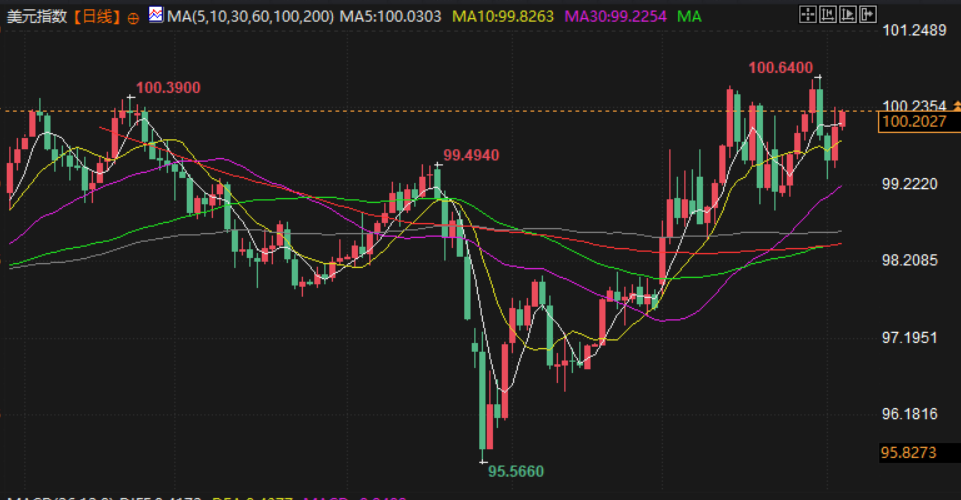
The US dollar index closed higher at 100.20 on Friday. The ongoing conflict in the Middle East, lasting over a month, coupled with the real fighting on the battlefield and Trump's frequent diversionary rhetoric, has plunged the market into a fog of uncertainty. The US's status as an energy exporter and investors' demand for safe-haven assets provided solid support for the dollar.
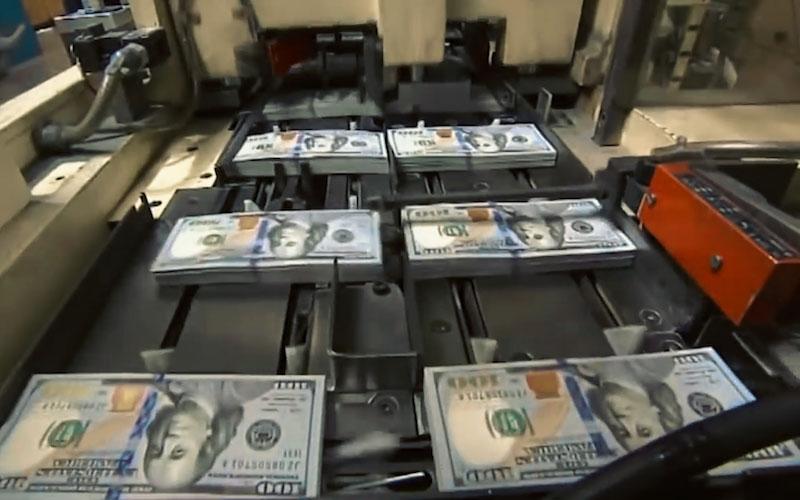
The dollar rose 1.67% in the first three months of this year, marking its best quarterly performance since the end of 2024. The currency market initially saw optimism regarding a potential de-escalation, but Trump's national address on Wednesday declared a "fierce strike against Iran within the next two to three weeks," stating that the main strategic objectives of the war were nearing completion. The Iranian military responded strongly, threatening even more destructive attacks. Uncertainty returned, prompting investors to sell stocks and other risk assets and buy the dollar, leading to a decline in the yen, euro, and pound.
Pepperstone strategist Michael Brown noted, "Risk aversion is following the typical pattern throughout the conflict – rising oil prices drag down all assets except the dollar, which remains the only real safe haven."
The euro edged down to 1.1532 against the dollar on Friday, having fallen 2.21% in March, its biggest quarterly drop since the third quarter of 2024. The pound fell 1.94% against the dollar in March; the yen was flat at 159.62. However, surveys show that foreign exchange strategists maintain a long-term bearish view on the dollar, believing that its modest rebound will fade as its safe-haven appeal diminishes.
The survey predicts the euro will rise to 1.18 against the dollar in six months and to 1.20 in a year. Standard Chartered's Steven Englander believes recent dollar buying has been lukewarm, but the euro will quickly rise above 1.18 once the situation eases and oil prices fall below $90.
Derek Halpenny of Mitsubishi UFJ Financial Group also agrees: a 60%-70% rise in crude oil prices should have pushed the dollar up by 4%-5%, but the actual increase was much more modest, weakening the dollar's safe-haven status. Meanwhile, the US Bureau of Labor Statistics' March non-farm payroll report showed a stunning reversal. After February's unexpectedly weak data due to factors such as severe weather and strikes, the March job market saw a strong rebound. Seasonally adjusted non-farm payrolls increased by 178,000 in March, far exceeding expectations, the unemployment rate fell to 4.3%, and average hourly earnings rose by 0.2% month-on-month, lower than the expected 0.3%, indicating that wage pressures have eased. The market believes that with the uncertain prospects of war with Iran, downside risks to the labor market are rising. Strong employment data may actually reinforce the Federal Reserve's focus on inflation risks. Market bets on a Fed rate cut in 2026 have declined again.
Asian currencies that rely on oil imports weaken.
Another survey shows that currency market confidence in almost all oil-dependent Asian economies has fallen to a six-month low. The situation in Iran has triggered a surge in oil prices, exacerbating market concerns about inflation and economic growth. Short positions in the Indonesian rupiah, Thai baht, and Philippine peso have risen to their highest levels since the end of 2022; bearish bets on the Indian rupee and South Korean won have jumped to their highest levels in over a year. Earlier this week, the Indonesian rupiah fell to a record low of 17,026 against the US dollar; the Philippine peso hovered near a record low of 60.814; and the South Korean won fell to 1,536.9, a new low since 2009.
The Indian rupee fell to a record low of 95.21 on Monday but rebounded sharply after the central bank took measures to curb speculation. The Thai baht appreciated steadily in 2025 and February of this year, but depreciated by 6% in March as conflict escalated, with short positions jumping to their highest level since October 2022.
HSBC analysts noted: "The US dollar's performance against Asian currencies will continue to be driven by commodity prices and risk appetite, with an overall upward bias. In Asia, the Singapore dollar and Malaysian ringgit will be more resilient than the Thai baht, Philippine peso, and Indian rupee."
Central bank interest rate decisions and policy divergence
Most major central banks kept interest rates unchanged in March, primarily due to uncertainty stemming from the Middle East wars. Concerns about rising inflation and slowing economic growth cast a shadow over the global economic outlook. Of the nine central banks that held meetings in March, eight kept rates steady, except for Australia, which raised rates by 25 basis points. Next week, the central banks of New Zealand, India, and Korea will announce their interest rate decisions.
The market widely expects the Reserve Bank of India to keep interest rates unchanged at 5.25% on Wednesday, but the bank faces a dilemma: soaring energy prices and a record low rupee mean inflation data will soon reflect the impact of the rise; meanwhile, economists have lowered their economic growth forecasts.
A survey indicates the Reserve Bank of New Zealand is expected to keep interest rates unchanged at 2.25% on Wednesday, but due to rising energy prices and inflation caused by the war, the bank's future rate hikes may come sooner than previously anticipated. Barclays economists say the Bank of Japan may raise rates this month, citing the tightening tone in its March meeting's summary of opinions and the weakening yen. However, the increased risk of a protracted Middle East conflict could lead more central bankers to believe the economic downturn will be more severe, making a rate hike at the April 27-28 meeting uncertain until the "last minute."
Former Bank of Japan official Nobuyasu Atago warned on Thursday that the Japanese economy may face a supply shock and demand contraction triggered by the war in Iran, a risk the central bank may be overlooking due to its focus on inflationary pressures. The Bank of Japan has recently released a series of hawkish signals, with the market expecting a roughly 70% probability of an April rate hike. The Middle East conflict has pushed up oil prices, and a weaker yen has increased import costs, exacerbating price pressures. Although interest rates were kept unchanged in March, policymakers have already begun discussions on further rate hikes. Atago warned of a potential shortage of naphtha and other chemical products, posing a greater risk and potentially harming the economy.
Nobuyasu Atago stated, "This summer, Japan may face stagflation, where soaring prices and economic contraction occur simultaneously." The Bank of Japan is collecting information on petrochemical plant operators' responses through its branches nationwide, and this information may be reflected in the regional economic report to be released next Monday (April 6).
Expectations of interest rate hikes by the European Central Bank and the Bank of England are rising.
As policymakers warn that the US-Israel war in Iraq is exacerbating inflation risks, global brokerages are increasingly expecting the European Central Bank to raise interest rates as early as April, while simultaneously postponing their expectations for a rate cut by the Bank of England. Bank of America Global Research has become the latest brokerage to predict that the Bank of England will raise interest rates this year, forecasting 25 basis point increases in June and July respectively.
JPMorgan Chase predicts the Bank of England will raise interest rates once in June. Wall Street giants like Goldman Sachs and Barclays also point out that if global energy prices continue to rise, the Bank of England is very likely to raise rates soon, possibly as early as April. European Central Bank Governing Council member Villeroy de Gallo said on Thursday that the ECB's next interest rate adjustment is highly likely to be a rate hike, although it is too early to say when the hikes will begin.
The current surge in energy prices is rapidly being reflected in overall eurozone inflation data, although core inflation remains "firmly under control." The ongoing conflict in the Middle East continues to negatively impact the economic outlook, and the current situation is closer to the ECB's "adverse medium-term scenario" than the "baseline scenario" on which last month's economic forecasts were based.
Villeroy de Gallo emphasized: "It is too early to predict the timeline for the ECB's interest rate hikes, but it is clear that we have the capacity to take any necessary action if necessary."
The dollar rose 1.67% in the first three months of this year, marking its best quarterly performance since the end of 2024. The currency market initially saw optimism regarding a potential de-escalation, but Trump's national address on Wednesday declared a "fierce strike against Iran within the next two to three weeks," stating that the main strategic objectives of the war were nearing completion. The Iranian military responded strongly, threatening even more destructive attacks. Uncertainty returned, prompting investors to sell stocks and other risk assets and buy the dollar, leading to a decline in the yen, euro, and pound.
Pepperstone strategist Michael Brown noted, "Risk aversion is following the typical pattern throughout the conflict – rising oil prices drag down all assets except the dollar, which remains the only real safe haven."
The euro edged down to 1.1532 against the dollar on Friday, having fallen 2.21% in March, its biggest quarterly drop since the third quarter of 2024. The pound fell 1.94% against the dollar in March; the yen was flat at 159.62. However, surveys show that foreign exchange strategists maintain a long-term bearish view on the dollar, believing that its modest rebound will fade as its safe-haven appeal diminishes.
The survey predicts the euro will rise to 1.18 against the dollar in six months and to 1.20 in a year. Standard Chartered's Steven Englander believes recent dollar buying has been lukewarm, but the euro will quickly rise above 1.18 once the situation eases and oil prices fall below $90.
Derek Halpenny of Mitsubishi UFJ Financial Group also agrees: a 60%-70% rise in crude oil prices should have pushed the dollar up by 4%-5%, but the actual increase was much more modest, weakening the dollar's safe-haven status. Meanwhile, the US Bureau of Labor Statistics' March non-farm payroll report showed a stunning reversal. After February's unexpectedly weak data due to factors such as severe weather and strikes, the March job market saw a strong rebound. Seasonally adjusted non-farm payrolls increased by 178,000 in March, far exceeding expectations, the unemployment rate fell to 4.3%, and average hourly earnings rose by 0.2% month-on-month, lower than the expected 0.3%, indicating that wage pressures have eased. The market believes that with the uncertain prospects of war with Iran, downside risks to the labor market are rising. Strong employment data may actually reinforce the Federal Reserve's focus on inflation risks. Market bets on a Fed rate cut in 2026 have declined again.
Asian currencies that rely on oil imports weaken.
Another survey shows that currency market confidence in almost all oil-dependent Asian economies has fallen to a six-month low. The situation in Iran has triggered a surge in oil prices, exacerbating market concerns about inflation and economic growth. Short positions in the Indonesian rupiah, Thai baht, and Philippine peso have risen to their highest levels since the end of 2022; bearish bets on the Indian rupee and South Korean won have jumped to their highest levels in over a year. Earlier this week, the Indonesian rupiah fell to a record low of 17,026 against the US dollar; the Philippine peso hovered near a record low of 60.814; and the South Korean won fell to 1,536.9, a new low since 2009.
The Indian rupee fell to a record low of 95.21 on Monday but rebounded sharply after the central bank took measures to curb speculation. The Thai baht appreciated steadily in 2025 and February of this year, but depreciated by 6% in March as conflict escalated, with short positions jumping to their highest level since October 2022.
HSBC analysts noted: "The US dollar's performance against Asian currencies will continue to be driven by commodity prices and risk appetite, with an overall upward bias. In Asia, the Singapore dollar and Malaysian ringgit will be more resilient than the Thai baht, Philippine peso, and Indian rupee."
Central bank interest rate decisions and policy divergence
Most major central banks kept interest rates unchanged in March, primarily due to uncertainty stemming from the Middle East wars. Concerns about rising inflation and slowing economic growth cast a shadow over the global economic outlook. Of the nine central banks that held meetings in March, eight kept rates steady, except for Australia, which raised rates by 25 basis points. Next week, the central banks of New Zealand, India, and Korea will announce their interest rate decisions.
The market widely expects the Reserve Bank of India to keep interest rates unchanged at 5.25% on Wednesday, but the bank faces a dilemma: soaring energy prices and a record low rupee mean inflation data will soon reflect the impact of the rise; meanwhile, economists have lowered their economic growth forecasts.
A survey indicates the Reserve Bank of New Zealand is expected to keep interest rates unchanged at 2.25% on Wednesday, but due to rising energy prices and inflation caused by the war, the bank's future rate hikes may come sooner than previously anticipated. Barclays economists say the Bank of Japan may raise rates this month, citing the tightening tone in its March meeting's summary of opinions and the weakening yen. However, the increased risk of a protracted Middle East conflict could lead more central bankers to believe the economic downturn will be more severe, making a rate hike at the April 27-28 meeting uncertain until the "last minute."
Former Bank of Japan official Nobuyasu Atago warned on Thursday that the Japanese economy may face a supply shock and demand contraction triggered by the war in Iran, a risk the central bank may be overlooking due to its focus on inflationary pressures. The Bank of Japan has recently released a series of hawkish signals, with the market expecting a roughly 70% probability of an April rate hike. The Middle East conflict has pushed up oil prices, and a weaker yen has increased import costs, exacerbating price pressures. Although interest rates were kept unchanged in March, policymakers have already begun discussions on further rate hikes. Atago warned of a potential shortage of naphtha and other chemical products, posing a greater risk and potentially harming the economy.
Nobuyasu Atago stated, "This summer, Japan may face stagflation, where soaring prices and economic contraction occur simultaneously." The Bank of Japan is collecting information on petrochemical plant operators' responses through its branches nationwide, and this information may be reflected in the regional economic report to be released next Monday (April 6).
Expectations of interest rate hikes by the European Central Bank and the Bank of England are rising.
As policymakers warn that the US-Israel war in Iraq is exacerbating inflation risks, global brokerages are increasingly expecting the European Central Bank to raise interest rates as early as April, while simultaneously postponing their expectations for a rate cut by the Bank of England. Bank of America Global Research has become the latest brokerage to predict that the Bank of England will raise interest rates this year, forecasting 25 basis point increases in June and July respectively.
JPMorgan Chase predicts the Bank of England will raise interest rates once in June. Wall Street giants like Goldman Sachs and Barclays also point out that if global energy prices continue to rise, the Bank of England is very likely to raise rates soon, possibly as early as April. European Central Bank Governing Council member Villeroy de Gallo said on Thursday that the ECB's next interest rate adjustment is highly likely to be a rate hike, although it is too early to say when the hikes will begin.
The current surge in energy prices is rapidly being reflected in overall eurozone inflation data, although core inflation remains "firmly under control." The ongoing conflict in the Middle East continues to negatively impact the economic outlook, and the current situation is closer to the ECB's "adverse medium-term scenario" than the "baseline scenario" on which last month's economic forecasts were based.
Villeroy de Gallo emphasized: "It is too early to predict the timeline for the ECB's interest rate hikes, but it is clear that we have the capacity to take any necessary action if necessary."
- Risk Warning and Disclaimer
- The market involves risk, and trading may not be suitable for all investors. This article is for reference only and does not constitute personal investment advice, nor does it take into account certain users’ specific investment objectives, financial situation, or other needs. Any investment decisions made based on this information are at your own risk.