Aluminum prices are poised for a four-year peak, while a supply crisis looms in the Middle East.
2026-04-07 15:45:22
On Tuesday, April 7th, LME aluminum futures for March delivery traded around $3,500 per tonne in early European trading, a significant increase from the end of March, but still within a four-year high range. Market focus was on the sudden supply disruption in the Middle East, with major producers' smelters suffering attacks and production halts, coupled with shipping disruptions in the Strait of Hormuz, leading to a substantial interruption in primary aluminum exports. The tight balance in the physical market is becoming increasingly clear, with warehouse inventories falling to near-record lows. Traders are closely monitoring the progress of logistical recovery and potential ripple effects.

LME aluminum futures rose rapidly from late March, reaching a high of nearly $3,550 per ton. Although there has been a slight pullback, the overall trend remains strong. This movement is not isolated, but rather a result of the concentrated release of supply-side risks in the Middle East. As a major global primary aluminum producing region with a high export share, any restriction on logistics channels immediately puts pressure on the global supply chain. Compared to the 2022 high, this round of increases is more due to the contraction of physical supply than purely speculative. Traders are closely monitoring daily warehouse receipt changes and spot premium/discount data to grasp the rhythm of price fluctuations.
Inventories continued to decline to around 411,950 tons, a further narrowing from the low point in July 2025, indicating that there are clear signs of supply shortage in the spot market.
The Middle East accounts for approximately 9% of global primary aluminum production capacity, primarily exporting to major consumer markets via sea. The Altawera smelter of Emirates Global Aluminium, one of the region's largest producers, was completely shut down last month after a missile attack, directly leading to a sharp decline in local exports. Simultaneously, shipping disruptions in the Strait of Hormuz further amplified the impact, preventing the timely loading and export of large quantities of produced primary aluminum. Market analysis indicates that this event could remove millions of tons of supply capacity in the short term, far exceeding the scale of seasonal maintenance. Traders generally believe that if similar logistical bottlenecks persist, they will force downstream users to shift to other sources of procurement, further widening the spot premium. The current physical market has shifted from ample to tight, with a clearly positive premium/discount structure, reflecting buyers' urgent demand for immediate delivery.
LME warehouse inventories have fallen below 410,000 tons, the lowest level since July 2025, a significant drop from the peak at the beginning of the year. This data directly confirms the process by which supply-side pressure is transmitted to the exchange system. In a low-inventory environment, warehouse receipt cancellations are accelerating, the spot delivery window is compressed, and some positions face the risk of increased rollover costs. Historical data shows that when inventories fall below 500,000 tons, price volatility typically increases significantly, and this round is no exception. Traders observe changes in deliveries at specific warehouses in daily inventory reports as an important reference for judging the sustainability of the tight balance. Another key indicator in the physical market is the spot premium, which has recently risen to multi-year highs, further corroborating the fundamental support for rising futures prices.
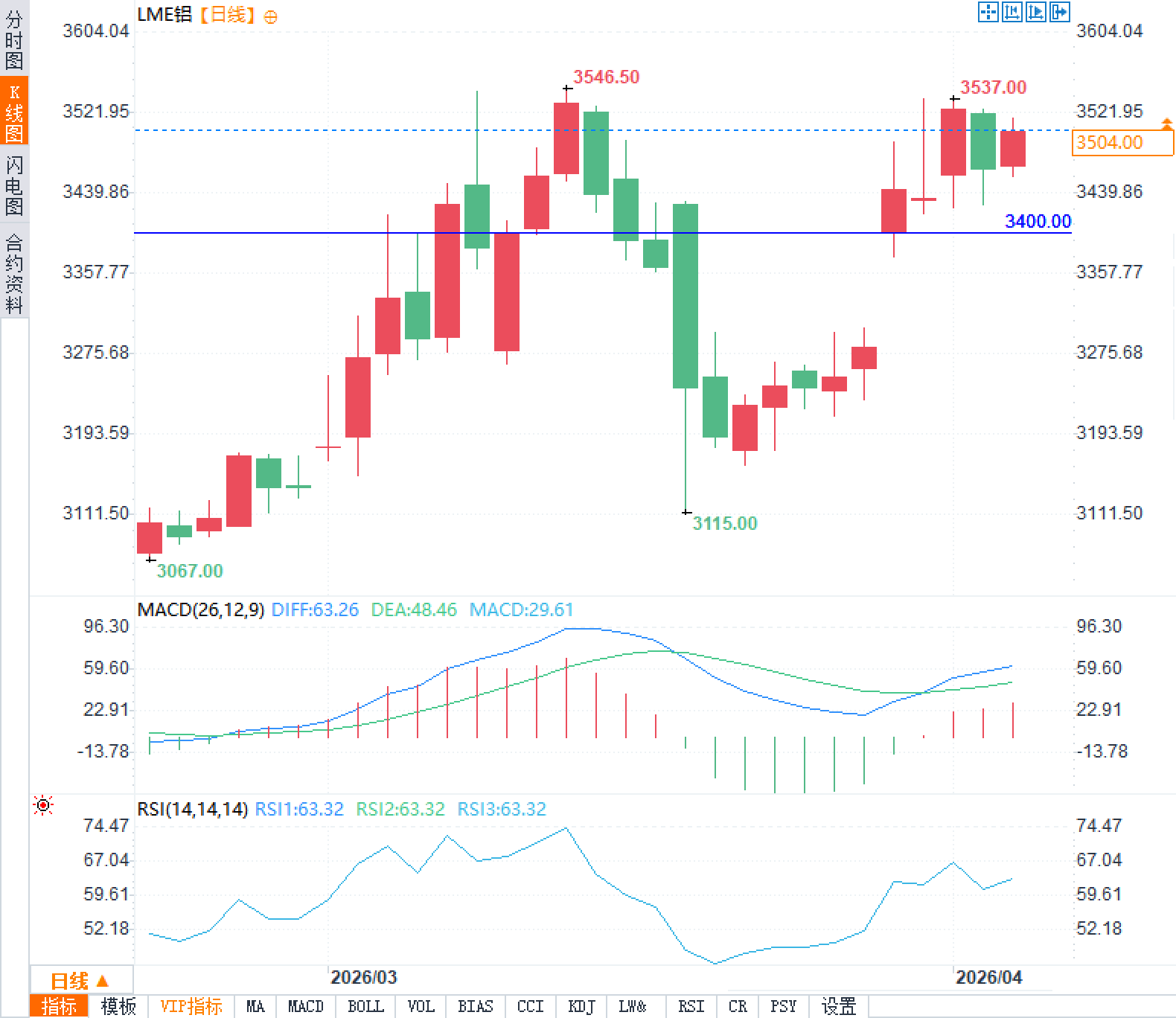
The global primary aluminum supply-demand balance is facing a structural tightening test. The events in the Middle East, coupled with slow capacity release in other regions, have led to a downward revision of the overall supply increase forecast for 2026. While downstream consumption faces some macroeconomic uncertainties, demand for aluminum in aviation, packaging, and new energy sectors continues to provide support. In the short term, prices will fluctuate around the pace of supply recovery; if shipping routes fail to reopen quickly, the inventory reduction trend may continue into the second quarter. In the long term, the market is focused on the timeline for new smelting capacity coming online and changes in energy costs, as these factors will jointly determine the length of this tight balance cycle.
Current market conditions and fundamental drivers
LME aluminum futures rose rapidly from late March, reaching a high of nearly $3,550 per ton. Although there has been a slight pullback, the overall trend remains strong. This movement is not isolated, but rather a result of the concentrated release of supply-side risks in the Middle East. As a major global primary aluminum producing region with a high export share, any restriction on logistics channels immediately puts pressure on the global supply chain. Compared to the 2022 high, this round of increases is more due to the contraction of physical supply than purely speculative. Traders are closely monitoring daily warehouse receipt changes and spot premium/discount data to grasp the rhythm of price fluctuations.
| date | LME March settlement price (USD/ton) | Warehouse inventory (tons) |
|---|---|---|
| March 27, 2026 | 3242 | 420875 |
| March 30, 2026 | 3425 | 418675 |
| April 2, 2026 | 3469.50 | 411950 |
The profound impact of supply disruptions in the Middle East
The Middle East accounts for approximately 9% of global primary aluminum production capacity, primarily exporting to major consumer markets via sea. The Altawera smelter of Emirates Global Aluminium, one of the region's largest producers, was completely shut down last month after a missile attack, directly leading to a sharp decline in local exports. Simultaneously, shipping disruptions in the Strait of Hormuz further amplified the impact, preventing the timely loading and export of large quantities of produced primary aluminum. Market analysis indicates that this event could remove millions of tons of supply capacity in the short term, far exceeding the scale of seasonal maintenance. Traders generally believe that if similar logistical bottlenecks persist, they will force downstream users to shift to other sources of procurement, further widening the spot premium. The current physical market has shifted from ample to tight, with a clearly positive premium/discount structure, reflecting buyers' urgent demand for immediate delivery.
Low inventory levels signal a tight balance in the physical market
LME warehouse inventories have fallen below 410,000 tons, the lowest level since July 2025, a significant drop from the peak at the beginning of the year. This data directly confirms the process by which supply-side pressure is transmitted to the exchange system. In a low-inventory environment, warehouse receipt cancellations are accelerating, the spot delivery window is compressed, and some positions face the risk of increased rollover costs. Historical data shows that when inventories fall below 500,000 tons, price volatility typically increases significantly, and this round is no exception. Traders observe changes in deliveries at specific warehouses in daily inventory reports as an important reference for judging the sustainability of the tight balance. Another key indicator in the physical market is the spot premium, which has recently risen to multi-year highs, further corroborating the fundamental support for rising futures prices.
Outlook on the Evolution of Supply and Demand Pattern
The global primary aluminum supply-demand balance is facing a structural tightening test. The events in the Middle East, coupled with slow capacity release in other regions, have led to a downward revision of the overall supply increase forecast for 2026. While downstream consumption faces some macroeconomic uncertainties, demand for aluminum in aviation, packaging, and new energy sectors continues to provide support. In the short term, prices will fluctuate around the pace of supply recovery; if shipping routes fail to reopen quickly, the inventory reduction trend may continue into the second quarter. In the long term, the market is focused on the timeline for new smelting capacity coming online and changes in energy costs, as these factors will jointly determine the length of this tight balance cycle.
Frequently Asked Questions
Question 1: What are the main driving factors that have driven aluminum prices to near a four-year high?
A: The core issue is that the attacks on two major smelters in the Middle East led to production shutdowns, coupled with the disruption of shipping through the Strait of Hormuz, directly cutting off approximately 9% of global primary aluminum exports. LME inventories simultaneously fell to a low of around 410,000 tons, while the spot premium in the physical market surged, creating a tight supply-demand balance and driving futures prices upward. This event differs from previous seasonal disturbances, being sudden and regionally concentrated, causing market anxieties to escalate rapidly.
Question 2: What does low inventory level mean for the aluminum market?
A: Inventory levels below historical averages indicate reduced spot market circulation, increased delivery pressure, and a higher risk of a short squeeze. The inventory of 418,675 tons at the end of March was the lowest since July 2025, showing a continued outflow of aluminum ingots from warehouses, forcing buyers to pay higher premiums for physical delivery. This provides solid support for prices but also amplifies volatility. Traders need to pay attention to subsequent warehouse receipt cancellation data to determine whether the tight balance has eased.
- Risk Warning and Disclaimer
- The market involves risk, and trading may not be suitable for all investors. This article is for reference only and does not constitute personal investment advice, nor does it take into account certain users’ specific investment objectives, financial situation, or other needs. Any investment decisions made based on this information are at your own risk.