The Bank of Korea kept its repurchase rate unchanged at 2.5%, while inflation rose slightly to 2.2% in March.
2026-04-10 10:59:39
According to APP, the Bank of Korea announced on Friday that it would keep the seven-day repo rate unchanged at 2.5%, marking the second consecutive meeting since July 2025 to maintain this stance, fully in line with market expectations. This decision was based on a comprehensive assessment of the relatively stable inflation situation and the resilience of economic growth .
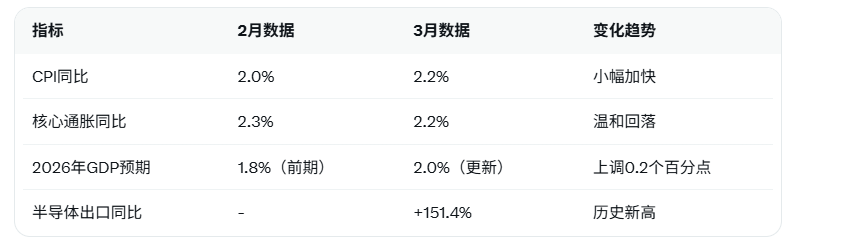
South Korea's latest consumer price index (CPI) released by the National Data Service shows that the CPI rose 2.2% year-on-year in March, a slight acceleration from 2.0% in February, but still near the central bank's medium-term target range of 2%. The increase was mainly due to imported pressure from rising oil product prices and exchange rate fluctuations, while core inflation showed a moderate decline, indicating that domestic demand was not excessively overheated.
At its February meeting, the Bank of Korea raised its 2026 economic growth forecast from 1.8% to 2.0%, a more optimistic adjustment primarily attributed to the robust recovery of the artificial intelligence-driven semiconductor cycle and a relatively favorable global trade environment. March export data further confirmed this resilience: semiconductor exports surged 151.4% year-on-year, reaching a record high of $32.83 billion for the month, driving overall exports up 48.3% year-on-year, also setting a new monthly record. Exports to major Asian countries saw a significant increase of 64.2%, becoming a crucial supporting factor.
However, the conflict in the Middle East is exerting pressure on both inflation and growth simultaneously. As one of the world's major energy importers, South Korea relies on the Gulf region for approximately 70% of its crude oil, and rising oil and gas prices directly increase import costs. Coupled with the impact of foreign capital outflows, the Korean won has weakened significantly in recent weeks, further amplifying the risk of imported inflation. Meanwhile, although the export sector remains strong, the potential for global supply chain disruptions may gradually emerge in the coming months.
The following table compares recent changes in key economic indicators:
Faced with external uncertainties, the Bank of Korea chose to maintain its interest rate unchanged, reflecting a cautious wait-and-see policy approach: avoiding premature tightening that could dampen recovery momentum while continuing to monitor potential financial instability issues such as the real estate market and household debt. In the coming months, policymakers will focus on monitoring oil price trends, exchange rate fluctuations, and changes in global demand. If the situation in the Middle East eases and inflationary pressures subside, there may be room for policy fine-tuning this year; conversely, if risks continue to escalate, interest rates may remain at current levels for an extended period.
Editor's Summary:
This monetary policy decision highlights the resilience of the South Korean economy driven by exports, while also reflecting the central bank's prudent response to external shocks. Semiconductor demand and trade with major Asian powers are bright spots for growth, while energy prices and exchange rate volatility pose the main downside risks. Overall, maintaining a neutral policy stance is conducive to a soft landing for the economy, but the combined impact of geopolitical variables on inflation and growth needs to be closely monitored.
South Korea's latest consumer price index (CPI) released by the National Data Service shows that the CPI rose 2.2% year-on-year in March, a slight acceleration from 2.0% in February, but still near the central bank's medium-term target range of 2%. The increase was mainly due to imported pressure from rising oil product prices and exchange rate fluctuations, while core inflation showed a moderate decline, indicating that domestic demand was not excessively overheated.
At its February meeting, the Bank of Korea raised its 2026 economic growth forecast from 1.8% to 2.0%, a more optimistic adjustment primarily attributed to the robust recovery of the artificial intelligence-driven semiconductor cycle and a relatively favorable global trade environment. March export data further confirmed this resilience: semiconductor exports surged 151.4% year-on-year, reaching a record high of $32.83 billion for the month, driving overall exports up 48.3% year-on-year, also setting a new monthly record. Exports to major Asian countries saw a significant increase of 64.2%, becoming a crucial supporting factor.
However, the conflict in the Middle East is exerting pressure on both inflation and growth simultaneously. As one of the world's major energy importers, South Korea relies on the Gulf region for approximately 70% of its crude oil, and rising oil and gas prices directly increase import costs. Coupled with the impact of foreign capital outflows, the Korean won has weakened significantly in recent weeks, further amplifying the risk of imported inflation. Meanwhile, although the export sector remains strong, the potential for global supply chain disruptions may gradually emerge in the coming months.
The following table compares recent changes in key economic indicators:
Faced with external uncertainties, the Bank of Korea chose to maintain its interest rate unchanged, reflecting a cautious wait-and-see policy approach: avoiding premature tightening that could dampen recovery momentum while continuing to monitor potential financial instability issues such as the real estate market and household debt. In the coming months, policymakers will focus on monitoring oil price trends, exchange rate fluctuations, and changes in global demand. If the situation in the Middle East eases and inflationary pressures subside, there may be room for policy fine-tuning this year; conversely, if risks continue to escalate, interest rates may remain at current levels for an extended period.
Editor's Summary:
This monetary policy decision highlights the resilience of the South Korean economy driven by exports, while also reflecting the central bank's prudent response to external shocks. Semiconductor demand and trade with major Asian powers are bright spots for growth, while energy prices and exchange rate volatility pose the main downside risks. Overall, maintaining a neutral policy stance is conducive to a soft landing for the economy, but the combined impact of geopolitical variables on inflation and growth needs to be closely monitored.
- Risk Warning and Disclaimer
- The market involves risk, and trading may not be suitable for all investors. This article is for reference only and does not constitute personal investment advice, nor does it take into account certain users’ specific investment objectives, financial situation, or other needs. Any investment decisions made based on this information are at your own risk.