Trump orders strait blockade, global energy crisis hits record high
2026-04-14 15:05:40
US President Donald Trump ordered a naval blockade of the Strait of Hormuz on Sunday (April 12), a move that significantly diminishes hopes for a quick end to the Middle East conflict and further escalates the confrontation with Iran, which has triggered the worst energy crisis in global history.
According to a statement issued by the U.S. Central Command, the target is all vessels of all countries entering and leaving Iranian ports and coastal areas, including ports and related areas in the Arabian Gulf and the Gulf of Oman.
Tanker traffic in the Strait of Hormuz, which had begun to slowly recover after Trump announced a two-week ceasefire last week, stalled again within hours of his latest closure announcement. According to Lloyds Marine Intelligence, at least two vessels that were preparing to leave the strait quickly turned back.
Before Trump issued the lockdown order, Washington and Tehran held intensive 21-hour weekend talks, but failed to reach any agreement on Iran's nuclear program, control of the Straits of Hormuz, and Israel's continued strikes against Iranian-backed Hezbollah in Lebanon, ultimately leading to the breakdown of the negotiations.
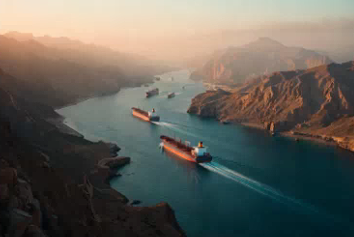
Before the initial strikes by the United States and Israel against Iran on February 28, approximately one-fifth of global oil shipments passed through the Strait of Hormuz. Since then, oil flow through the strait has drastically decreased to a trickle, severely disrupting supply chains for oil, fertilizers, clothing, and industrial goods. Analysts warn that even if the conflict is resolved, clearing the backlog of supplies could take weeks.
A full lockdown would further exacerbate the supply shortage. Trita Parsi, executive vice president of the Quincy Institute for Responsible Governance, said on Monday, "Removing more oil from the market, especially the only oil currently still available for export from the Persian Gulf, would drive oil prices even higher…potentially to around $150 a barrel."
In addition to crude oil, prices for commodities such as fertilizers and helium are likely to continue to rise. These are key raw materials for food production and semiconductor manufacturing, which, according to Ben Emons, managing director of FedWatch Consulting, will further exacerbate already accelerating inflationary pressures.
Officials from the International Monetary Fund (IMF) and the World Bank signaled last week that they would lower their global economic growth forecasts and raise their inflation expectations, while specifically warning that emerging markets would suffer the most severe shocks.
Barclays analysts stated, "The economic damage caused by the attacks on energy facilities and ports in Iran and other Gulf states could continue to strain supplies in emerging Asia. It remains unclear how long it will take for oil and gas extraction, refining, and loading operations to return to normal."
The month-long disruption to shipping through the Strait of Hormuz has raised warnings that the current energy shortage could be more severe than the oil crisis of the 1970s, when an embargo imposed by Arab oil-producing nations on countries that supported the United States caused oil prices to quadruple, leading major economies to implement fuel rationing.
International Energy Agency Executive Director Fatih Birol said last week that the disruption is the worst energy shock in global history, exceeding the combined severity of the 1970s oil crisis and the Russia-Ukraine conflict.
S&P Global Vice President Daniel Yergin said last month: "This is an unprecedented major disruption in the history of the world's oil industry. There has never been an event of this scale before. Even the oil crisis of the 1970s, the Iran-Iraq War of the 1980s, or the Iraqi invasion of Kuwait in 1990 cannot compare to the severity of this disruption."
However, David Lubin, a senior fellow at the Chatham House, points out that the current oil price reaction is relatively mild, and the resilience of economic growth may be stronger than market concerns. He explains that the global economy's dependence on oil has decreased significantly compared to the past. Currently, oil consumption per unit of GDP is only about 40% of that in the early 1970s. Furthermore, clean energy sources such as wind, solar, and nuclear power have greatly enriched the energy mix, conditions that were not available 50 years ago.
Rubin also warned that if the conflict escalates further, "the impact of this crisis on energy could very well evolve into a severe negative shock comparable to that of the 1970s crisis."
This blockade could also draw the world's second-largest economy, a major Asian power, into the confrontation. Analysts point out that the country remains the largest buyer of Iranian oil, having consistently received Iranian oil through the Strait of Hormuz since the conflict began. A complete embargo on tankers transporting Iranian crude would cut off this supply route, potentially further escalating tensions between the United States and Iran.
Parsey said, "I doubt Trump is prepared for this kind of escalation." He added that it wouldn't be surprising if Trump eventually retracted his previous threats.
In addition, the U.S. government threatened on Monday to impose an additional 50% tariff on Iran if a major Asian power provides it with advanced defense equipment.
Parsi pointed out that countries such as India and Pakistan, which have already negotiated safe passage arrangements with Iran, could also be drawn into the crossfire of this conflict.
Some analysts believe that the blockade is more of a pressure tactic than a means of final escalation. Parsey stated, "Since neither side has explicitly stated that negotiations will not resume or that the ceasefire has ended, all these actions should be viewed as tactics and threats within the negotiation process."
Brian Jacobsen, chief economist at Anax Wealth Management, is cautiously optimistic that Washington may grant safe passage exemptions to allied vessels. However, Emons warns of serious downside risks to this strategy. He points out that an action aimed at forcing Iran to "kneel" could trigger a retaliation and initiate a new cycle of military escalation.
Iran's Islamic Revolutionary Guard Corps sent a clear signal on Sunday, warning that any warship approaching the Strait of Hormuz under "any pretext" would be considered a violation of the ceasefire agreement. The organization further hardened its stance, stating that any miscalculation would trap the enemy in a "deadly vortex."
Several experts pointed out that the blockade is also legally controversial, because neither the United States nor Iran has the right to close or obstruct passage through the Strait of Hormuz.
Emons stated, "Under international law, particularly the rules governing international straits, the United States has no legal authority to close, suspend, or impede transit through the Strait of Hormuz." He added that only Iran and Oman are littoral states of the strait, and even then, they are prohibited from suspending transit.
For ship owners, the actual deterrent effect of transiting the strait also includes the risk of Western sanctions against Iran. Paying fees to Iran could violate relevant US and European regulations, and companies could face severe penalties.
Overall , Trump's order to close the Strait of Hormuz has pushed the Middle East conflict into a new and dangerous phase. In the short term, the global energy market will continue to face significant volatility, while the long-term impact will depend on whether the conflict escalates further and whether all parties can return to the negotiating table as soon as possible.
According to a statement issued by the U.S. Central Command, the target is all vessels of all countries entering and leaving Iranian ports and coastal areas, including ports and related areas in the Arabian Gulf and the Gulf of Oman.
Tanker traffic in the Strait of Hormuz, which had begun to slowly recover after Trump announced a two-week ceasefire last week, stalled again within hours of his latest closure announcement. According to Lloyds Marine Intelligence, at least two vessels that were preparing to leave the strait quickly turned back.
Before Trump issued the lockdown order, Washington and Tehran held intensive 21-hour weekend talks, but failed to reach any agreement on Iran's nuclear program, control of the Straits of Hormuz, and Israel's continued strikes against Iranian-backed Hezbollah in Lebanon, ultimately leading to the breakdown of the negotiations.
Oil supply tightens further, exacerbating the global energy shock.
Before the initial strikes by the United States and Israel against Iran on February 28, approximately one-fifth of global oil shipments passed through the Strait of Hormuz. Since then, oil flow through the strait has drastically decreased to a trickle, severely disrupting supply chains for oil, fertilizers, clothing, and industrial goods. Analysts warn that even if the conflict is resolved, clearing the backlog of supplies could take weeks.
A full lockdown would further exacerbate the supply shortage. Trita Parsi, executive vice president of the Quincy Institute for Responsible Governance, said on Monday, "Removing more oil from the market, especially the only oil currently still available for export from the Persian Gulf, would drive oil prices even higher…potentially to around $150 a barrel."
In addition to crude oil, prices for commodities such as fertilizers and helium are likely to continue to rise. These are key raw materials for food production and semiconductor manufacturing, which, according to Ben Emons, managing director of FedWatch Consulting, will further exacerbate already accelerating inflationary pressures.
Officials from the International Monetary Fund (IMF) and the World Bank signaled last week that they would lower their global economic growth forecasts and raise their inflation expectations, while specifically warning that emerging markets would suffer the most severe shocks.
Barclays analysts stated, "The economic damage caused by the attacks on energy facilities and ports in Iran and other Gulf states could continue to strain supplies in emerging Asia. It remains unclear how long it will take for oil and gas extraction, refining, and loading operations to return to normal."
The month-long disruption to shipping through the Strait of Hormuz has raised warnings that the current energy shortage could be more severe than the oil crisis of the 1970s, when an embargo imposed by Arab oil-producing nations on countries that supported the United States caused oil prices to quadruple, leading major economies to implement fuel rationing.
International Energy Agency Executive Director Fatih Birol said last week that the disruption is the worst energy shock in global history, exceeding the combined severity of the 1970s oil crisis and the Russia-Ukraine conflict.
S&P Global Vice President Daniel Yergin said last month: "This is an unprecedented major disruption in the history of the world's oil industry. There has never been an event of this scale before. Even the oil crisis of the 1970s, the Iran-Iraq War of the 1980s, or the Iraqi invasion of Kuwait in 1990 cannot compare to the severity of this disruption."
However, David Lubin, a senior fellow at the Chatham House, points out that the current oil price reaction is relatively mild, and the resilience of economic growth may be stronger than market concerns. He explains that the global economy's dependence on oil has decreased significantly compared to the past. Currently, oil consumption per unit of GDP is only about 40% of that in the early 1970s. Furthermore, clean energy sources such as wind, solar, and nuclear power have greatly enriched the energy mix, conditions that were not available 50 years ago.
Rubin also warned that if the conflict escalates further, "the impact of this crisis on energy could very well evolve into a severe negative shock comparable to that of the 1970s crisis."
A major Asian power faces direct risks.
This blockade could also draw the world's second-largest economy, a major Asian power, into the confrontation. Analysts point out that the country remains the largest buyer of Iranian oil, having consistently received Iranian oil through the Strait of Hormuz since the conflict began. A complete embargo on tankers transporting Iranian crude would cut off this supply route, potentially further escalating tensions between the United States and Iran.
Parsey said, "I doubt Trump is prepared for this kind of escalation." He added that it wouldn't be surprising if Trump eventually retracted his previous threats.
In addition, the U.S. government threatened on Monday to impose an additional 50% tariff on Iran if a major Asian power provides it with advanced defense equipment.
Parsi pointed out that countries such as India and Pakistan, which have already negotiated safe passage arrangements with Iran, could also be drawn into the crossfire of this conflict.
Negotiation strategy or misjudgment?
Some analysts believe that the blockade is more of a pressure tactic than a means of final escalation. Parsey stated, "Since neither side has explicitly stated that negotiations will not resume or that the ceasefire has ended, all these actions should be viewed as tactics and threats within the negotiation process."
Brian Jacobsen, chief economist at Anax Wealth Management, is cautiously optimistic that Washington may grant safe passage exemptions to allied vessels. However, Emons warns of serious downside risks to this strategy. He points out that an action aimed at forcing Iran to "kneel" could trigger a retaliation and initiate a new cycle of military escalation.
Iran's Islamic Revolutionary Guard Corps sent a clear signal on Sunday, warning that any warship approaching the Strait of Hormuz under "any pretext" would be considered a violation of the ceasefire agreement. The organization further hardened its stance, stating that any miscalculation would trap the enemy in a "deadly vortex."
The lockdown lacks legal basis.
Several experts pointed out that the blockade is also legally controversial, because neither the United States nor Iran has the right to close or obstruct passage through the Strait of Hormuz.
Emons stated, "Under international law, particularly the rules governing international straits, the United States has no legal authority to close, suspend, or impede transit through the Strait of Hormuz." He added that only Iran and Oman are littoral states of the strait, and even then, they are prohibited from suspending transit.
For ship owners, the actual deterrent effect of transiting the strait also includes the risk of Western sanctions against Iran. Paying fees to Iran could violate relevant US and European regulations, and companies could face severe penalties.
Overall , Trump's order to close the Strait of Hormuz has pushed the Middle East conflict into a new and dangerous phase. In the short term, the global energy market will continue to face significant volatility, while the long-term impact will depend on whether the conflict escalates further and whether all parties can return to the negotiating table as soon as possible.
- Risk Warning and Disclaimer
- The market involves risk, and trading may not be suitable for all investors. This article is for reference only and does not constitute personal investment advice, nor does it take into account certain users’ specific investment objectives, financial situation, or other needs. Any investment decisions made based on this information are at your own risk.