After six ships in the strait turned around, what are crude oil traders most afraid of?
2026-04-15 20:35:04
On Wednesday, April 15th, Brent crude oil prices fluctuated narrowly around $95.5 per barrel. News that the US and Iran were close to agreeing to extend the ceasefire agreement bought time for the reopening of the Strait of Hormuz and directly suppressed oil prices. This development indicates that the Middle East peace process is progressing, and if formally confirmed, it will further boost sentiment towards risk assets.
Despite the Strait remaining under US military blockade, with reports indicating six ships were ordered to turn back on Monday, market expectations for a short-term solution have clearly increased, causing oil prices to fall below the $100/barrel mark. European markets opened slightly lower, volatility decreased, and the overall atmosphere is gradually returning to normal from extreme geopolitical tensions.
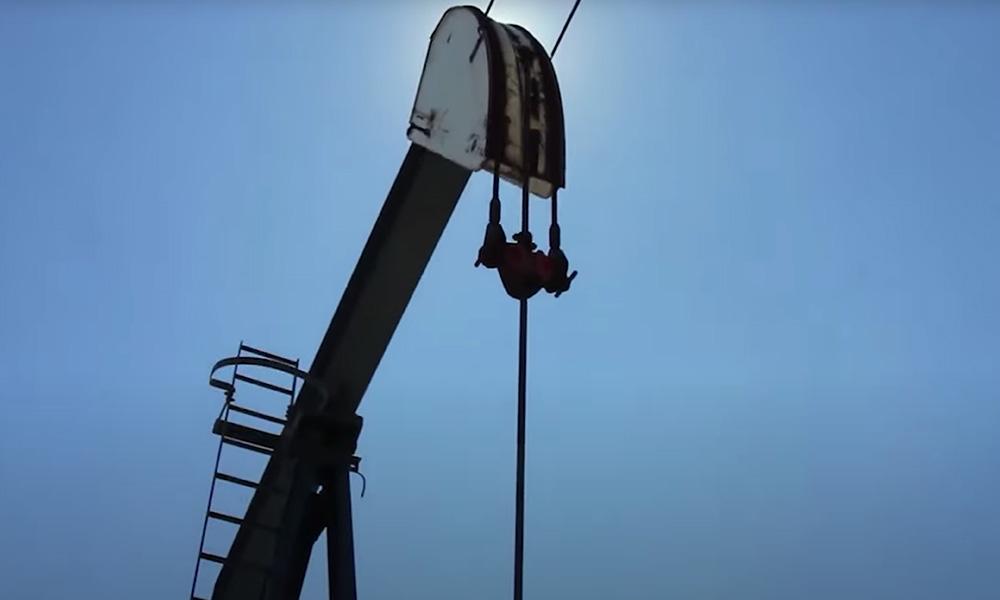
The Strait of Hormuz remains effectively blocked due to ongoing US military operations, with daily vessel traffic significantly lower than pre-war levels. This crucial waterway handles approximately 20% of global oil shipments, and its restricted flow directly leads to tight near-end supply. Trump indicated that a new round of negotiations with Iran might begin in the next two days and reiterated that the war is nearing its end. This statement quickly alleviated the market's most pessimistic expectations of supply disruptions, prompting traders to shift from risk aversion to risk reassessment. Although the market still shows accelerated inventory reduction, if the strait reopens in the short term, global crude oil supply will recover rapidly, thereby easing upward pressure on prices. Traders are closely monitoring the progress of negotiations, as any delays could trigger a new wave of supply concerns.
While Brent crude oil prices have retreated from their early-month highs, they remain above $95 per barrel. Forward contracts exhibit a significant premium structure, meaning near-term contracts are priced higher than forward contracts. This curve reflects tight short-term supply in the spot market, while the market anticipates a gradual normalization of supply in the medium term. European natural gas futures prices have fallen back to early March levels, indicating an overall easing of concerns about commodity supply. The oil market remains in a premium position, suggesting that traders are still pricing in significant immediate supply disruptions, but the most volatile phase appears to have passed.
Brent crude is still up about 46% year-over-year. Within this price range, traders are focused on the steepness of the yield curve: if the cash premium continues to narrow, it will indicate easing supply pressures; conversely, if it steepens again, it suggests market doubts about the Straits timetable for reopening. The current curve remains in an extreme structure, and any positive fundamental news could accelerate a price correction.
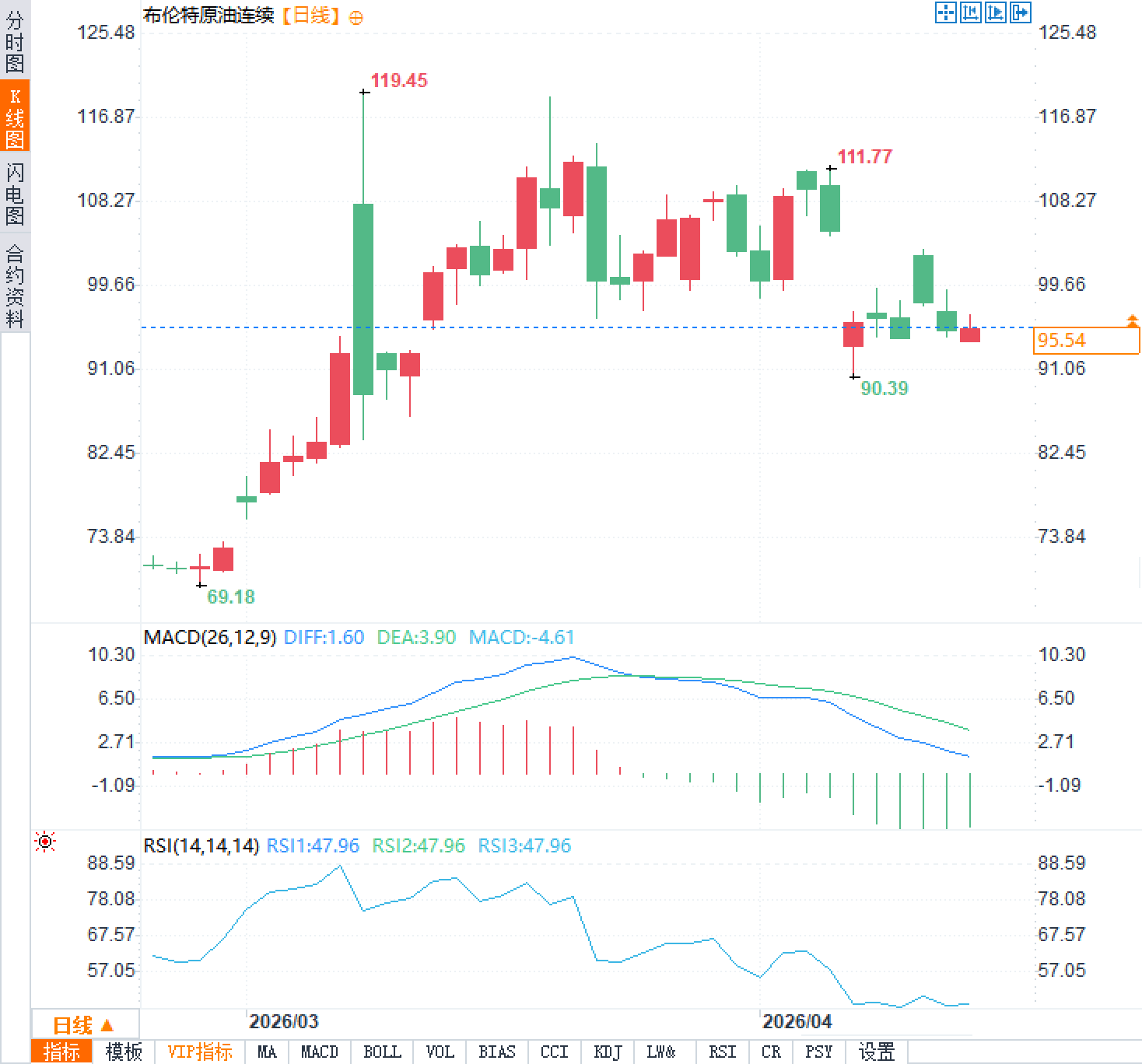
High energy prices are being transmitted to global inflation through imported costs. Although the direct impact of the war on the US domestically is limited, rising global supply chain costs could still spill over to core prices. Trump recently criticized Federal Reserve Chairman Powell again, saying, "If Powell doesn't leave, I'll have to fire him," and expressed his hope that Warsh would be confirmed as chairman next week, believing that interest rates would decline under the new leadership. This statement highlights the continued pressure from the administration on monetary policy.
However, the Federal Reserve is currently adopting a more cautious wait-and-see approach, and the likelihood of a rate cut before the summer is extremely low given the potential inflationary risks associated with energy prices. Traders are focusing on the Fed meeting minutes and Powell's recent statements, as energy price trends have become a key variable in determining the path of monetary policy. Persistent high energy costs will compress corporate profit margins and push up global borrowing costs.
Despite the Strait remaining under US military blockade, with reports indicating six ships were ordered to turn back on Monday, market expectations for a short-term solution have clearly increased, causing oil prices to fall below the $100/barrel mark. European markets opened slightly lower, volatility decreased, and the overall atmosphere is gradually returning to normal from extreme geopolitical tensions.
Evolution of the situation in the Strait of Hormuz and risks to crude oil supply
The Strait of Hormuz remains effectively blocked due to ongoing US military operations, with daily vessel traffic significantly lower than pre-war levels. This crucial waterway handles approximately 20% of global oil shipments, and its restricted flow directly leads to tight near-end supply. Trump indicated that a new round of negotiations with Iran might begin in the next two days and reiterated that the war is nearing its end. This statement quickly alleviated the market's most pessimistic expectations of supply disruptions, prompting traders to shift from risk aversion to risk reassessment. Although the market still shows accelerated inventory reduction, if the strait reopens in the short term, global crude oil supply will recover rapidly, thereby easing upward pressure on prices. Traders are closely monitoring the progress of negotiations, as any delays could trigger a new wave of supply concerns.
Brent crude oil futures curve structure and market dynamics
While Brent crude oil prices have retreated from their early-month highs, they remain above $95 per barrel. Forward contracts exhibit a significant premium structure, meaning near-term contracts are priced higher than forward contracts. This curve reflects tight short-term supply in the spot market, while the market anticipates a gradual normalization of supply in the medium term. European natural gas futures prices have fallen back to early March levels, indicating an overall easing of concerns about commodity supply. The oil market remains in a premium position, suggesting that traders are still pricing in significant immediate supply disruptions, but the most volatile phase appears to have passed.
Brent crude is still up about 46% year-over-year. Within this price range, traders are focused on the steepness of the yield curve: if the cash premium continues to narrow, it will indicate easing supply pressures; conversely, if it steepens again, it suggests market doubts about the Straits timetable for reopening. The current curve remains in an extreme structure, and any positive fundamental news could accelerate a price correction.
The impact of energy price fluctuations on monetary policy transmission
High energy prices are being transmitted to global inflation through imported costs. Although the direct impact of the war on the US domestically is limited, rising global supply chain costs could still spill over to core prices. Trump recently criticized Federal Reserve Chairman Powell again, saying, "If Powell doesn't leave, I'll have to fire him," and expressed his hope that Warsh would be confirmed as chairman next week, believing that interest rates would decline under the new leadership. This statement highlights the continued pressure from the administration on monetary policy.
However, the Federal Reserve is currently adopting a more cautious wait-and-see approach, and the likelihood of a rate cut before the summer is extremely low given the potential inflationary risks associated with energy prices. Traders are focusing on the Fed meeting minutes and Powell's recent statements, as energy price trends have become a key variable in determining the path of monetary policy. Persistent high energy costs will compress corporate profit margins and push up global borrowing costs.
Frequently Asked Questions
Question 1: Given the current blockade of the Strait of Hormuz, why has Brent crude oil remained above $95 per barrel instead of surging further?
A: Although the significant restriction on water flow in the Taiwan Strait led to physical supply shortages, the market had already priced in geopolitical risks, and news of a ceasefire extension quickly boosted expectations. Trump's statements regarding negotiations and the near end of the war further eased the worst-case scenario of supply disruptions, causing traders to shift from panic buying to profit-taking, pushing prices to stabilize below $100/barrel. Meanwhile, the spot premium curve shows that short-term premiums are already high, and forward contract pricing is relatively rational, limiting further upside potential for spot prices. This balance reflects the dynamic interplay between tight supply and diplomatic progress in the market.
Question 2: What are the key implications of the spot premium structure for risk management in crude oil trading?
A: A spot premium means that holding spot or near-month contracts can generate positive rolling returns, but it also amplifies sensitivity to short-term supply shocks. Traders closely monitor inventory data, strait traffic, and negotiation progress, because a narrowing of the curve's steepness indicates easing supply pressure and a potential for rapid price corrections. In the current environment, while declining volatility reduces hedging costs, it also necessitates more precise term structure allocation to address potential geopolitical reversals.
- Risk Warning and Disclaimer
- The market involves risk, and trading may not be suitable for all investors. This article is for reference only and does not constitute personal investment advice, nor does it take into account certain users’ specific investment objectives, financial situation, or other needs. Any investment decisions made based on this information are at your own risk.