One chart: The Baltic Dry Index rose for the ninth consecutive trading day.
2026-04-16 00:19:56
Latest data shows that the Baltic Dry Index (BDI) reached 2484 points on April 15, 2026, a new high since December 9, 2025, up 5.52% month-on-month, the largest increase since February 12, 2026, and marking the 9th consecutive day of increase (including zero growth). Looking at the short-term charts, the recent 11 BDI data points show: 9 positive increases, 2 negative increases, and 0 zero increases. Specifically, the Panamax Freight Index (BPI) was 1948 points, up 2.53% from the previous value; the Capesize Freight Index (BCI) was 3964 points, up 7.98%; and the Supramax Freight Index (BSI) was 1371 points, up 2.01%. For detailed 720-day and 10-year trend charts of the Baltic Dry Index and its three main sub-indices, please refer to the specially designed charts.
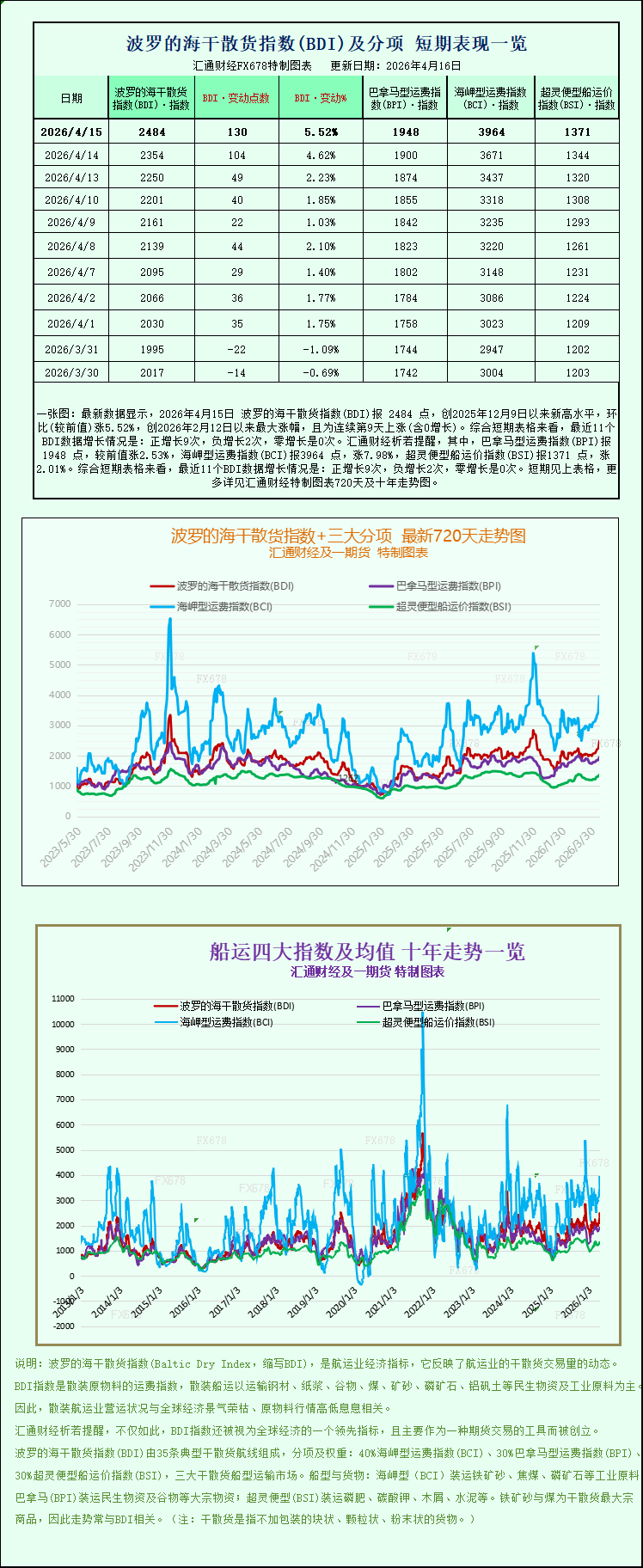
The Baltic Dry Index (BDI), which comprehensively monitors global freight rate fluctuations for ships transporting dry bulk commodities, covering ocean and near-sea shipping prices for various bulk commodities such as iron ore, coal, and grain, and is a key indicator reflecting the global dry bulk shipping market's health, saw its ninth consecutive trading day of increases on Wednesday. The market showed a broad-based positive trend, with freight rates in all sub-sectors of shipping rising to varying degrees, and no sector experiencing a pullback, fully demonstrating the strong recovery momentum of the current dry bulk shipping market.
As a core indicator for measuring the overall performance of the dry bulk shipping market, the Baltic Dry Index, which tracks freight rates for the three major types of vessels—Capesize, Panamax, and Supramax—performed particularly well that day, rising 130 points, or 5.5%, to close at 2484 points. This figure not only continued the previous upward trend but also reached its highest level since early December 2025, just a step away from the high point at the end of last year. This also means that the recovery momentum of the dry bulk shipping market since the end of last year has been further consolidated and strengthened.
Among the three major shipping sectors, the Capesize sector performed the best, becoming the core driver of the overall index rise. On that day, the Capesize index rose sharply by 293 points, an increase of about 8%, and finally closed at 3964 points, also reaching the highest level since mid-December 2025. The increase far exceeded the overall index, demonstrating the strong demand in the large dry bulk shipping market.
Capesize vessels, the "juggernauts" of dry bulk carriers, typically transport around 150,000 tons of bulk cargo per voyage, with iron ore and coal being their main commodities. They undertake long-distance ocean transport tasks between major iron ore exporting countries (such as Australia and Brazil) and importing countries (such as China), serving as the core carriers for upstream raw material transportation in the steel industry chain. Driven by rising freight rates, the average daily revenue of Capesize vessels has also increased significantly, rising by $2,658 per day to reach $32,450, resulting in a significant improvement in shipowner profitability and further stimulating their operational enthusiasm.
One of the core drivers of the recent surge in dry bulk freight rates is the boost in demand from the iron ore market. Recently, the global market has held strong hopes for potential peace talks to end the war in Iran. This expectation has effectively alleviated market concerns about possible disruptions to Chinese steel supplies to the Gulf region, significantly reducing market panic and directly driving up iron ore futures prices. At the same time, global pig iron production continues to grow, and the demand for steelmaking raw materials such as iron ore and coking coal during pig iron production is robust. This rigid demand further supports iron ore transportation demand, thereby driving up freight rates for Capesize vessels and other vessels primarily transporting iron ore. It is understood that the conflict in Iran previously led to the shutdown of two major steel mills. More than 60% of the steel in the Middle East relies on China for supply. The expectation of peace talks will further stabilize China's steel exports and raw material transportation demand, providing sustained support for the dry bulk shipping market.
Besides Capesize vessels, the Panamax sector also performed well, continuing its strong upward trend. The Panamax index rose 48 points, or approximately 2.5%, to close at 1948 points, its highest level in over three weeks. Notably, this index has now risen for ten consecutive trading days, a longer upward trend than the overall Baltic Dry Index, demonstrating a robust recovery in the medium-sized dry bulk shipping market.
Panamax vessels typically have a deadweight tonnage between 60,000 and 70,000 tons (some older vessels fall within this range, while newer Panamax vessels can reach over 80,000 tons). They are primarily used for transporting bulk commodities such as coal and grain. Their routes are mainly concentrated on short-to-medium-haul ocean and near-sea routes, making them suitable for important waterways such as the Panama Canal. They are crucial carriers connecting global food and coal trade. Driven by market demand, the average daily revenue of Panamax vessels has also increased, rising by $427 to $17,528 per day. Although the increase is not as significant as that of Capesize vessels, the continued upward trend reflects the resilience of demand in the medium-sized dry bulk shipping market.
The Supramax bulk carrier index also rose, increasing by 27 points, or 2%, to close at 1371 points. Supramax bulk carriers, a small to medium-sized vessel type within the dry bulk shipping fleet, typically have a deadweight tonnage between 45,000 and 70,000 tons. They possess advantages such as shallow draft and high maneuverability, making them suitable for various small to medium-sized ports and capable of transporting diverse cargoes, including coal, grain, fertilizers, and minor ores. The increase in their freight rates further confirms the comprehensive recovery of the dry bulk shipping market, with large, medium, and small vessels all receiving strong support from market demand. Currently, Supramax vessels account for a very high proportion of the global dry bulk fleet, and their freight rate increase reflects the recovery in global demand for minor bulk cargo transportation, adding momentum to the overall recovery of the dry bulk market.
The Baltic Dry Index (BDI), which comprehensively monitors global freight rate fluctuations for ships transporting dry bulk commodities, covering ocean and near-sea shipping prices for various bulk commodities such as iron ore, coal, and grain, and is a key indicator reflecting the global dry bulk shipping market's health, saw its ninth consecutive trading day of increases on Wednesday. The market showed a broad-based positive trend, with freight rates in all sub-sectors of shipping rising to varying degrees, and no sector experiencing a pullback, fully demonstrating the strong recovery momentum of the current dry bulk shipping market.
As a core indicator for measuring the overall performance of the dry bulk shipping market, the Baltic Dry Index, which tracks freight rates for the three major types of vessels—Capesize, Panamax, and Supramax—performed particularly well that day, rising 130 points, or 5.5%, to close at 2484 points. This figure not only continued the previous upward trend but also reached its highest level since early December 2025, just a step away from the high point at the end of last year. This also means that the recovery momentum of the dry bulk shipping market since the end of last year has been further consolidated and strengthened.
Among the three major shipping sectors, the Capesize sector performed the best, becoming the core driver of the overall index rise. On that day, the Capesize index rose sharply by 293 points, an increase of about 8%, and finally closed at 3964 points, also reaching the highest level since mid-December 2025. The increase far exceeded the overall index, demonstrating the strong demand in the large dry bulk shipping market.
Capesize vessels, the "juggernauts" of dry bulk carriers, typically transport around 150,000 tons of bulk cargo per voyage, with iron ore and coal being their main commodities. They undertake long-distance ocean transport tasks between major iron ore exporting countries (such as Australia and Brazil) and importing countries (such as China), serving as the core carriers for upstream raw material transportation in the steel industry chain. Driven by rising freight rates, the average daily revenue of Capesize vessels has also increased significantly, rising by $2,658 per day to reach $32,450, resulting in a significant improvement in shipowner profitability and further stimulating their operational enthusiasm.
One of the core drivers of the recent surge in dry bulk freight rates is the boost in demand from the iron ore market. Recently, the global market has held strong hopes for potential peace talks to end the war in Iran. This expectation has effectively alleviated market concerns about possible disruptions to Chinese steel supplies to the Gulf region, significantly reducing market panic and directly driving up iron ore futures prices. At the same time, global pig iron production continues to grow, and the demand for steelmaking raw materials such as iron ore and coking coal during pig iron production is robust. This rigid demand further supports iron ore transportation demand, thereby driving up freight rates for Capesize vessels and other vessels primarily transporting iron ore. It is understood that the conflict in Iran previously led to the shutdown of two major steel mills. More than 60% of the steel in the Middle East relies on China for supply. The expectation of peace talks will further stabilize China's steel exports and raw material transportation demand, providing sustained support for the dry bulk shipping market.
Besides Capesize vessels, the Panamax sector also performed well, continuing its strong upward trend. The Panamax index rose 48 points, or approximately 2.5%, to close at 1948 points, its highest level in over three weeks. Notably, this index has now risen for ten consecutive trading days, a longer upward trend than the overall Baltic Dry Index, demonstrating a robust recovery in the medium-sized dry bulk shipping market.
Panamax vessels typically have a deadweight tonnage between 60,000 and 70,000 tons (some older vessels fall within this range, while newer Panamax vessels can reach over 80,000 tons). They are primarily used for transporting bulk commodities such as coal and grain. Their routes are mainly concentrated on short-to-medium-haul ocean and near-sea routes, making them suitable for important waterways such as the Panama Canal. They are crucial carriers connecting global food and coal trade. Driven by market demand, the average daily revenue of Panamax vessels has also increased, rising by $427 to $17,528 per day. Although the increase is not as significant as that of Capesize vessels, the continued upward trend reflects the resilience of demand in the medium-sized dry bulk shipping market.
The Supramax bulk carrier index also rose, increasing by 27 points, or 2%, to close at 1371 points. Supramax bulk carriers, a small to medium-sized vessel type within the dry bulk shipping fleet, typically have a deadweight tonnage between 45,000 and 70,000 tons. They possess advantages such as shallow draft and high maneuverability, making them suitable for various small to medium-sized ports and capable of transporting diverse cargoes, including coal, grain, fertilizers, and minor ores. The increase in their freight rates further confirms the comprehensive recovery of the dry bulk shipping market, with large, medium, and small vessels all receiving strong support from market demand. Currently, Supramax vessels account for a very high proportion of the global dry bulk fleet, and their freight rate increase reflects the recovery in global demand for minor bulk cargo transportation, adding momentum to the overall recovery of the dry bulk market.
- Risk Warning and Disclaimer
- The market involves risk, and trading may not be suitable for all investors. This article is for reference only and does not constitute personal investment advice, nor does it take into account certain users’ specific investment objectives, financial situation, or other needs. Any investment decisions made based on this information are at your own risk.