Euro Crisis: The Shadow of Stagflation Looms Larger
2026-04-20 21:09:57
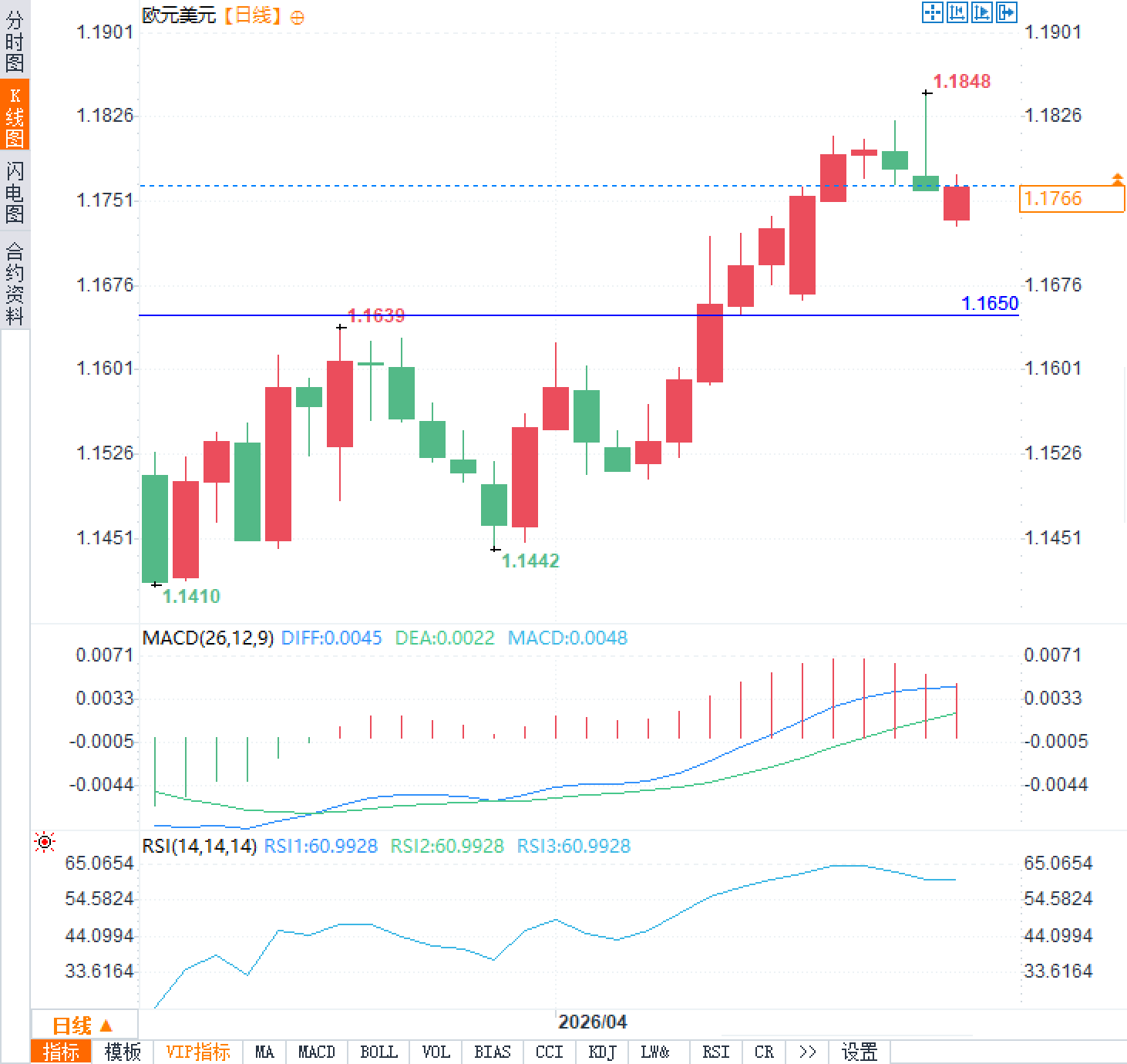
On Monday, April 20th, the foreign exchange market showed a clear divergence. The US dollar index opened slightly higher by 0.2%, trading around 98.30, mainly due to safe-haven inflows triggered by escalating signs of conflict in the Middle East. The euro continued to be under pressure against the dollar, currently trading around 1.1760, a significant drop from last week's high. Brent crude oil prices rebounded to around $94.8 per barrel, while WTI crude rose to $87 per barrel, with geopolitical factors once again dominating market sentiment. Traders are closely watching the US-Iran ceasefire agreement, which expires on April 22nd. If negotiations break down, oil prices and the dollar may strengthen in tandem, further squeezing the euro's potential.
News of the US seizure of an Iranian oil tanker spread rapidly over the weekend. Although Iran announced the opening of the Strait of Hormuz to merchant ships, the dispute over actual control remains unresolved. While initial market panic subsided quickly, major institutions have begun assessing long-term risks: if the strait blockade is extended, the global oil supply chain will face sustained pressure. The US dollar, as a traditional safe-haven asset, will remain supported in the short term, while the euro will be pressured due to the European economy's high dependence on energy imports.
Although some funds have begun to cover long positions, if the ceasefire agreement expires on April 22, oil prices may surge again, driving up the US dollar index and potentially subjecting the euro to another test against the dollar. The market logic is clear: geopolitical uncertainty amplifies the relative attractiveness of the dollar while weakening growth expectations for the Eurozone.
The Strait of Hormuz, a crucial chokepoint for global oil transportation, would directly drive up energy costs and pass on to consumer prices if blocked for an extended period. Traders have observed that Brent crude rebounded nearly 5% at the beginning of this week, a significant recovery from last week's lows. This price volatility is not an isolated event, but rather a catalyst that could trigger a chain reaction. Higher oil prices will push up the producer price index and permeate core inflation through the supply chain. Sustained high oil prices will exacerbate the risk of stagflation in the global economy, and traders are closely monitoring the speed of downstream transmission.
Federal Reserve Governor Christopher Waller's latest speech on April 17th directly addressed the core issue: if the risk of inflation outweighs the risk of unemployment, the Fed may maintain current interest rates even if the labor market continues to cool. As a widely recognized "dovish" figure, his statement has attracted widespread attention. Traders interpret this as a move that, if other members follow similar logic, the dollar will receive additional policy support.
In contrast, the European Central Bank is likely to keep interest rates unchanged at its April meeting, with policymakers remaining cautious about raising rates. This expectation of divergence in monetary policy has further amplified the downward pressure on the euro against the dollar. Waller emphasized that a sustained energy price shock could lead to a more persistent deviation of inflation from the target, forcing the Federal Reserve to postpone its easing pace. The market has already priced in this signal, resulting in additional buying pressure on the dollar index.
The Eurozone's composite Purchasing Managers' Index (PMI) came in at 50.7 in March. While the manufacturing sector saw a slight rebound to 51.6, the services sector declined to 50.2, indicating a coexistence of slowing growth and rising input costs. The rebound in energy prices is transmitting through production to the services and consumption sectors, raising concerns among traders that signs of stagflation could limit the European Central Bank's policy space.
Gold prices retreated due to rising inflation expectations. Traders believe that if central banks tighten policy due to the energy shock, the dollar will benefit further, while the euro faces a double squeeze: weak fundamentals coupled with a relatively dovish policy stance. Overall, the euro/dollar exchange rate remains defensive in the short term, and any geopolitical or data-driven negative factors could amplify volatility.
Middle East geopolitical risks drive safe-haven buying of the US dollar.
News of the US seizure of an Iranian oil tanker spread rapidly over the weekend. Although Iran announced the opening of the Strait of Hormuz to merchant ships, the dispute over actual control remains unresolved. While initial market panic subsided quickly, major institutions have begun assessing long-term risks: if the strait blockade is extended, the global oil supply chain will face sustained pressure. The US dollar, as a traditional safe-haven asset, will remain supported in the short term, while the euro will be pressured due to the European economy's high dependence on energy imports.
Although some funds have begun to cover long positions, if the ceasefire agreement expires on April 22, oil prices may surge again, driving up the US dollar index and potentially subjecting the euro to another test against the dollar. The market logic is clear: geopolitical uncertainty amplifies the relative attractiveness of the dollar while weakening growth expectations for the Eurozone.
The rebound in oil prices amplifies the risk of global inflation transmission.
The Strait of Hormuz, a crucial chokepoint for global oil transportation, would directly drive up energy costs and pass on to consumer prices if blocked for an extended period. Traders have observed that Brent crude rebounded nearly 5% at the beginning of this week, a significant recovery from last week's lows. This price volatility is not an isolated event, but rather a catalyst that could trigger a chain reaction. Higher oil prices will push up the producer price index and permeate core inflation through the supply chain. Sustained high oil prices will exacerbate the risk of stagflation in the global economy, and traders are closely monitoring the speed of downstream transmission.
Federal Reserve officials' statements strengthen policy support for the US dollar.
Federal Reserve Governor Christopher Waller's latest speech on April 17th directly addressed the core issue: if the risk of inflation outweighs the risk of unemployment, the Fed may maintain current interest rates even if the labor market continues to cool. As a widely recognized "dovish" figure, his statement has attracted widespread attention. Traders interpret this as a move that, if other members follow similar logic, the dollar will receive additional policy support.
In contrast, the European Central Bank is likely to keep interest rates unchanged at its April meeting, with policymakers remaining cautious about raising rates. This expectation of divergence in monetary policy has further amplified the downward pressure on the euro against the dollar. Waller emphasized that a sustained energy price shock could lead to a more persistent deviation of inflation from the target, forcing the Federal Reserve to postpone its easing pace. The market has already priced in this signal, resulting in additional buying pressure on the dollar index.
Eurozone data shows signs of stagflation.
The Eurozone's composite Purchasing Managers' Index (PMI) came in at 50.7 in March. While the manufacturing sector saw a slight rebound to 51.6, the services sector declined to 50.2, indicating a coexistence of slowing growth and rising input costs. The rebound in energy prices is transmitting through production to the services and consumption sectors, raising concerns among traders that signs of stagflation could limit the European Central Bank's policy space.
Gold prices retreated due to rising inflation expectations. Traders believe that if central banks tighten policy due to the energy shock, the dollar will benefit further, while the euro faces a double squeeze: weak fundamentals coupled with a relatively dovish policy stance. Overall, the euro/dollar exchange rate remains defensive in the short term, and any geopolitical or data-driven negative factors could amplify volatility.
Frequently Asked Questions
Question 1: Why is the escalation of the Middle East conflict putting pressure on the euro against the US dollar?
A: The conflict directly boosted demand for the US dollar as a safe haven, while the rebound in oil prices exacerbated energy import costs in Europe, leading to a downward revision of growth expectations for the Eurozone. The market quickly digested the initial panic, but structural risks still support a strong dollar, and traders have shifted from chasing gains to a defensive stance.
Question 2: What substantive impact will Federal Reserve Governor Waller's latest remarks have on the euro/dollar exchange rate?
A: Waller pointed out that if inflation risks dominate, interest rates may remain unchanged even if labor market conditions cool, breaking market expectations for rapid easing. This strengthens the dollar's policy advantage, while the ECB may remain on hold in April, further widening the divergence in monetary policy and putting significant pressure on the euro.
Question 3: How do the rebound in oil prices and the Eurozone Purchasing Managers' Index data both point to the risk of stagflation?
A: High crude oil prices have pushed up production costs. Although the Eurozone composite PMI barely expanded in March, the service sector declined and the input price index rose, indicating that slowing growth and inflation coexist. This combination narrows the European Central Bank's policy options, and traders expect the euro to face further downside challenges against the US dollar.
- Risk Warning and Disclaimer
- The market involves risk, and trading may not be suitable for all investors. This article is for reference only and does not constitute personal investment advice, nor does it take into account certain users’ specific investment objectives, financial situation, or other needs. Any investment decisions made based on this information are at your own risk.