With production shutdowns looming, can copper prices reach new highs?
2026-04-20 21:54:27
On Monday, April 20th, trading in the LME copper market was tight, with the North American copper futures contract hovering around $13,300 per tonne, remaining at a high level. Although LME copper inventories rose slightly to approximately 400,000 tons, multiple supply-side disruptions dominated market movements. Latest news indicates that Zambia's two major copper smelters plan to extend maintenance shutdowns, which will directly reduce local refined copper output and exacerbate shortages of key chemicals such as sulfuric acid. This event further reinforces expectations of a tight supply balance, and traders are closely monitoring the price transmission effects of subsequent output data and logistical changes.
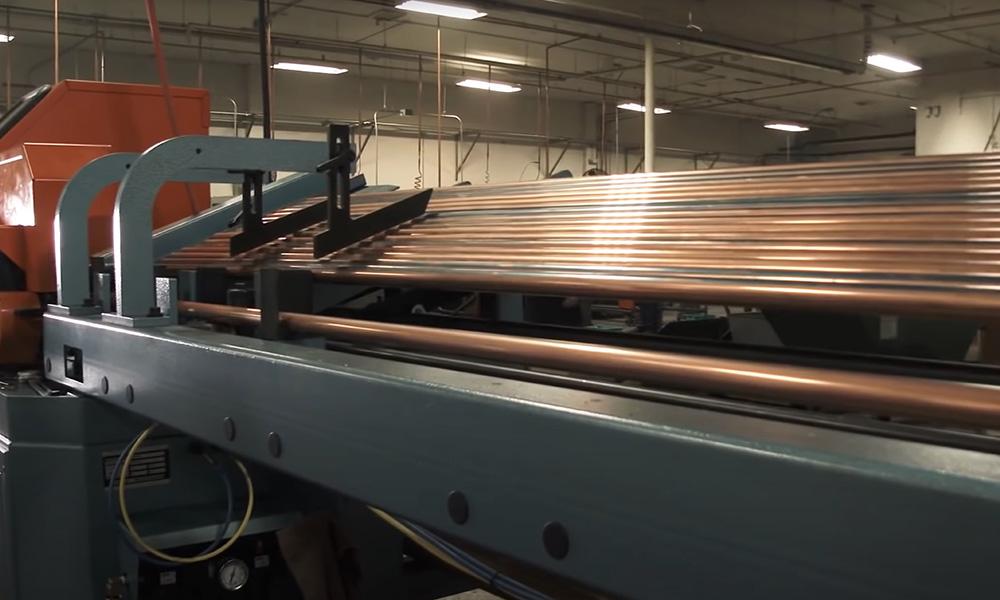
Zambia, Africa's second-largest copper producer, is facing significant capacity bottlenecks in its smelting sector. The Mopani copper smelter, due to long-term maintenance backlog, will first undergo a three-day routine shutdown in June, followed by an extended shutdown of approximately 40 to 45 days from August to mid-September. Another large smelter, the Zambishi copper smelter, plans to close for about two months around August. These arrangements far exceed the usual 30-day annual maintenance cycle, primarily due to the combined pressure of aging equipment and insufficient upstream copper concentrate supply.
Mopani's current operating capacity is far below its design capacity of 225,000 tons/year, and it experiences intermittent shutdowns most of the time due to concentrate shortages. Most of its controlling shareholders are simultaneously advancing mine development and smelting matching, but this has led to increased output volatility. Industry insiders point out that this extended shutdown will directly reduce local refined copper supply by tens of thousands of tons and simultaneously reduce sulfuric acid byproduct production. Sulfuric acid is an indispensable leaching agent in copper-cobalt processing. Zambian smelters produce approximately 2 million tons of sulfuric acid annually, most of which is used in local mines, with the remainder exported to neighboring countries. During the shutdown, a significant shortage of sulfuric acid supply will occur, further pushing up regional processing costs.
The above production data indicates that although some growth was achieved in 2025, it was still significantly lower than the government's target, highlighting structural capacity constraints. The output outlook for 2026 is already facing additional downward pressure due to this production shutdown plan.
Sulfuric acid shortages have become one of the most pressing bottlenecks in the current copper supply chain. Zambia's domestic sulfuric acid stocks have plummeted to extremely low levels, effectively rendering it unable to export. Anthony Mukutuma, head of First Quantum Mining's Zambia operations, recently stated that while current measures aim to protect the local industry, exports are virtually impossible in the short term. This statement directly reflects the fragility of the supply chain.
The geopolitical situation in the Middle East has further amplified the risk of chemical supply disruptions, leading to obstacles in the global transport of sulfuric acid and other leaching agents. Neighboring Democratic Republic of Congo, the world's largest cobalt producer and second-largest copper producer, has been forced to reduce its use of chemicals at its mines, and even consider voluntary production cuts. Congo's copper exports in the first quarter were approximately 955,000 tons, a 14.6% year-on-year decrease, partly due to shortages of raw material chemicals. Smelter shutdowns will completely disrupt Zambian sulfuric acid supplies, increasing processing costs at Congolese mines and potentially triggering more intermittent production cuts. Such upstream disruptions are often transmitted to LME deliverables through concentrate TC/RC (treatment/refining fees), amplifying price volatility.
Global copper supply has been in a structurally tight balance for several years, with insufficient mining investment leading to slow growth in new capacity. In 2026, the refined copper market is expected to continue facing a supply gap. While LME copper inventories hover around 400,000 tons, the rate of depletion depends on the efficiency of matching mines and smelters. The recent incident in Zambia is merely a localized microcosm of the global supply tightening; similar disruptions are gradually accumulating into systemic pressure.
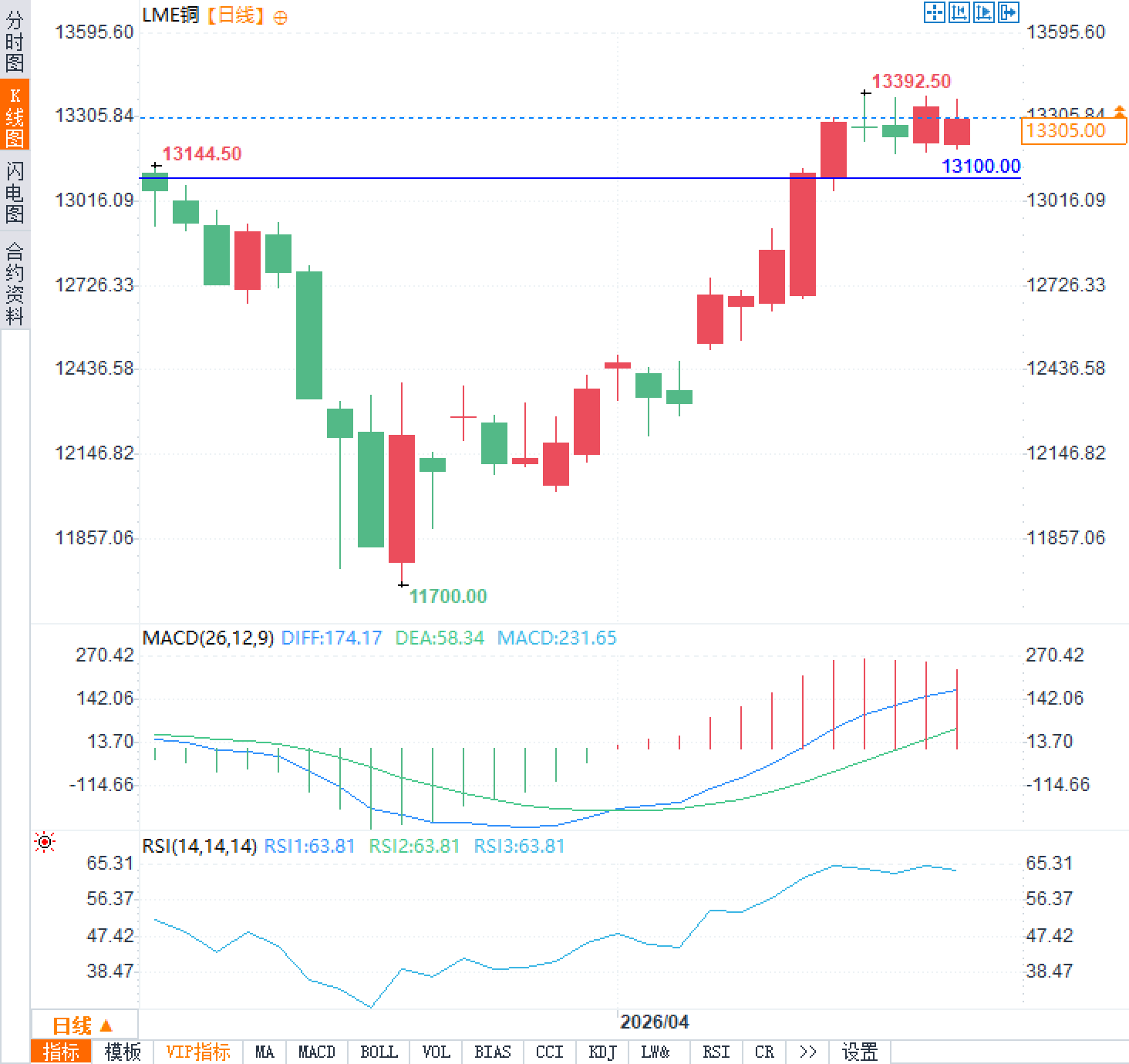
In terms of price, LME copper prices are currently fluctuating at a high level around $13,300/ton, mainly due to supply-side constraints rather than stronger-than-expected demand. Traders observe that despite macroeconomic uncertainties, mining bottlenecks, extended smelting maintenance, and chemical shortages are collectively providing support for the price floor. In the coming months, the market will focus on the actual implementation of the Zambian production shutdown, updates to Congolese export data, and global concentrate supply dynamics. These factors will collectively determine whether LME copper can maintain its current strong performance.
Zambia's main smelter extends maintenance shutdown
Zambia, Africa's second-largest copper producer, is facing significant capacity bottlenecks in its smelting sector. The Mopani copper smelter, due to long-term maintenance backlog, will first undergo a three-day routine shutdown in June, followed by an extended shutdown of approximately 40 to 45 days from August to mid-September. Another large smelter, the Zambishi copper smelter, plans to close for about two months around August. These arrangements far exceed the usual 30-day annual maintenance cycle, primarily due to the combined pressure of aging equipment and insufficient upstream copper concentrate supply.
Mopani's current operating capacity is far below its design capacity of 225,000 tons/year, and it experiences intermittent shutdowns most of the time due to concentrate shortages. Most of its controlling shareholders are simultaneously advancing mine development and smelting matching, but this has led to increased output volatility. Industry insiders point out that this extended shutdown will directly reduce local refined copper supply by tens of thousands of tons and simultaneously reduce sulfuric acid byproduct production. Sulfuric acid is an indispensable leaching agent in copper-cobalt processing. Zambian smelters produce approximately 2 million tons of sulfuric acid annually, most of which is used in local mines, with the remainder exported to neighboring countries. During the shutdown, a significant shortage of sulfuric acid supply will occur, further pushing up regional processing costs.
| years | Zambia's copper production (tons) | Year-on-year change | Target output (tons) |
|---|---|---|---|
| 2024 | 825513 | — | — |
| 2025 | 890346 | +8% | 1000000 |
The cascading impact of sulfuric acid supply shortages on regional copper production
Sulfuric acid shortages have become one of the most pressing bottlenecks in the current copper supply chain. Zambia's domestic sulfuric acid stocks have plummeted to extremely low levels, effectively rendering it unable to export. Anthony Mukutuma, head of First Quantum Mining's Zambia operations, recently stated that while current measures aim to protect the local industry, exports are virtually impossible in the short term. This statement directly reflects the fragility of the supply chain.
The geopolitical situation in the Middle East has further amplified the risk of chemical supply disruptions, leading to obstacles in the global transport of sulfuric acid and other leaching agents. Neighboring Democratic Republic of Congo, the world's largest cobalt producer and second-largest copper producer, has been forced to reduce its use of chemicals at its mines, and even consider voluntary production cuts. Congo's copper exports in the first quarter were approximately 955,000 tons, a 14.6% year-on-year decrease, partly due to shortages of raw material chemicals. Smelter shutdowns will completely disrupt Zambian sulfuric acid supplies, increasing processing costs at Congolese mines and potentially triggering more intermittent production cuts. Such upstream disruptions are often transmitted to LME deliverables through concentrate TC/RC (treatment/refining fees), amplifying price volatility.
Tight supply and demand balance in the global copper market and the logic supporting LME prices
Global copper supply has been in a structurally tight balance for several years, with insufficient mining investment leading to slow growth in new capacity. In 2026, the refined copper market is expected to continue facing a supply gap. While LME copper inventories hover around 400,000 tons, the rate of depletion depends on the efficiency of matching mines and smelters. The recent incident in Zambia is merely a localized microcosm of the global supply tightening; similar disruptions are gradually accumulating into systemic pressure.
In terms of price, LME copper prices are currently fluctuating at a high level around $13,300/ton, mainly due to supply-side constraints rather than stronger-than-expected demand. Traders observe that despite macroeconomic uncertainties, mining bottlenecks, extended smelting maintenance, and chemical shortages are collectively providing support for the price floor. In the coming months, the market will focus on the actual implementation of the Zambian production shutdown, updates to Congolese export data, and global concentrate supply dynamics. These factors will collectively determine whether LME copper can maintain its current strong performance.
Frequently Asked Questions
Question 1: How will the extended shutdown of Zambian smelters change the global copper supply landscape?
A: The extended maintenance at the Mopani and Zambichi smelters will directly reduce local refined copper production by tens of thousands of tons, while also disrupting the supply of approximately hundreds of thousands of tons of sulfuric acid. As a major copper production base in Africa, Zambia's move will exacerbate the tight global refined copper balance. Coupled with the already declining year-on-year exports from the Democratic Republic of Congo, the overall supply gap is expected to widen further, increasing pressure on LME copper inventory reduction.
Question 2: Given the tight global copper supply and demand balance, what market signals should traders pay close attention to?
A: We need to continuously monitor LME inventory changes, Congo's quarterly export data, and the maintenance progress of major smelters. A decline in TC/RC levels often indicates a worsening concentrate shortage, and the situation in Zambia is reinforcing this logic. At the macro level, any new supply-side disruptions could amplify price elasticity, but it's crucial to distinguish between short-term event-driven factors and long-term structural gaps.
- Risk Warning and Disclaimer
- The market involves risk, and trading may not be suitable for all investors. This article is for reference only and does not constitute personal investment advice, nor does it take into account certain users’ specific investment objectives, financial situation, or other needs. Any investment decisions made based on this information are at your own risk.