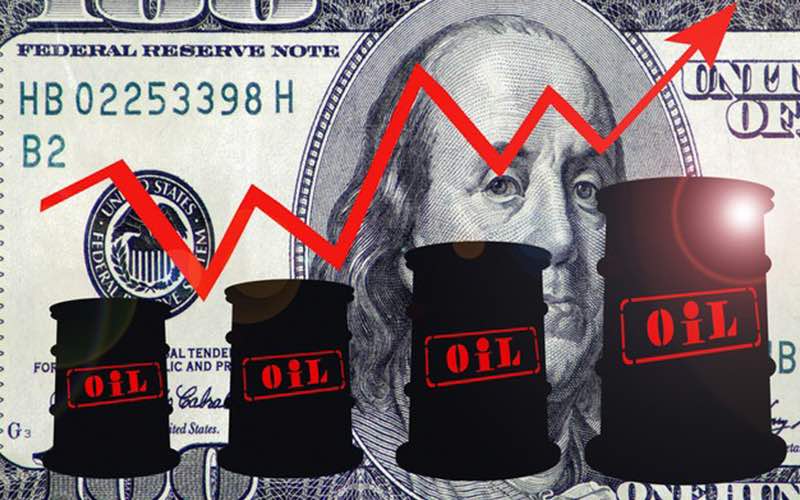
The world's largest physical oil trader warns: Oil price volatility will continue for months.
2026-04-21 01:50:32
Senior management at Gunvor Group, a globally renowned oil trader, revealed that seasonally weak demand ahead of the summer driving season, coupled with ongoing geopolitical turmoil in the Middle East, could lead to the current sharp fluctuations in oil prices lasting for several months. As one of the core trading players in the global energy market, Gunvor Group's assessments often accurately reflect the true state of global oil supply and demand, and its warning serves as a cautionary tale for future energy market trends.
Gary Petersen, Chairman and CEO of the Gunvor Group, said, "We are in a more challenging period with relatively weak demand, and we must remain vigilant." He emphasized that the current market uncertainty is far greater than expected, and any slight change in supply and demand or an escalation of geopolitical conflicts could further exacerbate oil price volatility.
Commenting further on the global oil market, Petersen stated, "Frankly, oil prices are likely to be very volatile in the coming months." This executive officially took over one of the world's largest physical oil traders after a management buyout in December 2025. This buyout was a significant turning point in Gunvor Group's history, aimed at reshaping the company's image and optimizing its operational structure, and Petersen's appointment is seen by the market as a key signal that the group is focusing on its core energy trading business.
Prior to this major restructuring, Gunvo Group was accused by the U.S. Treasury Department of being a "puppet of the Kremlin" and was denied permission to acquire the international operations of Lukoil, Russia's second-largest oil producer, which was sanctioned by the U.S. last fall. At the time, Gunvo Group planned to expand its global footprint by acquiring Lukoil's overseas assets, encompassing several refineries in Europe and overseas oil and gas fields. However, U.S. sanctions directly caused this plan to fail, plunging the group into a brief period of operational adjustment.
In an interview, Peterson pointed out that the recent sharp fluctuations in crude oil futures prices can be partly attributed to the "exemplary" political statements made by US President Donald Trump. Such statements often carry significant uncertainty, potentially signaling easing of tensions or triggering market concerns about geopolitical situations, thus directly impacting investor sentiment and oil price trends.
In recent weeks, whenever President Trump makes related statements—whether it's claiming a US-Iran deal is imminent or declaring the Middle East wars are "nearing their end"—crude oil futures prices have experienced several sharp declines. The market is sensitive to these political signals, with each statement triggering rapid inflows and outflows of speculative funds, further amplifying short-term oil price volatility and creating a unique market phenomenon where "statements equal volatility."
However, Peterson also emphasized that the crude oil futures market has not yet fully absorbed the significant disruptions on the physical supply side—with the closure of the Strait of Hormuz, crude oil and fuel supplies in the Middle East have been severely restricted, and the impact of this supply shock has not yet been fully reflected in futures prices. As one of the world's most important oil shipping routes, the Strait of Hormuz carries nearly a quarter of global seaborne oil trade; its closure directly hinders exports from oil-producing countries along the Persian Gulf, creating a significant supply gap.
According to Peterson of the Gunvor Group, physical crude oil supply remains extremely tight as global buyers urgently seek alternatives to Middle Eastern oil. This tightness has not only driven up spot crude oil prices but has also led to significant adjustments in global oil trade routes, with some regions even experiencing temporary shortages of oil.
One clear signal supports the buyers' eagerness to secure supply: a large number of empty supertankers have departed from Asia, passing the Cape of Good Hope and bound for the United States, forming one of the largest convoys in maritime history. These ships are headed to the US to load American crude oil to fill the supply gap in the Middle East. The Cape of Good Hope, a crucial maritime node connecting the Atlantic and Indian Oceans, was not originally the optimal route from Asia to the Americas. However, due to the closure of the Strait of Hormuz, ships have been forced to detour through the Cape, increasing transportation costs and extending transit times, further exacerbating the global oil supply shortage.
Gary Petersen, Chairman and CEO of the Gunvor Group, said, "We are in a more challenging period with relatively weak demand, and we must remain vigilant." He emphasized that the current market uncertainty is far greater than expected, and any slight change in supply and demand or an escalation of geopolitical conflicts could further exacerbate oil price volatility.
Commenting further on the global oil market, Petersen stated, "Frankly, oil prices are likely to be very volatile in the coming months." This executive officially took over one of the world's largest physical oil traders after a management buyout in December 2025. This buyout was a significant turning point in Gunvor Group's history, aimed at reshaping the company's image and optimizing its operational structure, and Petersen's appointment is seen by the market as a key signal that the group is focusing on its core energy trading business.
Prior to this major restructuring, Gunvo Group was accused by the U.S. Treasury Department of being a "puppet of the Kremlin" and was denied permission to acquire the international operations of Lukoil, Russia's second-largest oil producer, which was sanctioned by the U.S. last fall. At the time, Gunvo Group planned to expand its global footprint by acquiring Lukoil's overseas assets, encompassing several refineries in Europe and overseas oil and gas fields. However, U.S. sanctions directly caused this plan to fail, plunging the group into a brief period of operational adjustment.
In an interview, Peterson pointed out that the recent sharp fluctuations in crude oil futures prices can be partly attributed to the "exemplary" political statements made by US President Donald Trump. Such statements often carry significant uncertainty, potentially signaling easing of tensions or triggering market concerns about geopolitical situations, thus directly impacting investor sentiment and oil price trends.
In recent weeks, whenever President Trump makes related statements—whether it's claiming a US-Iran deal is imminent or declaring the Middle East wars are "nearing their end"—crude oil futures prices have experienced several sharp declines. The market is sensitive to these political signals, with each statement triggering rapid inflows and outflows of speculative funds, further amplifying short-term oil price volatility and creating a unique market phenomenon where "statements equal volatility."
However, Peterson also emphasized that the crude oil futures market has not yet fully absorbed the significant disruptions on the physical supply side—with the closure of the Strait of Hormuz, crude oil and fuel supplies in the Middle East have been severely restricted, and the impact of this supply shock has not yet been fully reflected in futures prices. As one of the world's most important oil shipping routes, the Strait of Hormuz carries nearly a quarter of global seaborne oil trade; its closure directly hinders exports from oil-producing countries along the Persian Gulf, creating a significant supply gap.
According to Peterson of the Gunvor Group, physical crude oil supply remains extremely tight as global buyers urgently seek alternatives to Middle Eastern oil. This tightness has not only driven up spot crude oil prices but has also led to significant adjustments in global oil trade routes, with some regions even experiencing temporary shortages of oil.
One clear signal supports the buyers' eagerness to secure supply: a large number of empty supertankers have departed from Asia, passing the Cape of Good Hope and bound for the United States, forming one of the largest convoys in maritime history. These ships are headed to the US to load American crude oil to fill the supply gap in the Middle East. The Cape of Good Hope, a crucial maritime node connecting the Atlantic and Indian Oceans, was not originally the optimal route from Asia to the Americas. However, due to the closure of the Strait of Hormuz, ships have been forced to detour through the Cape, increasing transportation costs and extending transit times, further exacerbating the global oil supply shortage.
- Risk Warning and Disclaimer
- The market involves risk, and trading may not be suitable for all investors. This article is for reference only and does not constitute personal investment advice, nor does it take into account certain users’ specific investment objectives, financial situation, or other needs. Any investment decisions made based on this information are at your own risk.