The conflict with Iran has so far resulted in a loss of $50 billion in global oil supplies.
2026-04-22 10:28:54
Seven weeks after the outbreak of the Middle East war, the world has lost 500 million barrels of oil supply. At an average price of $100 per barrel, this equates to a loss of approximately $50 billion. Futures prices have been fluctuating around this average level since February 28th.
The losses are enormous, and they continue to accumulate as traffic in the Strait of Hormuz remains severely restricted and tensions in the region escalate again. Before the war, 20 million barrels of oil were transported through the Strait of Hormuz daily.
Even if full-capacity navigation were to resume today, it would take months, and in some cases years, for oil and liquefied natural gas (LNG) supplies to recover. This is because all Middle Eastern oil-producing countries have been forced to drastically reduce upstream production and refinery operations due to disruptions to their energy infrastructure and the inability to transport oil and LNG cargoes through the Strait of Hormuz (which, for some of these producers, is the only route to international markets).
According to Kpler, six weeks after the outbreak of the war, as of April 10, the Middle East had suffered a cumulative loss of 430 million barrels of crude oil and condensate supply.
The analytics firm estimates that Middle Eastern crude oil supplies fell by an average of 9 million barrels per day in March compared to February, with a large portion of the decline coming from Saudi Arabia.
By the end of the seventh week, according to Kpler data, the cumulative supply loss in the Middle East had reached 500 million barrels. Johannes Rauball, senior oil analyst at Kpler, stated that this translates to a total revenue loss of approximately $50 billion since the outbreak of the war, based on an average oil price of around $100 per barrel.
500 million barrels of oil is almost equivalent to a month's oil consumption in the United States, or more than a month's oil demand in Europe.
Inventory depletion is accelerating as a large amount of supply exits the market. Kpler stated last week that the crude oil market is tightening, with onshore crude oil inventories having decreased by 41 million barrels by mid-April, which translates to a daily consumption of 2.7 million barrels.
Kpler analysts noted, "This shift is due to the exhaustion of previous supply buffers and the peak of shutdowns in the region." "The continued restrictions on the Strait of Hormuz indicate that future inventory pressures will further increase, further reinforcing the tightening of the supply-demand balance in the physical market."
The International Energy Agency (IEA) said in its monthly report last week that global oil supply plummeted by 10.1 million barrels per day in March to 97 million barrels per day, the largest supply disruption in history.
The IEA estimates that global observable oil inventories fell by 85 million barrels in March, with inventories outside the Middle East experiencing a significant decrease of 205 million barrels (equivalent to a daily decrease of 6.6 million barrels) due to continued obstruction of traffic in the Strait of Hormuz.
The agency stated, " Restoring traffic in the Strait of Hormuz remains the most important variable in alleviating pressures on energy supply, prices, and the global economy. "
A few days after the report was released, the Strait of Hormuz was briefly opened for a few hours, but tensions escalated again, and the world's most important oil chokepoint was closed once more. This brief window of opening did not alter the market balance, as only a very small number of oil tankers successfully passed through the Strait of Hormuz.
As of April 21, the Strait of Hormuz remained largely closed.
Analysts warn that even if the Strait of Hormuz were opened to all ships free, safe, and unconditional navigation today, global oil supplies would still need months, and in some cases, years, to recover to pre-war levels. This means that even if the Strait of Hormuz were opened to unrestricted navigation today, supply disruptions and oil price volatility would continue for the coming months.
Earlier this month, energy consultancy Wood Mackenzie stated that approximately 11 million barrels per day of upstream production in the Middle East has been shut down and can only be restarted once the Strait of Hormuz reopens and export logistics return to normal.
According to Fraser McKay, head of upstream analysis at WoodMac, even without other constraints, it would take a long time for countries like Iraq to return to previous production levels, potentially six to nine months, due to both reservoir management and resource conditions.
The restoration of liquefied natural gas (LNG) supplies will take longer. Qatar has stated that the damage caused by the Iranian missile attack to its Ras Lafan LNG complex (the world's largest single LNG production facility) will result in a loss of approximately $20 billion in revenue annually, and repairs could take up to five years.
International Energy Agency Executive Director Fatih Birol said last week that it could take Middle Eastern producers up to two years to restore oil and gas production to pre-war levels.
"This gap is now becoming apparent," Birol said last Friday, referring to the complete absence of oil and gas loading and shipments to Asia in March. "If the Strait of Hormuz doesn't reopen, we must prepare for a significant rise in energy prices," he said.
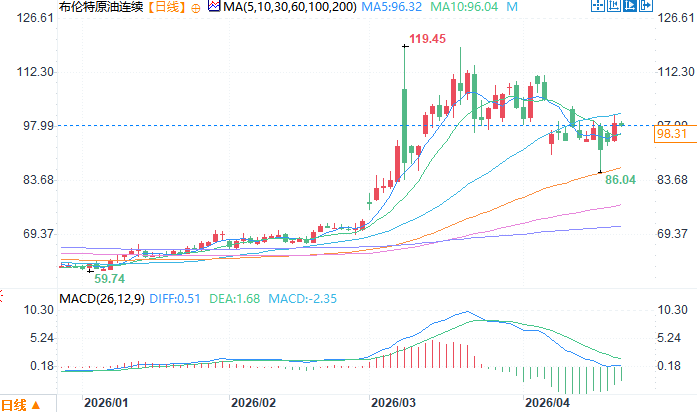
Brent crude oil daily chart source: EasyForex
At 10:28 AM Beijing time on April 22, Brent crude oil futures were trading at $98.36 per barrel.
The losses are enormous, and they continue to accumulate as traffic in the Strait of Hormuz remains severely restricted and tensions in the region escalate again. Before the war, 20 million barrels of oil were transported through the Strait of Hormuz daily.
Even if full-capacity navigation were to resume today, it would take months, and in some cases years, for oil and liquefied natural gas (LNG) supplies to recover. This is because all Middle Eastern oil-producing countries have been forced to drastically reduce upstream production and refinery operations due to disruptions to their energy infrastructure and the inability to transport oil and LNG cargoes through the Strait of Hormuz (which, for some of these producers, is the only route to international markets).
500 million barrels of oil withdrawn from the market
According to Kpler, six weeks after the outbreak of the war, as of April 10, the Middle East had suffered a cumulative loss of 430 million barrels of crude oil and condensate supply.
The analytics firm estimates that Middle Eastern crude oil supplies fell by an average of 9 million barrels per day in March compared to February, with a large portion of the decline coming from Saudi Arabia.
By the end of the seventh week, according to Kpler data, the cumulative supply loss in the Middle East had reached 500 million barrels. Johannes Rauball, senior oil analyst at Kpler, stated that this translates to a total revenue loss of approximately $50 billion since the outbreak of the war, based on an average oil price of around $100 per barrel.
500 million barrels of oil is almost equivalent to a month's oil consumption in the United States, or more than a month's oil demand in Europe.
Inventory depletion is accelerating as a large amount of supply exits the market. Kpler stated last week that the crude oil market is tightening, with onshore crude oil inventories having decreased by 41 million barrels by mid-April, which translates to a daily consumption of 2.7 million barrels.
Kpler analysts noted, "This shift is due to the exhaustion of previous supply buffers and the peak of shutdowns in the region." "The continued restrictions on the Strait of Hormuz indicate that future inventory pressures will further increase, further reinforcing the tightening of the supply-demand balance in the physical market."
The International Energy Agency (IEA) said in its monthly report last week that global oil supply plummeted by 10.1 million barrels per day in March to 97 million barrels per day, the largest supply disruption in history.
The IEA estimates that global observable oil inventories fell by 85 million barrels in March, with inventories outside the Middle East experiencing a significant decrease of 205 million barrels (equivalent to a daily decrease of 6.6 million barrels) due to continued obstruction of traffic in the Strait of Hormuz.
The agency stated, " Restoring traffic in the Strait of Hormuz remains the most important variable in alleviating pressures on energy supply, prices, and the global economy. "
A few days after the report was released, the Strait of Hormuz was briefly opened for a few hours, but tensions escalated again, and the world's most important oil chokepoint was closed once more. This brief window of opening did not alter the market balance, as only a very small number of oil tankers successfully passed through the Strait of Hormuz.
As of April 21, the Strait of Hormuz remained largely closed.
A slow and lengthy recovery process
Analysts warn that even if the Strait of Hormuz were opened to all ships free, safe, and unconditional navigation today, global oil supplies would still need months, and in some cases, years, to recover to pre-war levels. This means that even if the Strait of Hormuz were opened to unrestricted navigation today, supply disruptions and oil price volatility would continue for the coming months.
Earlier this month, energy consultancy Wood Mackenzie stated that approximately 11 million barrels per day of upstream production in the Middle East has been shut down and can only be restarted once the Strait of Hormuz reopens and export logistics return to normal.
According to Fraser McKay, head of upstream analysis at WoodMac, even without other constraints, it would take a long time for countries like Iraq to return to previous production levels, potentially six to nine months, due to both reservoir management and resource conditions.
The restoration of liquefied natural gas (LNG) supplies will take longer. Qatar has stated that the damage caused by the Iranian missile attack to its Ras Lafan LNG complex (the world's largest single LNG production facility) will result in a loss of approximately $20 billion in revenue annually, and repairs could take up to five years.
International Energy Agency Executive Director Fatih Birol said last week that it could take Middle Eastern producers up to two years to restore oil and gas production to pre-war levels.
"This gap is now becoming apparent," Birol said last Friday, referring to the complete absence of oil and gas loading and shipments to Asia in March. "If the Strait of Hormuz doesn't reopen, we must prepare for a significant rise in energy prices," he said.
Brent crude oil daily chart source: EasyForex
At 10:28 AM Beijing time on April 22, Brent crude oil futures were trading at $98.36 per barrel.
- Risk Warning and Disclaimer
- The market involves risk, and trading may not be suitable for all investors. This article is for reference only and does not constitute personal investment advice, nor does it take into account certain users’ specific investment objectives, financial situation, or other needs. Any investment decisions made based on this information are at your own risk.