The Middle East situation, coupled with rising oil prices and inflation expectations, and a stronger dollar, has led to continued consolidation in gold prices.
2026-04-24 09:58:38
Gold prices fluctuated and fell during Asian trading hours on Friday, trading around $4690. Although gold prices had remained high for some time, the strengthening dollar and rising inflationary pressures from energy prices have put significant pressure on the precious metal in the short term. From a technical perspective, gold prices are gradually moving away from previous highs, indicating a weakening of upward momentum in the short term.

The core factor driving market changes remains the uncertainty surrounding the Middle East. Escalating tensions around the Strait of Hormuz pose a potential shock to global energy transportation. The US has tightened restrictions on Iranian maritime transport, while Iran has also issued threatening signals regarding related shipping activities, significantly increasing market concerns about energy supply disruptions. As a result, international crude oil prices rose sharply this week, further reinforcing inflation expectations.
Rising energy prices are becoming a key variable influencing gold prices. With higher oil prices, market concerns about a global inflation rebound have intensified significantly, potentially prompting major central banks to maintain a tight monetary policy stance. In particular, the Federal Reserve may extend its high-interest-rate cycle in a high-inflation environment, thereby increasing the attractiveness of the US dollar and putting downward pressure on gold. As analysts have pointed out, gold's current price movement largely "follows oil price changes," and rising energy costs reinforce expectations of a short-term strengthening US dollar.
From an asset perspective, while gold possesses safe-haven characteristics, its appeal diminishes in a high-interest-rate environment. Since gold itself does not generate interest income, its holding costs increase relatively when market interest rates rise, causing some funds to shift towards higher-yielding assets, thus putting downward pressure on gold prices. Therefore, at the current stage, changes in inflation and interest rate expectations have a greater impact on gold than geopolitical risks themselves.
However, from a medium- to long-term perspective, gold still receives some support. Major central banks globally continue to increase their gold reserves, especially emerging market countries which are accelerating the diversification of their foreign exchange reserves. Market research shows that from 2025 to early 2026, many central banks continue to increase their gold holdings, with Asian central banks adding approximately 5 tons in March and marking 17 consecutive months of increases in gold reserves. This trend demonstrates the importance that countries place on asset security and reserve diversification, providing a long-term support foundation for gold prices.
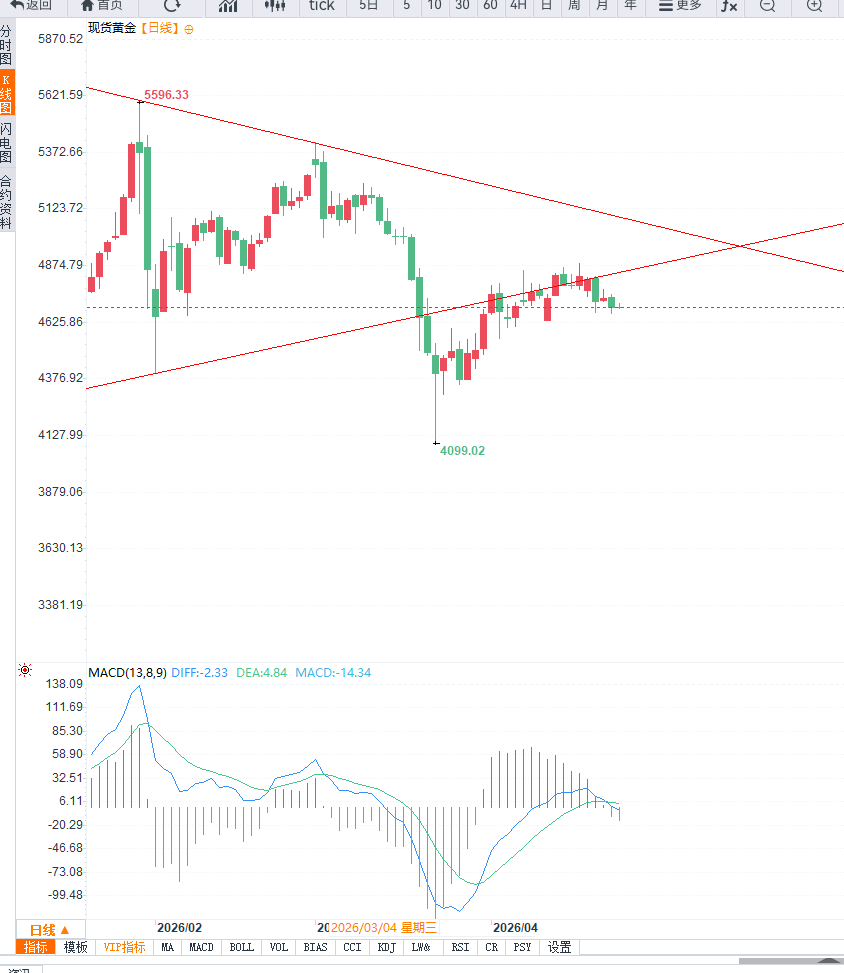
From a technical perspective, on the daily chart, gold prices have pulled back after reaching a recent high, breaking below short-term moving average support, shifting the trend from strong to slightly weak. The key support level is currently around $4650 ; a break below this level could lead to a further test of the $4600 area. Resistance levels are located in the $4720-$4750 range . Momentum indicators show weakening bullish momentum, but prices have not yet entered deeply oversold territory. On the 4-hour chart, gold prices are trading within a short-term descending channel, with limited upside potential. If prices cannot regain a foothold above $4700, there is still a risk of further pullback in the short term; however, a break above the resistance zone could potentially resume the upward trend.
Editor's Summary : Overall, gold's current price movement is driven by a complex interplay of factors. The Middle East situation is pushing up oil prices, which in turn is reinforcing inflation expectations and upward pressure on interest rates, primarily suppressing gold prices. Meanwhile, continued central bank gold purchases are providing medium- to long-term support to the market. In the short term, gold price movements will continue to depend on the strength of the US dollar and changes in interest rate expectations, while geopolitical tensions will indirectly affect the market through energy prices. If inflation remains high and policies remain tight, gold may continue to face downward pressure; however, if risks escalate further or monetary policy shifts, gold prices still have the potential to rebound.
The core factor driving market changes remains the uncertainty surrounding the Middle East. Escalating tensions around the Strait of Hormuz pose a potential shock to global energy transportation. The US has tightened restrictions on Iranian maritime transport, while Iran has also issued threatening signals regarding related shipping activities, significantly increasing market concerns about energy supply disruptions. As a result, international crude oil prices rose sharply this week, further reinforcing inflation expectations.
Rising energy prices are becoming a key variable influencing gold prices. With higher oil prices, market concerns about a global inflation rebound have intensified significantly, potentially prompting major central banks to maintain a tight monetary policy stance. In particular, the Federal Reserve may extend its high-interest-rate cycle in a high-inflation environment, thereby increasing the attractiveness of the US dollar and putting downward pressure on gold. As analysts have pointed out, gold's current price movement largely "follows oil price changes," and rising energy costs reinforce expectations of a short-term strengthening US dollar.
From an asset perspective, while gold possesses safe-haven characteristics, its appeal diminishes in a high-interest-rate environment. Since gold itself does not generate interest income, its holding costs increase relatively when market interest rates rise, causing some funds to shift towards higher-yielding assets, thus putting downward pressure on gold prices. Therefore, at the current stage, changes in inflation and interest rate expectations have a greater impact on gold than geopolitical risks themselves.
However, from a medium- to long-term perspective, gold still receives some support. Major central banks globally continue to increase their gold reserves, especially emerging market countries which are accelerating the diversification of their foreign exchange reserves. Market research shows that from 2025 to early 2026, many central banks continue to increase their gold holdings, with Asian central banks adding approximately 5 tons in March and marking 17 consecutive months of increases in gold reserves. This trend demonstrates the importance that countries place on asset security and reserve diversification, providing a long-term support foundation for gold prices.
From a technical perspective, on the daily chart, gold prices have pulled back after reaching a recent high, breaking below short-term moving average support, shifting the trend from strong to slightly weak. The key support level is currently around $4650 ; a break below this level could lead to a further test of the $4600 area. Resistance levels are located in the $4720-$4750 range . Momentum indicators show weakening bullish momentum, but prices have not yet entered deeply oversold territory. On the 4-hour chart, gold prices are trading within a short-term descending channel, with limited upside potential. If prices cannot regain a foothold above $4700, there is still a risk of further pullback in the short term; however, a break above the resistance zone could potentially resume the upward trend.
Editor's Summary : Overall, gold's current price movement is driven by a complex interplay of factors. The Middle East situation is pushing up oil prices, which in turn is reinforcing inflation expectations and upward pressure on interest rates, primarily suppressing gold prices. Meanwhile, continued central bank gold purchases are providing medium- to long-term support to the market. In the short term, gold price movements will continue to depend on the strength of the US dollar and changes in interest rate expectations, while geopolitical tensions will indirectly affect the market through energy prices. If inflation remains high and policies remain tight, gold may continue to face downward pressure; however, if risks escalate further or monetary policy shifts, gold prices still have the potential to rebound.
- Risk Warning and Disclaimer
- The market involves risk, and trading may not be suitable for all investors. This article is for reference only and does not constitute personal investment advice, nor does it take into account certain users’ specific investment objectives, financial situation, or other needs. Any investment decisions made based on this information are at your own risk.