













An epic oil supply disruption has hit, forcing economic recovery to be delayed for years.
2026-04-29 15:09:22
The global crude oil market has suffered the strongest supply shock in history this round, with Middle Eastern oil production capacity being restricted across the board. Coupled with the blockade and obstruction of shipping routes, not only will the energy industry be unable to recover in the short term, but it will also drag down the global economy. It will take months or even years to gradually emerge from the shadow of this round of negative impact, the overall recovery pace will be significantly slowed, and various derivative risks will continue to ferment and spread.
Since the escalation of this round of geopolitical tensions, the Strait of Hormuz has been closed for an extended period, preventing the vast majority of commercial oil tankers from navigating normally. This has forced the shutdown and storage of tens of millions of barrels of crude oil production capacity daily in key Middle Eastern oil-producing countries, completely disrupting the regional energy transport system. With the cross-border energy transport chain broken, countries around the world are scrambling to acquire alternative oil resources, directly forcing a sharp and widespread surge in energy prices.
Industry analysts predict that if this crucial global oil shipping route remains blocked, global economic growth will rapidly decline, the real economy will face increased pressure, and a global recession is highly probable. Previously, analysts generally predicted the shipping route would reopen in April and full production would resume in May; however, these expectations have completely failed to materialize. Massive amounts of crude oil are piling up and congesting in the heart of the Persian Gulf, onshore storage facilities are at full capacity, and there are no outlets for exporting the oil, further exacerbating the supply-demand imbalance.
Even if the Strait of Hormuz were to be fully reopened to navigation immediately, Middle Eastern crude oil production capacity would not be able to return to normal quickly. The entire supply chain would have a long ramp-up period, and Asia’s main energy-consuming region would continue to face long-term pressure.
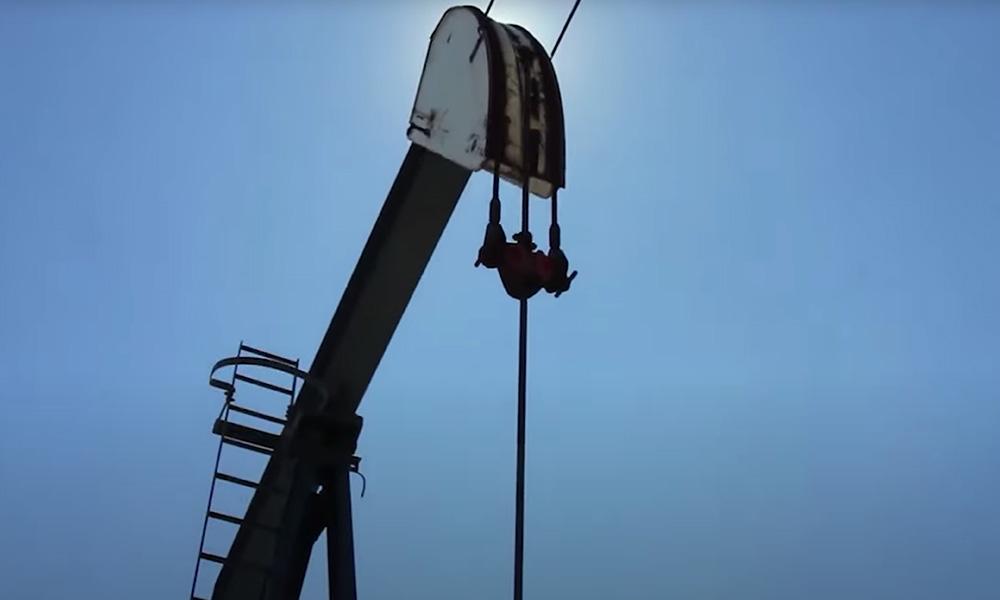
Industry veterans and energy analysts say that restarting thousands of operating oil wells in the Middle East is a complicated and cumbersome process. Some simplified production areas only require short-term commissioning to resume production, while major oil-producing countries like Iraq will need several months for steady recovery. Many wells hastily shut down at the beginning of the conflict have already suffered irreversible equipment damage, and the remaining compliant wells also require professional dredging, drilling, and maintenance, significantly delaying the release of production capacity.
Fraser McKay, head of upstream analysis at Wood Mackenzie, said that coupled with inherent weaknesses such as natural reservoir depletion and a shortage of skilled personnel, it could take up to nine months for Iraq to fully return to normal production levels. Currently, regional ceasefire negotiations are making no substantial progress, the shipping lane standoff remains unresolved, and a hasty resumption of production would permanently damage core oilfield assets and create long-term security risks.
Leading global energy and oilfield service providers have voiced their opinions, unanimously agreeing that the resumption of oil production in the Middle East can only be achieved gradually and steadily.
Olivier Le Peuch, CEO of Schlumberger, a leading global oilfield services company, said that oilfields that have been shut down in an orderly and standardized manner can resume operations quickly, while production areas that are forced to shut down suddenly must allow sufficient time for maintenance and ramp-up, and cannot be rushed to resume operations blindly.
Halliburton CEO Jeff Miller stated that the longer the wells are sealed and shut down, the higher the technical difficulty and financial cost of subsequent resumption of production and commissioning will be. This geopolitical shift in the Middle East will leave a long-term and profound negative impact on the global energy landscape.
The International Energy Agency (IEA) has also assessed that the resumption of Gulf oil production requires four conditions: improved geopolitical security, restored navigation, the availability of professional construction teams, and a smooth cross-border financial and logistics system. None of these conditions can be missing. A full resumption of production will require at least a two-month buffer period, and initial production capacity will still be difficult to reach the target.
The most pressing issue in the current oil market is that all of the world's idle and spare crude oil production capacity is concentrated in restricted areas of the Middle East, such as Saudi Arabia and the UAE, and is simultaneously trapped inside shipping lanes, with no spare capacity available to fill the gap. All other oil-producing regions globally are already operating at full capacity, and there is no room for increased US shale oil production, making it completely impossible to offset the supply disruption from the Middle East.
Russell Hardy, CEO of Vitol Group, the world's largest independent crude oil trader, said that all spare capacity is blocked and restricted, and the energy market is under full shock. At present, the cumulative crude oil production capacity gap has reached hundreds of millions of barrels and the gap is still widening.
In summary, this round of negative energy cycles is irreversible and has no short-term solution. The world can only passively accept a long-term pattern of high oil prices and weak economies.
The prolonged blockade of shipping routes has led to a complete standstill in crude oil supply.
Since the escalation of this round of geopolitical tensions, the Strait of Hormuz has been closed for an extended period, preventing the vast majority of commercial oil tankers from navigating normally. This has forced the shutdown and storage of tens of millions of barrels of crude oil production capacity daily in key Middle Eastern oil-producing countries, completely disrupting the regional energy transport system. With the cross-border energy transport chain broken, countries around the world are scrambling to acquire alternative oil resources, directly forcing a sharp and widespread surge in energy prices.
Industry analysts predict that if this crucial global oil shipping route remains blocked, global economic growth will rapidly decline, the real economy will face increased pressure, and a global recession is highly probable. Previously, analysts generally predicted the shipping route would reopen in April and full production would resume in May; however, these expectations have completely failed to materialize. Massive amounts of crude oil are piling up and congesting in the heart of the Persian Gulf, onshore storage facilities are at full capacity, and there are no outlets for exporting the oil, further exacerbating the supply-demand imbalance.
Resuming production has become significantly more difficult, and there are numerous obstacles to restoring production capacity in the medium to long term.
Even if the Strait of Hormuz were to be fully reopened to navigation immediately, Middle Eastern crude oil production capacity would not be able to return to normal quickly. The entire supply chain would have a long ramp-up period, and Asia’s main energy-consuming region would continue to face long-term pressure.
Industry veterans and energy analysts say that restarting thousands of operating oil wells in the Middle East is a complicated and cumbersome process. Some simplified production areas only require short-term commissioning to resume production, while major oil-producing countries like Iraq will need several months for steady recovery. Many wells hastily shut down at the beginning of the conflict have already suffered irreversible equipment damage, and the remaining compliant wells also require professional dredging, drilling, and maintenance, significantly delaying the release of production capacity.
Fraser McKay, head of upstream analysis at Wood Mackenzie, said that coupled with inherent weaknesses such as natural reservoir depletion and a shortage of skilled personnel, it could take up to nine months for Iraq to fully return to normal production levels. Currently, regional ceasefire negotiations are making no substantial progress, the shipping lane standoff remains unresolved, and a hasty resumption of production would permanently damage core oilfield assets and create long-term security risks.
Industry giants issue warnings, confirming a slowdown in the recovery pace across the entire sector.
Leading global energy and oilfield service providers have voiced their opinions, unanimously agreeing that the resumption of oil production in the Middle East can only be achieved gradually and steadily.
Olivier Le Peuch, CEO of Schlumberger, a leading global oilfield services company, said that oilfields that have been shut down in an orderly and standardized manner can resume operations quickly, while production areas that are forced to shut down suddenly must allow sufficient time for maintenance and ramp-up, and cannot be rushed to resume operations blindly.
Halliburton CEO Jeff Miller stated that the longer the wells are sealed and shut down, the higher the technical difficulty and financial cost of subsequent resumption of production and commissioning will be. This geopolitical shift in the Middle East will leave a long-term and profound negative impact on the global energy landscape.
The International Energy Agency (IEA) has also assessed that the resumption of Gulf oil production requires four conditions: improved geopolitical security, restored navigation, the availability of professional construction teams, and a smooth cross-border financial and logistics system. None of these conditions can be missing. A full resumption of production will require at least a two-month buffer period, and initial production capacity will still be difficult to reach the target.
There is a complete imbalance between supply and demand, and there is currently no backup capacity available globally.
The most pressing issue in the current oil market is that all of the world's idle and spare crude oil production capacity is concentrated in restricted areas of the Middle East, such as Saudi Arabia and the UAE, and is simultaneously trapped inside shipping lanes, with no spare capacity available to fill the gap. All other oil-producing regions globally are already operating at full capacity, and there is no room for increased US shale oil production, making it completely impossible to offset the supply disruption from the Middle East.
Russell Hardy, CEO of Vitol Group, the world's largest independent crude oil trader, said that all spare capacity is blocked and restricted, and the energy market is under full shock. At present, the cumulative crude oil production capacity gap has reached hundreds of millions of barrels and the gap is still widening.
In summary, this round of negative energy cycles is irreversible and has no short-term solution. The world can only passively accept a long-term pattern of high oil prices and weak economies.
- Risk Warning and Disclaimer
- The market involves risk, and trading may not be suitable for all investors. This article is for reference only and does not constitute personal investment advice, nor does it take into account certain users’ specific investment objectives, financial situation, or other needs. Any investment decisions made based on this information are at your own risk.

