Institutions collectively sell long and buy short, sanctions backfire, and the dollar's last dance amid the oil price crisis.
2026-04-29 16:38:37
Global discussions about de-dollarization have intensified again, and the dollar's long-standing global dominance is facing profound challenges from the market.
Geopolitical tensions continue to escalate, coupled with growing market skepticism about the independence of the Federal Reserve's interest rate policy. However, from the current global monetary landscape, despite the growing calls for de-dollarization, no reliable currency option with full strength has yet emerged to truly replace the dollar. The dollar's core anchoring position in the global financial system is unlikely to be overturned in the short term.
The US dollar has remained the world's primary reserve currency for nearly eighty years, but in recent years, market doubts have grown about whether this pattern can be maintained in the long term, and the sustainability of the US dollar's long-term hegemony is being repeatedly examined by the market.
The core reason for the erosion of market confidence lies in the widening cracks in trust regarding the Federal Reserve's policy independence, coupled with continued public pressure from White House political forces to intervene in the direction of interest rates.
Once the market widely becomes concerned that the Federal Reserve's monetary policy is no longer focused on controlling inflation but instead on serving political demands, the credibility of dollar assets in the minds of global investors will be directly impacted.
The market has already released clear signals of weakness in US Treasuries. The bid-to-cover ratios for auctions of US 5-year TIPS, 10-year, and 20-year long-term Treasury bonds have all declined significantly, clearly indicating that demand for US Treasuries, especially long-term bonds, has come under significant pressure.
Against the backdrop of the United States continuing to issue more long-term Treasury bonds, the supply of long-term bonds is constantly expanding, but the global capital inflow is weak. The imbalance between supply and demand can easily drive down the price of long-term Treasury bonds, which in turn will cause all institutions holding US Treasury bonds and central banks of various countries to see a reduction in the value of their holdings.
Faced with this situation, various investment institutions in the United States, together with the Federal Reserve, are simultaneously adjusting their asset allocation strategies, collectively compressing the duration of their investment portfolios, and generally adopting the strategy of selling long-term US Treasury bonds and instead allocating to short-term US Treasury bonds.
Essentially, it is about avoiding the interest rate volatility risk brought about by the long duration of long-term bonds and hedging in advance against the loss pressure caused by the oversupply and price decline of long-term bonds.
The precedent of freezing foreign exchange reserves of relevant countries after the outbreak of the Russia-Ukraine conflict has prompted most countries around the world to re-examine the hidden dangers of excessive concentration of dollar and euro assets in their foreign exchange reserves, and to proactively initiate marginal adjustments to diversify their reserve assets, consciously reducing the holding risks caused by financial sanctions and asset freezes.
The United States' frequent use of financial sanctions has further accelerated the pace of restructuring global dollar asset allocation.
To mitigate policy risks, more and more countries are beginning to slightly reduce their holdings of US Treasury bonds and proactively reduce their allocation to dollar assets, while continuing to increase their gold reserves and actively promoting the use of their own currencies in bilateral trade and commodity transaction settlements, in order to reduce their dependence on the dollar system.
Despite its large economic size and geographical influence, the RMB's share of use in trade and commodity settlement has steadily increased.
The euro is also seen as a potential alternative, with the advantages of a mature institutional system and a free-floating exchange rate. However, it is constrained by the fact that Europe has never formed a complete fiscal union and lacks a large enough unified high-rated sovereign bond market. In the short term, it cannot compete with the dollar in terms of size and liquidity.
In the post-oil crisis era, Middle Eastern countries are unable to sell oil smoothly, resulting in a significant gap in demand for US dollars. The dollar continues to function as a safe-haven currency, and this trend is likely to continue. However, when the Hormuz crisis shows signs of a turnaround, it may have a sustained negative impact on the dollar.
The declining bid-to-cover ratio for long-term US Treasury bonds, persistently weak global demand, and institutions collectively reducing duration to avoid long-term bond risks, coupled with financial sanctions forcing countries to actively reduce their allocation to dollar assets, will gradually create a negative cycle, prompting global funds to gradually withdraw from dollar assets.
This structural migration of funds will not immediately overturn the status of the US dollar, but it will suppress the upward potential of the US dollar index from the underlying fundamentals in the long term, sowing the seeds of a continued weakening trend.
From a technical perspective, the US dollar index recently rebounded after hitting the bottom of a double-top measured decline range. Currently, it is being capped by the 50% Fibonacci retracement level of the range. Once the exchange rate stabilizes above this level, there is a chance for further upward movement.
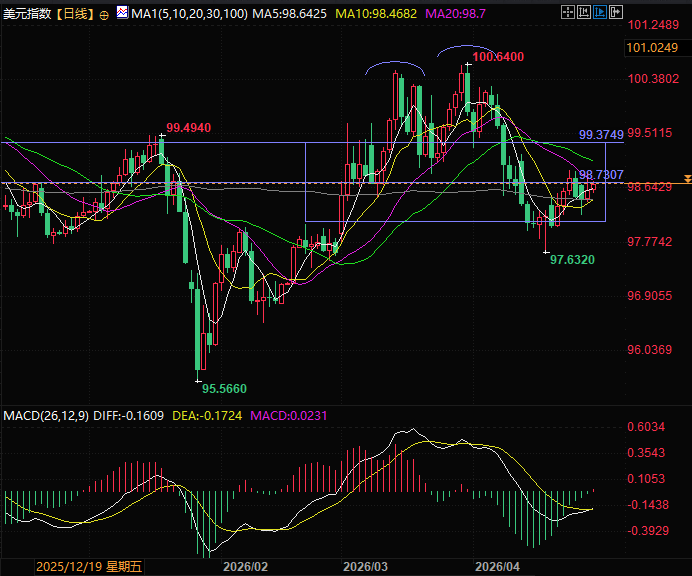
(US Dollar Index Daily Chart, Source: EasyForex)
At 16:34 Beijing time, the US dollar index is currently at 98.74.
Geopolitical tensions continue to escalate, coupled with growing market skepticism about the independence of the Federal Reserve's interest rate policy. However, from the current global monetary landscape, despite the growing calls for de-dollarization, no reliable currency option with full strength has yet emerged to truly replace the dollar. The dollar's core anchoring position in the global financial system is unlikely to be overturned in the short term.
The US dollar has remained the world's primary reserve currency for nearly eighty years, but in recent years, market doubts have grown about whether this pattern can be maintained in the long term, and the sustainability of the US dollar's long-term hegemony is being repeatedly examined by the market.
The Federal Reserve's independence undermines confidence in underlying dollar assets.
The core reason for the erosion of market confidence lies in the widening cracks in trust regarding the Federal Reserve's policy independence, coupled with continued public pressure from White House political forces to intervene in the direction of interest rates.
Once the market widely becomes concerned that the Federal Reserve's monetary policy is no longer focused on controlling inflation but instead on serving political demands, the credibility of dollar assets in the minds of global investors will be directly impacted.
Long-term bond bidding multiples have declined significantly, indicating a potential oversupply crisis in government bonds.
The market has already released clear signals of weakness in US Treasuries. The bid-to-cover ratios for auctions of US 5-year TIPS, 10-year, and 20-year long-term Treasury bonds have all declined significantly, clearly indicating that demand for US Treasuries, especially long-term bonds, has come under significant pressure.
Against the backdrop of the United States continuing to issue more long-term Treasury bonds, the supply of long-term bonds is constantly expanding, but the global capital inflow is weak. The imbalance between supply and demand can easily drive down the price of long-term Treasury bonds, which in turn will cause all institutions holding US Treasury bonds and central banks of various countries to see a reduction in the value of their holdings.
Faced with this situation, various investment institutions in the United States, together with the Federal Reserve, are simultaneously adjusting their asset allocation strategies, collectively compressing the duration of their investment portfolios, and generally adopting the strategy of selling long-term US Treasury bonds and instead allocating to short-term US Treasury bonds.
Essentially, it is about avoiding the interest rate volatility risk brought about by the long duration of long-term bonds and hedging in advance against the loss pressure caused by the oversupply and price decline of long-term bonds.
Sanctions have backfired, triggering a global trend of reducing holdings of dollar-denominated assets.
The precedent of freezing foreign exchange reserves of relevant countries after the outbreak of the Russia-Ukraine conflict has prompted most countries around the world to re-examine the hidden dangers of excessive concentration of dollar and euro assets in their foreign exchange reserves, and to proactively initiate marginal adjustments to diversify their reserve assets, consciously reducing the holding risks caused by financial sanctions and asset freezes.
The United States' frequent use of financial sanctions has further accelerated the pace of restructuring global dollar asset allocation.
To mitigate policy risks, more and more countries are beginning to slightly reduce their holdings of US Treasury bonds and proactively reduce their allocation to dollar assets, while continuing to increase their gold reserves and actively promoting the use of their own currencies in bilateral trade and commodity transaction settlements, in order to reduce their dependence on the dollar system.
The RMB and the Euro begin to rise
Despite its large economic size and geographical influence, the RMB's share of use in trade and commodity settlement has steadily increased.
The euro is also seen as a potential alternative, with the advantages of a mature institutional system and a free-floating exchange rate. However, it is constrained by the fact that Europe has never formed a complete fiscal union and lacks a large enough unified high-rated sovereign bond market. In the short term, it cannot compete with the dollar in terms of size and liquidity.
Summary and Technical Analysis:
In the post-oil crisis era, Middle Eastern countries are unable to sell oil smoothly, resulting in a significant gap in demand for US dollars. The dollar continues to function as a safe-haven currency, and this trend is likely to continue. However, when the Hormuz crisis shows signs of a turnaround, it may have a sustained negative impact on the dollar.
The declining bid-to-cover ratio for long-term US Treasury bonds, persistently weak global demand, and institutions collectively reducing duration to avoid long-term bond risks, coupled with financial sanctions forcing countries to actively reduce their allocation to dollar assets, will gradually create a negative cycle, prompting global funds to gradually withdraw from dollar assets.
This structural migration of funds will not immediately overturn the status of the US dollar, but it will suppress the upward potential of the US dollar index from the underlying fundamentals in the long term, sowing the seeds of a continued weakening trend.
From a technical perspective, the US dollar index recently rebounded after hitting the bottom of a double-top measured decline range. Currently, it is being capped by the 50% Fibonacci retracement level of the range. Once the exchange rate stabilizes above this level, there is a chance for further upward movement.
(US Dollar Index Daily Chart, Source: EasyForex)
At 16:34 Beijing time, the US dollar index is currently at 98.74.
- Risk Warning and Disclaimer
- The market involves risk, and trading may not be suitable for all investors. This article is for reference only and does not constitute personal investment advice, nor does it take into account certain users’ specific investment objectives, financial situation, or other needs. Any investment decisions made based on this information are at your own risk.