Amid the interplay of energy inflation and economic slowdown, the Bank of Canada may keep interest rates unchanged, putting pressure on the US dollar against the Canadian dollar.
2026-04-29 16:20:44
The market widely expects the Bank of Canada to keep its benchmark interest rate unchanged at 2.25% for the fourth consecutive time at its policy meeting this week. This decision reflects policymakers' more cautious balancing act between inflationary pressures and slowing economic growth. Given the current backdrop of heightened global energy price volatility, the central bank is inclined to wait for more data to assess the actual impact of external shocks on inflation and the economy.
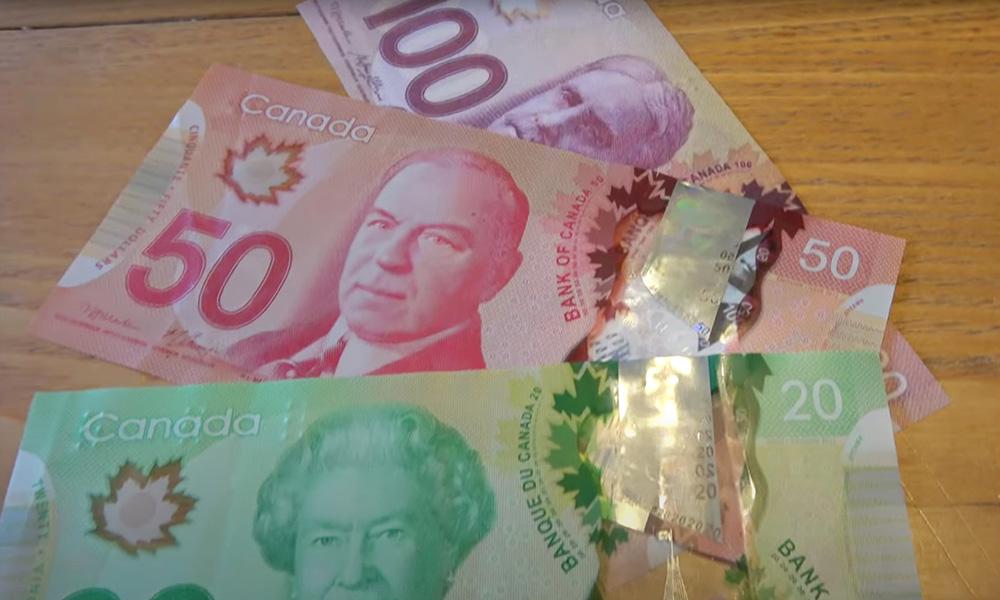
In terms of inflation, Canada's CPI rose to 2.4% year-on-year in March, higher than the previous 1.8% and exceeding the central bank's target level of 2%, but still lower than the market expectation of 2.5% . This data indicates that although energy prices have driven a short-term rebound in inflation, overall inflationary pressure remains within a controllable range, providing room for the central bank to maintain its current policy. Meanwhile, the central bank expects inflation to fall to 2.2% by the end of the year and further to 2.1% in 2027, indicating that medium- to long-term inflation expectations remain relatively stable.
From an economic fundamentals perspective, Canada's economic growth momentum has clearly weakened. Data shows that GDP contracted by 0.6% annualized in the fourth quarter of 2025, while monthly GDP grew by only 0.1% in January 2026, indicating a sluggish economic recovery. Furthermore, the Ivey Purchasing Managers' Index unexpectedly fell into contraction territory, further confirming the continued weakness in economic activity at the beginning of the year. Against this backdrop, tightening monetary policy too early could put additional pressure on the economy, thus significantly cooling expectations for interest rate hikes.
Regarding policy communication, the Bank of Canada Governor has previously stated clearly that he is not overly concerned about short-term inflation, emphasizing that it stems more from external energy shocks. This means the central bank is more likely to "see through" short-term inflation fluctuations rather than immediately taking tightening measures. Meanwhile, market surveys show that most analysts expect interest rates to remain unchanged throughout 2026, further strengthening market expectations for policy stability.
From an external perspective, the ongoing tensions in the Middle East have exacerbated the shipping restrictions in the Strait of Hormuz. This waterway carries approximately 20% of global crude oil shipments , and its obstruction pushes up energy prices, impacting the Canadian economy through imported inflation. However, this inflation is more of an external shock than a result of overheated domestic demand, thus its impact on monetary policy is relatively limited.
From an exchange rate perspective, the USD/CAD pair is currently in a downward channel. Although it has recently rebounded from around 1.3605 , the overall rebound has been limited, with 1.3700 forming a key resistance area. Analysts believe that any rebound near this level is more likely to be seen as an opportunity to sell on rallies rather than a trend reversal signal.
From a technical perspective, the USD/CAD pair remains in a sideways-to-bearish pattern on the daily chart. After falling from the 1.4000 high, a downward channel has formed, with resistance at 1.3700 and 1.3800 , and support at 1.3600 and 1.3525 . The current price is approaching a key resistance area; failure to break through this level could lead to a continuation of the downtrend.
From a 4-hour chart perspective, the short-term trend shows a rebound and correction structure, but it remains within a downward channel overall. Currently, the RSI is in neutral territory, and the MACD momentum is limited, indicating a lack of sustainability in the rebound. If it encounters resistance near 1.3700 , it may retest the support at 1.3600 or even lower; a break above this level could open up further upside potential to 1.3800 .

Editor's Summary : Overall, the Bank of Canada's current policy stance is primarily "wait-and-see," maintaining a balance between rising inflation and a weak economy. In the short term, interest rates are likely to remain unchanged at 2.25% , and market focus will shift to the central bank's guidance on future policy path. From an exchange rate perspective, the USD/CAD exchange rate remains in a downward trend, with oil prices and the dollar's performance being key variables. Without significant changes in fundamentals, the exchange rate may maintain a volatile but slightly bearish pattern.
In terms of inflation, Canada's CPI rose to 2.4% year-on-year in March, higher than the previous 1.8% and exceeding the central bank's target level of 2%, but still lower than the market expectation of 2.5% . This data indicates that although energy prices have driven a short-term rebound in inflation, overall inflationary pressure remains within a controllable range, providing room for the central bank to maintain its current policy. Meanwhile, the central bank expects inflation to fall to 2.2% by the end of the year and further to 2.1% in 2027, indicating that medium- to long-term inflation expectations remain relatively stable.
From an economic fundamentals perspective, Canada's economic growth momentum has clearly weakened. Data shows that GDP contracted by 0.6% annualized in the fourth quarter of 2025, while monthly GDP grew by only 0.1% in January 2026, indicating a sluggish economic recovery. Furthermore, the Ivey Purchasing Managers' Index unexpectedly fell into contraction territory, further confirming the continued weakness in economic activity at the beginning of the year. Against this backdrop, tightening monetary policy too early could put additional pressure on the economy, thus significantly cooling expectations for interest rate hikes.
Regarding policy communication, the Bank of Canada Governor has previously stated clearly that he is not overly concerned about short-term inflation, emphasizing that it stems more from external energy shocks. This means the central bank is more likely to "see through" short-term inflation fluctuations rather than immediately taking tightening measures. Meanwhile, market surveys show that most analysts expect interest rates to remain unchanged throughout 2026, further strengthening market expectations for policy stability.
From an external perspective, the ongoing tensions in the Middle East have exacerbated the shipping restrictions in the Strait of Hormuz. This waterway carries approximately 20% of global crude oil shipments , and its obstruction pushes up energy prices, impacting the Canadian economy through imported inflation. However, this inflation is more of an external shock than a result of overheated domestic demand, thus its impact on monetary policy is relatively limited.
From an exchange rate perspective, the USD/CAD pair is currently in a downward channel. Although it has recently rebounded from around 1.3605 , the overall rebound has been limited, with 1.3700 forming a key resistance area. Analysts believe that any rebound near this level is more likely to be seen as an opportunity to sell on rallies rather than a trend reversal signal.
From a technical perspective, the USD/CAD pair remains in a sideways-to-bearish pattern on the daily chart. After falling from the 1.4000 high, a downward channel has formed, with resistance at 1.3700 and 1.3800 , and support at 1.3600 and 1.3525 . The current price is approaching a key resistance area; failure to break through this level could lead to a continuation of the downtrend.
From a 4-hour chart perspective, the short-term trend shows a rebound and correction structure, but it remains within a downward channel overall. Currently, the RSI is in neutral territory, and the MACD momentum is limited, indicating a lack of sustainability in the rebound. If it encounters resistance near 1.3700 , it may retest the support at 1.3600 or even lower; a break above this level could open up further upside potential to 1.3800 .
Editor's Summary : Overall, the Bank of Canada's current policy stance is primarily "wait-and-see," maintaining a balance between rising inflation and a weak economy. In the short term, interest rates are likely to remain unchanged at 2.25% , and market focus will shift to the central bank's guidance on future policy path. From an exchange rate perspective, the USD/CAD exchange rate remains in a downward trend, with oil prices and the dollar's performance being key variables. Without significant changes in fundamentals, the exchange rate may maintain a volatile but slightly bearish pattern.
- Risk Warning and Disclaimer
- The market involves risk, and trading may not be suitable for all investors. This article is for reference only and does not constitute personal investment advice, nor does it take into account certain users’ specific investment objectives, financial situation, or other needs. Any investment decisions made based on this information are at your own risk.