Can central bank gold purchases stem the decline in gold prices?
2026-04-29 17:59:40
On Wednesday, April 29th, spot gold prices were under pressure, fluctuating around $4,550 per ounce, influenced by inflation concerns stemming from rising energy costs and market expectations regarding the policy paths of major central banks. Brent crude oil prices rose above $110 per barrel as the US maintained maritime restrictions on Iranian ports, disrupting shipping in the Strait of Hormuz and posing a potential risk of supply disruptions. The Federal Reserve is expected to keep interest rates unchanged, and traders are focused on Powell's speech to assess the transmission of geopolitical factors to the economy and monetary policy. Global gold demand in the first quarter showed structural changes, with strong investment demand partially offsetting a decline in jewelry consumption.
The United States maintains its maritime restrictions aimed at reducing Iranian oil exports and advancing negotiations. Iran insists on not resuming comprehensive dialogue until the restrictions are lifted. Analysis shows that Iran's oil storage capacity is limited; based on relevant data, the remaining available storage space corresponds to approximately 12 to 22 days of normal production. If storage reaches capacity, it could force production cuts, thereby affecting the global supply balance.
Brent crude oil prices remained high as traders assessed the duration of supply disruptions. Rising energy costs directly fueled inflation expectations, which the market interpreted as potentially prompting central banks to maintain higher interest rates for an extended period. The high-interest-rate environment increased the cost of holding non-yielding assets, causing spot gold prices to retreat from their recent highs, falling approximately 14% since the beginning of the conflict. Technically, prices briefly broke below recent support levels, further triggering some liquidation selling pressure.
Nevertheless, gold's status as a traditional safe-haven asset has not disappeared. Traders have observed that the divergence between rising oil prices and gold price movements reflects that the current dominant influence of interest rate paths on gold prices is greater than short-term geopolitical premiums.
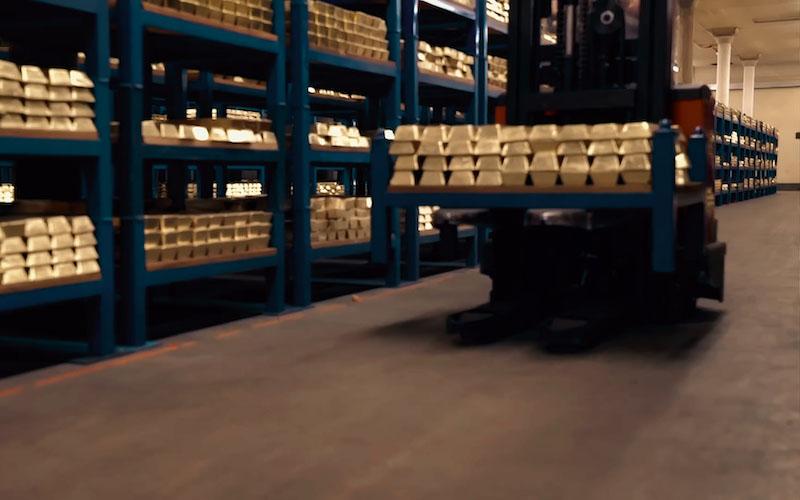
Data from the World Gold Council shows that global gold demand grew by 2% year-on-year in the first quarter of 2026, reaching approximately 1,231 tons (including over-the-counter transactions). Purchases of gold bars and coins surged by 42% to 474 tons, the second-highest quarterly level on record; central bank gold purchases also increased by 3%, offsetting a 23% decline in jewelry demand. The value of demand reached a record high for the quarter due to high prices.
This shift in demand structure indicates that institutions and investors continue to actively allocate gold even in a high-price environment, reflecting a continuation of diversification strategies. Goldman Sachs analysts recently maintained their year-end gold price target of $5,400 per ounce, citing key drivers including continued diversified gold purchases by central banks and private sector allocation demand.
The following is a brief comparison of the main components of gold demand in the first quarter (unit: tons):
Demand-side resilience provides a downside buffer for gold prices, but short-term liquidation pressures may still emerge if energy supply shocks persist and bond yields rise further.
The Federal Reserve is expected to maintain the target range for the federal funds rate at this meeting. Markets are focused on Powell's remarks regarding inflation risks, the economic impact of geopolitical events, and the thresholds for future policy adjustments. Rising energy prices may temporarily push up inflation readings, but traders are assessing the impact of this persistence on the path of real interest rates.
Recent policy decisions by major institutions such as the European Central Bank, the Bank of England, and the Bank of Canada have also drawn attention. The Bank of Japan previously kept its benchmark interest rate unchanged at 0.75%, but internal voting disagreements suggest the possibility of future adjustments. The US dollar index fluctuated slightly, reflecting the market's pricing in policy divergence.
Gold prices are highly sensitive to interest rates: rising real yields typically dampen gold's appeal. The recent pullback in gold prices is partly due to higher bond yields and strengthened expectations of a "high-threshold" intervention by the Federal Reserve. Traders need to monitor subsequent economic data and geopolitical developments; if signals emerge that the Strait of Hormuz will reopen, a decline in oil prices could provide a short-term positive catalyst for gold prices.
Geopolitical factors push up energy prices, putting short-term pressure on gold prices.
The United States maintains its maritime restrictions aimed at reducing Iranian oil exports and advancing negotiations. Iran insists on not resuming comprehensive dialogue until the restrictions are lifted. Analysis shows that Iran's oil storage capacity is limited; based on relevant data, the remaining available storage space corresponds to approximately 12 to 22 days of normal production. If storage reaches capacity, it could force production cuts, thereby affecting the global supply balance.
Brent crude oil prices remained high as traders assessed the duration of supply disruptions. Rising energy costs directly fueled inflation expectations, which the market interpreted as potentially prompting central banks to maintain higher interest rates for an extended period. The high-interest-rate environment increased the cost of holding non-yielding assets, causing spot gold prices to retreat from their recent highs, falling approximately 14% since the beginning of the conflict. Technically, prices briefly broke below recent support levels, further triggering some liquidation selling pressure.
Nevertheless, gold's status as a traditional safe-haven asset has not disappeared. Traders have observed that the divergence between rising oil prices and gold price movements reflects that the current dominant influence of interest rate paths on gold prices is greater than short-term geopolitical premiums.
Central bank policies and investment demand support the medium- to long-term outlook for gold.
Data from the World Gold Council shows that global gold demand grew by 2% year-on-year in the first quarter of 2026, reaching approximately 1,231 tons (including over-the-counter transactions). Purchases of gold bars and coins surged by 42% to 474 tons, the second-highest quarterly level on record; central bank gold purchases also increased by 3%, offsetting a 23% decline in jewelry demand. The value of demand reached a record high for the quarter due to high prices.
This shift in demand structure indicates that institutions and investors continue to actively allocate gold even in a high-price environment, reflecting a continuation of diversification strategies. Goldman Sachs analysts recently maintained their year-end gold price target of $5,400 per ounce, citing key drivers including continued diversified gold purchases by central banks and private sector allocation demand.
The following is a brief comparison of the main components of gold demand in the first quarter (unit: tons):
| category | change |
|---|---|
| Gold bars and coins | +42% |
| Central bank gold purchases | +3% |
| Jewelry demand | -twenty three% |
| Total demand | +2% |
Relationship between monetary policy expectations and gold price dynamics
The Federal Reserve is expected to maintain the target range for the federal funds rate at this meeting. Markets are focused on Powell's remarks regarding inflation risks, the economic impact of geopolitical events, and the thresholds for future policy adjustments. Rising energy prices may temporarily push up inflation readings, but traders are assessing the impact of this persistence on the path of real interest rates.
Recent policy decisions by major institutions such as the European Central Bank, the Bank of England, and the Bank of Canada have also drawn attention. The Bank of Japan previously kept its benchmark interest rate unchanged at 0.75%, but internal voting disagreements suggest the possibility of future adjustments. The US dollar index fluctuated slightly, reflecting the market's pricing in policy divergence.
Gold prices are highly sensitive to interest rates: rising real yields typically dampen gold's appeal. The recent pullback in gold prices is partly due to higher bond yields and strengthened expectations of a "high-threshold" intervention by the Federal Reserve. Traders need to monitor subsequent economic data and geopolitical developments; if signals emerge that the Strait of Hormuz will reopen, a decline in oil prices could provide a short-term positive catalyst for gold prices.
Frequently Asked Questions
Question 1: What is the actual impact of restrictions on the Strait of Hormuz on global oil supply?
A: The strait is a crucial passage for approximately 20% of global seaborne oil trade. Current restrictions have hampered Iranian exports, and although Iran is attempting to maintain some flow through various means, overall supply uncertainty is pushing up oil prices. Traders are focused on whether saturated storage will force Iran to further reduce production, and whether other oil-producing countries can quickly fill the gap. In the short term, rising energy costs have become a major channel for inflation transmission.
Question 2: Why did gold prices fall when oil prices rose and inflation expectations increased?
A: Traditionally, gold has been a hedge against inflation, but high oil prices may prompt central banks to postpone interest rate cuts or maintain tightening, raising real yields and holding costs. Gold prices have recently corrected by about 14% from their highs, with technical selling intensifying after breaking support levels. While demand is supported by central banks and investment, short-term pricing is dominated by interest rate expectations. If progress in mediation leads to a decline in oil prices, gold may regain safe-haven buying.
Question 3: What does the change in gold demand structure in 2026 mean for the medium- to long-term price trend?
A: Strong demand for gold bars and coins in the first quarter, coupled with stable central bank gold purchases, indicates that allocation-oriented buying remains active in high-price areas. This provides structural support for gold prices. Institutions such as Goldman Sachs maintain high targets for the year, emphasizing diversification trends. However, if geopolitical risks ease and monetary policy remains cautious, gold price volatility may remain high, and traders need to distinguish between short-term event-driven factors and long-term demand trends.
- Risk Warning and Disclaimer
- The market involves risk, and trading may not be suitable for all investors. This article is for reference only and does not constitute personal investment advice, nor does it take into account certain users’ specific investment objectives, financial situation, or other needs. Any investment decisions made based on this information are at your own risk.