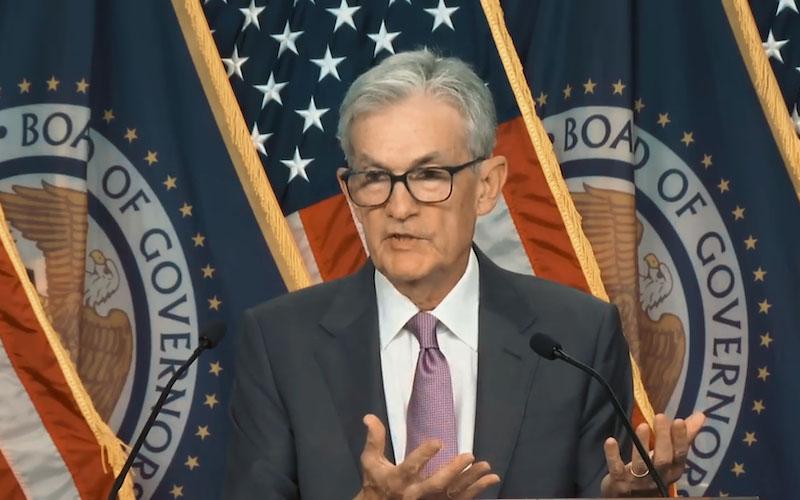
Powell's final move may have been hawkish.
2026-04-29 19:39:55
On Wednesday (April 29), the dollar appeared to improve ahead of today's Federal Open Market Committee (FOMC) statement. This momentum was partly due to volatility in the US stock market. Powell's final press conference is not expected to cause much turmoil. However, given the lack of progress in the Gulf region, Powell may take a more hawkish stance. Meanwhile, the release of earnings reports from major technology companies today may have an impact on the foreign exchange market no less significant than, or even greater than, the Fed's statement.
US Dollar: Potential Upside Risks
The US dollar has rebounded somewhat in the past 24 hours. While the market is concerned about the lack of progress in US-Iran negotiations, this does not appear to be the main driving force. In fact, the conflict between Iran and the United States has been escalating since the end of February this year, and the blockade of the Strait of Hormuz has caused Brent crude oil prices to soar to around $111 per barrel, severely impacting the global energy supply landscape.
The recent rebound in the US dollar stemmed largely from market volatility in the US stock market triggered by concerns about the future of artificial intelligence. One key trigger was reports that OpenAI failed to meet its internal growth and revenue targets, which dragged down leading AI companies such as Nvidia, Broadcom, and Micron, consequently suppressing the Nasdaq Composite Index and causing its biggest single-day drop in nearly a month.
Ultimately, the dollar's rebound did not last long. This rebound may be related to month-end fund flows. Month-end fund rebalancing often brings short-term technical dollar buying, but this does not represent a fundamental shift in the market's assessment of the dollar's medium- to long-term fundamentals.
Middle East Situation: The Strait of Hormuz and the Dual Shifts in OPEC
Today, the market will await a response from Tehran. President Trump claimed on social media that Iran is in a "collapse" state and is eager to reopen the Strait of Hormuz as soon as possible. This subtly contradicts reports in the Wall Street Journal about internal White House preparations—Trump has reportedly instructed officials to prepare contingency plans for a prolonged closure of the Strait of Hormuz, indicating that the prospects for negotiations remain uncertain and the market should not have overly high expectations for a short-term solution.
A noteworthy recent development is that, despite continued tensions, several oil tankers have successfully transited the Strait of Hormuz, including a Japanese supertanker that passed smoothly after coordination with Iran. This is interpreted by the market as a limited signal of easing tensions in the strait; however, analysts generally caution that the safety of the shipping route remains uncertain until a formal political agreement is reached.
Another major piece of news that shook the market was the UAE's announcement of its withdrawal from OPEC and OPEC+, effective May 1st. The UAE characterized its withdrawal as a sovereign decision based on "national strategic interests," emphasizing that it reflects its long-term strategic vision and the evolving energy landscape. As OPEC's second-largest oil producer, this departure is a severe blow to the nearly 60-year-old cartel.
In an interview, UAE Energy Minister Suhail al-Mazrouei pointed out that given the Strait of Hormuz is still closed, the immediate impact of the current closure on oil prices is relatively limited. In the long run, however, this move will give the UAE greater freedom to increase production, and is expected to release an additional supply of about 1 million barrels per day after the strait reopens.
David Oxley, chief climate and commodities economist at Capital Economics, said the ties between OPEC members have loosened, and a war with Iran could be the catalyst for the eventual collapse of the organization. From a foreign exchange market perspective, the expectation of a structural breakdown in OPEC will put medium-term pressure on the currencies of oil-exporting countries, while potentially suppressing inflation expectations and providing some breathing room for global central banks.
Federal Reserve: Hawks hold rates steady, but wording hints at something more?
The market's main focus today is the Federal Reserve's interest rate decision, to be announced at 2 p.m. Eastern Time (2 a.m. Beijing Time). The market has priced in a 100% probability that the Fed will keep interest rates unchanged, with the benchmark rate expected to remain in the 3.50% to 3.75% range, a level that has remained unchanged since December of last year.
Inflation has added complexity to the Federal Reserve's position. March's CPI reached 3.3%, a two-year high, primarily driven by soaring energy prices. Meanwhile, the fourth-quarter 2025 GDP forecast, after three revisions, is only 0.5%, leaving the market facing a classic "stagflation dilemma"—rising prices coupled with slowing growth, putting the central bank in a difficult position. Due to rising fuel and airfares, the market expects the CPI to continue moving towards the 4% range. However, the Federal Reserve believes this is merely a temporary supply-side shock, not demand-pull inflation. Compared to the pandemic period, the current supply disruptions are less widespread, and household real incomes are already under pressure; therefore, the risk of a secondary effect from an inflationary spiral is relatively manageable.
The Federal Reserve is likely to maintain its consistent stance—it is too early to judge the balance between inflation and economic growth and the direction of monetary policy. FXStreet analysts point out that the baseline scenario for this Fed meeting is "hawks holding steady"—not because the Fed intends to tighten further, but because Powell lacks a reason to signal easing given the high oil prices and excessive inflation.
However, the latest news from the Middle East is not optimistic. This makes Powell's choice of words at this press conference even more crucial. Powell may acknowledge that the Fed's dual mandate is becoming increasingly difficult to balance—inflation risks are rising due to the energy shock, and economic growth risks are accumulating simultaneously, supporting a monetary policy framework of "remaining patient and not committing to a path of rate cuts." Currently, the market is loosely pricing in one or two rate cuts in the second half of the year, and Powell may not endorse this.
More alarmingly, this is very likely Powell's last press conference as Federal Reserve Chairman. Powell's term expires on May 15, and the Senate Banking Committee is scheduled to vote this Wednesday on Trump's nominee, Kevin Warsh. With the Justice Department dropping its criminal investigation against Powell, the biggest hurdle to confirming Warsh's appointment has been cleared. Against this backdrop, Powell's press conference is less a clear indication of future policy path and more a summary of his legacy in monetary policy history. But this precisely means he has ample motivation to champion institutional independence before leaving office—emphasizing that monetary policy should be data-driven, not politically driven, and putting the brakes on premature easing expectations.
Bank of America economists wrote in a recent report that the Federal Reserve will "remain firmly on hold" at its April meeting, and that "Powell's tone may be hawkish."
Major tech earnings reports: another source of volatility in the foreign exchange market
If the Federal Reserve sends an unexpectedly hawkish signal, leading to a stronger dollar, the US stock market could face significant pressure. Today, with Google (Alphabet), Microsoft, Amazon, and Meta all releasing their quarterly reports, the US stock market faces another major test.
These four tech giants are projected to spend a combined $600 billion to $645 billion on AI in 2026, and the market is eager to see these astronomical investments translate into tangible revenue and profit growth. After OpenAI reportedly missed its internal growth targets, investor patience is wearing thin – they need to prove that their massive bets on data centers, GPUs, and AI products are beginning to pay off, rather than just being a waste of capital on paper.
Analysts are particularly optimistic about Meta, predicting first-quarter EPS of $6.65 and revenue of approximately $55 billion, a 32% year-over-year increase; none of the 42 analysts have given it a "sell" rating. However, Meta's core risk lies in its almost complete reliance on advertising revenue, meaning macroeconomic fluctuations will directly impact its performance, while its aggressive AI capital expenditure plans severely limit the safety margin of its profit margins.
From the perspective of the foreign exchange market, the impact of technology earnings reports on the currency market follows a similar path to that of the Federal Reserve: if earnings exceed expectations, rising US stocks will reduce demand for the US dollar as a safe haven, benefiting high-beta currencies; if earnings disappoint the market, risk aversion may simultaneously drive the US dollar higher and US stocks lower, creating a resonance effect. Currently, the overall momentum of the US earnings season is good, with approximately 80% to 85% of companies in the S&P 500 exceeding earnings expectations, and the technology sector's profit growth reaching as high as 45%, providing important fundamental support for the stock market.
In summary, the foreign exchange market today faces a rare situation with the superposition of "double event risks"—if both the Fed's hawkish rhetoric and weaker-than-expected tech earnings reports are triggered simultaneously, the technical overbought pressure on the dollar may make its trend more complex. Traders are advised to prudently control their position size before key time windows and closely monitor Powell's press conference remarks and the after-hours trading of tech stocks following the release of earnings reports tonight.
US Dollar: Potential Upside Risks
The US dollar has rebounded somewhat in the past 24 hours. While the market is concerned about the lack of progress in US-Iran negotiations, this does not appear to be the main driving force. In fact, the conflict between Iran and the United States has been escalating since the end of February this year, and the blockade of the Strait of Hormuz has caused Brent crude oil prices to soar to around $111 per barrel, severely impacting the global energy supply landscape.
The recent rebound in the US dollar stemmed largely from market volatility in the US stock market triggered by concerns about the future of artificial intelligence. One key trigger was reports that OpenAI failed to meet its internal growth and revenue targets, which dragged down leading AI companies such as Nvidia, Broadcom, and Micron, consequently suppressing the Nasdaq Composite Index and causing its biggest single-day drop in nearly a month.
Ultimately, the dollar's rebound did not last long. This rebound may be related to month-end fund flows. Month-end fund rebalancing often brings short-term technical dollar buying, but this does not represent a fundamental shift in the market's assessment of the dollar's medium- to long-term fundamentals.
Middle East Situation: The Strait of Hormuz and the Dual Shifts in OPEC
Today, the market will await a response from Tehran. President Trump claimed on social media that Iran is in a "collapse" state and is eager to reopen the Strait of Hormuz as soon as possible. This subtly contradicts reports in the Wall Street Journal about internal White House preparations—Trump has reportedly instructed officials to prepare contingency plans for a prolonged closure of the Strait of Hormuz, indicating that the prospects for negotiations remain uncertain and the market should not have overly high expectations for a short-term solution.
A noteworthy recent development is that, despite continued tensions, several oil tankers have successfully transited the Strait of Hormuz, including a Japanese supertanker that passed smoothly after coordination with Iran. This is interpreted by the market as a limited signal of easing tensions in the strait; however, analysts generally caution that the safety of the shipping route remains uncertain until a formal political agreement is reached.
Another major piece of news that shook the market was the UAE's announcement of its withdrawal from OPEC and OPEC+, effective May 1st. The UAE characterized its withdrawal as a sovereign decision based on "national strategic interests," emphasizing that it reflects its long-term strategic vision and the evolving energy landscape. As OPEC's second-largest oil producer, this departure is a severe blow to the nearly 60-year-old cartel.
In an interview, UAE Energy Minister Suhail al-Mazrouei pointed out that given the Strait of Hormuz is still closed, the immediate impact of the current closure on oil prices is relatively limited. In the long run, however, this move will give the UAE greater freedom to increase production, and is expected to release an additional supply of about 1 million barrels per day after the strait reopens.
David Oxley, chief climate and commodities economist at Capital Economics, said the ties between OPEC members have loosened, and a war with Iran could be the catalyst for the eventual collapse of the organization. From a foreign exchange market perspective, the expectation of a structural breakdown in OPEC will put medium-term pressure on the currencies of oil-exporting countries, while potentially suppressing inflation expectations and providing some breathing room for global central banks.
Federal Reserve: Hawks hold rates steady, but wording hints at something more?
The market's main focus today is the Federal Reserve's interest rate decision, to be announced at 2 p.m. Eastern Time (2 a.m. Beijing Time). The market has priced in a 100% probability that the Fed will keep interest rates unchanged, with the benchmark rate expected to remain in the 3.50% to 3.75% range, a level that has remained unchanged since December of last year.
Inflation has added complexity to the Federal Reserve's position. March's CPI reached 3.3%, a two-year high, primarily driven by soaring energy prices. Meanwhile, the fourth-quarter 2025 GDP forecast, after three revisions, is only 0.5%, leaving the market facing a classic "stagflation dilemma"—rising prices coupled with slowing growth, putting the central bank in a difficult position. Due to rising fuel and airfares, the market expects the CPI to continue moving towards the 4% range. However, the Federal Reserve believes this is merely a temporary supply-side shock, not demand-pull inflation. Compared to the pandemic period, the current supply disruptions are less widespread, and household real incomes are already under pressure; therefore, the risk of a secondary effect from an inflationary spiral is relatively manageable.
The Federal Reserve is likely to maintain its consistent stance—it is too early to judge the balance between inflation and economic growth and the direction of monetary policy. FXStreet analysts point out that the baseline scenario for this Fed meeting is "hawks holding steady"—not because the Fed intends to tighten further, but because Powell lacks a reason to signal easing given the high oil prices and excessive inflation.
However, the latest news from the Middle East is not optimistic. This makes Powell's choice of words at this press conference even more crucial. Powell may acknowledge that the Fed's dual mandate is becoming increasingly difficult to balance—inflation risks are rising due to the energy shock, and economic growth risks are accumulating simultaneously, supporting a monetary policy framework of "remaining patient and not committing to a path of rate cuts." Currently, the market is loosely pricing in one or two rate cuts in the second half of the year, and Powell may not endorse this.
More alarmingly, this is very likely Powell's last press conference as Federal Reserve Chairman. Powell's term expires on May 15, and the Senate Banking Committee is scheduled to vote this Wednesday on Trump's nominee, Kevin Warsh. With the Justice Department dropping its criminal investigation against Powell, the biggest hurdle to confirming Warsh's appointment has been cleared. Against this backdrop, Powell's press conference is less a clear indication of future policy path and more a summary of his legacy in monetary policy history. But this precisely means he has ample motivation to champion institutional independence before leaving office—emphasizing that monetary policy should be data-driven, not politically driven, and putting the brakes on premature easing expectations.
Bank of America economists wrote in a recent report that the Federal Reserve will "remain firmly on hold" at its April meeting, and that "Powell's tone may be hawkish."
Major tech earnings reports: another source of volatility in the foreign exchange market
If the Federal Reserve sends an unexpectedly hawkish signal, leading to a stronger dollar, the US stock market could face significant pressure. Today, with Google (Alphabet), Microsoft, Amazon, and Meta all releasing their quarterly reports, the US stock market faces another major test.
These four tech giants are projected to spend a combined $600 billion to $645 billion on AI in 2026, and the market is eager to see these astronomical investments translate into tangible revenue and profit growth. After OpenAI reportedly missed its internal growth targets, investor patience is wearing thin – they need to prove that their massive bets on data centers, GPUs, and AI products are beginning to pay off, rather than just being a waste of capital on paper.
Analysts are particularly optimistic about Meta, predicting first-quarter EPS of $6.65 and revenue of approximately $55 billion, a 32% year-over-year increase; none of the 42 analysts have given it a "sell" rating. However, Meta's core risk lies in its almost complete reliance on advertising revenue, meaning macroeconomic fluctuations will directly impact its performance, while its aggressive AI capital expenditure plans severely limit the safety margin of its profit margins.
From the perspective of the foreign exchange market, the impact of technology earnings reports on the currency market follows a similar path to that of the Federal Reserve: if earnings exceed expectations, rising US stocks will reduce demand for the US dollar as a safe haven, benefiting high-beta currencies; if earnings disappoint the market, risk aversion may simultaneously drive the US dollar higher and US stocks lower, creating a resonance effect. Currently, the overall momentum of the US earnings season is good, with approximately 80% to 85% of companies in the S&P 500 exceeding earnings expectations, and the technology sector's profit growth reaching as high as 45%, providing important fundamental support for the stock market.
In summary, the foreign exchange market today faces a rare situation with the superposition of "double event risks"—if both the Fed's hawkish rhetoric and weaker-than-expected tech earnings reports are triggered simultaneously, the technical overbought pressure on the dollar may make its trend more complex. Traders are advised to prudently control their position size before key time windows and closely monitor Powell's press conference remarks and the after-hours trading of tech stocks following the release of earnings reports tonight.
- Risk Warning and Disclaimer
- The market involves risk, and trading may not be suitable for all investors. This article is for reference only and does not constitute personal investment advice, nor does it take into account certain users’ specific investment objectives, financial situation, or other needs. Any investment decisions made based on this information are at your own risk.