Divergent policy signals from the Bank of Japan, coupled with a high-level US dollar index, led to a volatile rise in the USD/JPY exchange rate.
2026-04-30 10:47:33
The USD/JPY pair edged lower to around 160.25 during Thursday's Asian trading session, indicating a temporary slowdown in its previously sustained upward trend. This pullback was primarily driven by expectations of potential intervention by Japanese authorities in the currency market, leading to cautious market sentiment and profit-taking by some long positions, which in turn fueled a technical rebound in the yen.
Although no formal intervention has been confirmed this week, the Japanese government has repeatedly issued warning signals. Market research indicates that the Japanese Finance Minister stated he is highly concerned about the continued depreciation of the yen and speculative activities, emphasizing the "high urgency" of the current situation. This statement has been interpreted by the market as a precursor to potential intervention. Historical experience shows that when exchange rates approach key psychological levels, Japanese authorities often take action to stabilize the market; therefore, the current level near 160 has triggered heightened vigilance.
Regarding monetary policy, the Bank of Japan previously decided to maintain the interest rate at 0.75% , in line with market expectations. Although Bank of Japan Governor Kazuo Ueda indicated that a future interest rate hike might be necessary to combat inflation, the market reaction was relatively limited. This is because Japan's real interest rate remains in negative territory, and the loose monetary environment has not fundamentally changed. Market surveys show that analysts generally believe that current policies are insufficient to reverse the long-term weakness of the yen.
In contrast, monetary policy in the United States remains tight. The Federal Reserve maintained interest rates in the 3.50%-3.75% range at its latest meeting, but four members disagreed , marking the first time in decades that this has happened. The meeting statement noted that inflation remains high, partly due to rising energy prices. This backdrop reinforced market expectations of a prolonged period of high interest rates, thus supporting the US dollar.
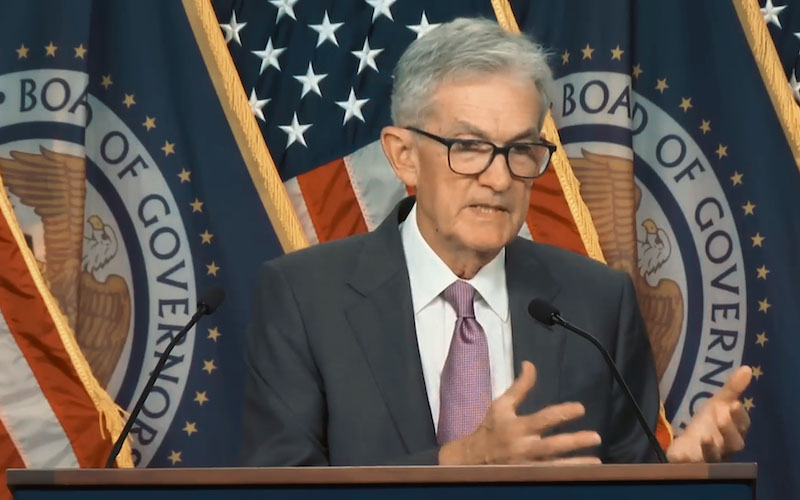
Furthermore, Federal Reserve Chairman Jerome Powell stated at a press conference that he will continue to serve as a governor for some time to come, emphasizing the importance of policy independence. Meanwhile, the market is conducting an advance assessment of the policy leanings of his successor, Kevin Warsh , keeping dollar assets highly attractive.
From a market perspective, investors are closely watching the upcoming release of the US first-quarter GDP price index and core PCE inflation data. The market expects inflation to remain relatively high, which will further strengthen the case for the Federal Reserve to maintain its tightening policy. If the data exceeds expectations, the US dollar may strengthen again, thus pushing USD/JPY higher; conversely, if the data weakens, it may exacerbate the current pullback.
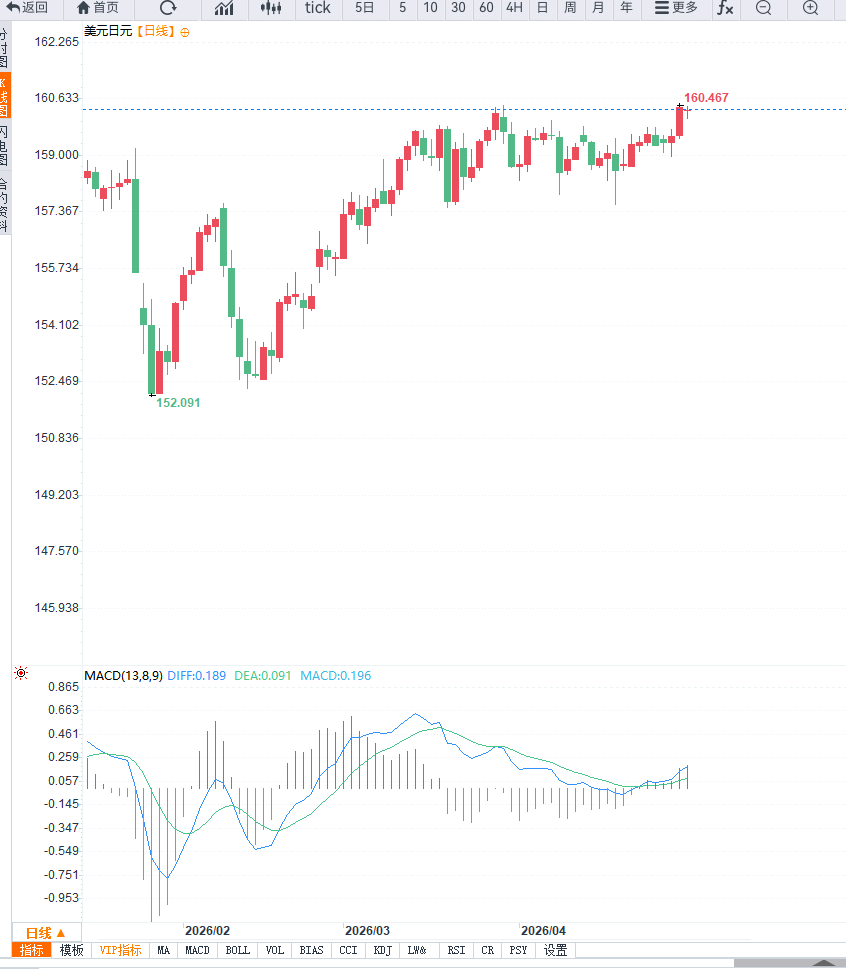
From a technical perspective, the USD/JPY daily chart maintains a strong upward trend, but shows signs of consolidation at higher levels in the short term. The price previously rose consecutively, breaking through the key levels of 158 and 160 , and is currently fluctuating around 160. Short-term support levels to watch are 159.00 and 158.00 ; a break below these levels could lead to a further pullback to the 156.50 area. Resistance levels are located at 161.50 and 163.00 ; a break above these levels could lead to a continuation of the upward trend.
On the 4-hour chart, the exchange rate is showing a consolidation and pullback structure, with the highs gradually flattening and short-term moving averages beginning to level off. The RSI indicator has fallen from the overbought zone to the neutral zone, indicating that the upward momentum has weakened, but a clear reversal signal has not yet formed. If the exchange rate regains its footing above 160.80, it may resume upward momentum; if it continues to be pressured below 160, the risk of further pullback should be noted.
Editor's Summary:
The current USD/JPY exchange rate movement reflects the interplay between policy divergences and market intervention expectations. On one hand, the Federal Reserve's maintenance of high interest rates supports the US dollar; on the other hand, Japanese authorities may intervene in the foreign exchange market to limit further yen depreciation. In the short term, the exchange rate may maintain a high-level consolidation pattern with increased volatility. Future trends will depend on US inflation data and whether the Japanese government actually intervenes.
Although no formal intervention has been confirmed this week, the Japanese government has repeatedly issued warning signals. Market research indicates that the Japanese Finance Minister stated he is highly concerned about the continued depreciation of the yen and speculative activities, emphasizing the "high urgency" of the current situation. This statement has been interpreted by the market as a precursor to potential intervention. Historical experience shows that when exchange rates approach key psychological levels, Japanese authorities often take action to stabilize the market; therefore, the current level near 160 has triggered heightened vigilance.
Regarding monetary policy, the Bank of Japan previously decided to maintain the interest rate at 0.75% , in line with market expectations. Although Bank of Japan Governor Kazuo Ueda indicated that a future interest rate hike might be necessary to combat inflation, the market reaction was relatively limited. This is because Japan's real interest rate remains in negative territory, and the loose monetary environment has not fundamentally changed. Market surveys show that analysts generally believe that current policies are insufficient to reverse the long-term weakness of the yen.
In contrast, monetary policy in the United States remains tight. The Federal Reserve maintained interest rates in the 3.50%-3.75% range at its latest meeting, but four members disagreed , marking the first time in decades that this has happened. The meeting statement noted that inflation remains high, partly due to rising energy prices. This backdrop reinforced market expectations of a prolonged period of high interest rates, thus supporting the US dollar.
Furthermore, Federal Reserve Chairman Jerome Powell stated at a press conference that he will continue to serve as a governor for some time to come, emphasizing the importance of policy independence. Meanwhile, the market is conducting an advance assessment of the policy leanings of his successor, Kevin Warsh , keeping dollar assets highly attractive.
From a market perspective, investors are closely watching the upcoming release of the US first-quarter GDP price index and core PCE inflation data. The market expects inflation to remain relatively high, which will further strengthen the case for the Federal Reserve to maintain its tightening policy. If the data exceeds expectations, the US dollar may strengthen again, thus pushing USD/JPY higher; conversely, if the data weakens, it may exacerbate the current pullback.
From a technical perspective, the USD/JPY daily chart maintains a strong upward trend, but shows signs of consolidation at higher levels in the short term. The price previously rose consecutively, breaking through the key levels of 158 and 160 , and is currently fluctuating around 160. Short-term support levels to watch are 159.00 and 158.00 ; a break below these levels could lead to a further pullback to the 156.50 area. Resistance levels are located at 161.50 and 163.00 ; a break above these levels could lead to a continuation of the upward trend.
On the 4-hour chart, the exchange rate is showing a consolidation and pullback structure, with the highs gradually flattening and short-term moving averages beginning to level off. The RSI indicator has fallen from the overbought zone to the neutral zone, indicating that the upward momentum has weakened, but a clear reversal signal has not yet formed. If the exchange rate regains its footing above 160.80, it may resume upward momentum; if it continues to be pressured below 160, the risk of further pullback should be noted.
Editor's Summary:
The current USD/JPY exchange rate movement reflects the interplay between policy divergences and market intervention expectations. On one hand, the Federal Reserve's maintenance of high interest rates supports the US dollar; on the other hand, Japanese authorities may intervene in the foreign exchange market to limit further yen depreciation. In the short term, the exchange rate may maintain a high-level consolidation pattern with increased volatility. Future trends will depend on US inflation data and whether the Japanese government actually intervenes.
- Risk Warning and Disclaimer
- The market involves risk, and trading may not be suitable for all investors. This article is for reference only and does not constitute personal investment advice, nor does it take into account certain users’ specific investment objectives, financial situation, or other needs. Any investment decisions made based on this information are at your own risk.