ING: The biggest variable in yen exchange rate intervention lies in whether the US Treasury will participate in conjunction with it.
2026-04-30 20:26:52
This week, high international oil prices, the Bank of Japan's hesitant stance on interest rate hikes, and the slightly hawkish stance of the Federal Reserve's policy meeting all contributed to pushing the USD/JPY exchange rate above the 160 mark. The Japanese Finance Minister has hinted that intervention in the foreign exchange market may be imminent. However, analysts point out that unless the US Treasury participates in joint intervention, it will be difficult for Japan to sustain a prolonged decline in the USD/JPY exchange rate through unilateral intervention.

In the current market environment, even if the Bank of Japan intervenes in the foreign exchange market, it can at most suppress the USD/JPY exchange rate to the range of 162 to 165; the biggest variable is whether the US Treasury will join in the intervention.
The time is approaching, and a decisive move may be made.
The US dollar rose as high as 160.70 against the Japanese yen during Asian trading hours, but fell sharply during European trading hours following comments from Japanese Finance Minister Satsuki Katayama. Katayama stated that the time was ripe for decisive action in the foreign exchange market, which was widely interpreted as Japan's intervention in the currency market imminent.
Katayama Satsuki also specifically mentioned that even during holidays, they would closely monitor market movements, bluntly warning European investors not to short the yen during the May Day holiday. The Bank of Japan has a history of intervening in the foreign exchange market during market holidays.
The market is highly wary because the Bank of Japan typically intervenes on a large scale when it sells dollars to support the yen. The last time the Bank of Japan intervened in the dollar-yen exchange rate was in 2024, with a single-day sell-off of approximately $35 billion. The intervention that summer ultimately totaled nearly $100 billion and was highly effective. At that time, investors were generally heavily shorting the yen, and Japanese regulators accurately predicted that the Federal Reserve would begin a rate-cutting cycle that year, which the Fed did indeed implement in September.
For foreign exchange market intervention to be effective, it must align with the direction of monetary policy. However, the current situation is drastically different from that of 2024: speculators' short positions in the yen are far less than they were back then; affected by this year's energy price shocks, major central banks around the world are facing policy dilemmas, and the uncertainty surrounding the Federal Reserve's subsequent interest rate path has also increased significantly.
Whether it's unilateral or joint intervention, that determines the final outcome.
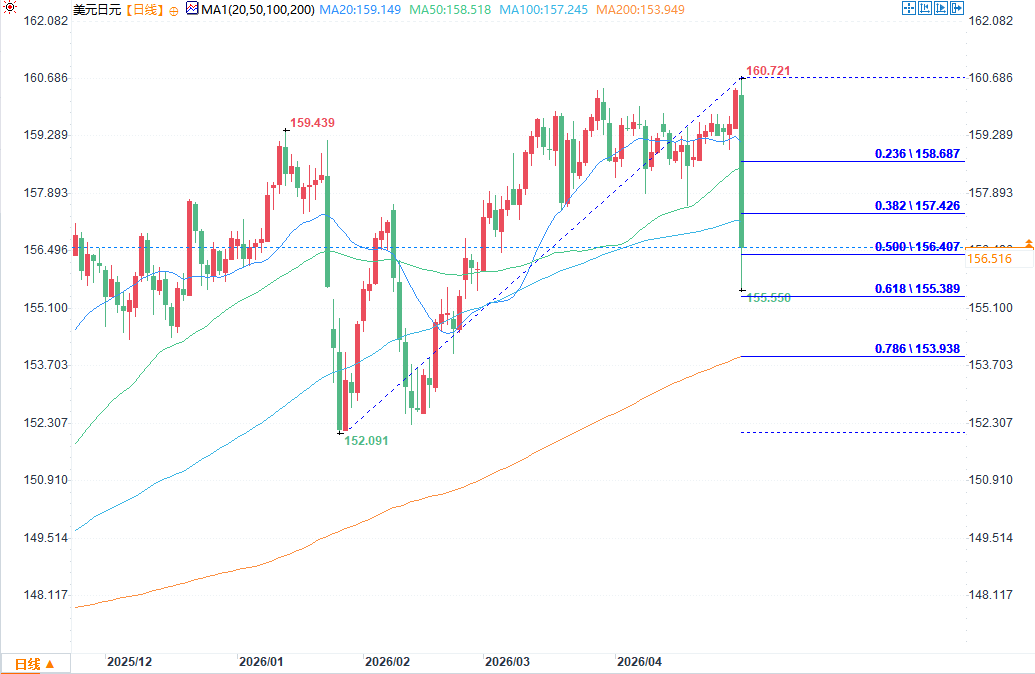
(USD/JPY daily chart source: FX678)
Our baseline assessment is that, under the current circumstances, the Bank of Japan's intervention in the foreign exchange market alone can only exert downward pressure on the USD/JPY exchange rate within the 162-165 range, and cannot reverse the overall trend of yen depreciation.
On the one hand, international oil prices remain high and Japan's real interest rate remains in deep negative territory; on the other hand, market demand for the US dollar as a safe haven and for asset allocation is strong. It is difficult for Japan alone to push the USD/JPY exchange rate down continuously.
The biggest variable in the situation lies in whether the U.S. Treasury will participate in joint intervention. A rare development occurred at the end of January this year: during the closing trading session in New York on Friday, the Federal Reserve suddenly inquired about the dollar-yen exchange rate, an inquiry historically seen as a precursor to foreign exchange market intervention. The Fed later confirmed that this action was carried out on behalf of the U.S. Treasury, but the Treasury subsequently stated that it did not actually sell any foreign currency.
It is certain that the combined impact of the US and Japan selling off dollars and intervening in the exchange rate would be far greater than if Japan acted alone. Such a move would signify both US acknowledgment of an unreasonable depreciation of the yen and a possible official US assessment that the dollar is excessively strong. This may echo some of the views expressed by Stephen Milan in his Mar-a-Lago report.
It is also important to clarify that if the US intervenes in this instance, the main body will be the US Treasury Department, not the Federal Reserve. The Federal Reserve typically intervenes in the foreign exchange market due to systemic risk considerations, such as disorderly fluctuations in the foreign exchange market exacerbating financial market turmoil, a situation that does not currently exist in the market.
It's worth noting that the U.S. Treasury intervened in the foreign exchange market last October, buying Argentine pesos. During the same period, the U.S. Treasury also provided Argentina with a $20 billion dollar swap line through the Currency Stabilization Fund. Argentina used $2.5 billion of this line in October and repaid the full amount in December.
This suggests that intervention by the U.S. Treasury Department rather than the Federal Reserve is more of a proactive foreign exchange policy move by the U.S. than a passive response to market fluctuations.
Key conclusions
Japan signaled intervention in the foreign exchange market this weekend, which has already pushed the USD/JPY exchange rate lower in the short term. If Japan officially intervenes, the scale is likely to be substantial, and in extreme cases, it could briefly push the exchange rate down to the lower end of its nearly two-month trading range at 157.50.
However, if it is only Japan's unilateral intervention and international oil prices remain high, the USD/JPY exchange rate will soon rebound to the 161-162 range against the backdrop of a persistently weak yen fundamental.
If the U.S. Treasury participates in joint intervention, the overall policy landscape of the U.S. dollar may undergo a profound adjustment, with the USD/JPY exchange rate potentially falling to around 155 and remaining weak for an extended period.
In the current market environment, even if the Bank of Japan intervenes in the foreign exchange market, it can at most suppress the USD/JPY exchange rate to the range of 162 to 165; the biggest variable is whether the US Treasury will join in the intervention.
The time is approaching, and a decisive move may be made.
The US dollar rose as high as 160.70 against the Japanese yen during Asian trading hours, but fell sharply during European trading hours following comments from Japanese Finance Minister Satsuki Katayama. Katayama stated that the time was ripe for decisive action in the foreign exchange market, which was widely interpreted as Japan's intervention in the currency market imminent.
Katayama Satsuki also specifically mentioned that even during holidays, they would closely monitor market movements, bluntly warning European investors not to short the yen during the May Day holiday. The Bank of Japan has a history of intervening in the foreign exchange market during market holidays.
The market is highly wary because the Bank of Japan typically intervenes on a large scale when it sells dollars to support the yen. The last time the Bank of Japan intervened in the dollar-yen exchange rate was in 2024, with a single-day sell-off of approximately $35 billion. The intervention that summer ultimately totaled nearly $100 billion and was highly effective. At that time, investors were generally heavily shorting the yen, and Japanese regulators accurately predicted that the Federal Reserve would begin a rate-cutting cycle that year, which the Fed did indeed implement in September.
For foreign exchange market intervention to be effective, it must align with the direction of monetary policy. However, the current situation is drastically different from that of 2024: speculators' short positions in the yen are far less than they were back then; affected by this year's energy price shocks, major central banks around the world are facing policy dilemmas, and the uncertainty surrounding the Federal Reserve's subsequent interest rate path has also increased significantly.
Whether it's unilateral or joint intervention, that determines the final outcome.
(USD/JPY daily chart source: FX678)
Our baseline assessment is that, under the current circumstances, the Bank of Japan's intervention in the foreign exchange market alone can only exert downward pressure on the USD/JPY exchange rate within the 162-165 range, and cannot reverse the overall trend of yen depreciation.
On the one hand, international oil prices remain high and Japan's real interest rate remains in deep negative territory; on the other hand, market demand for the US dollar as a safe haven and for asset allocation is strong. It is difficult for Japan alone to push the USD/JPY exchange rate down continuously.
The biggest variable in the situation lies in whether the U.S. Treasury will participate in joint intervention. A rare development occurred at the end of January this year: during the closing trading session in New York on Friday, the Federal Reserve suddenly inquired about the dollar-yen exchange rate, an inquiry historically seen as a precursor to foreign exchange market intervention. The Fed later confirmed that this action was carried out on behalf of the U.S. Treasury, but the Treasury subsequently stated that it did not actually sell any foreign currency.
It is certain that the combined impact of the US and Japan selling off dollars and intervening in the exchange rate would be far greater than if Japan acted alone. Such a move would signify both US acknowledgment of an unreasonable depreciation of the yen and a possible official US assessment that the dollar is excessively strong. This may echo some of the views expressed by Stephen Milan in his Mar-a-Lago report.
It is also important to clarify that if the US intervenes in this instance, the main body will be the US Treasury Department, not the Federal Reserve. The Federal Reserve typically intervenes in the foreign exchange market due to systemic risk considerations, such as disorderly fluctuations in the foreign exchange market exacerbating financial market turmoil, a situation that does not currently exist in the market.
It's worth noting that the U.S. Treasury intervened in the foreign exchange market last October, buying Argentine pesos. During the same period, the U.S. Treasury also provided Argentina with a $20 billion dollar swap line through the Currency Stabilization Fund. Argentina used $2.5 billion of this line in October and repaid the full amount in December.
This suggests that intervention by the U.S. Treasury Department rather than the Federal Reserve is more of a proactive foreign exchange policy move by the U.S. than a passive response to market fluctuations.
Key conclusions
Japan signaled intervention in the foreign exchange market this weekend, which has already pushed the USD/JPY exchange rate lower in the short term. If Japan officially intervenes, the scale is likely to be substantial, and in extreme cases, it could briefly push the exchange rate down to the lower end of its nearly two-month trading range at 157.50.
However, if it is only Japan's unilateral intervention and international oil prices remain high, the USD/JPY exchange rate will soon rebound to the 161-162 range against the backdrop of a persistently weak yen fundamental.
If the U.S. Treasury participates in joint intervention, the overall policy landscape of the U.S. dollar may undergo a profound adjustment, with the USD/JPY exchange rate potentially falling to around 155 and remaining weak for an extended period.
- Risk Warning and Disclaimer
- The market involves risk, and trading may not be suitable for all investors. This article is for reference only and does not constitute personal investment advice, nor does it take into account certain users’ specific investment objectives, financial situation, or other needs. Any investment decisions made based on this information are at your own risk.