Dramatic reversal! Trump abruptly halts "Operation Hormuz," marking a major breakthrough in the US-Iran peace agreement?
2026-05-06 08:48:28
US President Donald Trump issued a surprising statement on Tuesday (early Wednesday morning, May 6th Beijing time) through his self-created social media platform, "Truth Social," announcing the suspension of "Project Freedom," which had just been launched a day earlier. Project Freedom is a military escort operation whereby the US military guides merchant ships stranded in the Strait of Hormuz safely out of the waters. In his statement, Trump explicitly stated that this suspension was partly based on "significant progress made in reaching a comprehensive and final agreement" with Iran. He further explained that Project Freedom would be put on hold "for a short period to observe whether an agreement can be finalized and formally signed."
This policy shift is shocking not only because of its swift implementation—the operation was halted just one day after its launch—but also because it starkly contrasts with previous characterizations of the operation by the US government. Just hours before Trump's statement, Secretary of State Marco Rubio emphasized to the media at the White House that the core objective of Project Freedom was to "rescue" civilian sailors "abandoned" due to Iran's blockade of the Strait of Hormuz. According to US statistics, approximately 23,000 sailors from 87 countries were stranded on ships in the Persian Gulf in dire straits due to the de facto closure of the Strait of Hormuz. Rubio stated at the time that these sailors were "waiting to die, isolated, starving, and extremely vulnerable," and claimed that at least ten sailors had already perished as a result.
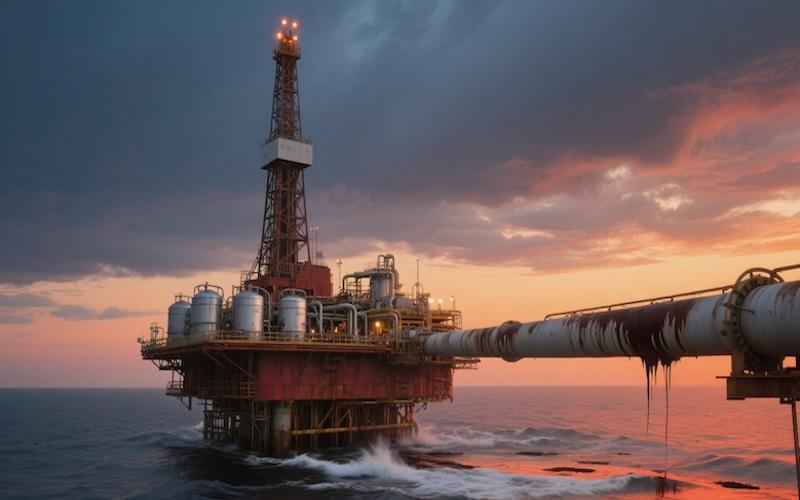
The Strait of Hormuz, a crucial chokepoint for global oil transportation, directly impacts the stability of the world energy market and international trade. Recently, due to the escalating military conflict between the United States and Israel and Iran, Iran has effectively strengthened its control over the strait, preventing numerous merchant ships from passing through normally.
When Trump first announced the launch of the "Freedom Initiative" on Sunday evening (May 3), he promised that the U.S. would provide security guarantees to countries whose ships are stranded due to war and "guide their ships safely out of restricted waterways." The U.S. Central Command subsequently released a detailed military deployment plan, outlining the deployment of guided-missile destroyers, more than 100 land-based and sea-based aircraft, multi-domain unmanned platforms, and 15,000 military personnel to support the escort operation.
However, this initiative has faced skepticism even in its planning stages. Some defense and geopolitical experts told CNBC earlier on Tuesday that they were doubtful whether the "Freedom Project" could truly achieve its stated goals.
Meanwhile, Iran responded in a more hostile manner, not only rejecting US pressure but also further escalating regional tensions. The United Arab Emirates, a key US ally in the Middle East, announced on Monday that its territory had been attacked by a combined attack from Iran using ballistic missiles, cruise missiles, and drones, resulting in three injuries. US Central Command Commander General Brad Cooper, in an interview, stated that Monday's attack "did not help ease tensions" and emphasized that "we need to de-escalate tensions."
Faced with a faltering ceasefire, U.S. Secretary of State Marco Rubio attempted to define the clear boundaries of U.S. military operations. He told reporters on Tuesday (May 5) that the escort operation in the Strait of Hormuz was essentially defensive in nature, stating, "We will not fire unless we are attacked first."
U.S. Defense Secretary Hergsays added that the U.S. has successfully secured a passage through the Strait, and hundreds of merchant ships are currently queuing to pass. He also emphasized that the four-week ceasefire agreement between the U.S. and Iran "is indeed still in effect," but the U.S. will "monitor the situation very closely."
However, Iran did not show any sign of de-escalation. Shortly after Hegsays's remarks, the UAE Ministry of Defense stated that its air defense systems had once again responded to missile and drone attacks from Iran—marking the second consecutive day of such attacks.
Although Iran's Joint Military Command denied launching the attacks, the Iranian Revolutionary Guard released a new map showing a significant expansion of the Strait of Hormuz within Iranian control and publicly warned all vessels to strictly adhere to its designated shipping lanes or face a "decisive response." The UAE Ministry of Foreign Affairs, in a statement, explicitly stated that these attacks constituted a serious escalation of the situation, posing a direct threat to the country's security, and reserved the "right to a full and legitimate response."
Despite the ongoing military standoff, Trump's statement regarding significant progress on the US-Iran agreement has injected a glimmer of hope for peace into the tense situation. Following Trump's announcement of the suspension of the "Freedom Program," US stock index futures rose, US crude oil fell nearly 3% to $99.12 per barrel, the US dollar index fell more than 20 points to 98.23, and spot gold rose more than $60 to around $4610 per ounce in Asian trading on Wednesday. The market generally interprets this movement as a growing expectation for a peace agreement. If an agreement is ultimately finalized, it would theoretically end the state of war between the US and Israel against Iran and reopen the economically vital Strait of Hormuz.
It is worth noting that US and Iranian officials have held a round of face-to-face peace talks, although attempts to arrange follow-up meetings have failed. Iranian Foreign Minister Araqchi stated that peace negotiations are still progressing with Pakistan's continued mediation.
Furthermore, Araghchi is scheduled to travel to Beijing on Tuesday for talks with the Chinese Foreign Minister, and Trump himself plans to visit China this month. These diplomatic moves indicate that although the situation remains fragile, the parties have not completely closed the door to dialogue. Speaking to reporters in the Oval Office, Trump said that despite Iran's open rhetoric, its military has been weakened to the point of only being able to fire "toy guns," and he believes Tehran actually desires a peace agreement. "They're playing games," Trump said, "but I can tell you, they actually want a deal."
From its high-profile launch of the "Freedom of Movement" program to its swift suspension, the Trump administration's shift in stance on the Strait of Hormuz reflects the complex and delicate power struggle between the US and Iran. On the one hand, the US needs to address the security concerns of its allies and demonstrate its resolve to pressure Iran; on the other hand, a protracted military conflict is incurring increasingly heavy costs to the global economy and regional stability.
This decision to suspend operations is less a policy abandonment and more a strategic wait—the US is attempting to use military pressure as leverage to secure a more substantial peace agreement. However, given Iran's hardline stance on the attacks in the UAE and the significant differences between the two sides regarding ceasefire conditions, whether this "comprehensive final agreement" can truly be implemented remains highly uncertain.
Question 1: Why did Trump suspend the newly launched "Freedom Initiative"? Does this mean that the United States has compromised with Iran?
A: Trump's official reason was that the US and Iran had made "significant progress" in reaching a comprehensive and final agreement, thus necessitating a suspension of escort operations to observe whether an agreement could be finalized. This is not a simple compromise, but a strategic adjustment: creating space for diplomatic negotiations by temporarily halting military pressure. At the same time, this move also tests whether Iran is genuinely willing to reach an agreement. If negotiations fail, the US could very well restart or even escalate military operations.
Question 2: What was the "Freedom Project" originally intended to do? Why was it halted shortly after its launch?
A: "Operation Freedom" is a military escort operation involving US guided-missile destroyers, aircraft, and 15,000 troops to guide merchant ships stranded in the Strait of Hormuz safely out of the water. The plan was announced on May 3, 2026, but was halted by Trump the following day. The immediate reason for the halt was a breakthrough in US-Iran negotiations, but deeper reasons likely included expert doubts about the feasibility of the operation, Iran's strong military response (such as the attack on the UAE), and the US's unwillingness to provoke a larger-scale conflict through the escort operation.
Question 3: Is the ceasefire agreement between the US and Iran still in effect?
A: According to US Defense Secretary Hergsays, the four-week ceasefire agreement reached by both sides "is indeed still in effect," but the situation is extremely fragile. While Iran denies attacking the UAE, its Revolutionary Guard has released new maps expanding its controlled area and threatened ships. Chairman of the Joint Chiefs of Staff Kane stated that Iranian attacks on US forces are "currently below the threshold for resuming large-scale military operations." In other words, the ceasefire remains in name only, but small-scale skirmishes and threats from both sides have not ceased.
Question 4: The UAE has been attacked by Iran for two consecutive days. What impact will this have on the situation?
A: As a key US ally, the UAE's repeated attacks by ballistic missiles, cruise missiles, and drones signify a serious escalation of the situation. The UAE has clearly stated its right to a "full and legitimate response," which could lead to further escalation of the conflict and even drag the UAE directly into the front lines against Iran. At the same time, these attacks also put the US in a dilemma: a strong response could undermine the ceasefire and negotiations; inaction could weaken its security commitment to its ally.
Question 5: Is the Strait of Hormuz currently passable? Have the stranded sailors been rescued?
A: The situation is complex. The US military claims to have successfully secured a shipping lane with hundreds of merchant ships queuing for passage, and even two US merchant ships have already passed through. However, Iran denies that any ships have successfully passed. As for the approximately 23,000 stranded sailors, the US claims that at least ten have died, and the rest are in a state of hunger and isolation. With the suspension of the "Freedom Project," these sailors are temporarily unable to receive direct assistance from the US military, and their escape depends on whether the subsequent diplomatic negotiations can quickly reach an agreement to restore normal passage through the strait.
At 08:47 Beijing time, US crude oil is currently trading at $101.09 per barrel.
This policy shift is shocking not only because of its swift implementation—the operation was halted just one day after its launch—but also because it starkly contrasts with previous characterizations of the operation by the US government. Just hours before Trump's statement, Secretary of State Marco Rubio emphasized to the media at the White House that the core objective of Project Freedom was to "rescue" civilian sailors "abandoned" due to Iran's blockade of the Strait of Hormuz. According to US statistics, approximately 23,000 sailors from 87 countries were stranded on ships in the Persian Gulf in dire straits due to the de facto closure of the Strait of Hormuz. Rubio stated at the time that these sailors were "waiting to die, isolated, starving, and extremely vulnerable," and claimed that at least ten sailors had already perished as a result.
Crisis Background: The Strait of Hormuz Blockade and the Game Between Various Parties
The Strait of Hormuz, a crucial chokepoint for global oil transportation, directly impacts the stability of the world energy market and international trade. Recently, due to the escalating military conflict between the United States and Israel and Iran, Iran has effectively strengthened its control over the strait, preventing numerous merchant ships from passing through normally.
When Trump first announced the launch of the "Freedom Initiative" on Sunday evening (May 3), he promised that the U.S. would provide security guarantees to countries whose ships are stranded due to war and "guide their ships safely out of restricted waterways." The U.S. Central Command subsequently released a detailed military deployment plan, outlining the deployment of guided-missile destroyers, more than 100 land-based and sea-based aircraft, multi-domain unmanned platforms, and 15,000 military personnel to support the escort operation.
However, this initiative has faced skepticism even in its planning stages. Some defense and geopolitical experts told CNBC earlier on Tuesday that they were doubtful whether the "Freedom Project" could truly achieve its stated goals.
Meanwhile, Iran responded in a more hostile manner, not only rejecting US pressure but also further escalating regional tensions. The United Arab Emirates, a key US ally in the Middle East, announced on Monday that its territory had been attacked by a combined attack from Iran using ballistic missiles, cruise missiles, and drones, resulting in three injuries. US Central Command Commander General Brad Cooper, in an interview, stated that Monday's attack "did not help ease tensions" and emphasized that "we need to de-escalate tensions."
Ceasefire Remains Unresolved: US Defensive Stance and Iran's Tough Stance
Faced with a faltering ceasefire, U.S. Secretary of State Marco Rubio attempted to define the clear boundaries of U.S. military operations. He told reporters on Tuesday (May 5) that the escort operation in the Strait of Hormuz was essentially defensive in nature, stating, "We will not fire unless we are attacked first."
U.S. Defense Secretary Hergsays added that the U.S. has successfully secured a passage through the Strait, and hundreds of merchant ships are currently queuing to pass. He also emphasized that the four-week ceasefire agreement between the U.S. and Iran "is indeed still in effect," but the U.S. will "monitor the situation very closely."
However, Iran did not show any sign of de-escalation. Shortly after Hegsays's remarks, the UAE Ministry of Defense stated that its air defense systems had once again responded to missile and drone attacks from Iran—marking the second consecutive day of such attacks.
Although Iran's Joint Military Command denied launching the attacks, the Iranian Revolutionary Guard released a new map showing a significant expansion of the Strait of Hormuz within Iranian control and publicly warned all vessels to strictly adhere to its designated shipping lanes or face a "decisive response." The UAE Ministry of Foreign Affairs, in a statement, explicitly stated that these attacks constituted a serious escalation of the situation, posing a direct threat to the country's security, and reserved the "right to a full and legitimate response."
Hopes for peace emerge: progress in negotiations and positive market reaction
Despite the ongoing military standoff, Trump's statement regarding significant progress on the US-Iran agreement has injected a glimmer of hope for peace into the tense situation. Following Trump's announcement of the suspension of the "Freedom Program," US stock index futures rose, US crude oil fell nearly 3% to $99.12 per barrel, the US dollar index fell more than 20 points to 98.23, and spot gold rose more than $60 to around $4610 per ounce in Asian trading on Wednesday. The market generally interprets this movement as a growing expectation for a peace agreement. If an agreement is ultimately finalized, it would theoretically end the state of war between the US and Israel against Iran and reopen the economically vital Strait of Hormuz.
It is worth noting that US and Iranian officials have held a round of face-to-face peace talks, although attempts to arrange follow-up meetings have failed. Iranian Foreign Minister Araqchi stated that peace negotiations are still progressing with Pakistan's continued mediation.
Furthermore, Araghchi is scheduled to travel to Beijing on Tuesday for talks with the Chinese Foreign Minister, and Trump himself plans to visit China this month. These diplomatic moves indicate that although the situation remains fragile, the parties have not completely closed the door to dialogue. Speaking to reporters in the Oval Office, Trump said that despite Iran's open rhetoric, its military has been weakened to the point of only being able to fire "toy guns," and he believes Tehran actually desires a peace agreement. "They're playing games," Trump said, "but I can tell you, they actually want a deal."
Summary and Outlook
From its high-profile launch of the "Freedom of Movement" program to its swift suspension, the Trump administration's shift in stance on the Strait of Hormuz reflects the complex and delicate power struggle between the US and Iran. On the one hand, the US needs to address the security concerns of its allies and demonstrate its resolve to pressure Iran; on the other hand, a protracted military conflict is incurring increasingly heavy costs to the global economy and regional stability.
This decision to suspend operations is less a policy abandonment and more a strategic wait—the US is attempting to use military pressure as leverage to secure a more substantial peace agreement. However, given Iran's hardline stance on the attacks in the UAE and the significant differences between the two sides regarding ceasefire conditions, whether this "comprehensive final agreement" can truly be implemented remains highly uncertain.
Frequently Asked Questions
Question 1: Why did Trump suspend the newly launched "Freedom Initiative"? Does this mean that the United States has compromised with Iran?
A: Trump's official reason was that the US and Iran had made "significant progress" in reaching a comprehensive and final agreement, thus necessitating a suspension of escort operations to observe whether an agreement could be finalized. This is not a simple compromise, but a strategic adjustment: creating space for diplomatic negotiations by temporarily halting military pressure. At the same time, this move also tests whether Iran is genuinely willing to reach an agreement. If negotiations fail, the US could very well restart or even escalate military operations.
Question 2: What was the "Freedom Project" originally intended to do? Why was it halted shortly after its launch?
A: "Operation Freedom" is a military escort operation involving US guided-missile destroyers, aircraft, and 15,000 troops to guide merchant ships stranded in the Strait of Hormuz safely out of the water. The plan was announced on May 3, 2026, but was halted by Trump the following day. The immediate reason for the halt was a breakthrough in US-Iran negotiations, but deeper reasons likely included expert doubts about the feasibility of the operation, Iran's strong military response (such as the attack on the UAE), and the US's unwillingness to provoke a larger-scale conflict through the escort operation.
Question 3: Is the ceasefire agreement between the US and Iran still in effect?
A: According to US Defense Secretary Hergsays, the four-week ceasefire agreement reached by both sides "is indeed still in effect," but the situation is extremely fragile. While Iran denies attacking the UAE, its Revolutionary Guard has released new maps expanding its controlled area and threatened ships. Chairman of the Joint Chiefs of Staff Kane stated that Iranian attacks on US forces are "currently below the threshold for resuming large-scale military operations." In other words, the ceasefire remains in name only, but small-scale skirmishes and threats from both sides have not ceased.
Question 4: The UAE has been attacked by Iran for two consecutive days. What impact will this have on the situation?
A: As a key US ally, the UAE's repeated attacks by ballistic missiles, cruise missiles, and drones signify a serious escalation of the situation. The UAE has clearly stated its right to a "full and legitimate response," which could lead to further escalation of the conflict and even drag the UAE directly into the front lines against Iran. At the same time, these attacks also put the US in a dilemma: a strong response could undermine the ceasefire and negotiations; inaction could weaken its security commitment to its ally.
Question 5: Is the Strait of Hormuz currently passable? Have the stranded sailors been rescued?
A: The situation is complex. The US military claims to have successfully secured a shipping lane with hundreds of merchant ships queuing for passage, and even two US merchant ships have already passed through. However, Iran denies that any ships have successfully passed. As for the approximately 23,000 stranded sailors, the US claims that at least ten have died, and the rest are in a state of hunger and isolation. With the suspension of the "Freedom Project," these sailors are temporarily unable to receive direct assistance from the US military, and their escape depends on whether the subsequent diplomatic negotiations can quickly reach an agreement to restore normal passage through the strait.
At 08:47 Beijing time, US crude oil is currently trading at $101.09 per barrel.
- Risk Warning and Disclaimer
- The market involves risk, and trading may not be suitable for all investors. This article is for reference only and does not constitute personal investment advice, nor does it take into account certain users’ specific investment objectives, financial situation, or other needs. Any investment decisions made based on this information are at your own risk.