The UAE's withdrawal from OPEC weakens its influence and alters the global oil market landscape.
2026-05-06 13:08:50
Before May 1st, the once-powerful Organization of the Petroleum Exporting Countries (OPEC) had 12 member countries, but with the United Arab Emirates (UAE) officially withdrawing earlier this month, the number of member countries has dropped to 11. Current members include Algeria, the Republic of Congo, Equatorial Guinea, Gabon, Iran, Iraq, Kuwait, Libya, Nigeria, Saudi Arabia, and Venezuela.
These countries collectively account for approximately 33% of global crude oil production, 46% of total international oil trade, and 73% of global proven oil reserves. When OPEC was founded in 1960, these proportions were 40%, 60%, and 80%, respectively. These figures enabled OPEC to effectively fulfill its core mission at its inception: "to coordinate and unify the oil policies of its member countries." In practice, this meant that OPEC could influence oil prices as effectively as a cartel and possess commensurate geopolitical influence. However, with the decline of these core figures and the withdrawal of major oil-producing countries, OPEC's future prospects and its impact on the global oil market are attracting considerable attention.
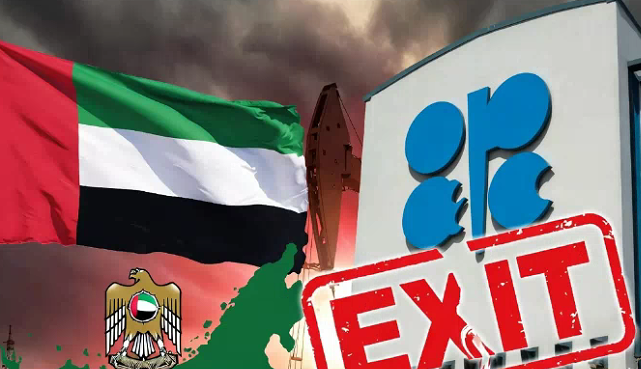
There are precedents of OPEC members withdrawing from the EU, including Indonesia in 2016, Qatar in 2019, Ecuador in 2020, and Angola in 2024, but none of these countries have the combined importance of the UAE in terms of oil production and geopolitics.
As a federation of seven emirates (with Abu Dhabi being the largest member), the UAE is OPEC's third-largest crude oil producer after Saudi Arabia and Iraq, currently producing approximately 3.5 million barrels per day. Previously, its production was limited by OPEC quotas, maintaining only between 3 million and 3.5 million barrels per day. This makes the UAE, besides Saudi Arabia, the only OPEC member with significant "spare capacity," enabling it to increase production when needed to alleviate oil price pressures.
Abu Dhabi National Oil Company (ADNOC) has stated its plan to increase production capacity to 5 million barrels per day by 2027. The inability to fully realize the commercial benefits of this additional production increase is one of the key practical reasons for the UAE's decision to withdraw from OPEC.
From a geopolitical perspective, the UAE's withdrawal also has deep-seated reasons.
Anwar Gargash, Foreign Affairs Advisor to the UAE President, stated at the Gulf Influence Forum hosted by the UAE Government Media Office on April 27 that the Gulf Cooperation Council (GCC, composed of the UAE, Saudi Arabia, Oman, Qatar, Bahrain, and Kuwait) had performed disappointingly in the recent Iranian attacks. “Unfortunately, given the nature of the attacks and the threat they pose to all parties, the GCC’s position is at its weakest level in history,” he added. “We must develop a Gulf vision and policies, and represent them at the national and collective levels. National defense is crucial, but we must also acknowledge that Gulf unity has failed to meet expectations.”
He emphasized that Iran, not Israel, remains the biggest strategic threat to security in the Gulf, and the United States' role in the region remains indispensable. "The United States' role in the region is becoming more important, not less important, because its role extends beyond military installations to include defense systems, political support, and economic and financial involvement."
US President Trump welcomed the news of the UAE's withdrawal from OPEC.
He said last week, "I think it's great, and it will ultimately help lower gas prices, oil prices, and all prices... OPEC is facing some problems." Washington sees the weakening of OPEC's influence and the key oil producer's more pro-American stance as beneficial on multiple levels.
The United States has long viewed the United Arab Emirates as a cornerstone of its new Middle East foreign policy, the core of which is to push for a normalization agreement between Arab states and Israel (the "Abraham Accords"). In September 2020, the UAE became the first major Gulf state to sign such an agreement, and it did not sever diplomatic relations with Israel after the Hamas attack on October 7, 2023. Furthermore, the UAE maintains close cooperation with India in the oil and gas sector, which is seen as a crucial lever for the United States to counterbalance China in the Asia-Pacific region through India.
Another major benefit for Washington from the UAE's withdrawal from OPEC is its disruptive impact on OPEC and its extended mechanism "OPEC+".
OPEC+ was established in late 2016 when OPEC, led by Saudi Arabia, attempted to suppress the US shale oil industry by increasing production, but failed. Instead, the US shale oil industry demonstrated strong cost control and resilience. Against this backdrop, Russia joined OPEC+ to help push for a production cut agreement to support oil prices. However, with the UAE's withdrawal (and Venezuela's likely imminent follow-up after Nicolás Maduro's resignation on January 3), the influence of Russia and Saudi Arabia within the OPEC framework is rapidly declining.
Lowering oil prices may not be Trump's primary objective in the short term, but he may still take advantage of the UAE's exit from OPEC.
The UAE plans to add 1.5 million barrels per day of production by 2027 and plans to build a new pipeline from the Abu Dhabi oil fields to the port of Fujairah to bypass the Strait of Hormuz and reduce transportation risks. Saudi Arabia has not ruled out the possibility of launching a new round of oil price wars, aimed at punishing the UAE and preventing it from profiting from the additional production.
The drop in oil prices will bring multiple benefits to the United States: first, it will further squeeze Iran's oil economy; second, it will exacerbate economic pressure on Russia; and third, it will lower domestic gasoline prices in the United States, which may have a positive impact on the midterm elections.
Overall , the UAE's withdrawal from OPEC signifies a further decline in the organization's influence and reflects a profound reshaping of the global oil market. This change will not only affect the policy coordination capabilities of oil-producing countries but will also reshape the future international energy landscape and geopolitical balance.
These countries collectively account for approximately 33% of global crude oil production, 46% of total international oil trade, and 73% of global proven oil reserves. When OPEC was founded in 1960, these proportions were 40%, 60%, and 80%, respectively. These figures enabled OPEC to effectively fulfill its core mission at its inception: "to coordinate and unify the oil policies of its member countries." In practice, this meant that OPEC could influence oil prices as effectively as a cartel and possess commensurate geopolitical influence. However, with the decline of these core figures and the withdrawal of major oil-producing countries, OPEC's future prospects and its impact on the global oil market are attracting considerable attention.
This is not the first time a member state has withdrawn; the UAE's withdrawal is particularly significant.
There are precedents of OPEC members withdrawing from the EU, including Indonesia in 2016, Qatar in 2019, Ecuador in 2020, and Angola in 2024, but none of these countries have the combined importance of the UAE in terms of oil production and geopolitics.
As a federation of seven emirates (with Abu Dhabi being the largest member), the UAE is OPEC's third-largest crude oil producer after Saudi Arabia and Iraq, currently producing approximately 3.5 million barrels per day. Previously, its production was limited by OPEC quotas, maintaining only between 3 million and 3.5 million barrels per day. This makes the UAE, besides Saudi Arabia, the only OPEC member with significant "spare capacity," enabling it to increase production when needed to alleviate oil price pressures.
Abu Dhabi National Oil Company (ADNOC) has stated its plan to increase production capacity to 5 million barrels per day by 2027. The inability to fully realize the commercial benefits of this additional production increase is one of the key practical reasons for the UAE's decision to withdraw from OPEC.
Geopolitical considerations drive the UAE to seek greater strategic autonomy.
From a geopolitical perspective, the UAE's withdrawal also has deep-seated reasons.
Anwar Gargash, Foreign Affairs Advisor to the UAE President, stated at the Gulf Influence Forum hosted by the UAE Government Media Office on April 27 that the Gulf Cooperation Council (GCC, composed of the UAE, Saudi Arabia, Oman, Qatar, Bahrain, and Kuwait) had performed disappointingly in the recent Iranian attacks. “Unfortunately, given the nature of the attacks and the threat they pose to all parties, the GCC’s position is at its weakest level in history,” he added. “We must develop a Gulf vision and policies, and represent them at the national and collective levels. National defense is crucial, but we must also acknowledge that Gulf unity has failed to meet expectations.”
He emphasized that Iran, not Israel, remains the biggest strategic threat to security in the Gulf, and the United States' role in the region remains indispensable. "The United States' role in the region is becoming more important, not less important, because its role extends beyond military installations to include defense systems, political support, and economic and financial involvement."
Trump views this as a victory, and the US gains multiple strategic advantages.
US President Trump welcomed the news of the UAE's withdrawal from OPEC.
He said last week, "I think it's great, and it will ultimately help lower gas prices, oil prices, and all prices... OPEC is facing some problems." Washington sees the weakening of OPEC's influence and the key oil producer's more pro-American stance as beneficial on multiple levels.
The United States has long viewed the United Arab Emirates as a cornerstone of its new Middle East foreign policy, the core of which is to push for a normalization agreement between Arab states and Israel (the "Abraham Accords"). In September 2020, the UAE became the first major Gulf state to sign such an agreement, and it did not sever diplomatic relations with Israel after the Hamas attack on October 7, 2023. Furthermore, the UAE maintains close cooperation with India in the oil and gas sector, which is seen as a crucial lever for the United States to counterbalance China in the Asia-Pacific region through India.
OPEC+ influence declines, impacting the positions of Russia and Saudi Arabia.
Another major benefit for Washington from the UAE's withdrawal from OPEC is its disruptive impact on OPEC and its extended mechanism "OPEC+".
OPEC+ was established in late 2016 when OPEC, led by Saudi Arabia, attempted to suppress the US shale oil industry by increasing production, but failed. Instead, the US shale oil industry demonstrated strong cost control and resilience. Against this backdrop, Russia joined OPEC+ to help push for a production cut agreement to support oil prices. However, with the UAE's withdrawal (and Venezuela's likely imminent follow-up after Nicolás Maduro's resignation on January 3), the influence of Russia and Saudi Arabia within the OPEC framework is rapidly declining.
Future oil price trends and global impact
Lowering oil prices may not be Trump's primary objective in the short term, but he may still take advantage of the UAE's exit from OPEC.
The UAE plans to add 1.5 million barrels per day of production by 2027 and plans to build a new pipeline from the Abu Dhabi oil fields to the port of Fujairah to bypass the Strait of Hormuz and reduce transportation risks. Saudi Arabia has not ruled out the possibility of launching a new round of oil price wars, aimed at punishing the UAE and preventing it from profiting from the additional production.
The drop in oil prices will bring multiple benefits to the United States: first, it will further squeeze Iran's oil economy; second, it will exacerbate economic pressure on Russia; and third, it will lower domestic gasoline prices in the United States, which may have a positive impact on the midterm elections.
Overall , the UAE's withdrawal from OPEC signifies a further decline in the organization's influence and reflects a profound reshaping of the global oil market. This change will not only affect the policy coordination capabilities of oil-producing countries but will also reshape the future international energy landscape and geopolitical balance.
- Risk Warning and Disclaimer
- The market involves risk, and trading may not be suitable for all investors. This article is for reference only and does not constitute personal investment advice, nor does it take into account certain users’ specific investment objectives, financial situation, or other needs. Any investment decisions made based on this information are at your own risk.