A new scenario in the market's "war room": The rise and fall of the US dollar depends entirely on the Strait of Hormuz.
2026-05-07 09:07:32
As the conflict between the US, Israel, and Iran enters its third month, the global foreign exchange market is experiencing a pricing pattern driven by military maps rather than economic data. A recent survey of leading foreign exchange strategists conducted from May 1st to 6th shows that the core variable for the US dollar's trajectory is entirely bet on the Strait of Hormuz—the dollar rises when tensions escalate and gives back its gains when tensions ease—while the long-term bearish outlook for the dollar remains unchanged, with the euro potentially climbing to $1.20 per dollar within a year.
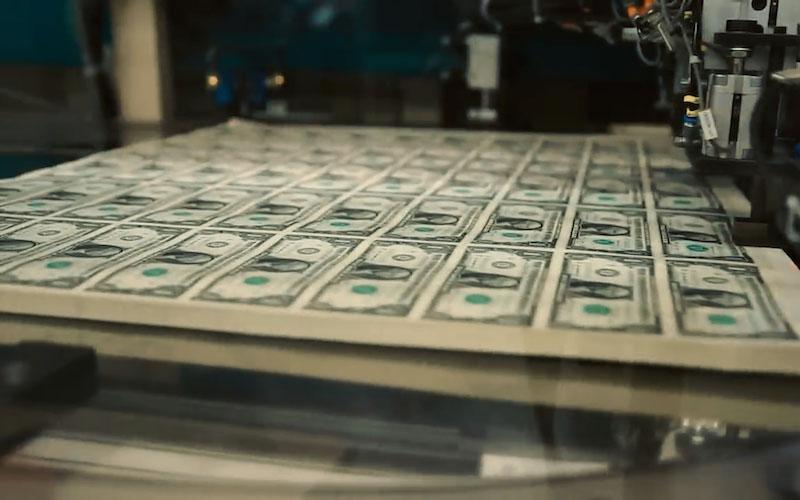
In the first month of the war, the US dollar index rose by about 3%, driven by short covering and safe-haven buying, but has since given back most of those gains. Entering May, the dollar index has traded primarily within the 97.60-98.45 range, exhibiting a clear range-bound trading pattern. Although the ceasefire agreement has been in place for about a month and tanker traffic in the Strait of Hormuz has largely returned to normal, the fragility of the ceasefire continues to keep markets on edge.
In his research, HSBC's Global Head of FX Research, Paul Mackel, noted, "US economic data suggests that the dollar is likely to remain within a relatively narrow range in the coming months. On the one hand, a de-escalation of tensions would weaken the dollar; on the other hand, the market is constantly reminded that the current environment remains challenging, which gives the dollar an advantage." He explicitly stated that changes in market risk sentiment will dominate the dollar's trajectory—sentimental fluctuations regarding the war remain the primary factor.
Another key factor supporting the US dollar is the continued surge in energy prices. Barclays analysis suggests that if the Strait of Hormuz remains blocked until the end of May, Brent crude oil prices could reach $110 per barrel. Recent renewed conflict has pushed up risk premiums, and Brent crude has already surpassed the $110 mark.
High oil prices mean that global inflation risks remain high, and also provide additional support for the US dollar. In its latest report, the World Bank predicts that if supply disruptions end in May this year, the average price of Brent crude oil futures for the whole of 2026 will be $86 per barrel, an increase of $26 from the January estimate; if supply disruptions are more prolonged or intensified, the average price could surge further to $95 to $115 per barrel.
The Federal Reserve's policy shift has also added uncertainty to the dollar's trajectory. At the latest FOMC meeting on April 30, the Fed announced it would maintain interest rates at 3.50%-3.75%, but the vote was 8-4, the highest number of dissenting votes since October 1992. The dot plot shows significant disagreement within the Fed regarding whether to cut rates in 2026, with some members even suggesting that high interest rates might be maintained for longer.
Disagreements within the Federal Reserve Board suggest that interest rates may remain unchanged for an extended period. The interest rate futures market has shifted from expecting multiple rate cuts to anticipating no change in rates, and even sees a slight possibility of a rate hike by the end of the year. Swap contracts linked to central bank interest rate decisions indicate that the market expects a greater than 50% probability of a Fed rate hike by April 2026, followed by a possible shift to rate cuts.
Despite high short-term uncertainty, long-term institutional investors' bearish view on the US dollar remains unchanged. Surveys indicate that the euro is expected to hover around $1.18 against the dollar over the next three months, rise to $1.19 over the next six months, and reach a median forecast of $1.20 over the next year.
Ales Koutny, Head of International Rates at Vanguard Group, stated in a survey: "In the long term, the dollar's valuation will continue to decline... More and more investors are seeking to diversify their asset allocations, and European currencies—especially the euro and the pound—will benefit significantly from this potential demand." Danske Bank even predicted in a report released in April that the euro/dollar exchange rate could break through the key resistance level of 1.22 within the next 12 months.
However, this assessment faces significant risks. Some institutions believe that if the Middle East conflict continues for a long time, the stagflationary pressures facing the Eurozone will become more pronounced, and the path to a Euro rebound may be far from smooth.
A recent survey reveals a key market reality: the US dollar has entered a range-bound trading pattern driven by the situation in the Strait of Hormuz, with its short-term trajectory highly dependent on fluctuating geopolitical news. While soaring oil prices and inflationary pressures provide support for the dollar, the Federal Reserve has shown rare policy divergence, and market expectations have quietly shifted from rate cuts to a possible rate hike. In terms of long-term outlook, institutional funds, represented by Vanguard Group, have not wavered in their structural judgment of a medium- to long-term weakening of the dollar – the euro is seen as a core direction for diversification. The market is currently in a narrow channel under pressure from both geopolitics and the economic cycle; the true turning point will depend on the pace of policy implementation after the tensions in the Strait of Hormuz dissipate.
Q1: Why does the rise and fall of the US dollar depend entirely on the situation in the Strait of Hormuz?
The Strait of Hormuz is the world's most important oil shipping route, passing through approximately 20% of global oil shipments. During the conflict between the US and Israel and Iran that erupted on February 28th, Iran threatened to close the strait and continued to create friction. The market views the US dollar as a safe-haven asset; when tensions escalate, investors flock to the dollar for protection; when ceasefires or tensions ease, market risk appetite improves, funds flow back to non-US dollar currencies, and the dollar weakens. Surveys show that the dynamics of this strait are the primary variable of concern.
Q2: How does the surge in Brent crude oil prices translate into the US dollar exchange rate?
The surge in crude oil prices has directly fueled global inflation expectations. As a major energy consumer, the United States faces persistently high inflation, which will compress consumers' real purchasing power, dampen economic confidence, and force the Federal Reserve to maintain high interest rates or even raise them further to curb inflation. Higher interest rates will attract global capital inflows into dollar assets, providing support for the dollar. Currently, Brent crude oil has reached $110 per barrel, nearly 40% higher than pre-conflict levels, and the persistence of inflation directly impacts market expectations regarding the dollar's trajectory.
Q3: In what specific areas do the Federal Reserve's disagreements manifest themselves?
The Federal Reserve voted 8-4 on April 30 to keep interest rates unchanged at 3.50%-3.75%, the largest dissenting vote since October 1992. The core of the disagreement lay in the fact that hawkish members believed sticky inflation might force the Fed to maintain high interest rates for longer or even raise them, while dovish members worried that high interest rates would severely damage economic growth and the job market. The dot plot shows that expectations for a rate cut this year have been significantly postponed, and policymakers have not yet reached a consensus on the future path of interest rates.
Q4: Why is the US dollar generally viewed as bearish in the long term?
The long-term bearish outlook is supported by three main factors. First, the dollar is overvalued—its fair value, as measured by real interest rate differentials, has deviated from its historical average and is under pressure to revert to its previous level. Second, the global trend of asset diversification is accelerating, with more and more sovereign wealth funds and pension funds seeking to reduce their reliance on the dollar. Third, expectations of a European economic recovery, China's push for the internationalization of the renminbi, and the increasing attractiveness of emerging market local currency bonds are all diverting demand for the dollar.
Q5: Will the euro be able to truly break through $1.20 in the future?
For the euro to break through 1.20 against the dollar, at least three conditions need to be met. First, the conflict in the Middle East must substantially de-escalate, and the war premium must disappear from the euro and the dollar. Second, the European Central Bank's policy cycle must remain relatively independent from that of the United States and maintain a tightening pace. Third, clear signs of recovery in Eurozone economic data must emerge, boosting investor confidence. The median forecast from surveyed institutions is for the euro to reach 1.20 against the dollar one year from now, but several institutions point out that if new uncertainties arise regarding the Trump administration's trade policies towards Europe, the euro's upside potential will be significantly limited.
The logic behind the dollar's fluctuations: acting in accordance with geopolitical dynamics.
In the first month of the war, the US dollar index rose by about 3%, driven by short covering and safe-haven buying, but has since given back most of those gains. Entering May, the dollar index has traded primarily within the 97.60-98.45 range, exhibiting a clear range-bound trading pattern. Although the ceasefire agreement has been in place for about a month and tanker traffic in the Strait of Hormuz has largely returned to normal, the fragility of the ceasefire continues to keep markets on edge.
In his research, HSBC's Global Head of FX Research, Paul Mackel, noted, "US economic data suggests that the dollar is likely to remain within a relatively narrow range in the coming months. On the one hand, a de-escalation of tensions would weaken the dollar; on the other hand, the market is constantly reminded that the current environment remains challenging, which gives the dollar an advantage." He explicitly stated that changes in market risk sentiment will dominate the dollar's trajectory—sentimental fluctuations regarding the war remain the primary factor.
Inflation is fueling the fire, and soaring oil prices are limiting policy flexibility.
Another key factor supporting the US dollar is the continued surge in energy prices. Barclays analysis suggests that if the Strait of Hormuz remains blocked until the end of May, Brent crude oil prices could reach $110 per barrel. Recent renewed conflict has pushed up risk premiums, and Brent crude has already surpassed the $110 mark.
High oil prices mean that global inflation risks remain high, and also provide additional support for the US dollar. In its latest report, the World Bank predicts that if supply disruptions end in May this year, the average price of Brent crude oil futures for the whole of 2026 will be $86 per barrel, an increase of $26 from the January estimate; if supply disruptions are more prolonged or intensified, the average price could surge further to $95 to $115 per barrel.
Internal divisions within the Federal Reserve: From expectations of rate cuts to the possibility of rate hikes
The Federal Reserve's policy shift has also added uncertainty to the dollar's trajectory. At the latest FOMC meeting on April 30, the Fed announced it would maintain interest rates at 3.50%-3.75%, but the vote was 8-4, the highest number of dissenting votes since October 1992. The dot plot shows significant disagreement within the Fed regarding whether to cut rates in 2026, with some members even suggesting that high interest rates might be maintained for longer.
Disagreements within the Federal Reserve Board suggest that interest rates may remain unchanged for an extended period. The interest rate futures market has shifted from expecting multiple rate cuts to anticipating no change in rates, and even sees a slight possibility of a rate hike by the end of the year. Swap contracts linked to central bank interest rate decisions indicate that the market expects a greater than 50% probability of a Fed rate hike by April 2026, followed by a possible shift to rate cuts.
Long-term perspective: The euro is seen as a strategic allocation target.
Despite high short-term uncertainty, long-term institutional investors' bearish view on the US dollar remains unchanged. Surveys indicate that the euro is expected to hover around $1.18 against the dollar over the next three months, rise to $1.19 over the next six months, and reach a median forecast of $1.20 over the next year.
Ales Koutny, Head of International Rates at Vanguard Group, stated in a survey: "In the long term, the dollar's valuation will continue to decline... More and more investors are seeking to diversify their asset allocations, and European currencies—especially the euro and the pound—will benefit significantly from this potential demand." Danske Bank even predicted in a report released in April that the euro/dollar exchange rate could break through the key resistance level of 1.22 within the next 12 months.
However, this assessment faces significant risks. Some institutions believe that if the Middle East conflict continues for a long time, the stagflationary pressures facing the Eurozone will become more pronounced, and the path to a Euro rebound may be far from smooth.
Editor's Summary
A recent survey reveals a key market reality: the US dollar has entered a range-bound trading pattern driven by the situation in the Strait of Hormuz, with its short-term trajectory highly dependent on fluctuating geopolitical news. While soaring oil prices and inflationary pressures provide support for the dollar, the Federal Reserve has shown rare policy divergence, and market expectations have quietly shifted from rate cuts to a possible rate hike. In terms of long-term outlook, institutional funds, represented by Vanguard Group, have not wavered in their structural judgment of a medium- to long-term weakening of the dollar – the euro is seen as a core direction for diversification. The market is currently in a narrow channel under pressure from both geopolitics and the economic cycle; the true turning point will depend on the pace of policy implementation after the tensions in the Strait of Hormuz dissipate.
Frequently Asked Questions
Q1: Why does the rise and fall of the US dollar depend entirely on the situation in the Strait of Hormuz?
The Strait of Hormuz is the world's most important oil shipping route, passing through approximately 20% of global oil shipments. During the conflict between the US and Israel and Iran that erupted on February 28th, Iran threatened to close the strait and continued to create friction. The market views the US dollar as a safe-haven asset; when tensions escalate, investors flock to the dollar for protection; when ceasefires or tensions ease, market risk appetite improves, funds flow back to non-US dollar currencies, and the dollar weakens. Surveys show that the dynamics of this strait are the primary variable of concern.
Q2: How does the surge in Brent crude oil prices translate into the US dollar exchange rate?
The surge in crude oil prices has directly fueled global inflation expectations. As a major energy consumer, the United States faces persistently high inflation, which will compress consumers' real purchasing power, dampen economic confidence, and force the Federal Reserve to maintain high interest rates or even raise them further to curb inflation. Higher interest rates will attract global capital inflows into dollar assets, providing support for the dollar. Currently, Brent crude oil has reached $110 per barrel, nearly 40% higher than pre-conflict levels, and the persistence of inflation directly impacts market expectations regarding the dollar's trajectory.
Q3: In what specific areas do the Federal Reserve's disagreements manifest themselves?
The Federal Reserve voted 8-4 on April 30 to keep interest rates unchanged at 3.50%-3.75%, the largest dissenting vote since October 1992. The core of the disagreement lay in the fact that hawkish members believed sticky inflation might force the Fed to maintain high interest rates for longer or even raise them, while dovish members worried that high interest rates would severely damage economic growth and the job market. The dot plot shows that expectations for a rate cut this year have been significantly postponed, and policymakers have not yet reached a consensus on the future path of interest rates.
Q4: Why is the US dollar generally viewed as bearish in the long term?
The long-term bearish outlook is supported by three main factors. First, the dollar is overvalued—its fair value, as measured by real interest rate differentials, has deviated from its historical average and is under pressure to revert to its previous level. Second, the global trend of asset diversification is accelerating, with more and more sovereign wealth funds and pension funds seeking to reduce their reliance on the dollar. Third, expectations of a European economic recovery, China's push for the internationalization of the renminbi, and the increasing attractiveness of emerging market local currency bonds are all diverting demand for the dollar.
Q5: Will the euro be able to truly break through $1.20 in the future?
For the euro to break through 1.20 against the dollar, at least three conditions need to be met. First, the conflict in the Middle East must substantially de-escalate, and the war premium must disappear from the euro and the dollar. Second, the European Central Bank's policy cycle must remain relatively independent from that of the United States and maintain a tightening pace. Third, clear signs of recovery in Eurozone economic data must emerge, boosting investor confidence. The median forecast from surveyed institutions is for the euro to reach 1.20 against the dollar one year from now, but several institutions point out that if new uncertainties arise regarding the Trump administration's trade policies towards Europe, the euro's upside potential will be significantly limited.
- Risk Warning and Disclaimer
- The market involves risk, and trading may not be suitable for all investors. This article is for reference only and does not constitute personal investment advice, nor does it take into account certain users’ specific investment objectives, financial situation, or other needs. Any investment decisions made based on this information are at your own risk.